AI headshots are technically allowed on LinkedIn, but with real caveats. LinkedIn’s policy requires your photo to “reflect your likeness,” and a 2024 survey of 1,087 recruiters found 76.5% preferred AI-generated headshots in blind comparisons, yet 66% said they’d be put off once they learned the photo wasn’t real. The right call depends on your industry, your role, and how much risk you can afford to carry on your profile picture.
Last updated: July 2026 · Written by Brian Confer, Co-founder at Capturely
Every few months a new AI headshot generator promises a Fortune 500-quality photo for $29 and ten minutes of uploading selfies. Some of them are genuinely good. Some produce a face that’s 90% you and 10% something a little off — a jawline that doesn’t quite track, skin with no pores, a collar that melts into a shoulder. The question isn’t whether the technology works. It’s whether the people looking at your profile picture, recruiters, clients, hiring managers, actually reward the gamble.
What Does LinkedIn’s Policy Actually Say About AI Headshots?
LinkedIn’s Help Center policy on profile photos comes down to one sentence: your profile photo must reflect your likeness. You’re allowed an illustration or artistic rendering of yourself. You are not allowed to use an image of someone else, and under the Professional Community Policies’ “Be Trustworthy” section, that rule extends to “any other image that is not your likeness.”
A LinkedIn spokesperson has repeated the same line to multiple outlets in 2026: AI tools can touch up or generate a profile photo, but the result “must reflect your likeness” — a fully synthetic image that doesn’t actually resemble the account holder violates policy and can be removed. LinkedIn hasn’t announced a public AI-detection tool for photos, and it isn’t banning AI headshots outright. It’s enforcing the same rule it always has: the photo has to be you.
That leaves a gray zone that matters more than the policy text. An AI headshot generated from your own selfies, that still looks recognizably like you, is compliant. An AI headshot that smooths your face into a slightly different person, changes your jawline, or lightens your skin tone, is a policy violation whether or not anyone reports it — and after three removed photos, LinkedIn permanently revokes your ability to upload one at all.
Can Recruiters Actually Tell an AI Headshot From a Real One?
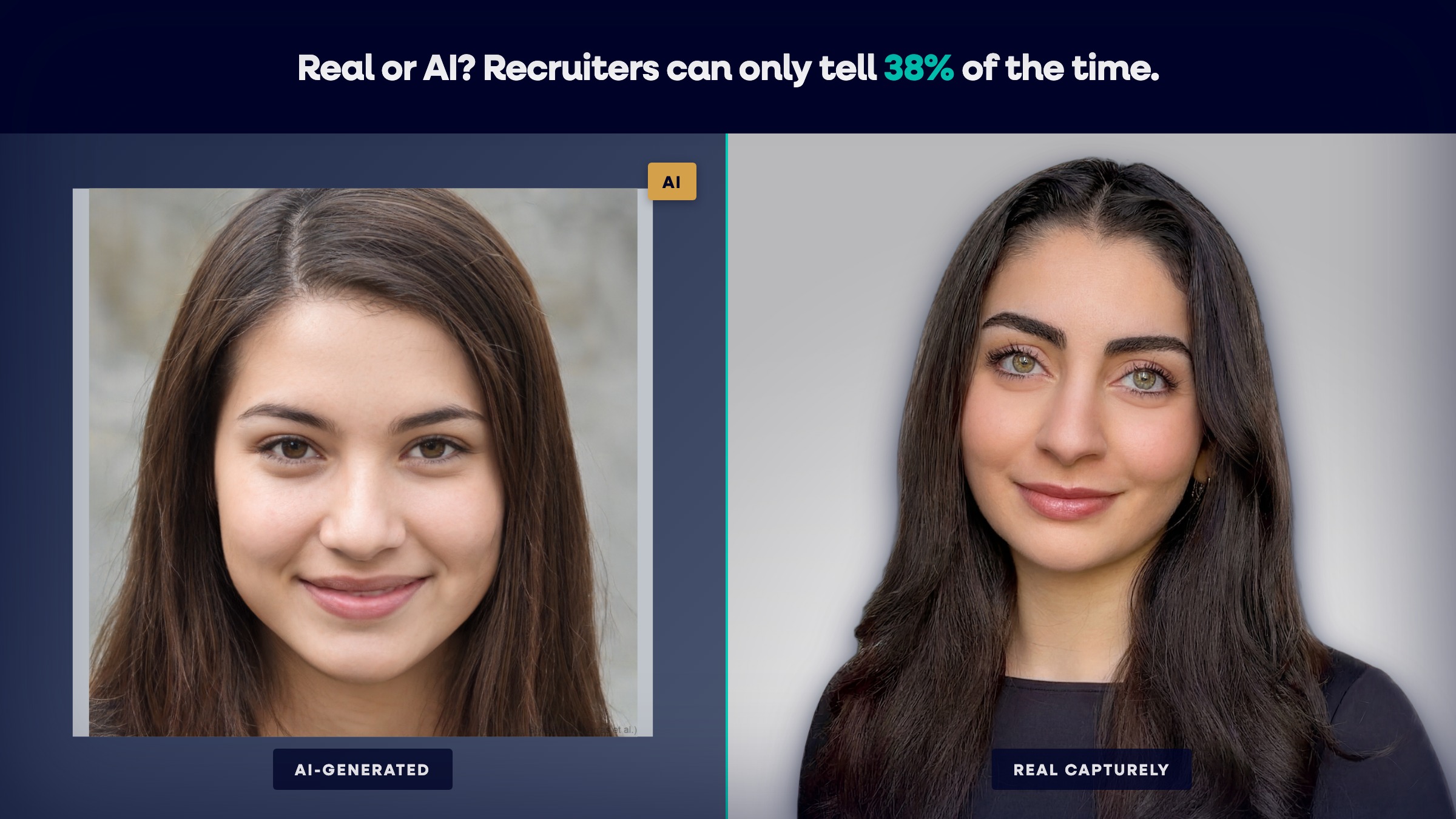
Barely better than a coin flip. A 2024 Ringover survey of 1,087 US recruiters found they correctly identified an AI-generated headshot as AI only 39.5% of the time, despite 80% believing they could spot one reliably (Ringover, 2024). Detection accuracy dropped further for the premium AI tools, 29.2%, compared to 58.9% for the free, lower-quality generators. The better the AI, the harder it is to catch.
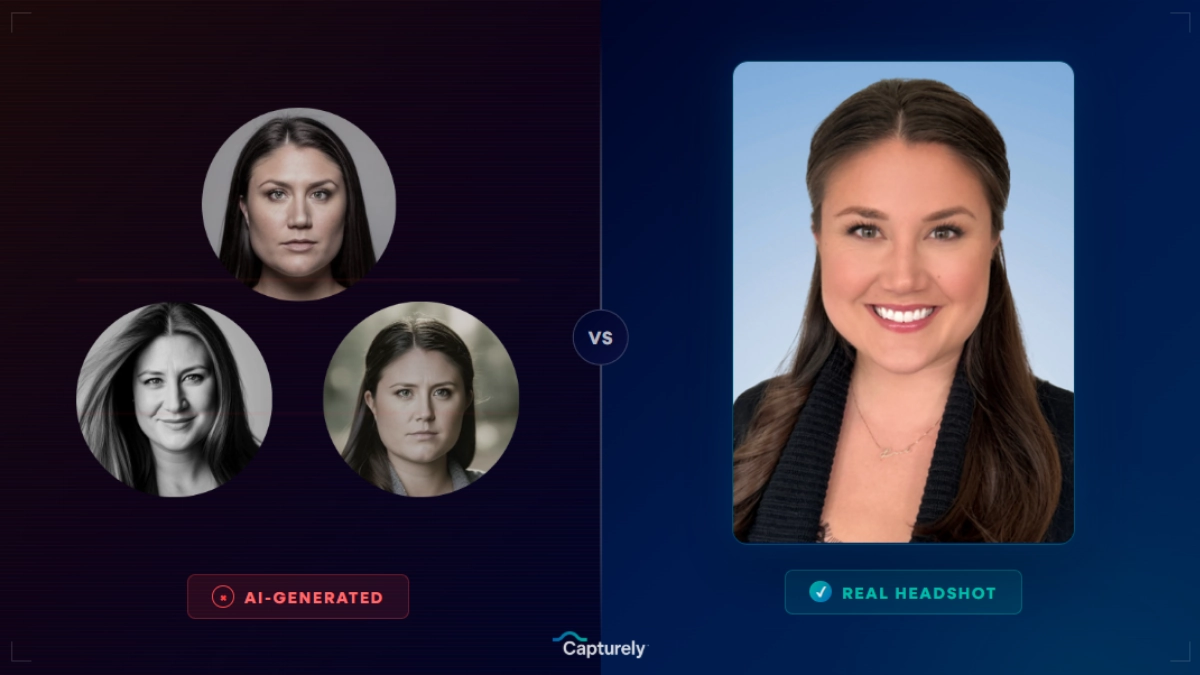
Here’s the twist: in a blind test with no context, 76.5% of those same recruiters said they preferred the AI-generated headshot over the real photo. Symmetrical features, even skin, studio-perfect lighting: AI photos are optimized to look good in isolation. The preference disappears the moment the recruiter learns which photo was fabricated.
Why Are 66% of Recruiters Put Off Once They Know?
Because a headshot isn’t just decoration, it’s a signal, and finding out the signal was manufactured reads as a small deception even when nobody meant it that way. The same Ringover survey found 66% of recruiters reported being put off once they learned a candidate’s headshot was AI-generated, and 88% said candidates should disclose AI use up front (Ringover, 2024).
According to Rob Eyler, CEO and co-founder of Capturely, “The recruiters aren’t upset about the photo quality. They’re upset that the first data point they had about you turned out to be fabricated. That’s a trust problem, not a photography problem, and trust problems follow you into the interview.”
The gap between “looks good blind” and “feels wrong once disclosed” is the entire risk calculation for an AI headshot. It performs fine until the moment someone realizes, and by 2026 more people are realizing, because more people know what to look for.
There’s a second, quieter cost: sameness. Kyle Elliott, a tech career coach quoted in Built In, put it this way: “When everyone uses the same tools the same way, your profile becomes indistinguishable… that hurts both your discoverability and your credibility.” Most AI headshot generators pull from the same handful of underlying models, which means the same lighting, the same smoothed skin, the same three-quarter turn, across thousands of profiles. A recruiter scrolling LinkedIn all day starts to recognize the template before they recognize the person.
Which Companies Are Moving Away From AI Headshots?
Anna Lawlor, Director of Digital & Social Media at Greentarget UK, tested an AI-generated LinkedIn headshot on herself in early 2025, then wrote about the result on LinkedIn. The agency’s call afterward: AI-generated images are fine for personal profiles, but off-limits for company assets, websites, press materials, marketing decks, where the standard for authenticity is higher. It’s a narrower policy than a blanket ban, but it reflects a pattern showing up across client-facing industries.
Law firms are watching the same risk from a different angle. Lowenstein Sandler’s April 2026 analysis on workplace deepfakes flagged that circulating AI-altered imagery of real employees can create Title VII exposure under EEOC guidance, a compliance risk most HR teams haven’t priced in yet (Lowenstein Sandler, 2026). Financial services and healthcare organizations, already sensitive to identity verification and provider trust, are applying informal versions of the same standard: AI-generated is fine for a personal side project, risky for anything with the company’s name attached.
Capturely sees this directly. More companies are moving away from AI headshots for the same reason Greentarget did, a survey of 1,600 participants found 38% described AI-generated professional photos as “soulless,” technically fine but missing the thing that makes a headshot connect (Capturely, 2026). For a distributed team, that reads as inconsistency at scale. The industry-by-industry breakdown of which sectors are formally restricting AI headshots in 2026 is worth a closer read if your company falls into a regulated category.
Do Any 2026 Laws Require You to Disclose an AI Headshot?
Not yet, not specifically for LinkedIn profile photos, but the regulatory direction is unmistakable. The EU AI Act’s Article 50 transparency obligations take effect August 2, 2026, and require disclosure when AI-generated content depicting real people is presented in ways that could deceive a viewer. It was written with deepfake video and synthetic voice in mind, not corporate headshots, but the same logic, don’t let people mistake a fabrication for reality, is exactly the tension an AI LinkedIn photo creates.
California’s AI Transparency Act, effective the same week, pushes major AI platforms toward provenance labeling and detection tools for synthetic content. New York’s synthetic performer law, effective June 9, 2026, sounds relevant but isn’t: it governs fully fabricated ad performers who don’t correspond to any real person, the opposite of an AI headshot built from your own face. Dynamis LLP’s 2026 disclosure guidance for brands is a useful read if you want the fuller regulatory picture (Dynamis LLP, 2026).
None of this makes an AI LinkedIn headshot illegal. It does mean the regulatory and cultural expectation is converging on the same point: disclose when it matters, and expect scrutiny to keep rising, not fall. For the full breakdown of what each 2026 disclosure law actually requires, see our guide to AI headshot disclosure requirements.
When Is an AI Headshot Actually Fine?
Context determines the risk, not the technology. Use the framework below before you upload one.
| Your Situation | Risk Level | Recommendation |
|---|---|---|
| Personal side project or hobby account | Low | AI headshot is a reasonable shortcut |
| Freelancer or gig worker, low-stakes clients | Low-Medium | Acceptable, but a real photo builds more trust faster |
| Active job search | Medium-High | Skip it. 88% of recruiters want AI disclosed, and undisclosed use reads worse than an average real photo |
| Executive, board member, or public-facing leader | High | Don’t. Authenticity is the entire job of an executive photo |
| Regulated industry (finance, healthcare, law) | High | Don’t. Compliance and identity-verification norms are moving against AI imagery |
| Company-wide rollout for a whole team | High | Don’t. One flagged AI photo becomes a brand-wide authenticity question |
Rolling out headshots for a whole team? Skip the AI generator and the logistics headache of an in-person shoot. Capturely delivers real, live-photographer-directed headshots via a phone session in 10 minutes, no app download, 3 edited photos in 24 hours. Get an instant quote →
What’s the Real Alternative to an AI Headshot Generator?
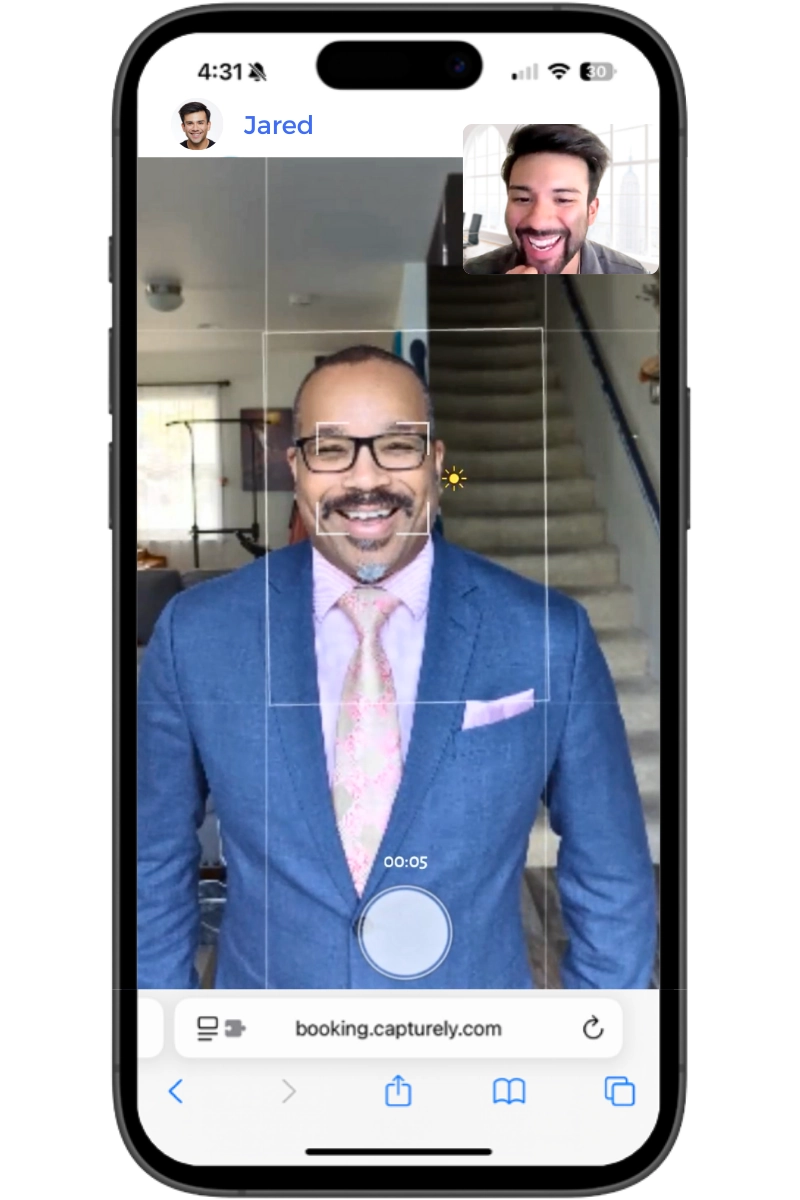
The appeal of an AI headshot generator is speed and price: upload some selfies, get a photo back in minutes for $29-$59. We’ve tested a dozen of the free and low-cost options and compared results against the higher-end 2026 generators, and the pattern holds across price points: the problem is that it’s still a fabrication, and the data above shows fabrications carry a real, if hard-to-predict, trust cost. The alternative isn’t a slower version of the same trade-off, it’s removing the trade-off. Capturely’s live photographer directs a real session over your phone’s rear camera (36-48 megapixels, held at arm’s length, not a front-facing selfie), coaching posture, lighting, and expression the way an in-person photographer would. The photo delivered is an actual photograph of your actual face, retouched by a professional editor, not generated by a model guessing what you probably look like.

For a distributed team, that difference compounds. Google, Netflix, and McKinsey use Capturely specifically because a headshot that’s 95% accurate isn’t good enough when it’s representing a real person on a real company directory. Sessions run 10 minutes, delivery lands in 24 hours, and pricing starts at $79/session for individuals with teams saving up to 45% ($45-$79 per person), a fraction of what a traditional in-person studio charges once you factor in travel and no-shows.
It also sidesteps a security question most AI headshot generators don’t answer well: what happens to the selfies you upload. Capturely’s session works through an API into the phone’s camera only, with no access to your photo library, contacts, or device storage, which is why it passes security review at companies like Google and UnitedHealth Group. An AI headshot generator, by contrast, needs you to upload several personal photos to a third-party server so its model can train on your face. For an individual on a $35 personal plan, that’s a minor trade. For a company rolling this out across a directory of employees, it’s a data-handling question procurement will eventually ask.
See the difference for yourself. Book a free demo session and compare a Capturely photo to what an AI generator would produce from the same face. Book a free demo →
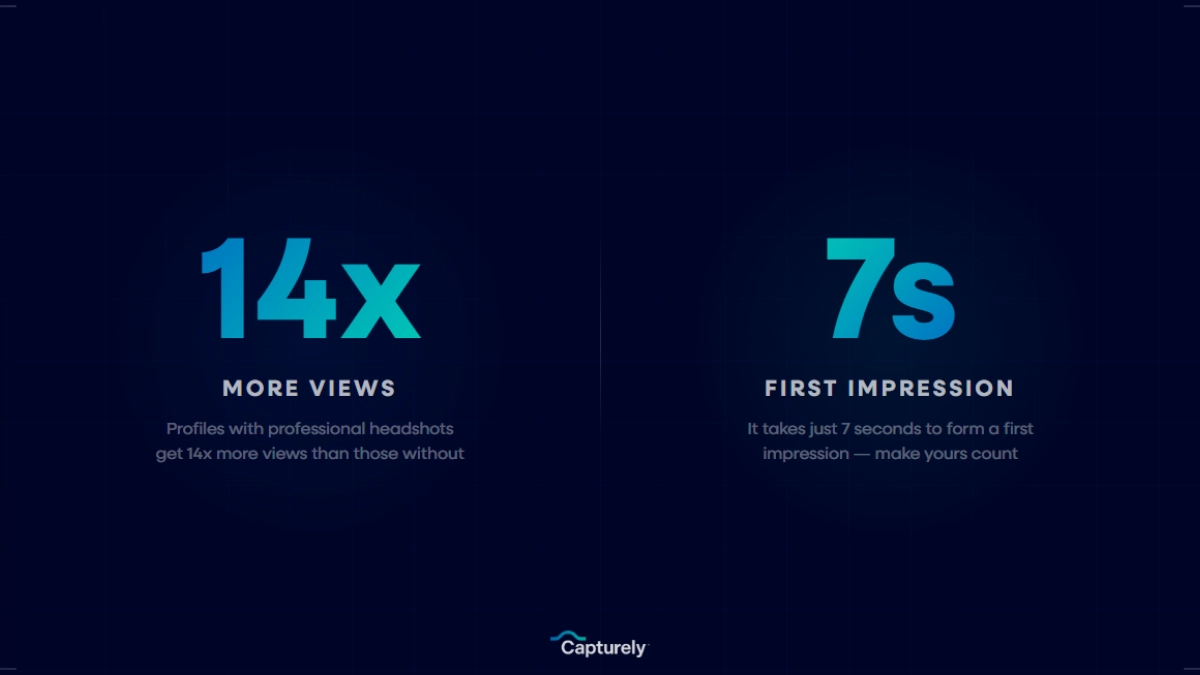
A properly directed real photo also solves the problem an AI headshot can’t: LinkedIn profiles with a photo already get 14x more profile views and 36x more messages than profiles without one, and that lift depends entirely on the photo reading as genuinely, verifiably you the moment someone clicks through to a video call or an in-person meeting.
Frequently Asked Questions
Are AI headshots allowed on LinkedIn?
Yes, as long as the result still reflects your actual likeness. LinkedIn’s policy bans images that are “not your likeness,” and an AI photo that alters your face, skin tone, or features enough to be unrecognizable violates that rule even without anyone reporting it, and can lead to the photo being removed.
Can recruiters tell if a LinkedIn headshot is AI-generated?
Rarely, on their own. A 2024 Ringover survey of 1,087 recruiters found they correctly identified AI-generated headshots only 39.5% of the time, despite 80% believing they could spot one. Detection gets even harder with higher-quality AI tools, dropping to 29.2% accuracy for premium generators.
Will an AI headshot hurt my credibility?
It can, but mainly if it’s discovered. 66% of recruiters in the same Ringover survey said they were put off once they learned a candidate’s headshot was AI-generated, even though 76.5% preferred the AI photo in a blind comparison before knowing.
Do I have to disclose that my LinkedIn photo is AI-generated?
Not under any current US or EU law specific to LinkedIn photos. But 88% of recruiters say candidates should disclose AI use, and the EU AI Act’s Article 50 disclosure rule, effective August 2026, signals where broader expectations are heading for AI-generated imagery of real people.
Can LinkedIn detect and remove AI-generated profile photos?
LinkedIn hasn’t announced a dedicated AI-photo detection tool, but it enforces the same likeness rule manually and via user reports. Three removed photos permanently revoke your ability to upload a profile picture, so a flagged AI photo carries a real, lasting cost.
Is an AI headshot riskier in some industries than others?
Yes. Financial services, healthcare, and law firms are the most sensitive, since identity verification and client trust are core to the business. Greentarget UK, a PR agency, barred AI-generated images from company assets after testing one, while still allowing them on personal profiles.
What’s a safer alternative to an AI headshot generator?
A live, photographer-directed virtual session. Capturely connects you with a real photographer over your phone’s rear camera who coaches posture, lighting, and expression in a 10-minute session, then delivers 3 professionally retouched photos within 24 hours, a real photo instead of a generated approximation.
How often should I update a real LinkedIn headshot?
Every 18-24 months, or sooner after a job change, significant weight or hairstyle change, or company rebrand. A current real photo avoids both the “is this really you” AI question and the “this is 10 years old” outdated-photo problem.
Trying to decide between an AI shortcut and the real thing for your whole team? Start with what actually makes a LinkedIn profile picture work, then get a quote for a live-directed session that never raises the disclosure question in the first place.