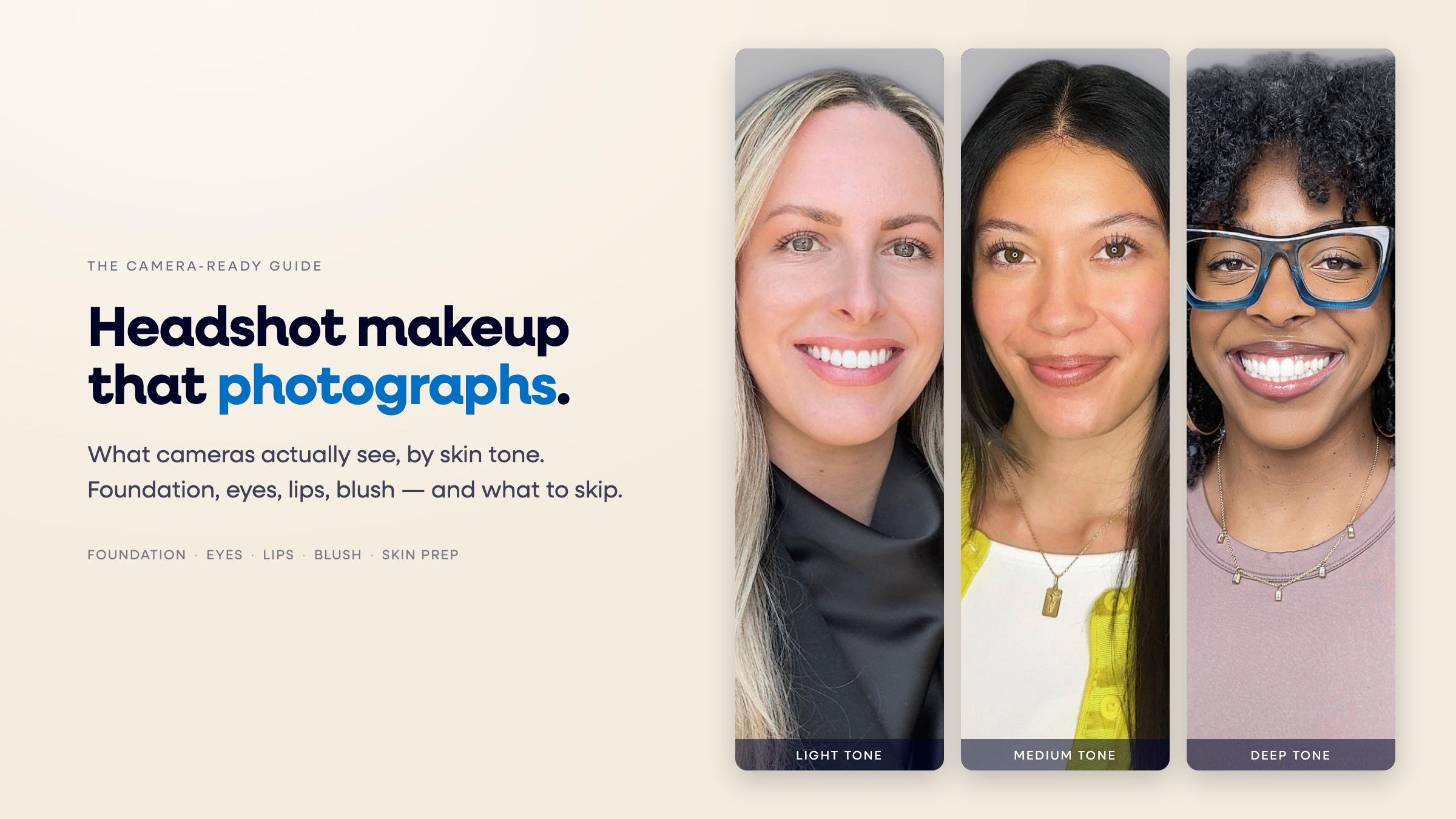
Headshot makeup is everyday makeup, applied with about 20 to 30 percent more pigment, finished matte rather than dewy, and stripped of anything reflective. Cameras flatten color and amplify shine, so the look that reads natural in a mirror reads washed-out in a photo. The goal is not heavier makeup. It is camera-calibrated makeup that still looks like you on a Tuesday.
Last updated: May 2026
That gap between “mirror you” and “camera you” is the entire reason this post exists. Capturely has delivered more than 100,000 headshots, almost all of them photographed from the subject’s own home over a phone, and the single most common reshoot request is a makeup miss: foundation a half-shade off, shimmer that catches the ring light, undereye concealer that turned chalky. This guide walks through the prep, the application, and the skin-tone-specific calls that prevent those misses, plus what an in-person HMUA actually costs versus doing it yourself before a virtual session.
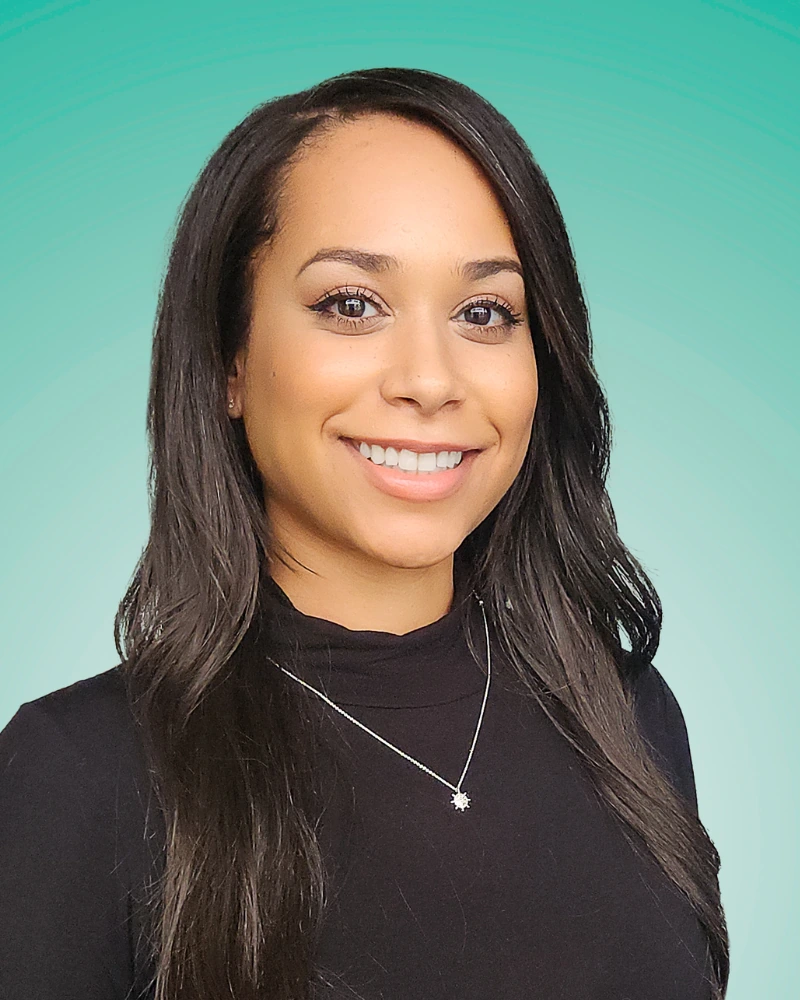
Why does headshot makeup look different from everyday makeup?
Cameras desaturate color and exaggerate texture, so makeup that looks balanced in person tends to look thin and patchy in a photo. Professional photographers report that studio lights and lenses soften cheek and lip color by roughly 50 percent (Captured Photography, 2021). Modern 4K and phone sensors capture about four times more pixels than older HD cameras, which makes pores, fine lines, and uneven blending visible in a way the naked eye misses (Cosmetics & Toiletries). The fix is not to apply more product. It is to apply slightly more pigment in the right places and to set everything with a matte finish.
The stakes are real because the viewer’s decision is fast. People form trait judgments about a face after just 100 milliseconds, and additional time mostly increases their confidence in that first read rather than changing it (Willis & Todorov, 2006). Your headshot has a fraction of a second to look polished without looking made-up. That is the brief.
According to Miriam Bulcher, a professional headshot photographer and makeup artist quoted in BRAVA Magazine (2025), “Makeup done for in-studio headshots is different from makeup done for outdoor headshots. If it’s a matter of budget, then I recommend avoiding any type of highlighter, as it will accentuate wrinkles, and undereye eyeliner if it’s not accompanied by a lash extension.” That two-line rule, no highlighter and no naked undereye liner, prevents the two most common photo-makeup failures we see in client galleries.
How should you prep your skin the week before a headshot?
Skin prep matters more than product choice. Makeup cannot change the texture of your skin, so the smoother your starting canvas, the less coverage you need, and the more your final photo looks like skin instead of a layer on top of skin. Use this 7-day countdown:
- Day 7 to 4: Drink water, sleep, and run any normal active skincare. Retinol, acids, and strong actives are fine this far out.
- Day 3: Last day for any new product, treatment, or facial. Stop introducing anything your skin has not seen before.
- Day 2: Gentle exfoliation, either a mild AHA or a soft physical scrub. Stop all retinoids, glycolic, and salicylic. Get brows shaped today, not tomorrow, so any redness has time to settle.
- Day 1 (night before): Hydrating mask or rich moisturizer. Drink water, skip alcohol, sleep early. Lay out your outfit and makeup so the morning is calm.
- Day 0 (morning of): Cleanse, hydrate, wait 10 minutes before primer. Do not apply a new SPF product. The titanium dioxide in many sunscreens causes a white cast under bright light or flash (Laura Mercier, 2024).
Cheryl, an HR director who booked a Capturely team session, summed it up after her shoot: “I should have slept Monday instead of trying a new sheet mask. Lesson learned.” Your skincare routine on the day of the shoot should be the routine your skin already knows.
What foundation should you use for a headshot?
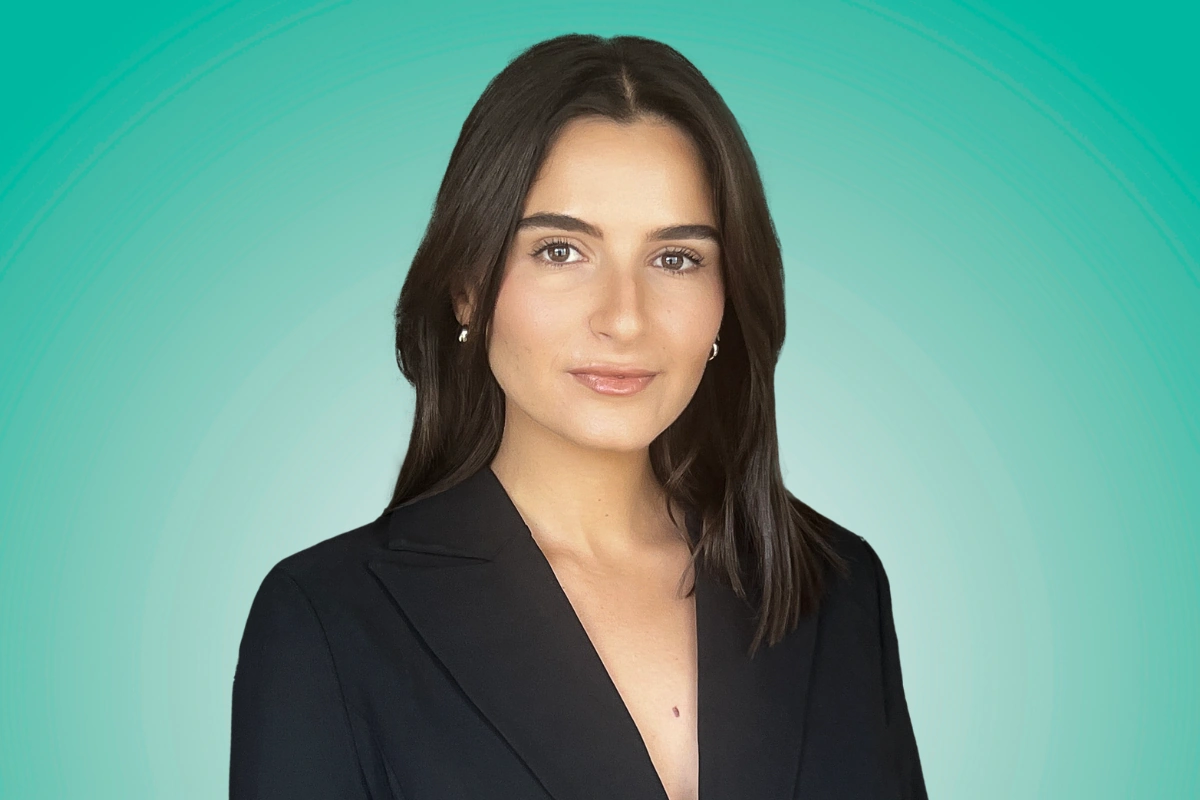
Use a matte or satin foundation that matches your neck, not your face, and build coverage only where you need it. The most common photo-makeup mistake is over-coverage. More product reads as a mask under high-resolution sensors, not as flawless skin. Per Nicole Caroline, a master esthetician quoted in The List, an HD-style foundation “coats the skin in a fine veil of medium to light coverage that has pliability and moves with the skin, rather than just sitting on top of it and creasing.” That is the finish you want.
Three specific rules:
- Match to the neck. Test along the jawline in natural window light. If you cannot see the line where foundation meets bare skin, it is the right shade.
- Skip SPF in product on shoot day. SPF reflects light and causes a white cast in photos and flash (From Head To Toe, 2012). Use your normal sunscreen 30 minutes before makeup if you want sun protection.
- Set the T-zone with translucent powder. Forehead, nose, chin. Skip the cheekbones, which photograph better with a little natural light reflection.

What eye makeup works best for headshots?
Keep the eye look soft, defined, and shimmer-free. Two coats of brown or black mascara on top lashes, a tightly groomed brow filled in to match natural color, and a matte neutral on the lid. Skip winged liner, glitter, and lower-lid eyeliner without lash extensions (Bulcher’s rule). Lower-lid liner without lashes makes the eye area read smaller and tired on camera, even when it looks balanced in person.
Brows are the single most under-loved feature in photo makeup. Cameras desaturate them more than any other facial feature, so brows that read “groomed” in the mirror often read “sparse” in the photo. Fill with a pencil one shade darker than your normal choice, brush upward, and set with a clear gel. As Captured Photography (2021) puts it, “eyebrows often get washed out in pictures.”
Want a session that includes prep guidance? Capturely sends every client a shoot-day prep guide and pairs you with a live photographer who can flag makeup issues in real time over your phone. See how it works →
What lip color should you wear for a headshot?
Pick a lip color one shade deeper than your natural lip in a satin or matte finish, never a high-gloss. The reason is the same camera physics: sensors desaturate, so “your lips but better” usually photographs as nothing at all. Avoid heavy lip liner without filling the rest of the lip, which photographs as a hard outline.
Direction by skin tone:
- Cool, fair complexions: rose, rosy-mauve, soft berry.
- Warm, medium or olive complexions: warm rose, brick, caramel nude.
- Deep complexions: deep berry, brick red, plum, chocolate nude. Pale “nude” shades read chalky on deeper skin (Laura Mercier, 2024).
If you are unsure, do a phone test the day before: take a selfie under the lighting you will use for the shoot, in the lip color you are considering. If the lip almost disappears, go a shade deeper.
Where should blush go and how much do you need?
Apply blush slightly heavier than feels natural, placed on the apple of the cheek and blended out toward the temple. Cameras flatten cheek color by roughly 30 to 50 percent (Captured Photography, 2021), and a too-soft application reads as no color at all by the time the file is exported. Choose a matte cream or powder formula. Skip the shimmer-pink finishes popular in social-content makeup, which catch directional lighting and photograph as oil.
Tone direction by skin tone:
- Fair: soft rose or cool pink.
- Medium or olive: warm peach, terracotta, or mauve.
- Deep: berry, brick, plum, blended higher on the cheekbone (Palette Hunt, 2024).
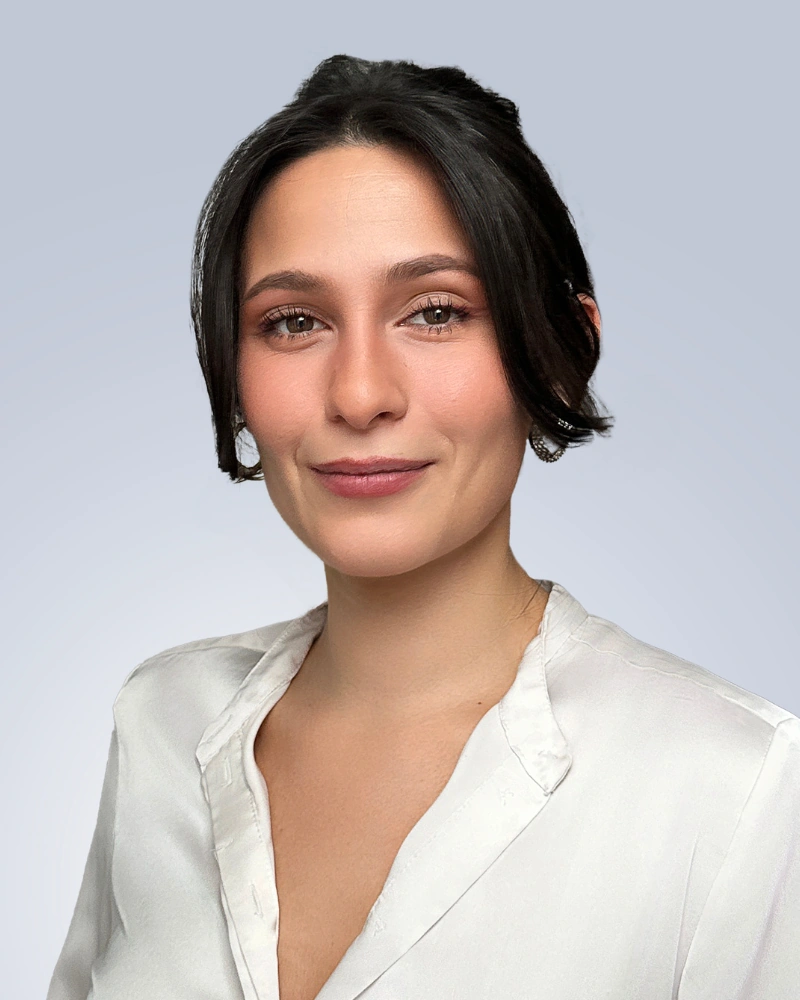
Headshot makeup by skin tone: fair, medium, and deep
Most generic makeup advice ignores the part that matters most for a finished photo: undertone and pigment density. Here is a focused breakdown.
Fair complexions
- Foundation: Match to neck, undertone usually cool or neutral. Avoid overly warm shades, which read sallow under flash.
- Contour: Cool taupe or grey-brown. Skip warm bronzer, which photographs as muddy orange on fair skin (Palette Hunt, 2024).
- Highlighter: Skip it entirely for headshots. Champagne highlighter on fair skin is the single most common “oily flashback” complaint.
- Mistake to avoid: Under-pigmenting brows and lashes. Fair features vanish on camera. Go one shade deeper than feels natural.
Medium and olive complexions
- Foundation: Look for true olive or neutral-yellow shades. Pink-leaning foundation oxidizes grey or ashy on olive skin in photos (Medium Olive, 2024).
- Contour: Warm-neutral brown. Cool grey-taupe reads dirty on olive; red-orange reads sunburned (Palette Hunt, 2024).
- Lip and blush: Brick, warm rose, terracotta. True berry can read purple against golden skin.
- Mistake to avoid: Matching foundation in indoor light, then photographing under daylight. Olive oxidizes orange. Always test in window light.
Deep complexions
- Foundation: Test 3 shades along the jawline, choosing the one that disappears under your shoot lighting. Deep skin often combines two undertones (red and gold, or neutral and blue), and a single-undertone foundation rarely covers both.
- Setting powder: Avoid HD or translucent powders containing silica or titanium dioxide. They cause white flashback. Use color-true setting powders like Danessa Myricks Yummy Skin (The Beaute Study, 2024).
- Highlight and contour: Highlight with gold, copper, or bronze; contour with rich espresso or deep red-brown. Pearl or champagne highlighter reads ashy.
- Lip and blush: Deep berry, brick, plum, chocolate nude. Pale nudes turn chalky. Berry blush blended higher on the cheekbone.
- Mistake to avoid: Too-light undereye concealer (creates a reverse-raccoon look on camera). If foundation looks grey, color-correct with a red or orange corrector underneath (PAC Cosmetics, 2024).
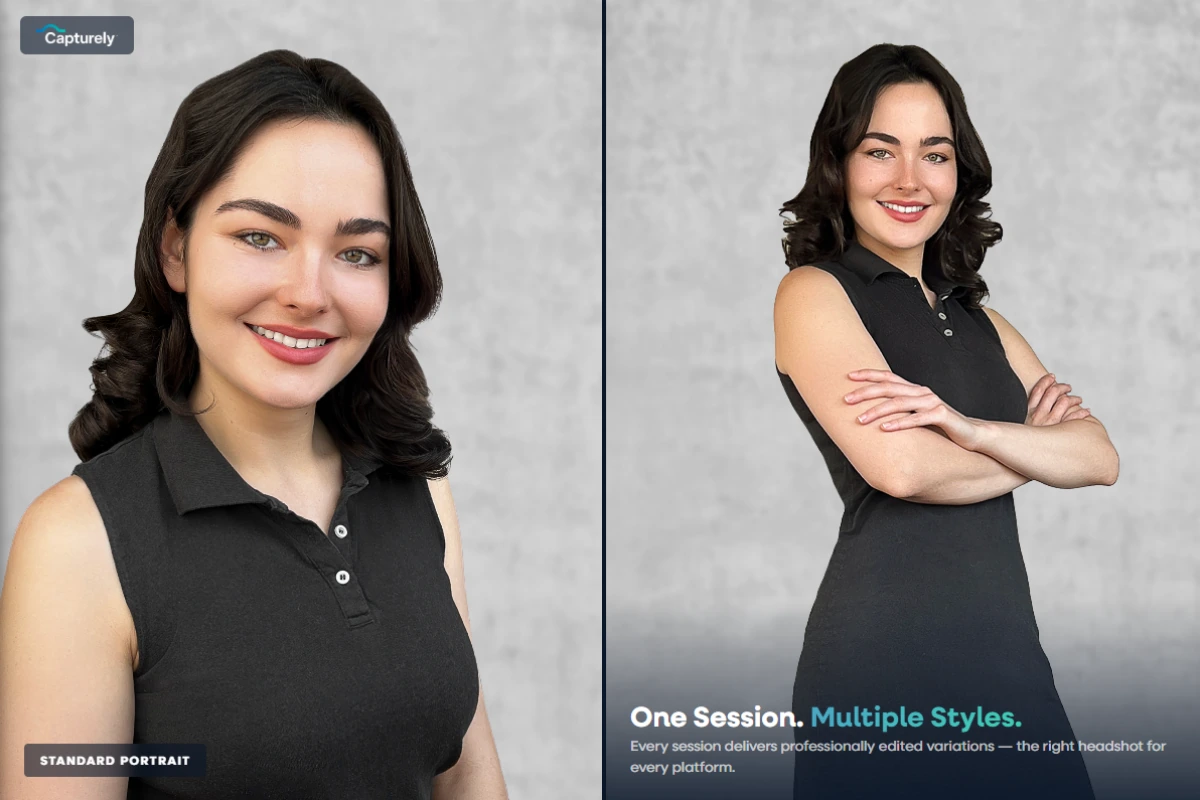
What should you avoid in headshot makeup?
Most photo-makeup mistakes repeat the same handful of errors. Avoid these:
- Shimmer and glitter anywhere. Reflective finishes catch light and photograph as shine or oil on the cheekbones, brow bone, and decolletage.
- Highlighter on aging or textured skin. Per Bulcher (2025), highlighter accentuates fine lines.
- SPF in foundation or primer. Causes white cast on camera. Apply sunscreen first, let it absorb, then start makeup.
- Heavy lip liner with no lip color fill. Photographs as a stark outline.
- Brand new product on shoot day. Even if friends rave about it, your face is not the place to find out it pills under primer.
- Evening-grade smoky eyes and dark contour. Reads heavy on camera. Save it for after the shoot.
- Undereye eyeliner without lashes. Shrinks the eye and adds tiredness, per Bulcher.
- Sunscreen SPF in lip product. Same flashback problem as foundation SPF.
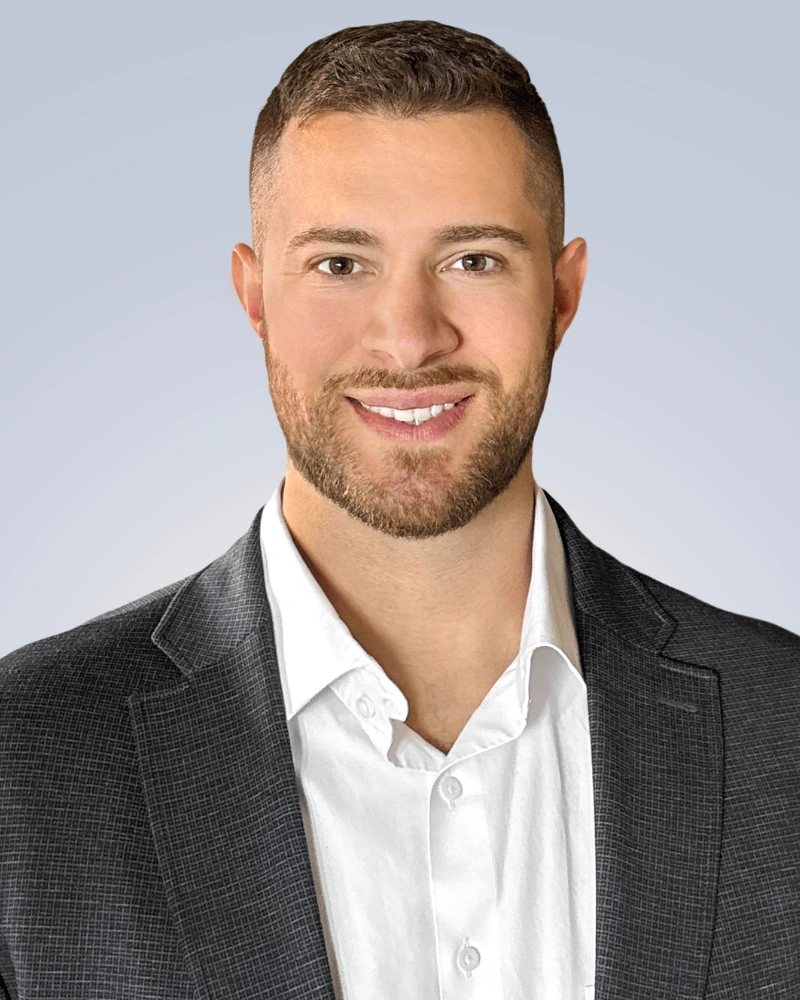
Should men wear makeup for headshots?
Yes, lightly. The goal for men is to neutralize shine and even out skin without adding the appearance of makeup. Three steps cover almost every situation:
- Translucent powder on the T-zone. Forehead, nose, chin. The single most impactful step for any man on camera, because shine reads as nervousness on a screen.
- Spot concealer. A pencil or sheer concealer on any active blemish, applied with a finger and blended outward. Do not cover undereye unless you have heavy shadows; men’s undereye concealer photographs as a brighter strip if applied evenly.
- Brow tame. Brush brows upward with a clear gel or trim any stray hair. No fill needed unless brows are very sparse.
No foundation. No bronzer. No lip color beyond balm. The point is to look like the version of you who is well rested, not the version of you who wore make
HMUA versus DIY: which makes sense for your headshot?
The right answer depends on the format of your shoot, the stakes, and your existing comfort with makeup. Here is a direct comparison:
| Option | What you get | Cost | Best for |
|---|---|---|---|
| In-studio shoot with on-site HMUA | Professional applies makeup in studio lighting, retouches between shots, full kit | $125–$300 per person add-on (HeadshotStudio.ai, 2025) | Executive portraits, actor headshots, anyone uncomfortable doing camera makeup themselves |
| Hire an HMUA before a virtual session | Pro applies makeup at your home or office, you travel to the camera | $150–$400 per session in major markets (Wolf Studio, 2026) | One-off high-stakes shoot, board portrait, IPO collateral |
| DIY at home before a virtual session | You apply makeup with this guide; live photographer flags issues over phone in real time | $0 incremental on top of session | Team rollouts, LinkedIn refreshes, anyone confident with their everyday look |
| Capturely team session | Live photographer on phone directs the shoot; multiple edited options delivered in 24 hours; your makeup is DIY with our shoot-day guide | $35 individual; teams save up to 45 percent (Capturely) | Distributed teams, HR-led headshot programs, anyone who does not want to leave their office |
For most professionals doing a single-person LinkedIn refresh or a team rollout, DIY plus a directed virtual session is the right call. The photographer-led correction in real time is what closes the quality gap, because a small makeup miss caught in the first 30 seconds is fixable, and a small makeup miss discovered three days later in delivery is a reshoot.
How do you apply makeup for a virtual or at-home headshot?
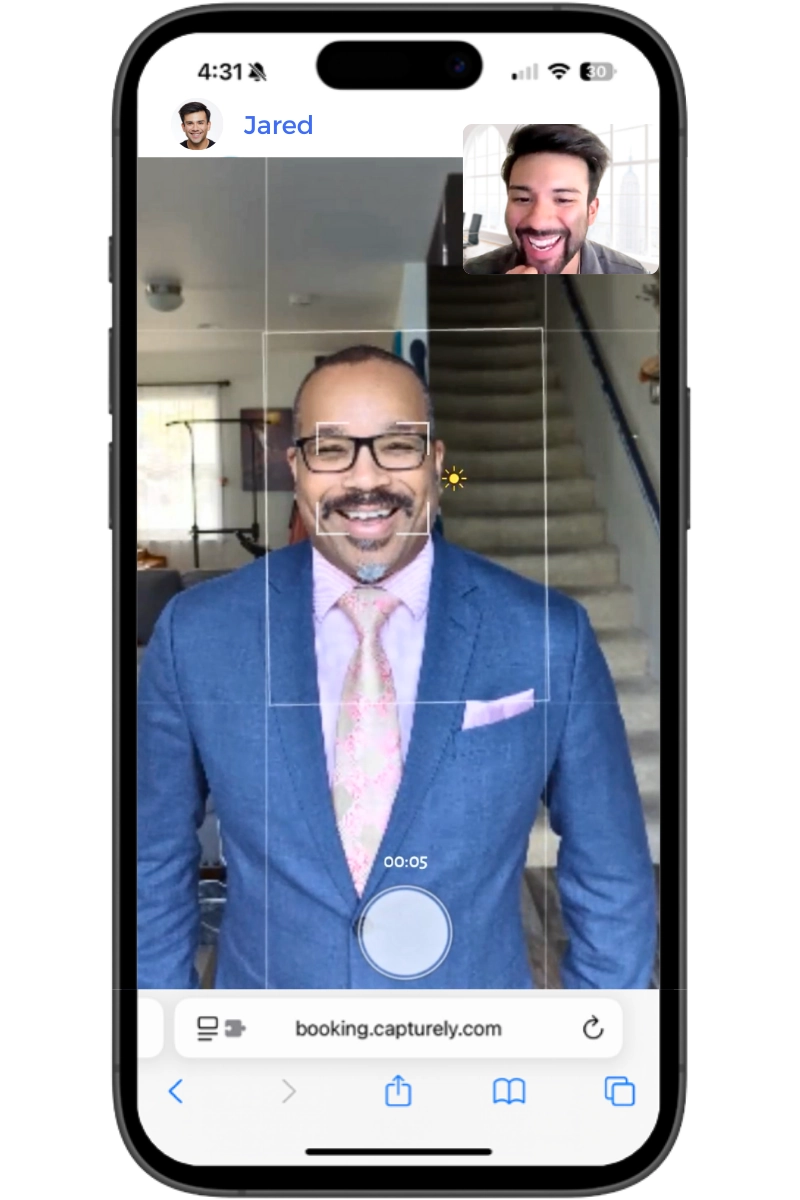
Virtual headshots are different from in-person studio shoots because your application setup is your own bathroom or office, not a controlled HMUA station. The light you apply your makeup in needs to match the light you will photograph in, or the look that read “balanced” at the vanity will read “orange” or “ghostly” on camera.
Five rules for at-home makeup before a Capturely-style session:
- Apply makeup in window light if you can. Daylight is the most honest mirror. Sit facing a north-facing window, do your makeup, then move to your shoot spot.
- Test on the phone you will use for the shoot. Front-facing camera, normal mode, no filters. Look for shine on the T-zone, sparse-looking brows, lip color that disappears, and any color demarcation along the jawline.
- Bring blotting papers and translucent powder to the shoot. A 10-minute Capturely session is long enough to get shiny under ring lighting. Have both within reach.
- Pull hair away from the face for the makeup test, then style as you intend. Hair often covers a foundation line. You want to see what the photo will see.
- Skip new shimmer products. Ring lights and the small built-in lights most virtual shoots use are flatter than studio lighting, and they make shimmer read as oil more aggressively than studio strobes do.
Our guide on how to prep for your headshot session covers the non-makeup side: outfit, hair, water, glasses, and the 15 minutes before the photographer dials in. Pair that with this guide and the gap between “mirror you” and “camera you” almost closes.
For broader wardrobe and color guidance to pair with your makeup, see our what to wear for professional headshots guide and the professional headshots for women walkthrough, which both touch on color choices that play well with the makeup directions above.
Refresh your team’s headshots without anyone leaving their desk. Capturely runs a 10-minute live-directed session from each employee’s phone, delivers multiple edited options in 24 hours, and includes a shoot-day prep guide so makeup, hair, and outfit are dialed in before the camera turns on. Talk to our team →

What if you do not normally wear makeup?
You do not need to start now. The lightest defensible look for a headshot is: tinted moisturizer or sheer foundation matched to neck, translucent powder on the T-zone, mascara on top lashes only, a brow gel, and a tinted lip balm one shade deeper than your natural lip. That total kit costs under $80 retail, takes seven minutes, and reads as “polished” on camera without reading as “made up.”
The reason this works is the same reason heavy makeup fails on camera: photo perception rewards small calibrations more than dramatic changes. A polished headshot is mostly the same face, with the parts the camera flattens nudged back to where the eye actually sees them.
Frequently Asked Questions
Should I get a professional makeup artist for my headshots?
It depends on the stakes and your comfort level. For a single executive portrait, a board photo, or any shoot where one image will be used for years, an HMUA add-on of $125 to $300 is worth it. For most team rollouts and LinkedIn refreshes, applying makeup yourself before a directed virtual session produces a strong result because the photographer can flag and correct issues live over your phone before the shoot ends.
Do men need makeup for headshots?
Yes, lightly. Translucent powder on the T-zone is the single most useful step for almost every man on camera, because shine reads as nervousness on a screen. Add spot concealer for any active blemish and a clear brow gel. No foundation, no bronzer, no lip color. The goal is to look well rested, not to look like you wore makeup.
Can I wear my normal everyday makeup for a headshot?
Usually no, because cameras desaturate color and exaggerate texture. Everyday makeup tends to look about 30 percent softer in photos than in person (Faithful Photography, 2021), so the look that reads polished in the mirror often reads tired on camera. Apply slightly more pigment than feels natural on lips, blush, and brows, switch to a matte finish, and skip shimmer or highlighter.
What lipstick color is best for a headshot?
Pick a satin or matte lip one shade deeper than your natural lip. Fair complexions tend to photograph best in soft rose or rosy-mauve, medium and olive in warm rose, brick, or caramel nude, and deep complexions in deep berry, brick red, plum, or chocolate nude. Avoid high-gloss, which catches light and reads as wet rather than polished.
Should I avoid SPF in my makeup on shoot day?
Yes. Products with SPF contain titanium dioxide or zinc oxide, which reflect light and cause a white cast in photos, especially under flash. Apply sunscreen 30 minutes before makeup if you want UV protection, then use SPF-free foundation, primer, and powder for the shoot itself.
How long before my headshot should I stop using retinol and acids?
Stop strong actives like retinol, glycolic acid, and salicylic acid 48 hours before the shoot. They can leave skin slightly red or flaky, which exaggerates under photo lighting. Switch to gentle hydration only for the final two days. Save any new product introductions for at least three days before the shoot, so your skin has time to react predictably.
How much does it cost to hire a makeup artist for a headshot?
Professional makeup for headshots typically runs $125 to $300 per person as a studio add-on (HeadshotStudio, 2025), or $150 to $400 for an HMUA who travels to your home or office for a virtual shoot (Wolf Studio, 2026). For more on the broader cost picture, see our professional headshot cost guide.
What makeup should I bring with me to the shoot?
Pack a touch-up kit: blotting papers, translucent powder, the exact lip color you applied, a small mirror, and the concealer you used. A 10-minute session is long enough to get shiny under ring lighting, and you want to be able to dab the T-zone between angles without smudging the rest of the look. Skip new product. Bring only what you already used during your morning application.