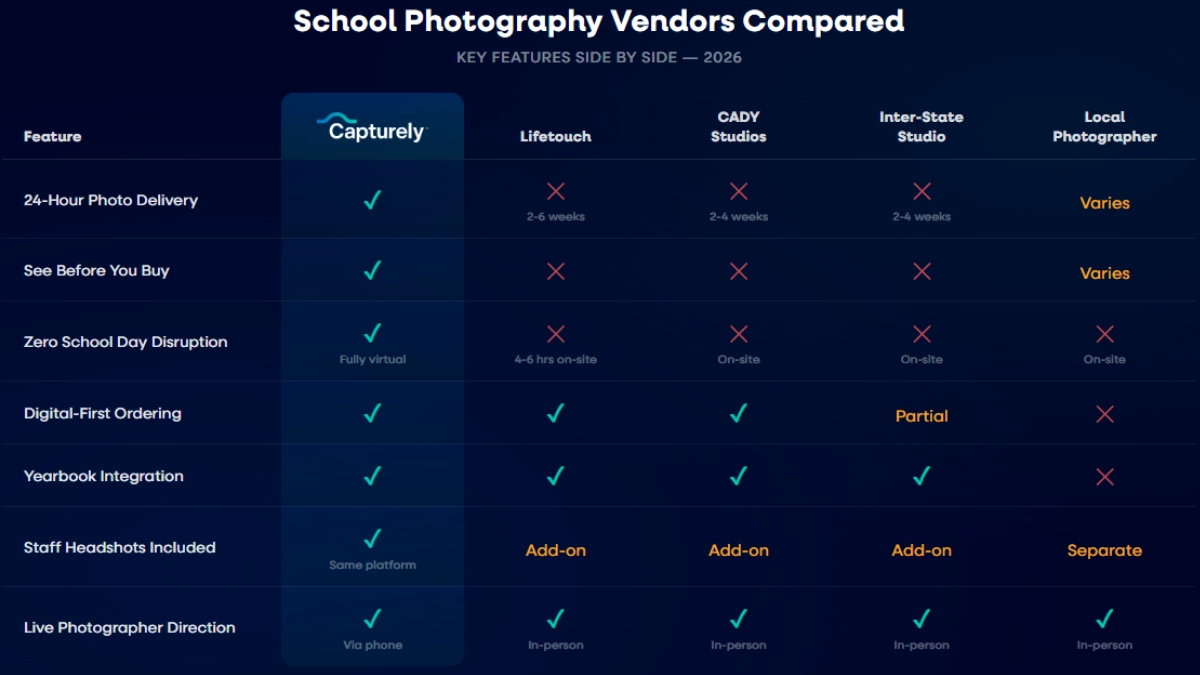
The best Lifetouch yearbook alternatives for 2026 fall into two groups. Yearbook publishers like Jostens, Walsworth, Treering, and Pictavo design and print the book. School photography vendors like Capturely, CADY, and Inter-State Studio supply the portraits inside it. Most districts leaving Lifetouch this year are switching both at once, and Capturely is the only fully virtual photo option that exports cleanly into any yearbook platform.
Last updated: May 2026 · Written by Brian Confer, Co-founder at Capturely
The Lifetouch crisis that began in February 2026 has matured. The panic phase ended in March. What replaced it is a procurement phase. Districts that paused contracts are now writing RFPs, taking vendor demos, and trying to figure out whether to switch the yearbook contract, the photography contract, or both. This guide is for the administrator who already decided to look at alternatives and now needs the actual list, the actual tradeoffs, and the actual playbook for switching without missing this year’s book.
Why Are Schools Leaving Lifetouch in 2026?
The trigger was the February 2026 social media wave linking Lifetouch’s ownership chain (Shutterfly, then Apollo Global Management) to the Jeffrey Epstein files through Apollo’s former CEO Leon Black. Lifetouch is not named in those files and there is no evidence of any actual misuse of student images. Lifetouch CEO Ken Murphy issued a public statement on February 9, 2026, saying that “when Lifetouch photographers take your student’s picture, that image is safeguarded for families and schools, only, with no exceptions” (Lifetouch CEO statement, 2026).
The statement did not stop the cancellations. By early March 2026, Education Week documented at least ten districts across four states that paused, opted families out of, or fully terminated their Lifetouch contracts (Education Week, 2026):
- Mount Pleasant Area School District (Pennsylvania) terminated outright.
- Malakoff ISD (Texas) moved photography in-house.
- Harrison County Schools (Kentucky) removed Lifetouch from approved vendors.
- Laurel County Schools (Kentucky) and Prairie Grove Schools (Arkansas) added formal parent opt-outs.
- Danbury Public Schools (Connecticut) paused all use pending review.
- Wake County Public Schools (North Carolina) opened school-level reevaluations.
- Weld County School District 8 (Colorado) terminated the contract on February 19, 2026, citing an “unrepairable breach of trust” in a public letter to families (Weld 8, 2026).
- Eight East Texas ISDs (Athens, Kemp, Kilgore, Malakoff, Cross Roads, Van, Edgewood, Winnsboro) ended their partnerships (KNUE, 2026).
“We felt strongly that moving in a different direction would be the most prudent decision and enable our families to maintain absolute confidence in the services and vendors we offer.”
According to Timothy M. Gabauer, Superintendent of Mount Pleasant Area School District, in a February 2026 letter to families announcing the termination (TribLive, 2026).
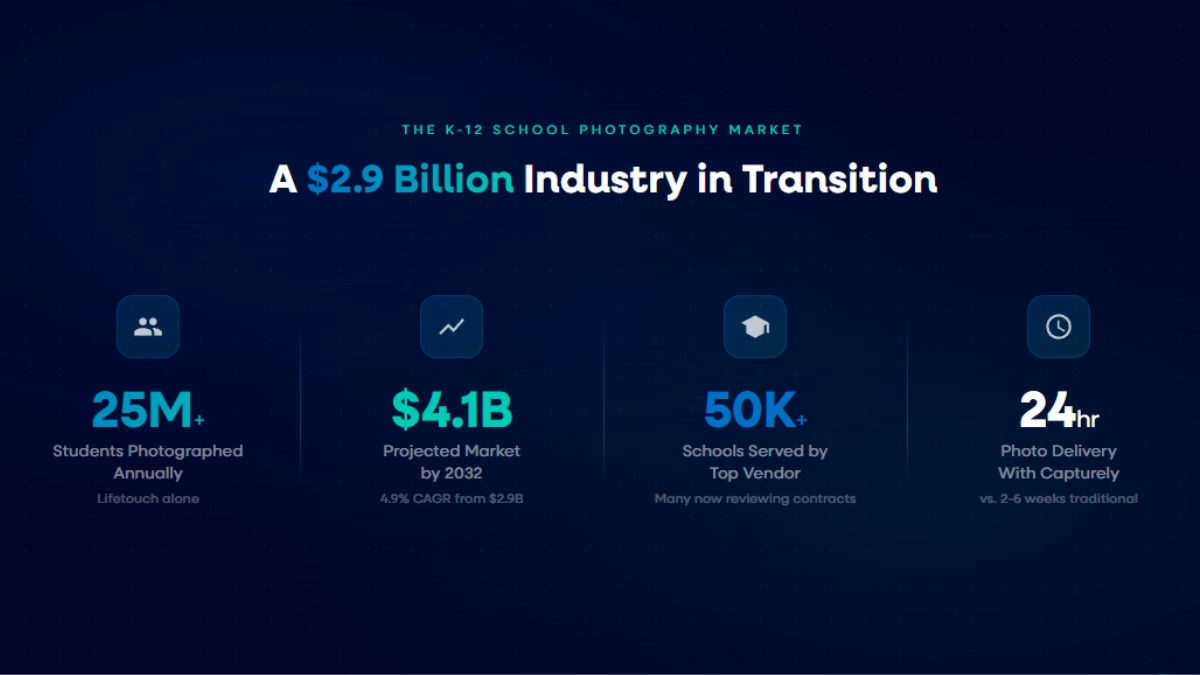
Three things are true at once. Lifetouch has not been shown to have done anything wrong. Districts are still leaving. And the conditions that make the situation hard to defend (a private-equity owner with a public reputational liability, a single national vendor handling 25 million students at 50,000 schools per its own FAQ, and no clear AI training disclosure language in most vendor contracts) are not going to resolve themselves before next school year’s contracts are signed (Lifetouch FAQ, 2026). That is the entire reason the alternatives list below exists.
There is also a structural shift independent of the controversy. In August 2025, CADY Studios announced an acquisition of Lifetouch’s high school photography accounts in select Mid-Atlantic, Southeast, and Texas markets, with the transition completing in summer 2026 (BusinessWire, 2025). That deal alone has put roughly a thousand high school photography programs into transition before the 2026 controversy added urgency.
What Should You Look For in a Lifetouch Yearbook Alternative?
Most yearbook RFPs from 2018 to 2023 were built around price and turnaround. Both still matter, but the evaluation criteria that districts are adding in 2026 fall into four newer buckets. Cape Henlopen School District in Delaware made these explicit in its March 2026 Request for Information, which is the cleanest public RFI template available right now.
- Ownership transparency. Is the vendor independent, family-owned, public, or private-equity owned? If PE-owned, what is the parent company’s reputational exposure? Districts are now asking this in writing.
- Explicit AI training and biometrics disclosure. Does the vendor’s privacy policy say in plain language whether student photos are used to train AI models, facial recognition, or other biometric systems? Most yearbook vendors are silent on this. The ones with explicit “no AI training” language have a real competitive moat in 2026.
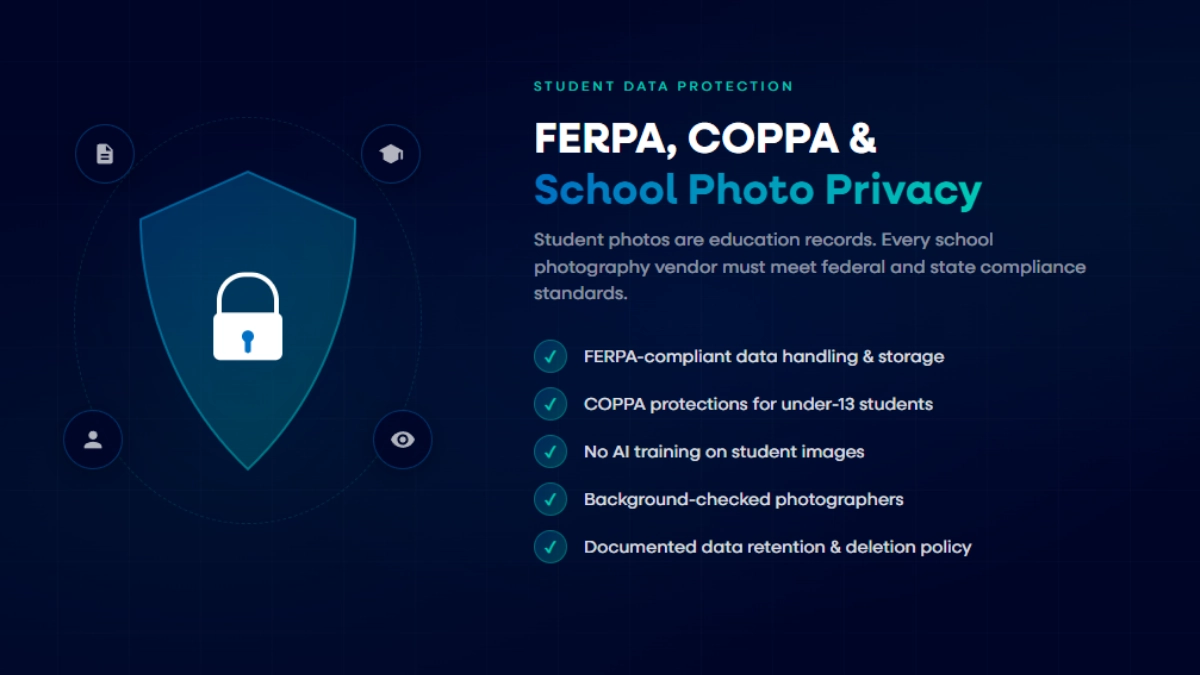
- FERPA retention period and parental deletion rights. The U.S. Department of Education classifies student photos as education records under FERPA when an educational agency maintains them (U.S. Department of Education, 2024). Vendors should disclose a maximum retention period and a clear parent process for early deletion. Our FERPA and school photography guide covers the compliance baseline.
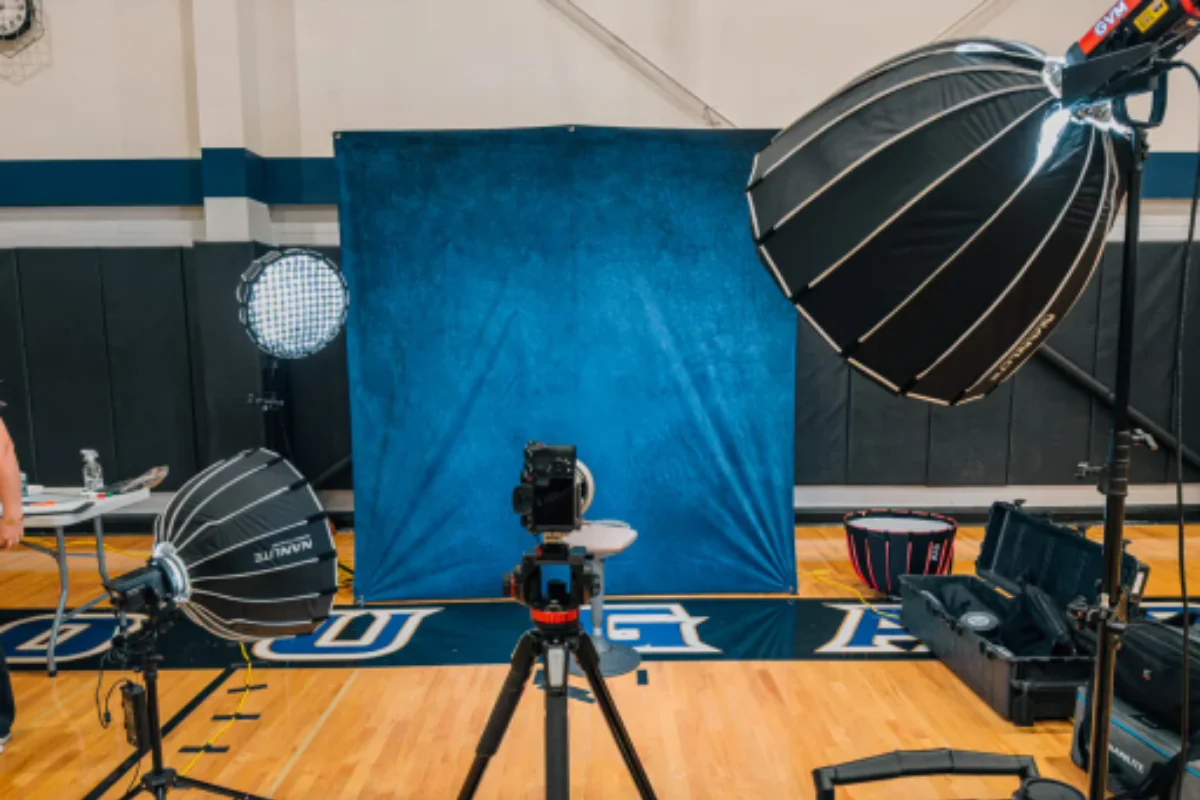
- School day disruption. The traditional model blocks a gym or multipurpose room for an entire day, pulls every class for 15 to 30 minutes, and leaves staff coordinating queues, retakes, and absentees. Modern alternatives reduce or eliminate this entirely.
Traditional buyer criteria (delivery speed, ordering experience, parent participation rate, commission rate, SIS and yearbook platform integration) all still apply. Our best school photography companies guide covers those in depth. The four criteria above are what is new for 2026.
The 7 Best Lifetouch Yearbook Alternatives for 2026
This list mixes two product categories on purpose. Yearbook publishers (Jostens, Walsworth, Treering, Pictavo) design and print the book itself. School photography vendors (Capturely, CADY, Inter-State Studio) supply the portraits that go into the book. Most schools need both, and most modern yearbook platforms accept portraits from any vendor that ships PSPA-formatted files. So the practical Lifetouch alternative decision is usually two decisions: who shoots the photos, and who lays out the book.
1. Capturely (Photography, Virtual)
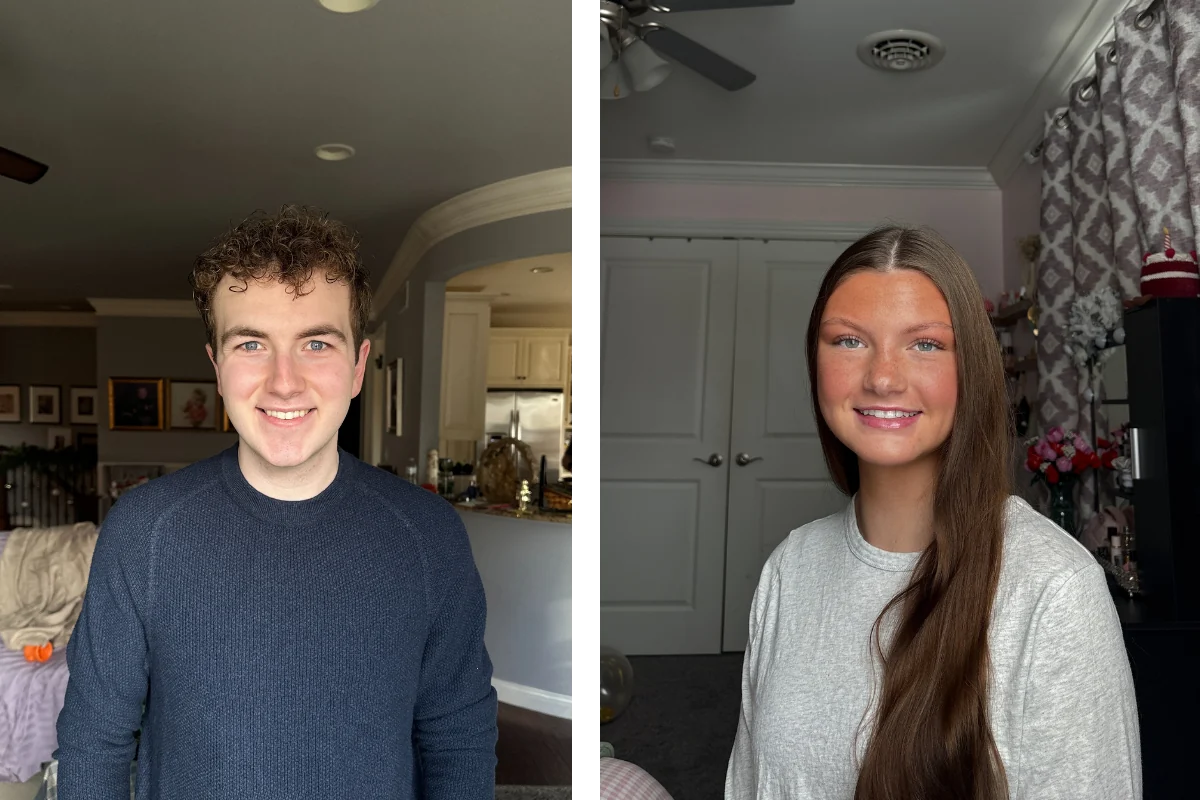
Capturely is the only fully virtual school photography vendor on this list. Instead of sending a photographer to your campus, Capturely sends a session link to each family. Parents open the link on a phone at the time they choose, a live professional Capturely photographer joins the call, the photographer directs the session in real time using the phone’s rear camera (36 to 48 megapixels), and three professionally retouched images are delivered within 24 hours. No on-site day, no blocked gym, and no pulled classes.
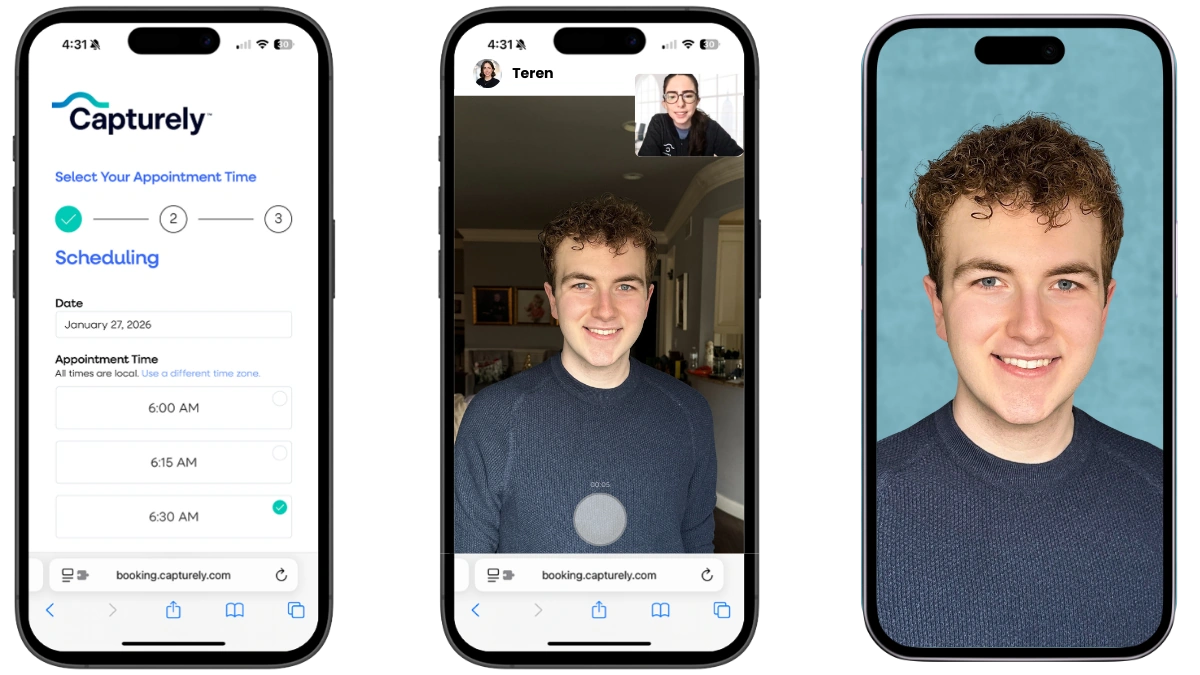
For yearbook purposes, Capturely exports portrait files directly into Jostens, Walsworth, Treering, and Entourage platforms using the standard PSPA index format (portrait JPEGs plus a tab-delimited file linking each filename to student ID, grade, and homeroom). The school keeps its existing yearbook software. Capturely just replaces the photo source. For background on the at-home virtual model, see our guide to virtual school photography.
Ownership: Independent, founder-led. No private equity, no parent company.
AI training disclosure: Student photos are not used to train any AI model.
Photo modality: Fully virtual. No on-site day, ever.
Delivery: 24 hours for retouched portraits.
School disruption: Zero. The school distributes one link.
Pricing model: Parent-pay portrait packages with see-before-you-buy galleries. Schools earn commission. Pilot programs available at no cost.
Yearbook compatibility: Photo source only. Exports to any major yearbook platform.
This is the same platform that has delivered more than 100,000 professional headshots for companies like Google, Netflix, and McKinsey, with 765 plus reviews averaging 4.9 stars. The K-12 adaptation kept the model intact and changed the audience.
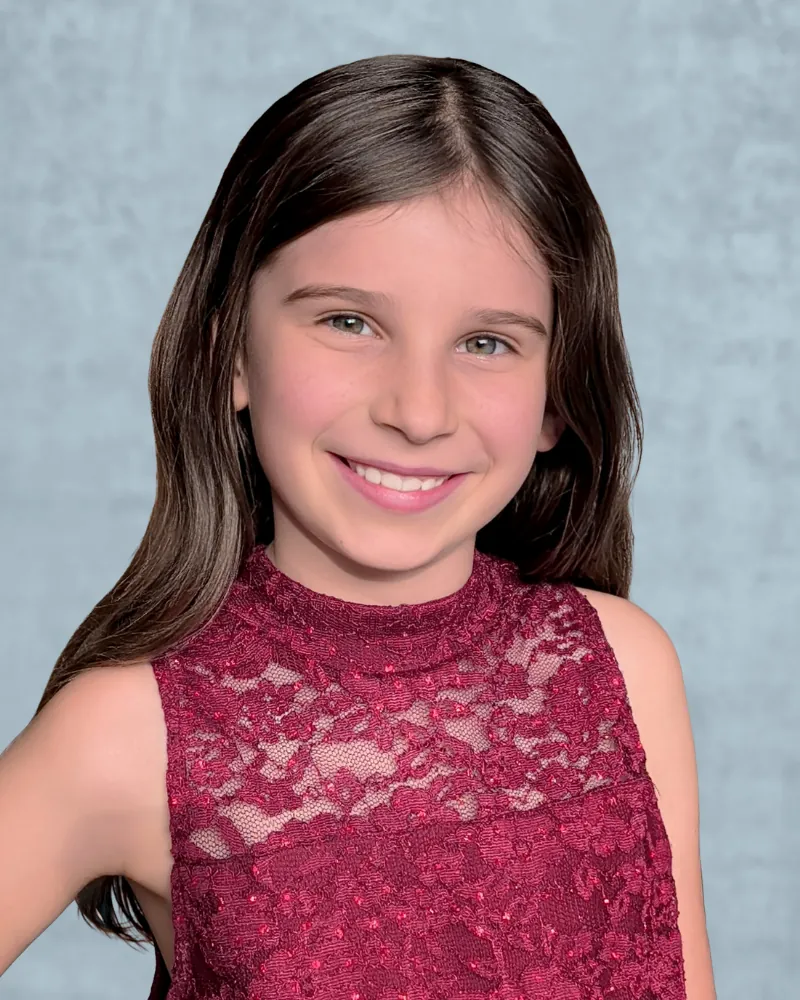
Considering a virtual photo model for next year? Capturely offers a free pilot for one grade so you and your families can see real results before signing anything. No contract, no cost. Request a free pilot →
2. Jostens (Yearbook Publisher)
Jostens is the largest yearbook publisher in the US and the most direct yearbook-only replacement for Lifetouch in many districts. Their platforms (Yearbook Avenue, Pictavo, Monarch) ingest portraits from any photographer that ships PSPA-formatted files, so a Jostens yearbook does not require a Jostens-affiliated photographer.
Jostens also has the strongest published “no AI training” language of any vendor on this list. Their public Security Commitment states: “We do not share or use student images to train data models, facial recognition software, or other biometric systems” (Jostens, 2026). That single sentence is now the benchmark every other vendor is being asked to match in RFPs.
Ownership: Platinum Equity (majority since 2018) and Koch Equity Development (minority since November 2024).
AI training disclosure: Explicit no, including biometrics.
Photo modality: Yearbook publishing primarily, with some on-site picture day capacity and a Yearbook+ portrait submission feature for self-uploaded photos.
Pricing model: Per-book retail with tiered early-bird discounts. School-specific contracts.
Yearbook compatibility: Native platform.
3. Walsworth Yearbooks (Yearbook Publisher)
Walsworth is the only major yearbook publisher still family-owned, now in its third and fourth generations of Walsworth leadership. Headquartered in Marceline, Missouri, founded in 1937. For districts that view the Lifetouch situation as primarily a private-equity-ownership problem, Walsworth is the cleanest opposite.
Ownership: Family-owned. Multi-generation Walsworth family leadership.
AI training disclosure: Not explicitly addressed in current public privacy materials. Worth asking in your RFP.
Photo modality: Yearbook printer only. Does not run a picture day photography division. Accepts portraits from any photographer.
Pricing model: Per-book plus accessory bundles through the Yearbook 360 and YearbookForever school stores.
Yearbook compatibility: Native platform.
4. Treering (Yearbook Publisher)
Treering is the only major option on this list where the school pays nothing and there is no contract. Parents purchase yearbooks directly. Treering prints only the books that are ordered (no minimums, no leftover inventory) and adapts each book with personalized pages per family. The platform is open to any photographer’s portrait files.
Ownership: Independent, venture-backed. No 2024 to 2026 acquisitions or change of control.
AI training disclosure: Treering uses AI internally for page-content safety analysis. No explicit pledge against training models on student content. Worth asking.
Photo modality: Yearbook platform only. Parents upload personal or portrait photos.
Pricing model: Per-book to parents. Optional fundraising markup (about 5 percent processing fee). Self-described “no contract, no minimums, no commitments, no fees to cancel.”
Yearbook compatibility: Native platform.
5. Pictavo (Yearbook Publisher)
Pictavo is the yearbook design platform owned by Varsity Brands (the parent of the former Herff Jones yearbook division). Pictavo is widely used as the design tool inside Herff Jones and Varsity bundled contracts. The platform itself ingests portraits from any source.
Ownership: Varsity Brands, owned by Bain Capital Private Equity (since 2018). Note: Herff Jones’ graduation business was sold to Atlas Holdings in October 2023. The yearbook business stayed with Varsity Brands.
AI training disclosure: Not explicitly addressed publicly.
Photo modality: Design platform. Does not operate a national picture day photography division.
Pricing model: Bundled into Herff Jones and Varsity printing contracts. No public per-school rate card.
Yearbook compatibility: Native platform.
6. CADY Studios (Photography, On-site)
CADY is the largest senior portrait photography company in the US, with 29 studios and roughly 1,500 photographers. In August 2025, CADY acquired Lifetouch’s high school photography accounts (including the Prestige senior portrait brand) in Mid-Atlantic, Southeast, and Texas markets, with the transition completing in summer 2026 (BusinessWire, 2025). For high schools in those regions, CADY is the default replacement on the photography side.
Ownership: Backed by Trivest Partners (private equity). Founder-led with Josh Cady as president.
AI training disclosure: Not explicitly addressed. Public policy references “analytical and statistical analysis tools.” Worth asking.
Photo modality: On-site picture day plus studio-based senior portraits. No virtual offering.
Pricing model: School contract based. Not publicly posted.
Yearbook compatibility: Photo source. Exports to standard platforms.
7. Inter-State Studio (Photography and Yearbooks)
Inter-State Studio is the largest family-owned school photography and yearbook publishing company in North America. Founded in 1933, headquartered in Sedalia, Missouri. They photograph approximately 17 million students annually across more than 30 states. Inter-State pioneered the integration of photography and yearbook publishing in the 1960s, which is still their strongest differentiator if your district wants a single vendor for both.
Inter-State has the most detailed retention disclosure of any vendor on this list: “We delete school photos after fulfilling our contractual obligations, typically three years, unless a parent makes a purchase.” Parents can request earlier deletion at issnet@inter-state.com (Inter-State Studio privacy policy, 2024). That is the benchmark every other vendor should be matching.
Ownership: Family-owned, third generation. Aric Snyder is President and CEO.
AI training disclosure: Not addressed in current privacy or security pages.
Photo modality: On-site, traditional. 26 company-owned plus 18 franchised locations.
Pricing model: Per-book project-based, 50 percent upfront or PO.
Yearbook compatibility: Native platform with a bundled photo and yearbook contract option.
Side-by-Side Comparison: 7 Lifetouch Yearbook Alternatives
| Vendor | Type | Ownership | AI Training Disclosure | Modality | School Pays | Switching Difficulty |
|---|---|---|---|---|---|---|
| Capturely | Photo | Independent, founder-led | Explicit no | Virtual (at home) | No (parent-pay) | Low (no on-site logistics to undo) |
| Jostens | Yearbook | Platinum Equity / Koch | Explicit no (incl. biometrics) | Yearbook publisher | No (parent-pay) | Medium (multi-year contracts common) |
| Walsworth | Yearbook | Family-owned | Not addressed | Yearbook publisher | No (parent-pay) | Medium |
| Treering | Yearbook | Independent, VC-backed | Internal AI use; no training pledge | Yearbook publisher | No (parent-pay) | Low (no contract, no minimums) |
| Pictavo | Yearbook | Bain Capital (Varsity) | Not addressed | Design platform | Bundled | Medium |
| CADY Studios | Photo | Trivest Partners (PE) | Not addressed | On-site | No (parent-pay) | Medium |
| Inter-State Studio | Both | Family-owned | Not addressed | On-site | No (parent-pay) | Medium |
The honest read: every vendor on this list except Capturely still requires either an on-site photography day or a separate photography vendor. If the goal is to eliminate the on-site disruption entirely, the photo half of the decision is Capturely. The yearbook half is whichever publisher fits your design, pricing, and ownership preferences.
How Do You Switch Yearbook Vendors Mid-Year Without Losing the Book?

Switching mid-year is possible but the calendar is unforgiving. Most yearbook publishers need 6 to 8 weeks between final page submission and ship date. To keep a traditional May delivery, a new vendor generally must be finalized by mid-November. Switching after November typically pushes the book to a summer or fall delayed delivery. Weld County School District 8 in Colorado terminated Lifetouch on February 19, 2026 and rerouted spring photography immediately (Weld 8, 2026). The pattern is workable when the decision is made fast.
The operational sequence that has worked for districts switching in early 2026:
- Pull the existing contract. Lifetouch yearbook agreements specify written modification by both parties (the standard clause: agreements “cannot be changed except in writing, signed by the School and Shutterfly”). Identify the cancellation clause, notice period, and any obligation for in-progress work.
- Notify the existing vendor in writing. Match the contract’s notification method exactly. Keep it short, factual, and on letterhead. Reference the clause you are invoking.
- Run a 3-vendor RFI in parallel. Cape Henlopen School District’s March 2026 RFI is a useable public template (Cape Henlopen, 2026). It explicitly weights vendor experience with K-12 public school districts at 20 percent.
- Confirm portrait file compatibility before signing. Verify that your incoming photo vendor exports the standard PSPA index format (portrait JPEGs plus a tab-delimited index linking filename to student ID, grade, and homeroom). Jostens publishes its PSPI Guidelines for exactly this case, and Memory Book by Jostens confirms in its public FAQ that it accepts portrait CDs from any photographer.
- Confirm SIS data export. Your incoming vendor needs to ingest your student roster (PowerSchool, Infinite Campus, Skyward, Tyler SIS) without manual entry.
- Pilot one grade or one building first. A two-week pilot validates the flow before the full district commits.
- Communicate to families in one round. See the section below.
Our guide on switching school photography vendors covers the operational sequence in more detail, including contract language and procurement office handoff.
How Do You Tell Parents the District Switched Yearbook Vendors?
The single most important thing is that families hear it from the district before they hear it from social media or a competing parent. A one-page letter is enough. Five elements:
- What is changing and when.
- Why (the district evaluated options and chose a vendor that better serves families). The reasoning should be specific without naming the prior vendor in a hostile tone.
- What parents gain (faster delivery, see-before-you-buy galleries, modern ordering portal, lower disruption to the school day).
- How privacy is handled (the new vendor’s FERPA agreement, retention policy, opt-out instructions).
- What happens to old accounts (any existing Shutterfly or mylifetouch.com login continues to work for previously purchased photos).
The National School Public Relations Association’s guidance to districts on this kind of communication, quoted by Education Week in March 2026:
“The approach should be guided by what will best maintain trust, whether through broad outreach to families or prepared responses to individual questions. The goal of any communication is to ensure families feel informed, respected, and confident that student well-being remains the district’s top priority.”
According to the National School Public Relations Association (NSPRA), quoted by Education Week in March 2026 (Education Week, 2026).
The Weld County School District 8 letter is the cleanest publicly available template. It runs about 200 words, names the action, states the rationale, confirms the operational change is immediate, and gives a single contact for questions. Anything more than one page usually waters down the message.
How Do You Write a 2026 RFP for Your Next Yearbook and Photo Vendor?
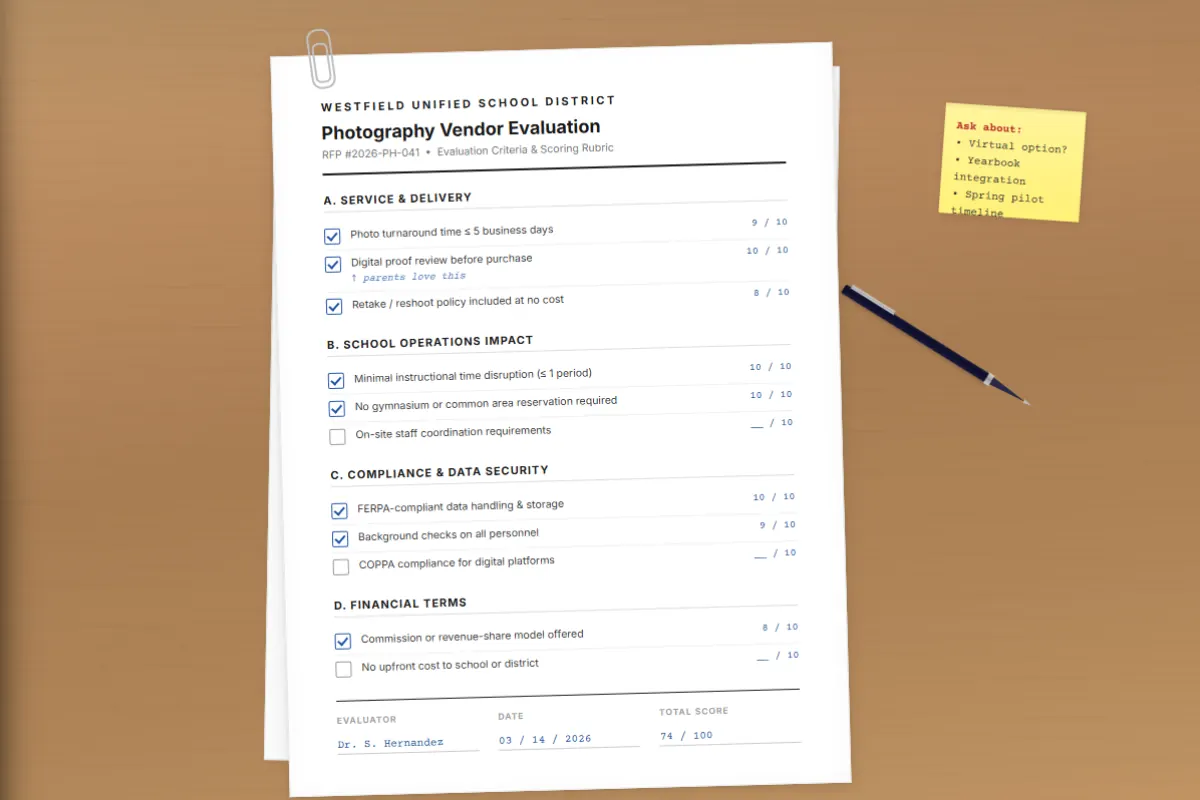
The Cape Henlopen RFI is the cleanest 2026 public template available. It scopes school portrait photography, digital portfolio management, online ordering, and SIS integration, and weights experience with K-12 public school districts at 20 percent. Adapt it for your district, add the four 2026 criteria above (ownership, AI training disclosure, FERPA retention, school day disruption), and require vendors to answer each in writing. Our 35-criteria RFP template includes a scoring rubric you can drop in.
Want to see how Capturely answers a 2026 K-12 RFP? We will respond to your district’s vendor questionnaire with written documentation on ownership, AI policy, FERPA, and operational model, and offer a free single-grade pilot before any commitment. Request your pilot →
Frequently Asked Questions
Is it too late to switch yearbook vendors mid-year?
Switching mid-year is possible but the calendar is unforgiving. Most yearbook publishers need 6 to 8 weeks between final page submission and ship date, so districts that want a traditional May delivery generally must finalize a new vendor by mid-November. Switching later usually pushes the book to a summer or fall delayed delivery. Weld County School District 8 in Colorado terminated Lifetouch in February 2026 and rerouted operations immediately, which shows the pattern is workable (Weld 8, 2026).
Will our existing yearbook software work with photos from a new vendor?
Yes, in nearly all cases. Major yearbook platforms (Jostens Yearbook Avenue, Pictavo, Walsworth Online Design, Treering, Memory Book by Jostens, Entourage) accept the industry-standard PSPA portrait export: a folder of JPEGs plus a tab-delimited index file linking each filename to student ID, grade, and homeroom. Jostens publishes its PSPI Guidelines specifically for outside photographers (Jostens, 2019). Lock-in between photo vendors and yearbook platforms is contractual, not technical.
How do we explain the change to parents?
Send a one-page letter with five elements: what is changing and when, why the district evaluated options and chose a different vendor, what parents gain (faster delivery, see-before-you-buy, modern ordering), how privacy is handled (FERPA terms, retention, opt-out), and what happens to existing Shutterfly or mylifetouch.com logins (they remain active for past photos). The Weld County School District 8 February 2026 termination letter is a strong real-world model (Weld 8, 2026).
Which Lifetouch alternative has the strongest AI training policy?
Jostens has the most explicit no-AI-training language of any major vendor in 2026. Their Security Commitment page states: “We do not share or use student images to train data models, facial recognition software, or other biometric systems” (Jostens, 2026). Capturely holds the same policy on the school-photography side. Most other yearbook and photography vendors are silent on AI training in their public privacy materials, which is now a reasonable RFP question.
Did Lifetouch sell its yearbook business to CADY?
No, not the yearbook business. In August 2025, CADY Studios acquired Lifetouch’s high school photography accounts, including the Prestige senior portrait brand, in select Mid-Atlantic, Southeast, and Texas markets (BusinessWire, 2025). The transition completes in summer 2026. Lifetouch continues to operate yearbook services for K through 12 across the rest of its book of business.
How long does Lifetouch keep student photos, and can we require deletion?
Lifetouch’s public privacy policy and FAQ do not specify a maximum retention period for student portraits and confirm that the company may share customer information with corporate affiliates including Shutterfly (Lifetouch, 2026). By comparison, Inter-State Studio publicly states that school photos are deleted after typical contractual obligations of three years unless a parent makes a purchase, with parents able to request earlier deletion (Inter-State Studio, 2024).
Is Capturely a Lifetouch yearbook replacement, or a photo replacement?
Capturely is a photo replacement, not a yearbook publisher. Capturely supplies professionally retouched student portraits delivered in 24 hours from a fully virtual at-home session, with no on-campus day required. Those portrait files export cleanly into any major yearbook platform (Jostens, Walsworth, Treering, Pictavo) using the standard PSPA index format. Districts typically pair Capturely as the photo source with whichever yearbook publisher they prefer.
What is the cleanest 2026 RFP template for school photography and yearbook vendors?
Cape Henlopen School District (Delaware) issued a public Request for Information on March 13, 2026, with responses due April 3 (Cape Henlopen, 2026). The RFI scopes portrait photography, digital portfolio management, online ordering, and SIS integration, and weights experience with K-12 public school districts at 20 percent. It is the cleanest publicly available 2026 template and can be adapted for any district.
Most Districts Will Replace Both Halves of the Lifetouch Contract
The hardest part of the 2026 Lifetouch situation is not picking the new vendor. It is convincing the procurement office, the IT director, the legal counsel, and the parent body that the new vendor answers all the questions the old one no longer does. The four criteria added this year (ownership transparency, explicit AI training disclosure, FERPA retention, school day disruption) are doing more work in 2026 RFPs than any of the traditional criteria. Vendors that already answer those questions in writing are getting picked. Vendors that stay silent are not.
Capturely is the only fully virtual photo vendor on this list, and the only one that pairs cleanly with any yearbook publisher you choose. The pilot is free, and the photography happens entirely from home. The 2026 conversation about school photography has shifted from “who can come to our gym” to “what do we actually need a vendor to do.” That shift was overdue.
Ready to see virtual school photography in action? Request a free single-grade pilot. Real photographers, 24-hour delivery, zero on-site day. Trusted by families and used by enterprise clients like Google and Netflix on the corporate side. Request your free pilot →