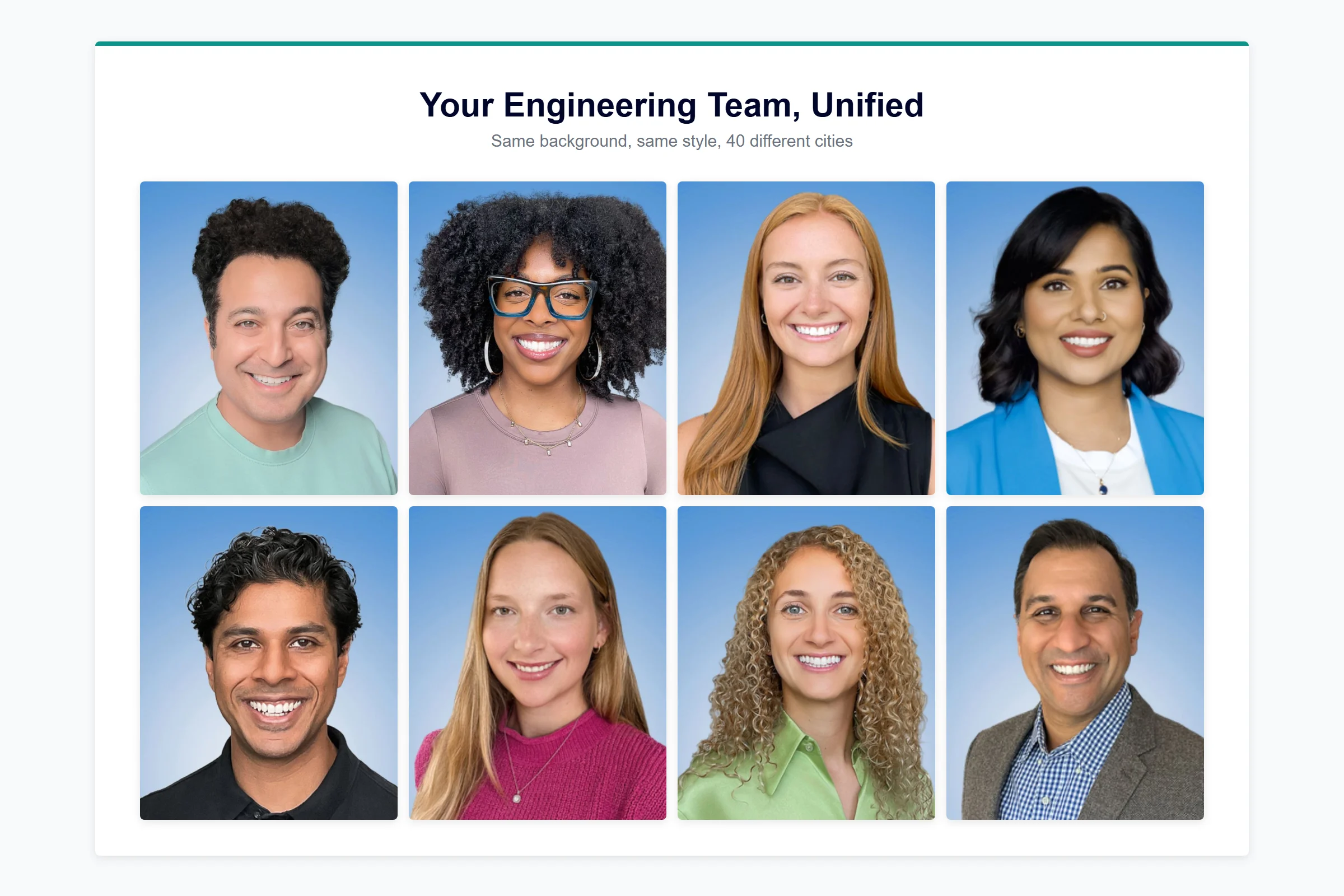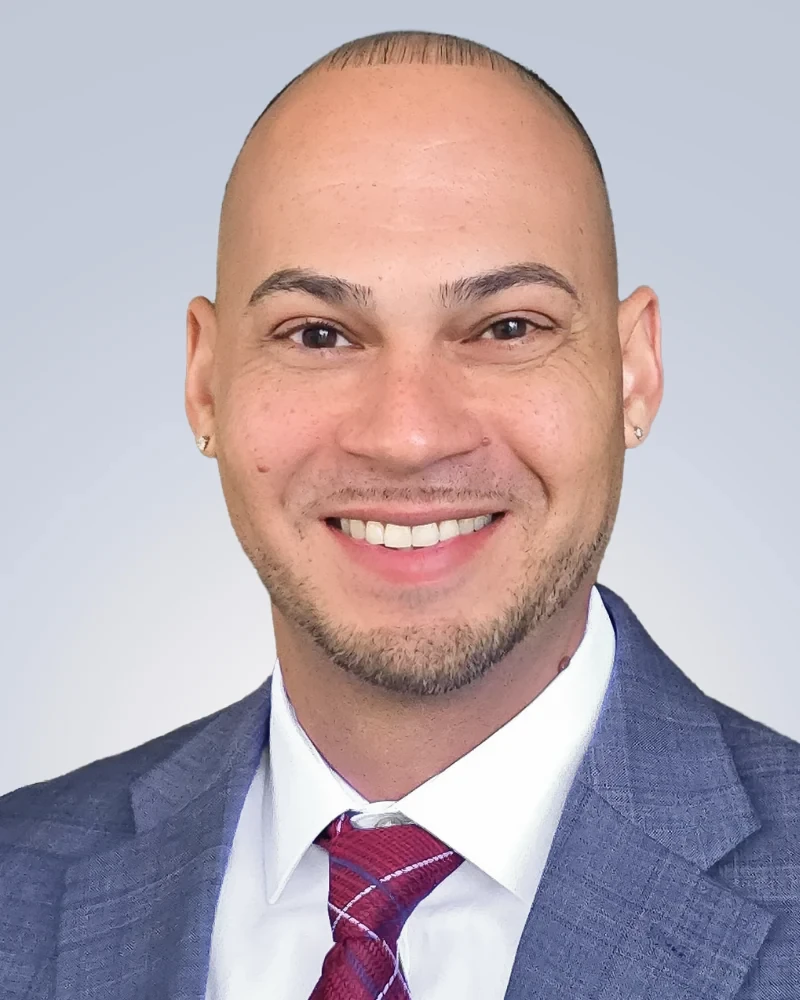
Dental headshots are professionally photographed portraits of dentists, hygienists, and support staff used on practice websites, Google Business Profiles, provider directories, and social media. In an industry where 52% of patients choose a provider with a professional photo and a 4-star rating over one with no photo and a 5-star rating (Healthgrades & The Health Management Academy, 2023), your team’s headshots are building—or breaking—patient trust around the clock. Capturely has delivered headshots to dental and healthcare teams at WellSpan Health, Schweiger Dermatology, Naran Neurology, and HCA Healthcare—here’s what effective dental practice headshots look like in 2026.
Last updated: March 2026
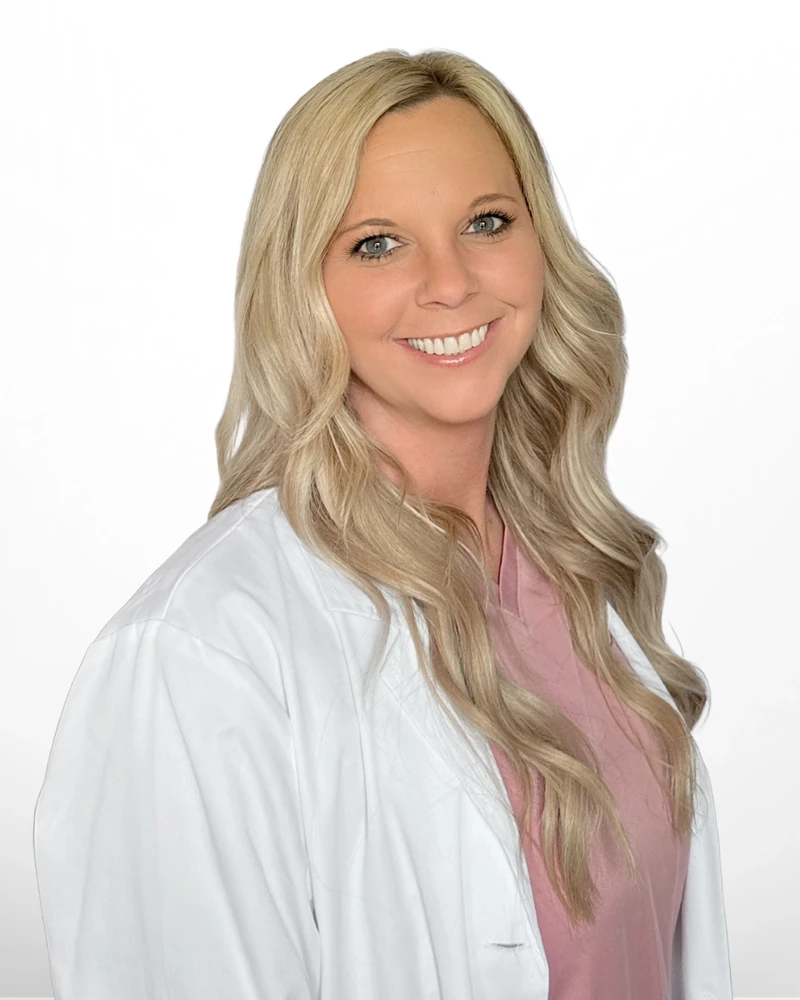
Why Do Dental Practices Need Professional Headshots?
Patients are nervous. About 36% of Americans experience dental anxiety (Appukuttan, Drug Healthcare and Patient Safety, 2016), and the first thing an anxious patient does before booking an appointment is research you online. Seventy-one percent of patients look up dentists before scheduling (2740 Consulting, 2025). They’re looking at your reviews, yes—but they’re also looking at your face.
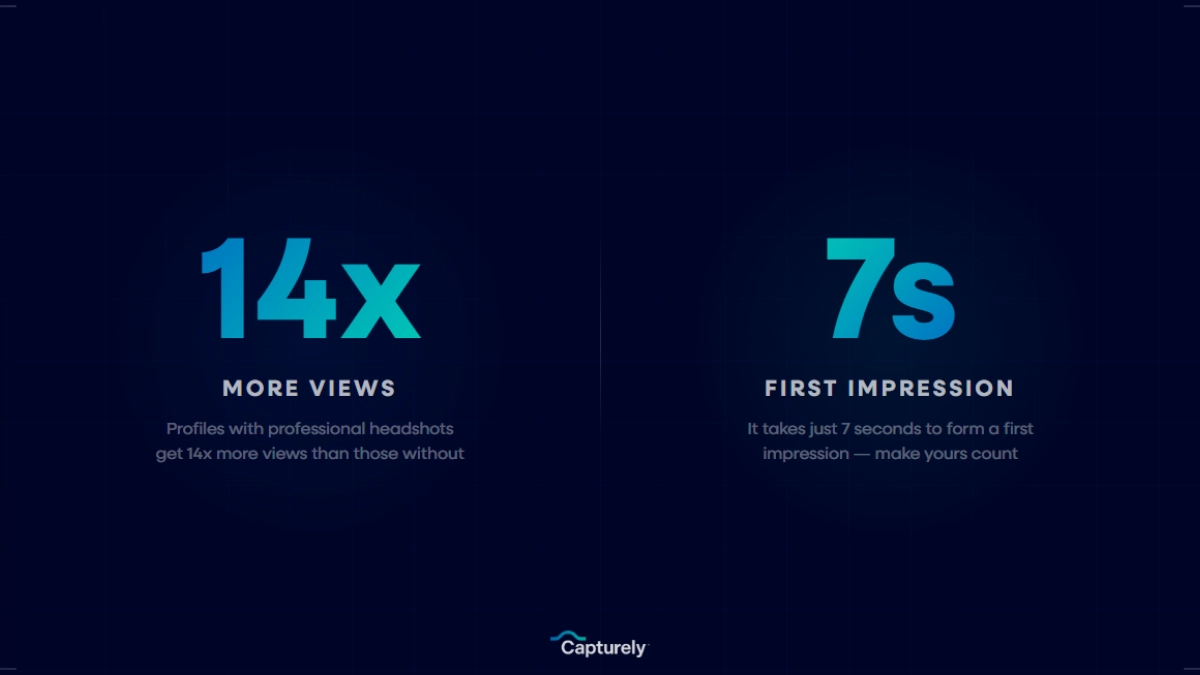
And the data on what they find there is striking. Providers with four or more photos on their profiles are 5.8x more likely to get a booking than providers with no photos (Zocdoc, 2024). Providers with photos get roughly 60% more patient interactions overall (Healthgrades, 2024). And the “Meet the Team” page is consistently the second most-visited page on dental websites, right behind the homepage (TNT Dental, 2024).
That last stat matters more than it seems. Patients aren’t clicking your team page out of idle curiosity. They’re deciding whether they trust you enough to sit in your chair with their mouth open. Ninety-two percent of healthcare seekers read a clinician’s bio before booking (Physicians Weekly, 2024), and 77% rely on visual cues—including the headshot—to build confidence in their choice.
As Fred Joyal, co-founder of 1-800-DENTIST and author of Everything is Marketing, puts it: “Consumers have the internet as a resource now… they’re doing their homework on everything they spend money on, so why would they not do the same when finding a new dentist?”
The ROI math is simple. Average patient acquisition cost for dental practices runs $150–$300 (Sixth City Marketing, 2024). Patient lifetime value is approximately $4,500 over seven years (Dr. Marketing, 2024). A professional headshot that converts even a handful of additional patients from your team page or Google listing pays for itself many times over. For more on the business case, see our ROI of professional team headshots analysis.
What Do Patients Look For in a Dentist’s Photo?
Patients evaluate a dentist’s headshot for three things—warmth, competence, and authenticity. The order matters because dental care is uniquely personal. Unlike choosing an accountant or a financial planner, choosing a dentist means choosing someone who will literally put their hands in your mouth. The photo needs to make that prospect feel less terrifying, not more.
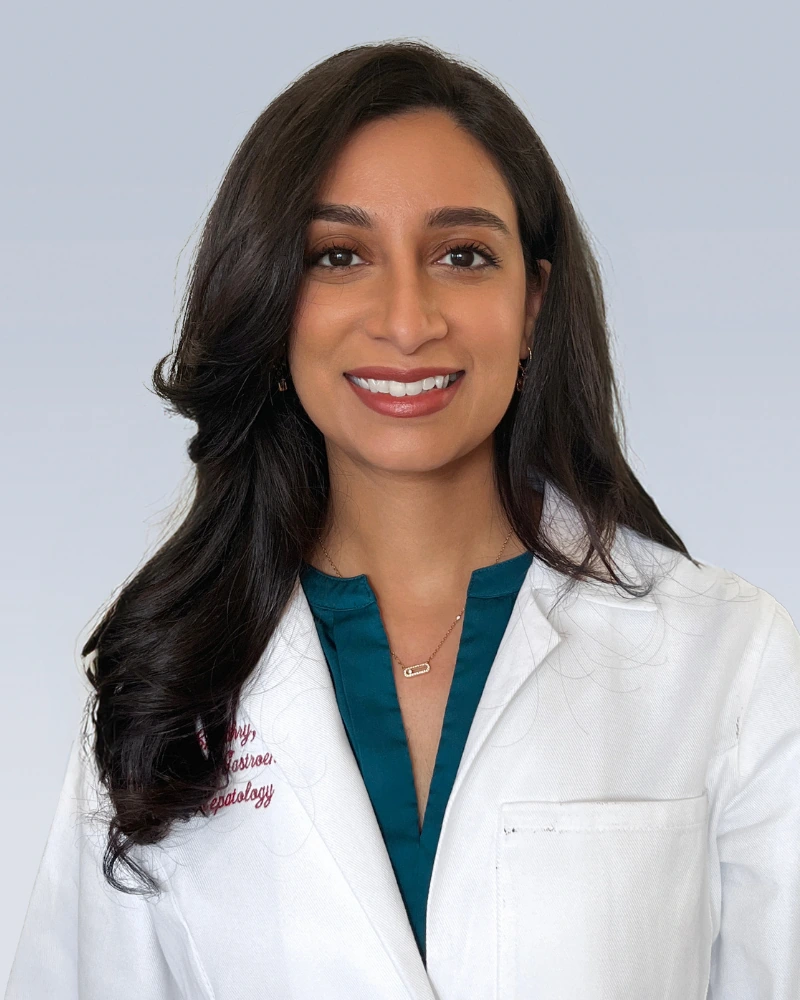
Warmth first. A genuine smile is non-negotiable. Not a forced grin—a relaxed, natural expression that says “I understand you’re nervous, and that’s okay.” PhotoFeeler’s analysis of 60,000+ profile photo ratings found that smiling with teeth increases likability by +1.35 on a normalized scale (PhotoFeeler, 2023). For a dental practice, likability isn’t vanity—it’s the difference between a patient who books and one who keeps scrolling.
Competence second. Clean grooming, professional attire, and composed posture all signal expertise. The same PhotoFeeler study found that formal dress increases perceived competence by +0.94. A patient needs to believe you know what you’re doing before they’ll let you near a drill.
Authenticity third. When patients arrive for their appointment and the person greeting them looks nothing like the photo on the website, the relationship starts with a credibility gap. This is why AI-generated headshots are especially problematic for dental practices—they create an expectation that doesn’t match reality. As one healthcare marketing director at a major health system described the psychology: “They’ve made an appointment and there’s some comfort in seeing—this is the person… I read their credentials and I felt comfortable… and here that person is… a little psychological ease comes in” (2025).
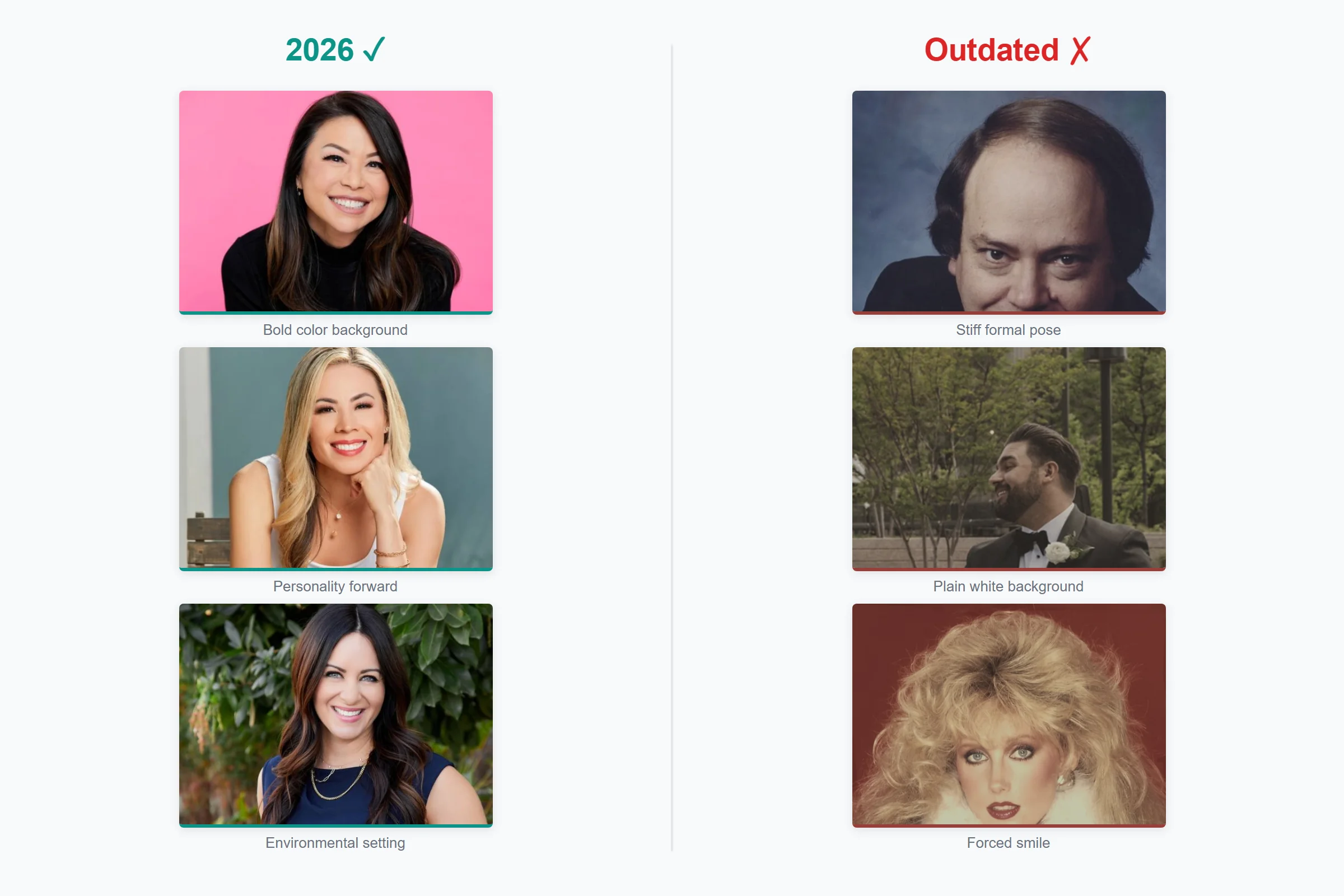
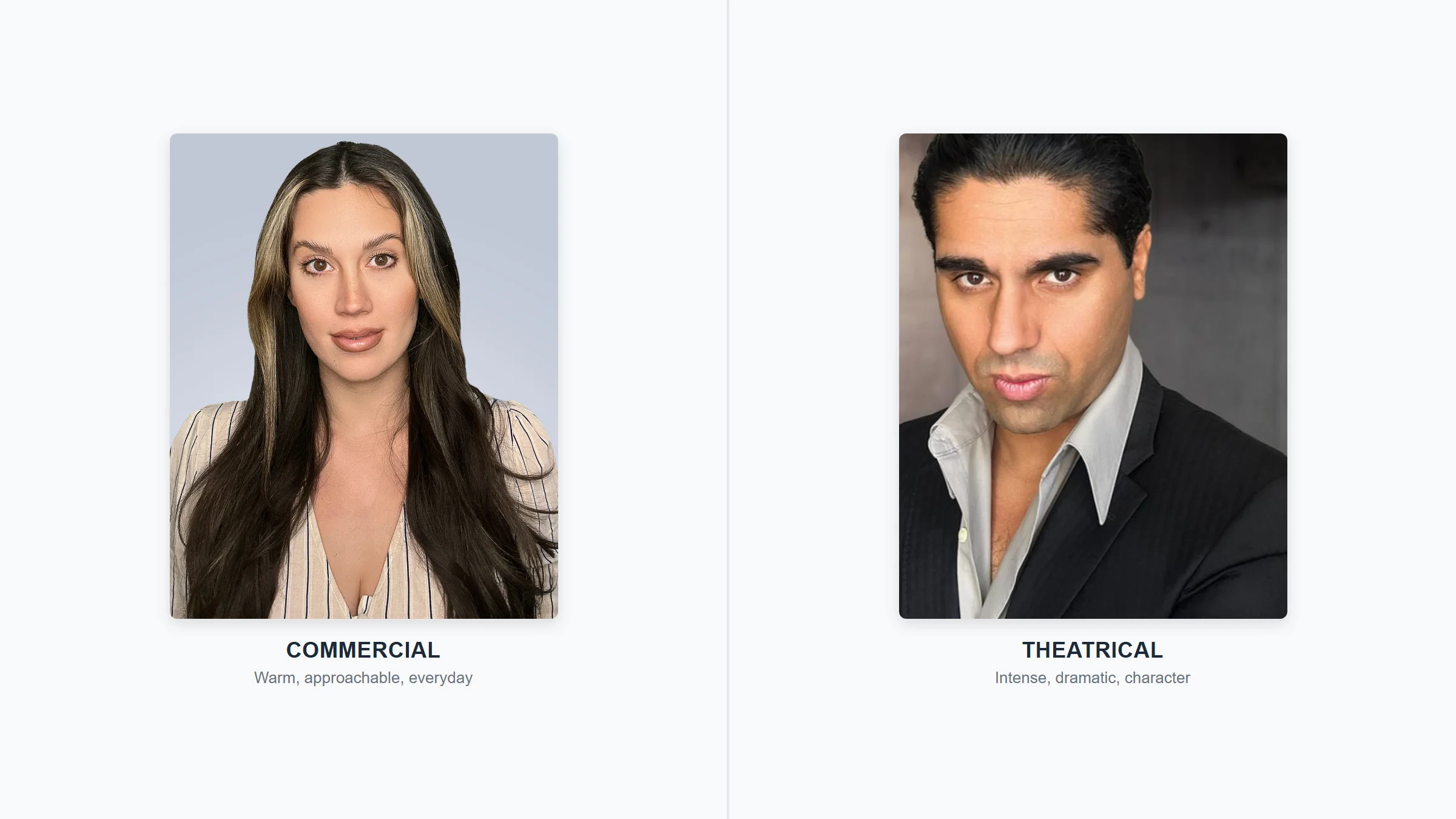
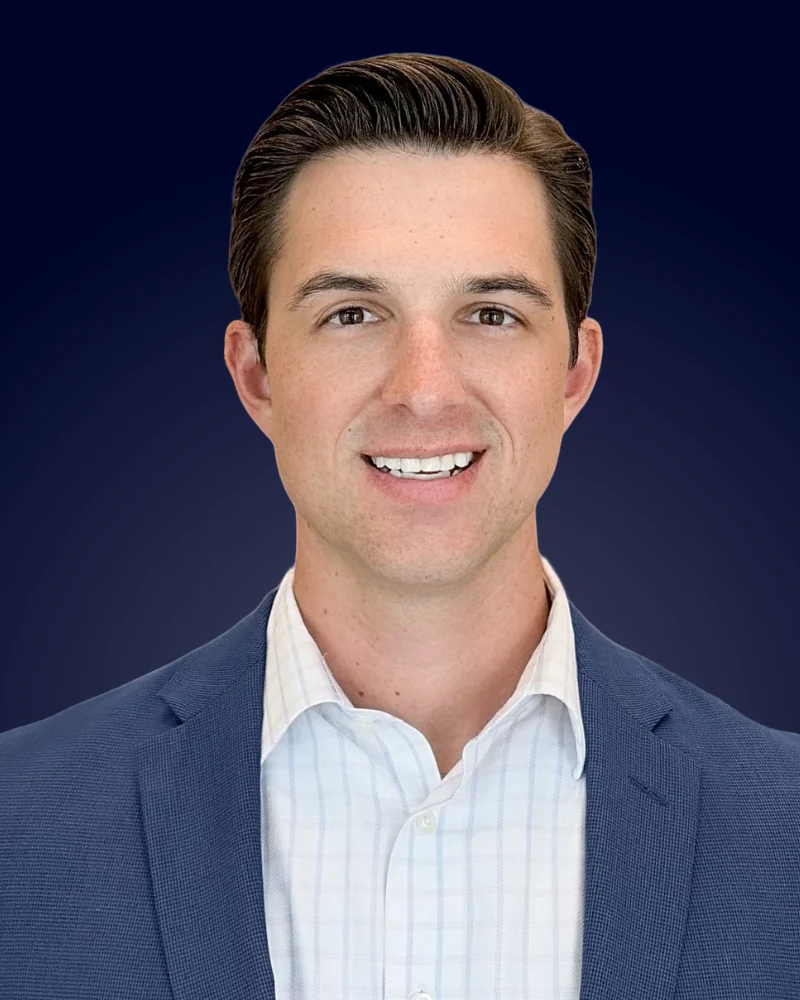
The trend in dental headshots for 2026 is what photographers call “warm authority”—approachable enough to reduce anxiety, polished enough to project clinical confidence. Not stiff. Not overly casual. The photo equivalent of a dentist who explains the procedure before starting it.
Dental Headshot Styles by Practice Type
Not every dental practice needs the same headshot. A pediatric office and a prosthodontics practice serve very different patients with very different emotional states.
| Practice Type | Recommended Style | Why It Works |
|---|---|---|
| General / Family Dentistry | Warm, approachable, clean background | Families with kids need to feel comfortable. A friendly face reduces the “I hate the dentist” reflex. |
| Pediatric Dentistry | Bright, friendly, relaxed expression | Parents are choosing for their children. They want to see someone patient and kind—not intimidating. |
| Cosmetic Dentistry | Polished, modern, lifestyle-adjacent | Cosmetic patients care about aesthetics. Your photo should reflect the standard you deliver. |
| Oral Surgery / Endodontics | Clinical authority, professional formality | Patients referred here are already anxious. Clinical confidence in the photo reassures. |
| Prosthodontics | Business formal, studio quality | High-investment procedures ($5K–$50K+). Patients expect gravitas from someone rebuilding their smile. |
| DSO / Multi-Brand Group | Standardized across all locations | Brand consistency matters when patients transfer between locations. Same background, same crop, same look. |
| Orthodontics | Modern, personality-forward | Younger patient demographic (teens, young adults). A bit of personality in the headshot connects better than corporate stiffness. |
The Scrubs vs. White Coat Question
This comes up in every dental headshot conversation. The answer depends on what you’re communicating:
- White coat: Projects authority and clinical expertise. Best for specialists, surgeons, and provider directory listings where patients are evaluating credentials.
- Scrubs: Projects accessibility and practical competence. Works well for general and pediatric practices. Choose clean, well-fitted, solid-color scrubs—avoid busy patterns or faded fabric.
- Business casual: Projects a modern, patient-friendly practice. Common for cosmetic dentists and practice owners who want to emphasize the relationship over the clinical setting.
The biggest mistake? Mixing styles on the same team page. One dentist in a suit, another in wrinkled scrubs, a third in a selfie from the break room. Inconsistency signals disorganization—the last impression you want before someone trusts you with their oral health. For complete wardrobe guidance, see our what to wear for professional headshots guide.
Professional headshots for your dental team. Capturely’s live photographers direct each 10-minute session in real time—coaching expression, posture, and lighting for the warm, confident look that builds patient trust. 3 edited images, 24-hour delivery. Get started →
Where Are Dental Headshots Used?
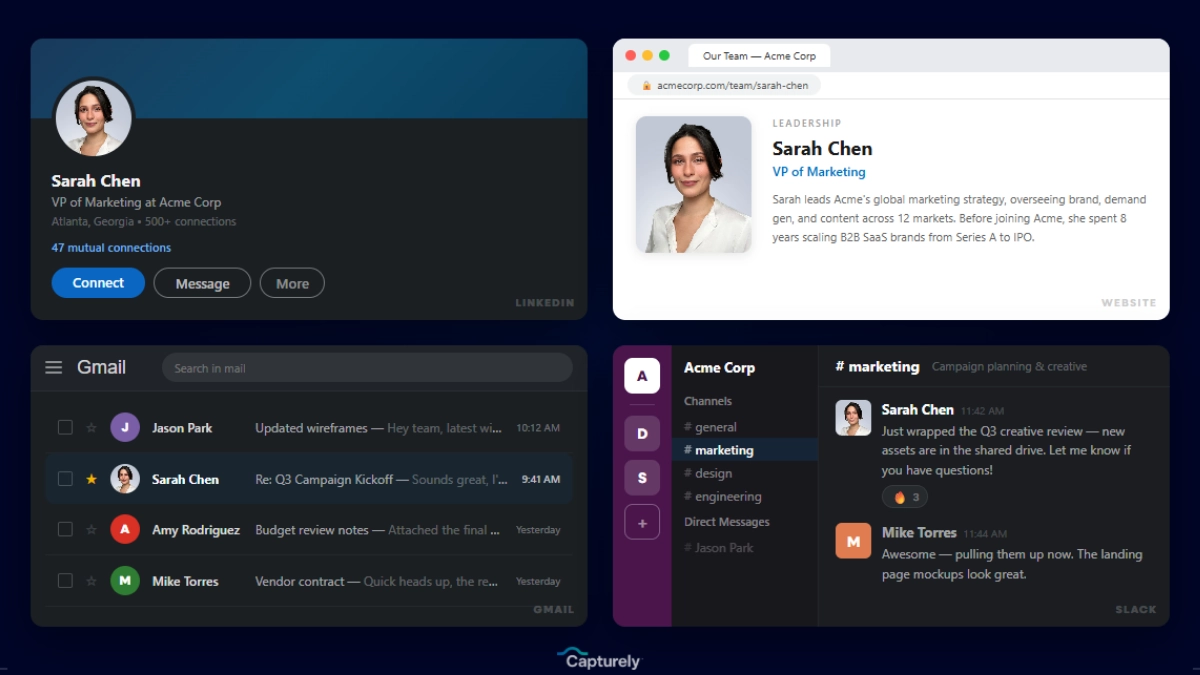
Your team’s headshots appear in more places than the practice website. Each one is a patient trust signal—and each one with a missing or outdated photo is a small crack in credibility.
| Platform | Why It Matters for Dental |
|---|---|
| Practice website / “Meet the Team” | The #2 most-visited page on dental websites. Patients check it before booking. Missing or stock photos erode trust immediately. |
| Google Business Profile | Listings with photos are 2x more likely to be considered reputable and get 35% more website clicks (BrightLocal, 2024). 42% of new patient leads come from local SEO (Sixth City Marketing, 2024). |
| Provider directories (Healthgrades, Zocdoc, WebMD) | 52% of patients choose a provider with a photo over a higher-rated one without. Dental-specific directories increasingly surface profile photos in search results. |
| Insurance network directories | Delta Dental, Cigna, Aetna, and MetLife provider finders all display headshots. In-network patients often browse photos when choosing among covered options. |
| Social media (Instagram, Facebook) | 41% of patients use social media to choose a provider (2740 Consulting, 2025). Team photos on social drive engagement and humanize the practice. |
| New patient welcome emails | Including provider headshots in pre-appointment communications reduces no-show anxiety. Patients arrive already knowing who to expect. |
| Referral materials and print | Postcards, brochures, in-office displays. Any material a patient sees before or during their visit benefits from a real, current face. |
For more on maximizing the return from every headshot placement, see our professional headshot examples gallery.
How to Coordinate Headshots Across Multiple Dental Offices
A solo practice with five team members can handle headshots with a local photographer in an afternoon. A group practice with three locations and 40 staff? That’s where it falls apart.
The coordination problem is uniquely painful in dentistry. Traditional photoshoots take three or more hours and require a non-production day with no patients (Pain-Free Dental Marketing, 2025). For a practice generating $2,000–$4,000 per day in production, shutting down for photos is a real revenue hit. Multiply that across three or four locations, and most multi-office practices just… don’t.
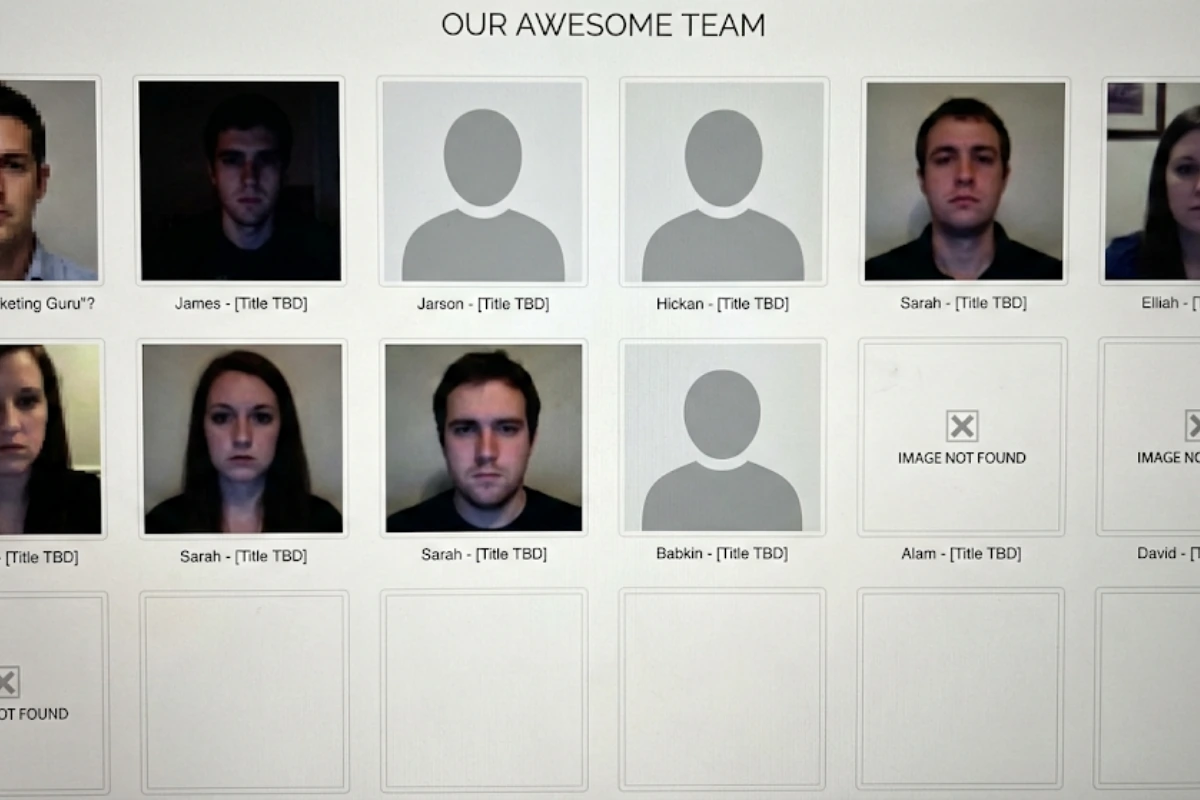
The result: team pages with a patchwork of professional headshots from 2019, iPhone selfies from last Tuesday, and placeholder silhouettes for anyone hired in the past year. Patients notice. Custom photos boost dental website visitor conversion by up to 95% compared to stock imagery (Remedo, 2025)—and patients “subconsciously notice when the same smiling model appears on multiple dental websites” (Connect the Doc, 2025).
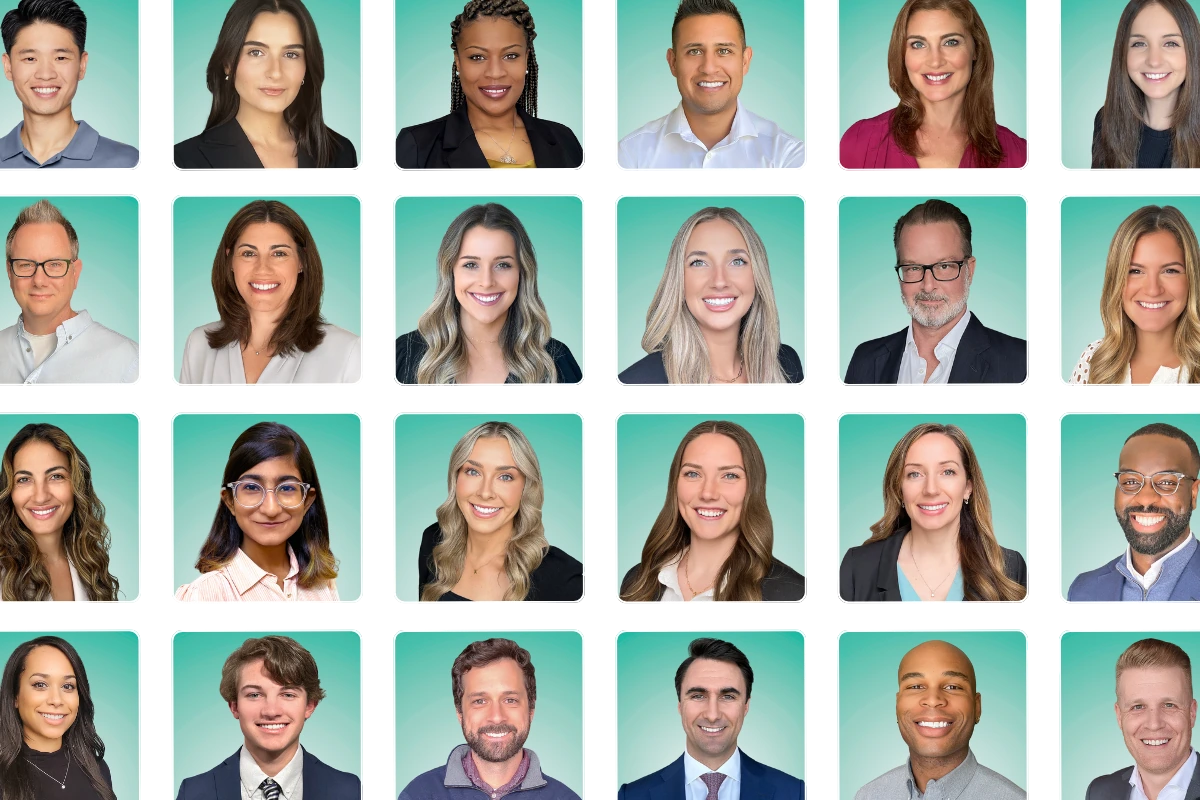
What consistency actually requires across multiple offices:
- Same background family. Not necessarily identical—but from the same palette. All neutral, all brand-matched, or all clinical white.
- Same crop and framing. Head-and-shoulders for every person. Mixed crops on a single team page signal disorganization.
- Same retouching standards. One provider with heavy skin smoothing next to another with no retouching creates a visual disconnect.
- Same lighting direction. Consistent light makes a grid of headshots look deliberate rather than assembled from random sources.
- Wardrobe coordination. Not a uniform, but a guideline—all white coats, all scrubs, or all business casual within the same formality band.
Lisa Cavallaro at WellSpan Health, a health system with an enormous geographic footprint, described the challenge: “I can’t even tell you. We get so many and some… our footprint is enormous. So at the moment, it’s a two and a half to three hour drive for some of the hospitals and you’ll get one priority—we need this one headshot and we need it fast. Do I really have to send a human three hours out and three hours back? That’s so wildly crazy” (2025).
For the full organizational playbook on managing headshots at scale, see our HR guide to team headshot programs.
The DSO Challenge: Consistent Photos Across 50+ Locations
If multi-office coordination is hard, Dental Service Organization scale makes it nearly impossible with traditional photography.
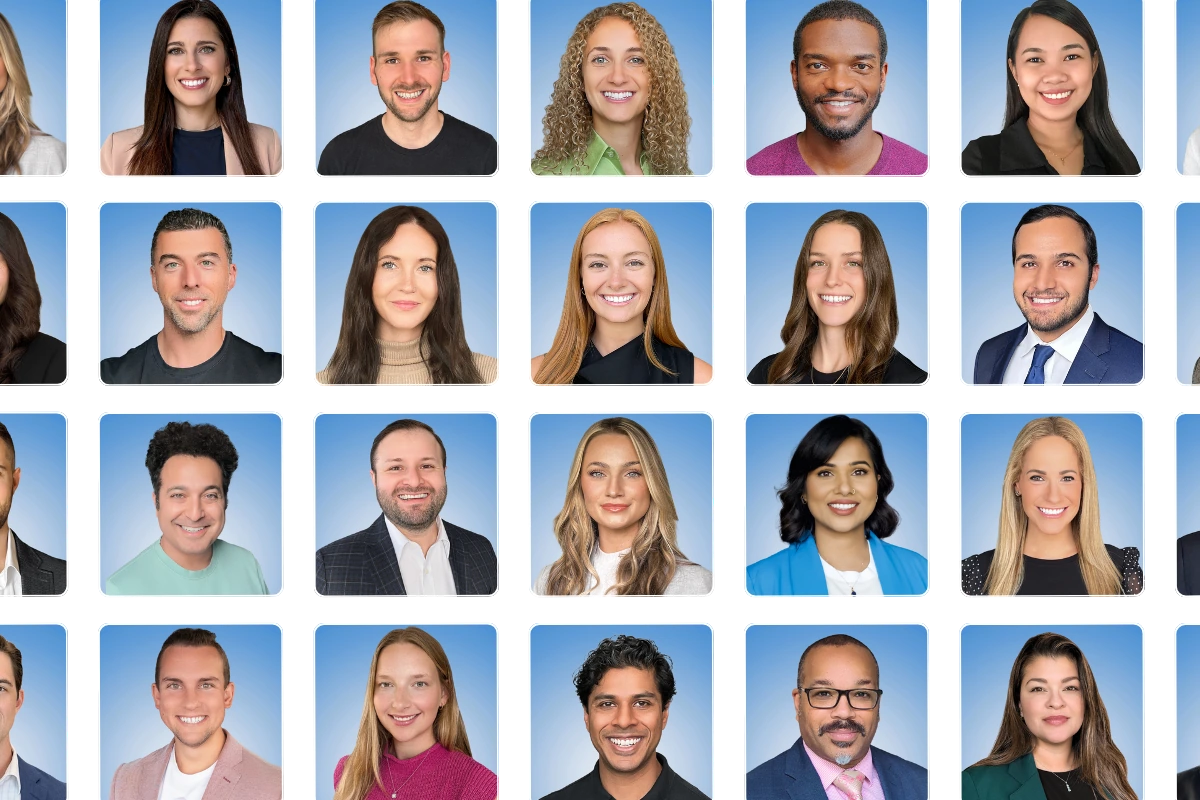
DSO consolidation has accelerated dramatically. In 2017, 8.8% of U.S. dentists were DSO-affiliated. By 2024, that number reached 16.1%—and among dentists less than ten years out of school, it’s 27% (ADA Health Policy Institute, 2025). L.E.K. Consulting projects 39% of dental offices will be DSO-affiliated by 2026 (L.E.K. Consulting, 2025). Over 55% of dental practice acquisitions in 2024 involved DSO buyers (Clerri, 2026).
The scale is staggering:
| DSO | Locations | States |
|---|---|---|
| Heartland Dental | 1,900+ | 39+ |
| TAG / Aspen Group | 1,300+ | 46 |
| PDS Health (Pacific Dental Services) | 1,000+ | 24 |
| MB2 Dental | 700+ | 44 |
| Smile Brands | ~700 | 30 |
Source: Becker’s Dental Review, 2026
Each of those locations needs current headshots for every provider and team member—on the local website page, the Google Business Profile, provider directories, and internal systems. Flying a photographer to 1,900 Heartland locations isn’t logistics. It’s fantasy.
The branding problem compounds it. As one dental marketing analysis noted, “Dull content and stock photos may be the default, but they don’t reveal the true brand or values of the practice” (Direction.com, 2025). DSOs need every location to feel like the same brand while still showing the actual humans who work there. That requires a system, not a photographer who visits once a year.
For an adjacent industry facing the same challenge, see how financial advisory firms handle multi-office headshots.
How to Keep Team Photos Current with High Turnover
Dental staffing turnover is brutal. The numbers make it clear why so many team pages are outdated.
| Role | Annual Turnover Rate | Source |
|---|---|---|
| Front desk / office staff | 29.7% | DentalPost Salary Survey, 2025 |
| Associate dentists | 29% | DentalPost, 2025 |
| Dental assistants | 23% | DentalPost, 2025 |
| Dental hygienists | 20.5% | DentalPost, 2025 |
A ten-person practice at 25% average turnover loses two to three team members per year. That’s two to three headshots that go stale on the website. Multiply that across a DSO with hundreds of locations and you’re looking at thousands of outdated photos at any given time.
And the problem is accelerating. Sixty-two percent of dentists identified staffing shortages as their biggest challenge heading into 2025 (ADA News, 2025). Thirty-one percent of hygienists plan to retire within five years (DentalPost, 2025). The revolving door isn’t slowing down.
The traditional approach—scheduling a photographer once a year—can’t keep up. By the time the annual photoshoot happens, several team members have already left and their replacements have been working for months without a headshot on the website. Patients visiting the team page see faces that no longer work there, which is worse than no photo at all.
The fix is a system that produces headshots on demand, not on a schedule. New hire starts Monday? Headshot delivered by Tuesday. Provider leaves? Photo removed same week. That cadence requires a solution that doesn’t depend on photographer availability, travel logistics, or office shutdowns.
Tracy at WellMed Medical Group described how their organization handles this now: “We’re really pushing any of our new providers or anybody who needs a retake to really just use the Capturely platform, because it’s so convenient and it’s so cost effective” (2026).
How Much Do Dental Practice Headshots Cost?
Cost varies significantly by method—and the hidden costs (production downtime, travel, coordination) often dwarf the per-person price tag.
| Method | Cost Per Person | Turnaround | Best For |
|---|---|---|---|
| Traditional studio (major metro) | $150–$400+ | 1–4 weeks | Solo practitioners in cities with strong local photographers |
| On-site photographer (team day) | $125–$300/person (or $2,500–$6,000 day rate) | 2–4 weeks | Single-location practices that can afford a non-production day |
| Virtual session with live photographer (Capturely) | $45–$79/person | 24 hours | Multi-location practices, DSOs, high-turnover teams |
| AI-generated headshots | $9–$59 | Minutes | Not recommended for dental (see below) |
The math shifts dramatically at scale. A 30-provider DSO group using on-site photography at $200/person pays $6,000+ per round, plus a full day of lost production per location ($2,000–$4,000). Virtual headshots at $45–$79/person cost $1,350–$2,370 total with zero production downtime and 24-hour turnaround.
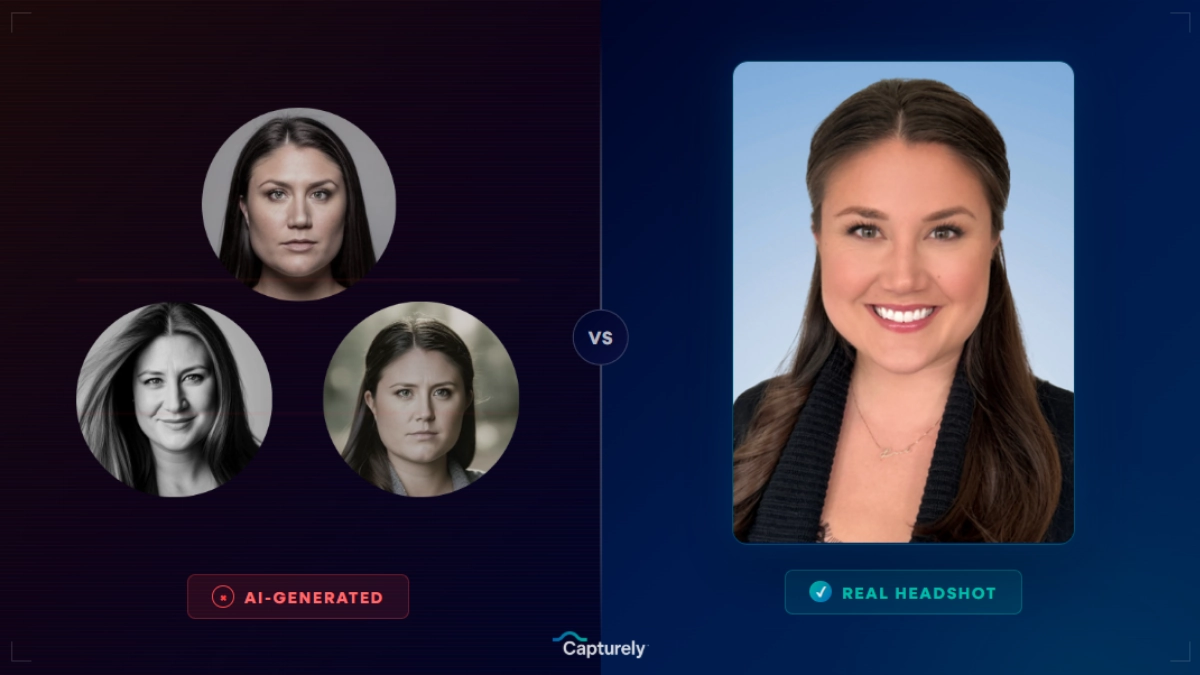
AI headshots look cheap at $9–$59, but they carry hidden costs in dental specifically. Patients already dealing with dental anxiety need to see the real person who will treat them. An AI portrait that smooths away every wrinkle and adjusts facial structure creates an expectation gap that erodes trust at the first appointment. Multiple healthcare organizations now require genuine photographs for provider profiles—and patients are increasingly savvy at spotting AI-generated imagery. For the full case, see our AI vs real headshots comparison.
For a complete pricing breakdown across all methods, see our professional headshot cost guide.
Professional dental team headshots, no office shutdown required. Capturely delivers consistent, professional headshots to distributed dental teams—each provider gets a 10-minute virtual session with a live photographer, and 3 edited images arrive in 24 hours. 98+ background options. Teams save up to 45%. Get a quote for your practice →
How Virtual Headshot Sessions Work for Dental Practices
Virtual headshots solve the specific problem that makes dental headshots so hard: getting consistent, professional results across every location without shutting down the practice for a photo day.
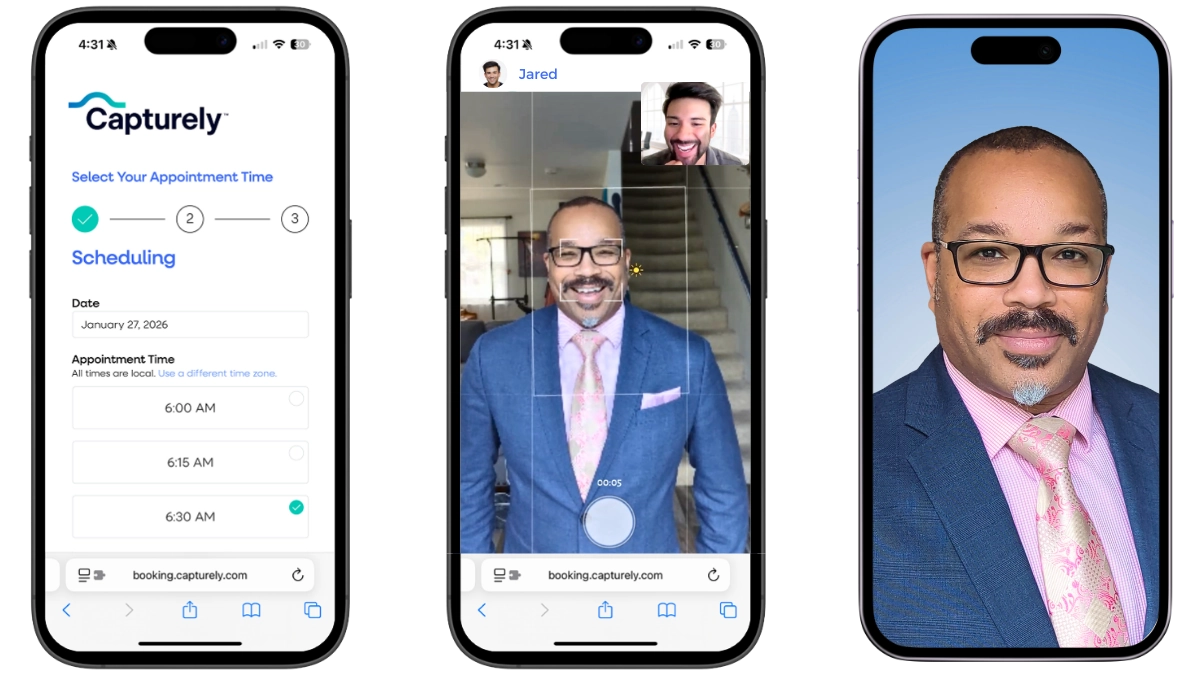
Here’s how Capturely’s process works for dental teams:
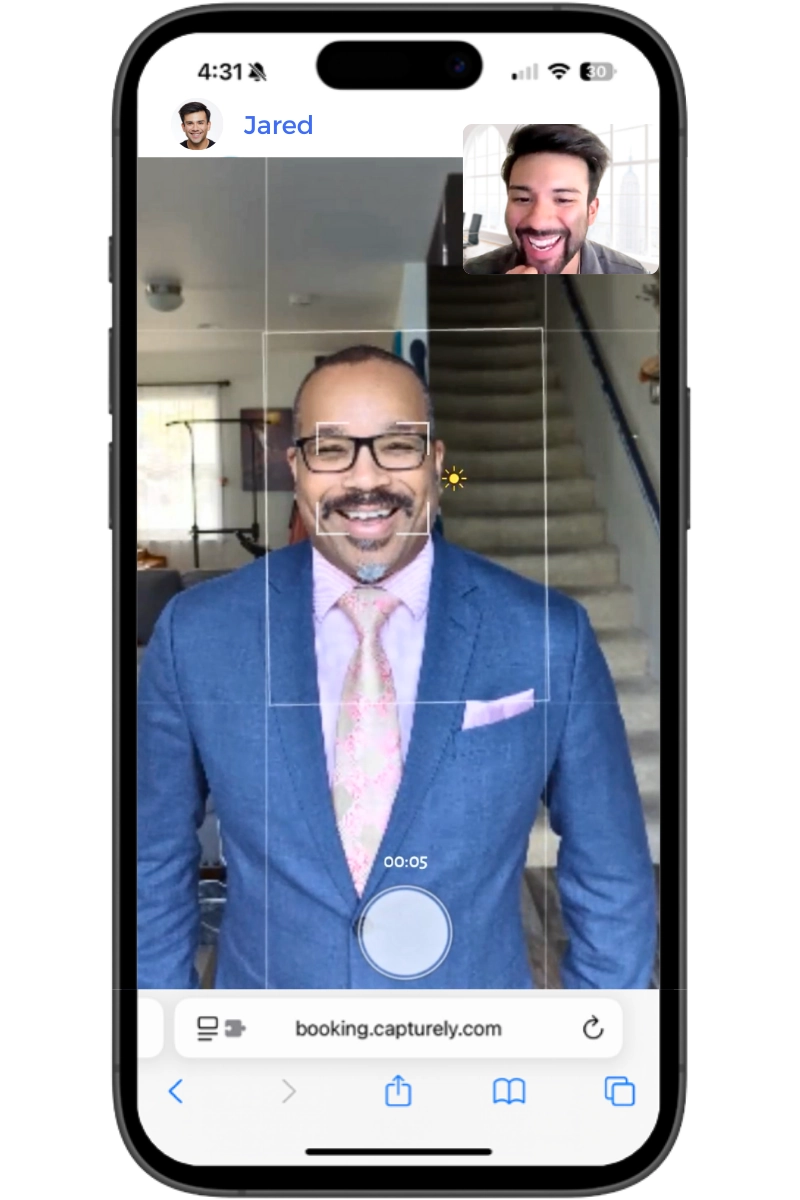
- Click a link. No app download. No software. The provider or team member opens a secure link on their phone’s browser—between patients, during lunch, whenever they have 10 minutes.
- Connect with a live photographer. A professional photographer directs the session in real time through the phone’s rear camera (36–48 megapixels). They coach posture, expression, and find the best natural lighting in whatever space is available. Ten minutes total.
- Get 3 edited images in 24 hours. Three professionally retouched headshots—delivered the next day. Choose from 98+ backgrounds, including custom options matched to your practice branding ($200 one-time fee). Unlimited retouching revisions and a happiness guarantee.
John Hamby at Resilience Lab, a behavioral health practice, captured the impact directly: “The two clinicians that you originally did, they filled their [caseloads] faster than a lot of others have in the past” (2024). First impression is everything when patients are choosing a provider.
And the operational advantage is real. Lisa Cavallaro at WellSpan Health explained why provider time is the key variable: “Part of what makes this so incredibly valuable for us is the provider’s time is so precious and it’s so hard to get time with them” (2025). A 10-minute session between patient appointments beats a three-hour on-site photoshoot every time.
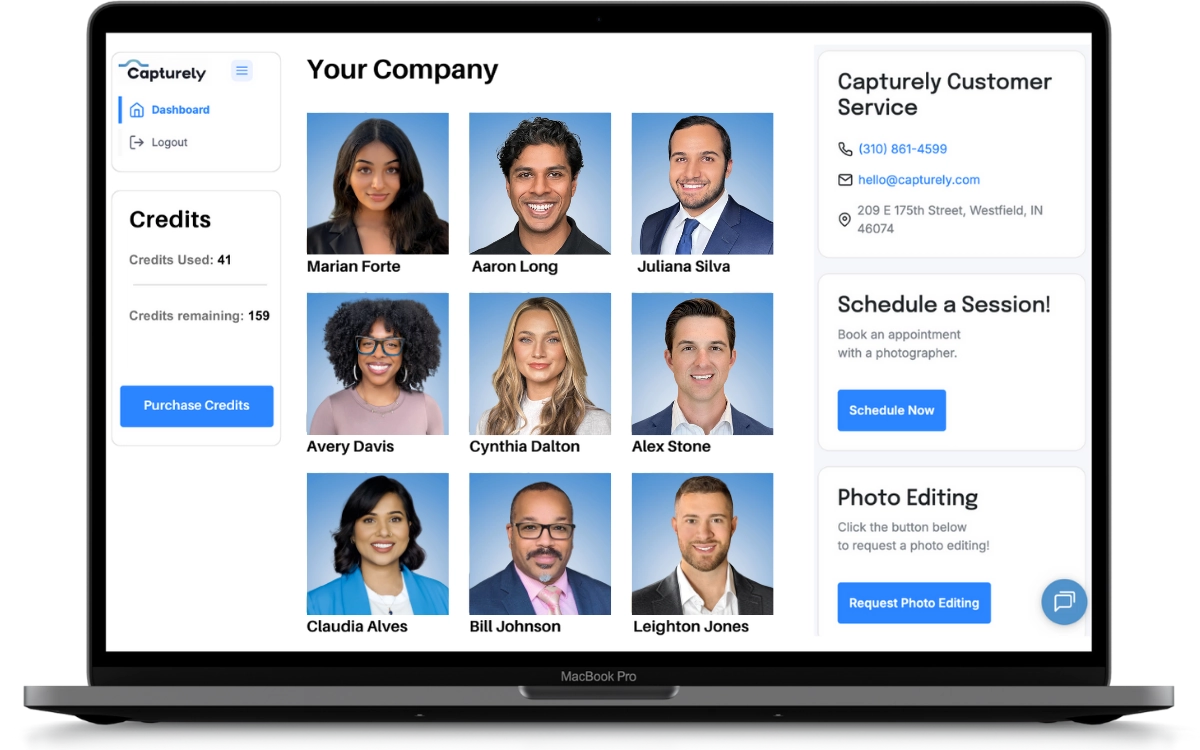
For dental practices building their broader corporate headshot program, Capturely also provides an admin dashboard for managing scheduling, delivery, and branding across the organization. For adjacent healthcare applications, see our healthcare headshots guide.
765+ reviews at 4.9 stars. Capturely has delivered headshots to healthcare and dental teams at WellSpan Health, HCA Healthcare, Schweiger Dermatology, Novant Health, and hundreds more. $79/session for individuals, teams save up to 45%. Schedule your dental team →
Frequently Asked Questions
Why are professional headshots important for dental practices?
Professional headshots build patient trust before the first appointment. Fifty-two percent of patients choose a provider with a professional photo and a 4-star rating over one with no photo and a 5-star rating (Healthgrades, 2023). The “Meet the Team” page is the second most-visited page on dental websites (TNT Dental, 2024), and providers with four or more photos receive 5.8x more bookings (Zocdoc, 2024).
What should a dentist wear for a headshot?
Dentists should choose between a white lab coat (projects clinical authority), clean solid-color scrubs (projects accessibility), or business casual attire (projects a modern, patient-friendly approach). The best choice depends on your practice type and patient demographic. The most important rule: every team member should wear the same category of attire so your team page looks consistent.
How much do dental headshots cost?
Traditional studio sessions run $150–$400+ per person with 1–4 week turnaround. On-site team photography costs $125–$300 per person plus a full day of lost production ($2,000–$4,000). Virtual headshot sessions with a live photographer through Capturely cost $45–$79 per person with 24-hour delivery and zero production downtime. AI-generated headshots ($9–$59) are not recommended for dental due to patient trust and authenticity concerns.
How often should dental practices update their team headshots?
Every 12 to 18 months for existing staff, and immediately for new hires. With dental assistant turnover at 23% and front desk turnover at 29.7% annually (DentalPost, 2025), most practices need several new headshots each year just to keep the team page current. Outdated photos of staff who no longer work there are worse than no photos at all.
Do dental headshots really affect patient acquisition?
Yes. Providers with professional photos receive 60% more patient interactions (Healthgrades, 2024). Google Business Profiles with photos are 2x more likely to be considered reputable and get 35% more website clicks (BrightLocal, 2024). With an average patient lifetime value of approximately $4,500 and acquisition cost of $150–$300, professional headshots are one of the highest-ROI investments a dental practice can make.
Should dental hygienists and assistants also get professional headshots?
Absolutely. Patients interact with the entire team—not just the dentist. Hygienists spend more time with patients than any other team member. Front desk staff are the first face patients see. Including the full team on your website humanizes the practice and reduces patient anxiety. DSOs that invest in full-team headshots report stronger brand consistency across locations.
Can dental practices use AI-generated headshots?
AI-generated headshots are not recommended for dental practices. Patients already dealing with dental anxiety need to see the real person who will treat them. AI portraits create facial features, smooth skin unrealistically, and adjust bone structure in ways that produce an expectation gap at the first appointment. Multiple healthcare organizations now require authentic photographs for provider profiles and marketing materials.