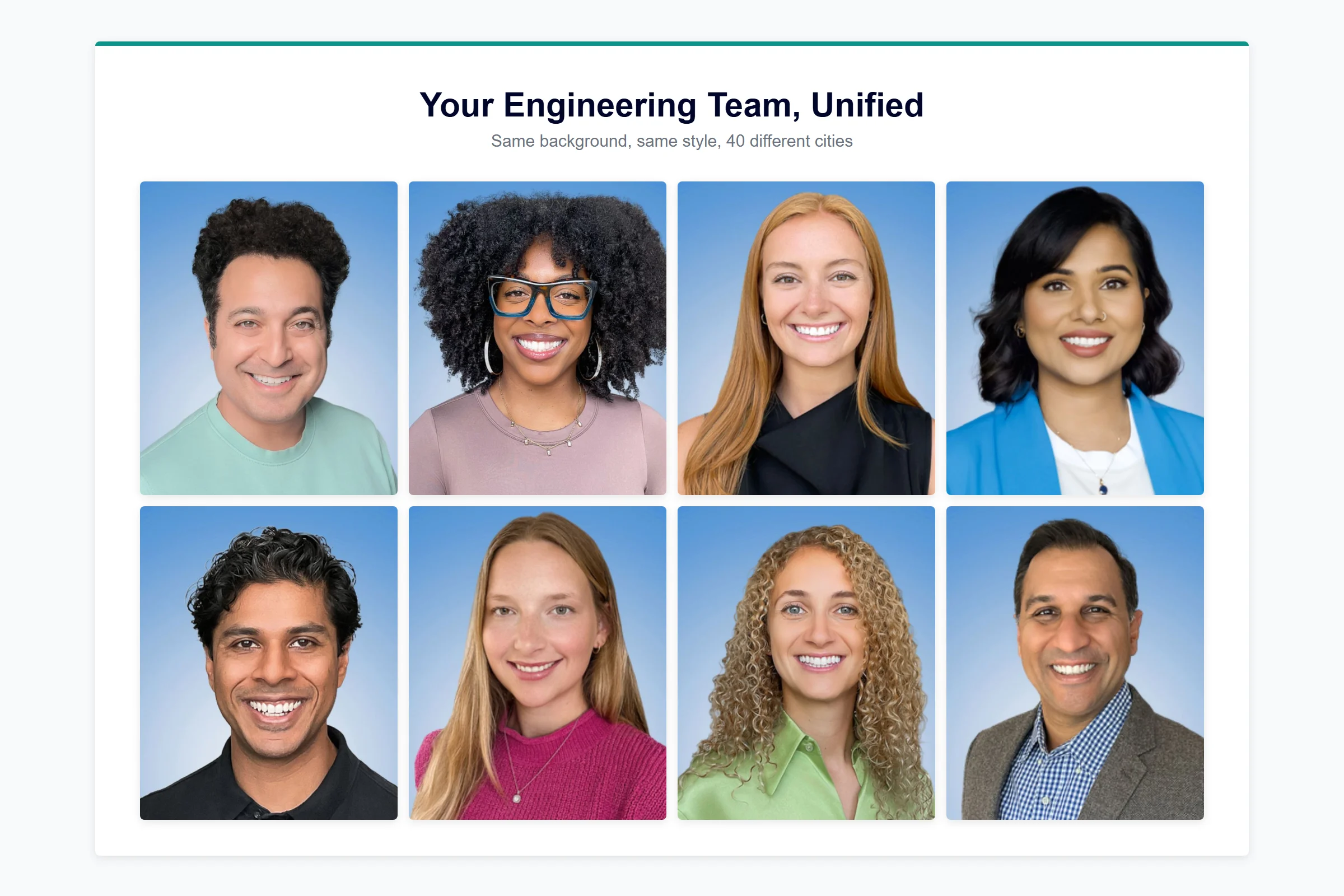
What to wear for professional headshots: solid colors in navy, charcoal, or jewel tones, with well-fitted clothing one level above your daily norm and matched to your industry. Skip busy patterns, logos, pure white, and pure black. Capturely has photographed over 100,000 headshots — this guide breaks it down by industry so you show up wearing exactly the right thing.
Last updated: April 2026 · Written by Brian Confer, Co-founder & COO at Capturely
But “dress professionally” is vague when a tech founder and a litigation attorney need completely different looks. Capturely’s photographers have worked with teams at Google, McKinsey, HCA Healthcare, and hundreds of other companies — so they’ve seen every wardrobe hit and miss the camera can catch.
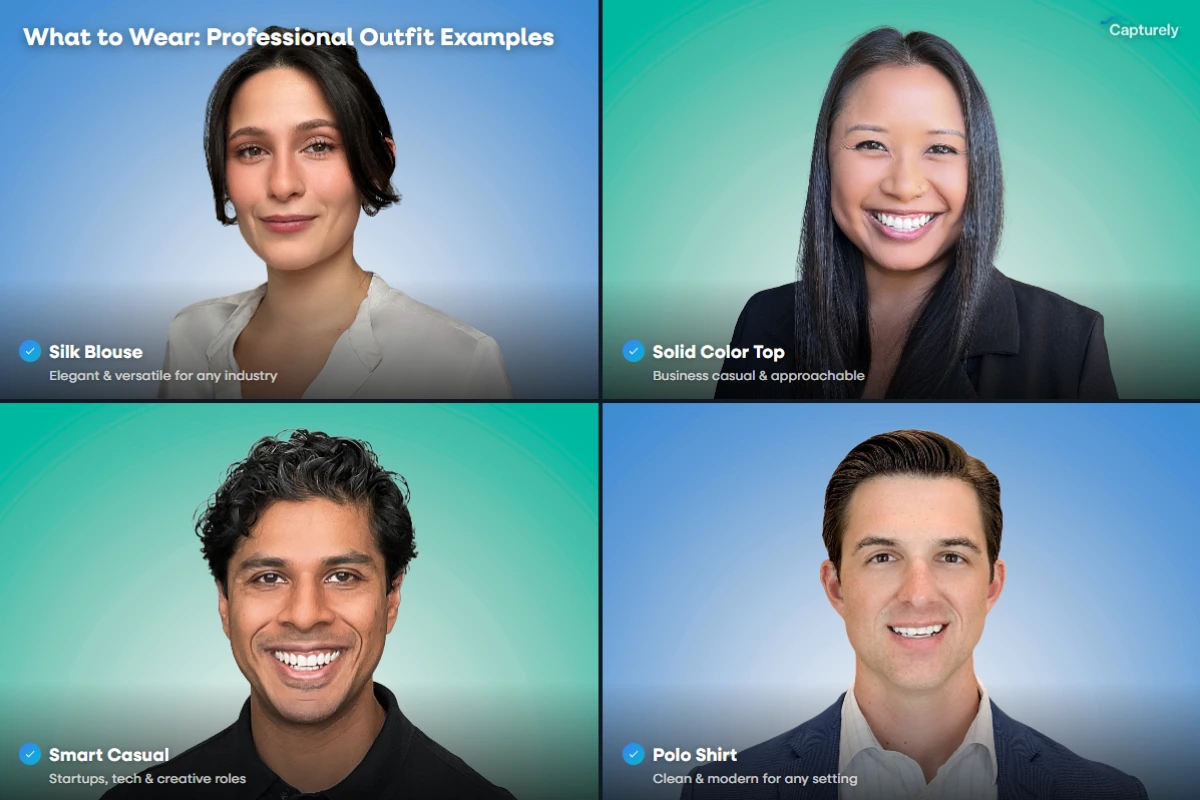
Why Does What You Wear in a Headshot Matter?
Clothing isn’t background noise in a headshot. It’s the second thing people notice after your face — and it shapes perception before anyone reads your bio or job title.
Princeton researchers Janine Willis and Alexander Todorov found people form trustworthiness judgments in just 100 milliseconds — one-tenth of a second (Willis & Todorov, Psychological Science, 2006). A 2023 study in Personality and Social Psychology Review confirmed that clothing, accessories, and grooming significantly influence snap judgments about competence, trustworthiness, and likability. And a color-trust study published in IJERT found that darker clothing scored significantly higher on trust than lighter clothing across all hues tested.
The numbers back it up. Profiles with professional LinkedIn headshots get 21x more profile views and 9x more connection requests (LinkedIn, 2017). Recruiters screen 86% of profiles in 30 seconds or less (LinkedIn via Onrec, 2019). And in a Robert Half OfficeTeam survey, 80% of executives said clothing choices affect a candidate’s promotion chances (Robert Half, 2013).
Your headshot outfit isn’t a minor decision. It’s working for — or against — you every time someone sees it.
According to Vanessa Van Edwards, lead investigator at Science of People and author of Cues, “A well-tailored outfit implies that you’re conscientious and pay close attention to detail.” That signal is doing its work before anyone reads a word you wrote.

What Are the Best Colors for Professional Headshots?
Color choice makes or breaks a headshot more than most people expect. There’s actual science behind what works on camera — it’s not just photographer preference.
Colors That Work
Navy blue is the single best color for headshots. Period. The IJERT color-trust study tested 32 subjects across 30 color variations and found blue-purple tones received the highest trust ratings of any color. Navy reads as competent and reliable without being aggressive. It works in every industry.
Charcoal gray is your safest second choice — versatile, professional, and creates clean contrast against most headshot backgrounds.
Jewel tones add personality. Emerald green, deep burgundy, teal, and plum photograph beautifully and create strong visual separation — especially on deeper skin tones.
Soft mid-tones like dusty blue, muted sage, and warm taupe feel approachable without washing out. Good picks for education, creative, and healthcare settings.

Colors to Avoid
Pure white blows out under camera exposure. It washes out lighter complexions and competes with your face for attention instead of framing it.
Pure black absorbs shadow and flattens dimension. Against a dark background, you risk looking like a floating head. Against a light one, the contrast can feel harsh.
Neon and bright colors reflect onto your skin, creating unnatural color casts that are difficult to correct even with professional retouching.
Colors matching your skin tone — beige on light skin, brown on medium skin — blur the boundary between clothing and face, killing jawline definition and making the whole image look soft.
Color Guide by Skin Tone
- Light complexion: Mid-tones and deeper shades create the best contrast. Avoid creams, beiges, and pastels that sit too close to your skin tone.
- Medium complexion: You have the most flexibility. Mid-tones and deeper shades both photograph cleanly. Avoid washed-out pastels.
- Deep complexion: Saturated jewel tones — teal, amethyst, ruby, emerald — create striking separation. Avoid overly dark colors that reduce contrast.
Quick undertone cheat sheet: cool undertones pair with navy, emerald, and deep purple. Warm undertones pop in earthy greens, rust, and rich reds. Not sure which you are? Charcoal and teal work for everyone.
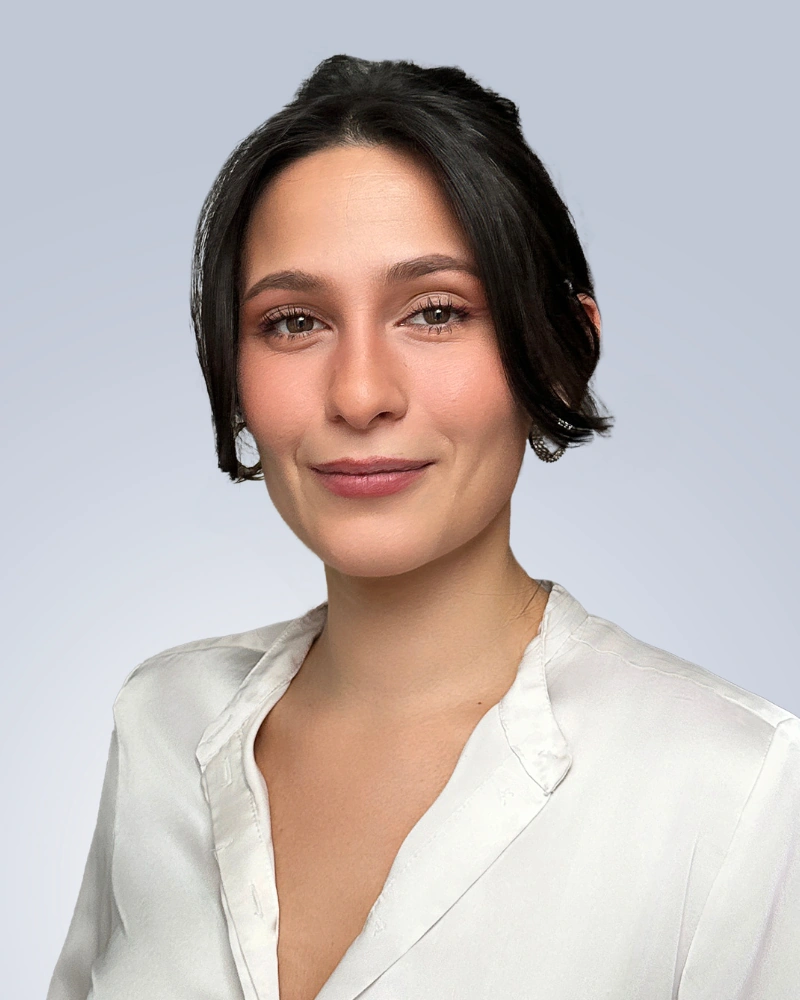
Not sure which background pairs with your outfit? Capturely offers 98+ background options, and your photographer helps you choose the right one during the session. See background options →
What to Wear for Corporate Headshots by Industry
The biggest mistake people make? Dressing for a generic “professional” look instead of dressing for their industry. A finance VP in a hoodie looks careless. A creative director in a three-piece suit looks stiff. Here’s what actually works for each field.
| Industry | Dress code | Go-to colors | Avoid |
|---|---|---|---|
| Finance & Banking | Suit and tie; tailored blazer over solid blouse | Navy, charcoal, white | Casual wear, bright colors, trendy cuts |
| Law & Legal | Dark suit; conservative tie; structured blazer | Navy, charcoal, black | Novelty ties, flashy accents |
| Tech & Startups | One level above daily norm; button-down or crew-neck sweater | White, soft blue, gray, muted teal | Suits and ties, graphic tees, logos |
| Healthcare | White coat for clinical; professional attire for admin | Soft blues, soft greens, earth tones | Loud colors, casual wear for patient-facing roles |
| Real Estate | One level above your target client; blazer or polished button-down | Blue, white, gray, warm neutrals | Bold patterns, trendy pieces |
| Education | Lightweight blazer, fitted cardigan, blouse, or collared button-down | Navy, burgundy, plum, emerald, charcoal | Neons, pastels, pure white |
| Creative Industries | Expressive but camera-friendly; statement pieces with solid bases | Jewel tones, mustard, copper, deep reds | Neon, busy patterns, pure white |
Tech and Startups

Tech has moved past hoodies-only, but it hasn’t swung to suits either. The rule: dress one level above your daily norm.
If you wear t-shirts to work, go with a fitted button-down or a clean crew-neck sweater. If you’re already in button-downs, add a blazer. Cashmere sweaters and layered looks are the current standard for tech headshots. Leave the tie at home — it’ll feel costume-y.
Go-to colors: White, soft blues, gray, muted teal.
Skip: Suits and ties (overdressed for the culture), graphic tees, anything with logos.
Finance and Banking
Still the most formal industry for headshots. The dark suit isn’t going anywhere.
Men: navy or charcoal suit, pressed white or light blue dress shirt, conservative tie with classic stripes or small dots. Women: tailored blazer or structured jacket over a solid-colored blouse. Think boardroom, not brunch.
Go-to colors: Navy blue, charcoal gray, black with a white shirt.
Skip: Casual wear, bright colors, trendy cuts.

Healthcare
This one depends on your role. Physicians shooting for a patient-facing directory? White coat over professional attire. It’s the most recognized trust symbol in medicine. Surgeons and ER docs can wear scrubs — it matches the expectation. Administration and non-clinical staff should dress as their peers do.
Go-to colors: Soft blues and greens under the white coat. Earth tones for non-clinical roles.
Skip: Loud colors that fight the white coat, casual wear for patient-facing directories.
Law and Legal
One of the last industries where a suit and tie is genuinely expected — at least for men. Your law firm headshot shows up on the firm’s website, in pitchbooks, and on bar association directories. Potential clients are evaluating whether they trust you before they walk in the door.
Dark suit in navy, charcoal, or black. Well-pressed white or light blue shirt. Conservative tie. Women: structured blazer or tailored suit. A warm-toned accessory — a burgundy pocket square or copper earrings — can soften a formal look without undermining authority.
Go-to colors: Navy, charcoal, black with white or light blue accents.
Skip: Novelty ties, casual wear, anything flashy.
Real Estate
The guideline in real estate: dress one level above the clients you want to attract. Luxury market? Look the part. Working with first-time homebuyers? Professional-but-warm hits better than intimidating.
Men: suit jacket with or without tie, or a polished button-down. Women: professional blazer, tailored dress, or polished blouse. The goal is trustworthy and approachable — you’re asking people to hand over the biggest purchase of their lives.
Go-to colors: Blue, white, gray, warm neutrals.
Skip: Bold patterns, trendy pieces that date quickly.
Education

Professional but approachable. Students, parents, and colleagues all see this photo — it needs to say “I take my work seriously” without saying “I’m unapproachable.”
A lightweight blazer or fitted cardigan works well. Men: collared button-down or polo. Women: blouse with sleeves. Long sleeves are universally more flattering in headshots — they create a clean line and avoid the distraction of bare arms in a cropped frame.
Go-to colors: Navy, burgundy, plum, emerald green, charcoal.
Skip: Neons, pastels, pure white.
Creative Industries
Design, marketing, media, and the arts give you the most freedom — and the most rope. Personality is expected in your headshot. But “creative” doesn’t mean “anything goes.”
Bold colors, interesting textures, and statement pieces that reflect your personal brand? Go for it. Mustard, copper, deep red, and rich burgundy all photograph beautifully and signal creative confidence. Just avoid the camera killers — neons and tight patterns still cause technical problems no matter how good they look in person.
Go-to colors: Bold jewel tones, mustard, copper, deep reds.
Skip: Neon, small busy patterns, pure white.
Managing headshots for a team across multiple departments? Capturely’s photographers help each person dress appropriately for their role while keeping a consistent style across the organization. 10-minute sessions, 24-hour delivery, zero logistics on your end. Get an instant team quote →
What Are the Universal Rules for Headshot Outfits?
Some rules apply to everyone sitting in front of a camera, regardless of industry.
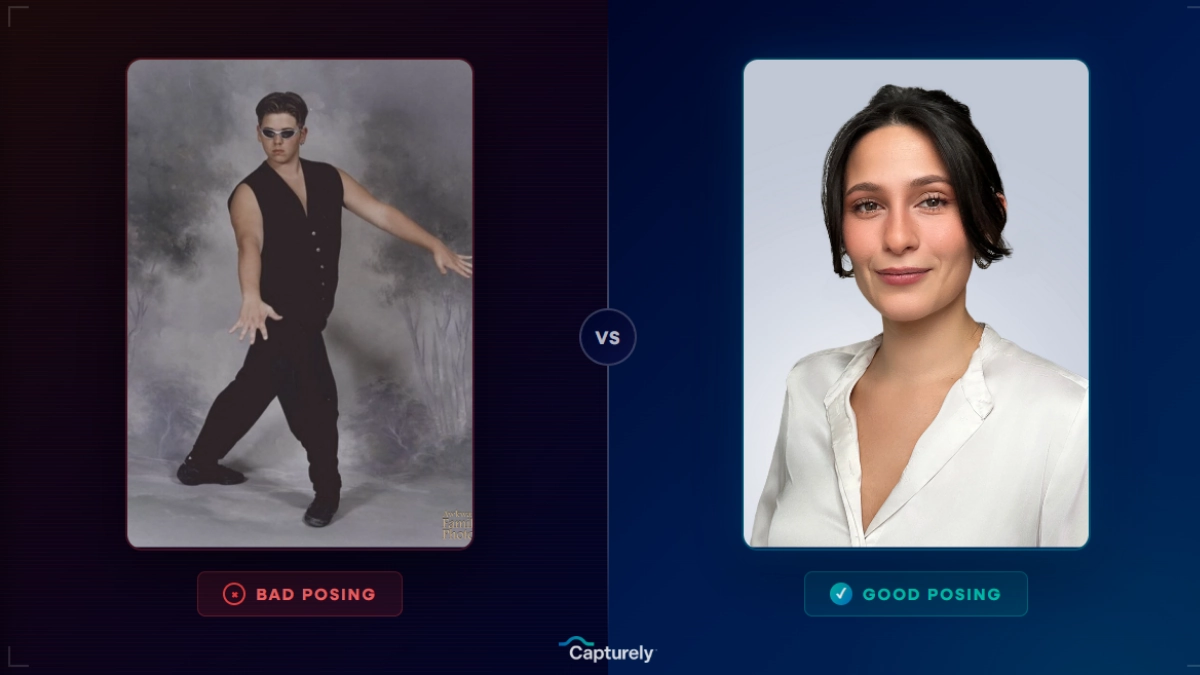
Fit
Fit matters more than the outfit itself. Slightly snug always photographs better than baggy. Loose clothing adds visual bulk and reads as careless on camera. If something is borderline between two sizes, go with the smaller one for the shoot.
According to Peter Hurley, the headshot photographer behind The Headshot and studio sessions for Fortune 500 executives, “Information like the shape of the neck, a necklace, or whatever wardrobe subjects wear, is more important to me than the top of their heads.” The wardrobe is doing as much work as the face.
Fabric
Stick with fabrics that hold their shape — structured wool blazers, cotton dress shirts, cashmere knits. Avoid sheer fabrics and anything that wrinkles the moment you look at it. And steam or press everything before the session. Wrinkles barely register in the mirror but become glaringly obvious in a photograph.
Patterns
Solid colors are the safest choice. Full stop.
Here’s the technical reason: fine patterns like pinstripes, houndstooth, herringbone, and thin stripes cause something called moire on digital cameras. It’s a wavy, rainbow-colored distortion that happens when repeating patterns interact with the camera sensor. It can’t be fully corrected in editing. If you must wear a pattern, choose large, widely-spaced designs. But honestly, solids let your face be the focal point — and that’s the whole purpose of a headshot.
Should You Wear Jewelry, Accessories, or Glasses in a Headshot?
Your face should be the star of this photo. Everything else is supporting cast — and supporting cast members who upstage the lead get cut.
Jewelry: Small stud earrings, a delicate chain necklace, a classic watch — all fine. Dangling earrings, large statement pieces, and anything with prominent logos pull attention away from your face. When in doubt, take it off.
Glasses: If you wear them every day, wear them in your headshot. People should recognize you. Use anti-reflective coating to avoid glare — and if you don’t have AR lenses, some photographers recommend bringing a second pair without lenses as backup.
Ties: Only if your industry expects it. Choose conservative patterns — classic stripes, small dots. Novelty ties have no place within 100 feet of a professional camera.
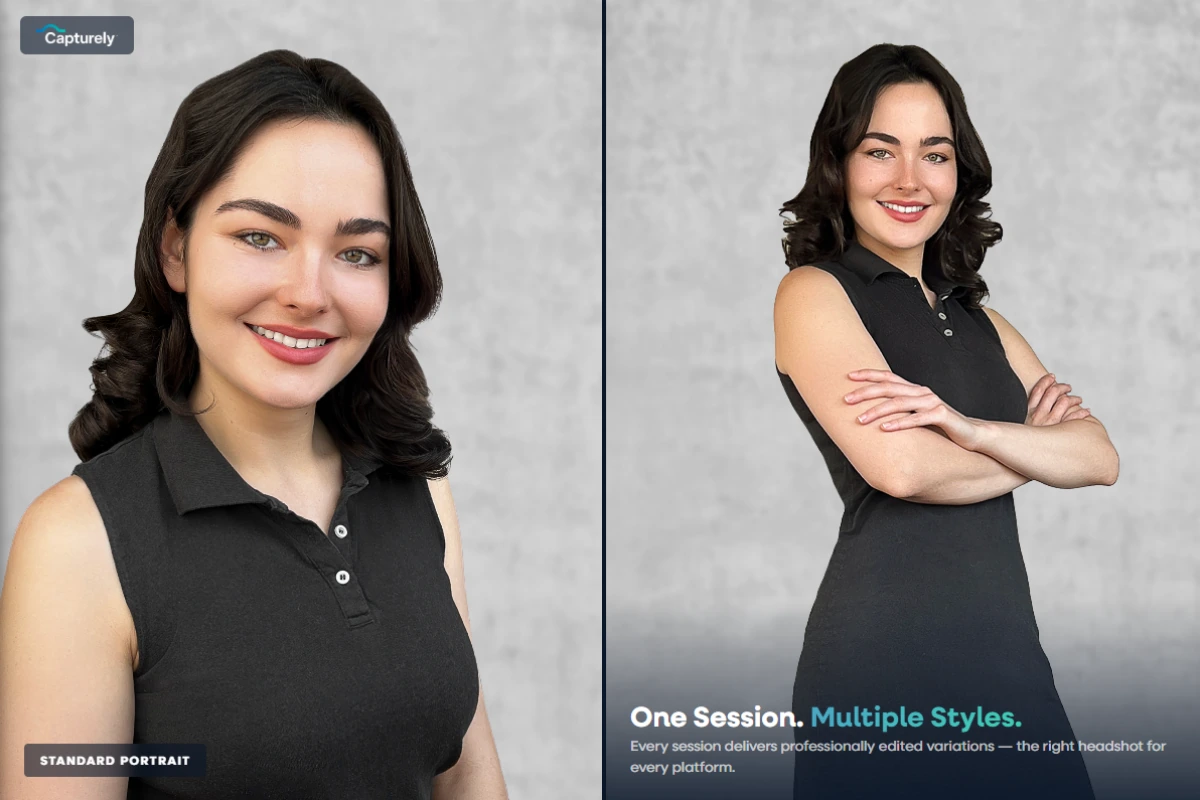
Hair, Makeup, and Grooming Tips for Headshots
Your wardrobe is half the equation. Grooming is the other half.
For Women
Use matte finish foundation. Dewy and glowy formulas look sweaty under camera lighting — not the vibe you’re going for. Match foundation to the skin at your neck and chest, not your face (which may be a different shade from sun exposure).
Stick with neutral eye shadows. Avoid shimmer — it creates distracting hot spots in photos. Go with black mascara, even if you usually wear brown. Darker lashes read stronger on camera. For lips, one shade darker than your best everyday look, shifted slightly toward deeper red.
The most important rule: don’t try anything new on headshot day. New makeup, new hairstyle, new products — the unfamiliarity will show in your expression. Go with what you know works.
For Men
Get a haircut 3-5 days before the session. Not the day of. Fresh cuts look sharp in person but need a few days to settle and look natural on camera.
If you have facial hair, keep it neatly trimmed. Patchy or uneven stubble reads as “forgot to shave,” not “going for a look.” Bring blotting papers or translucent powder if you tend to get shiny under lights. And hydrate in the days leading up — dehydration shows up as chapped lips and dry skin that retouching can only partially fix.
How Many Outfits Should You Bring?
Two to three. Always.
Even if you’re 90% sure about your first choice, bring backup options. Colors that look great in your bathroom mirror sometimes don’t translate on camera. Fabrics behave differently under photography lighting. Having alternatives means your photographer can help you find the best option instead of making do with the only one you brought.
Hang everything on proper hangers and transport carefully. Wrinkled backup outfits aren’t really backups — they’re dead weight.
What to Wear for a Virtual Headshot Session
Everything above applies whether you’re in a studio or taking your headshot from home. The camera doesn’t care about the location — it cares about what’s in the frame.
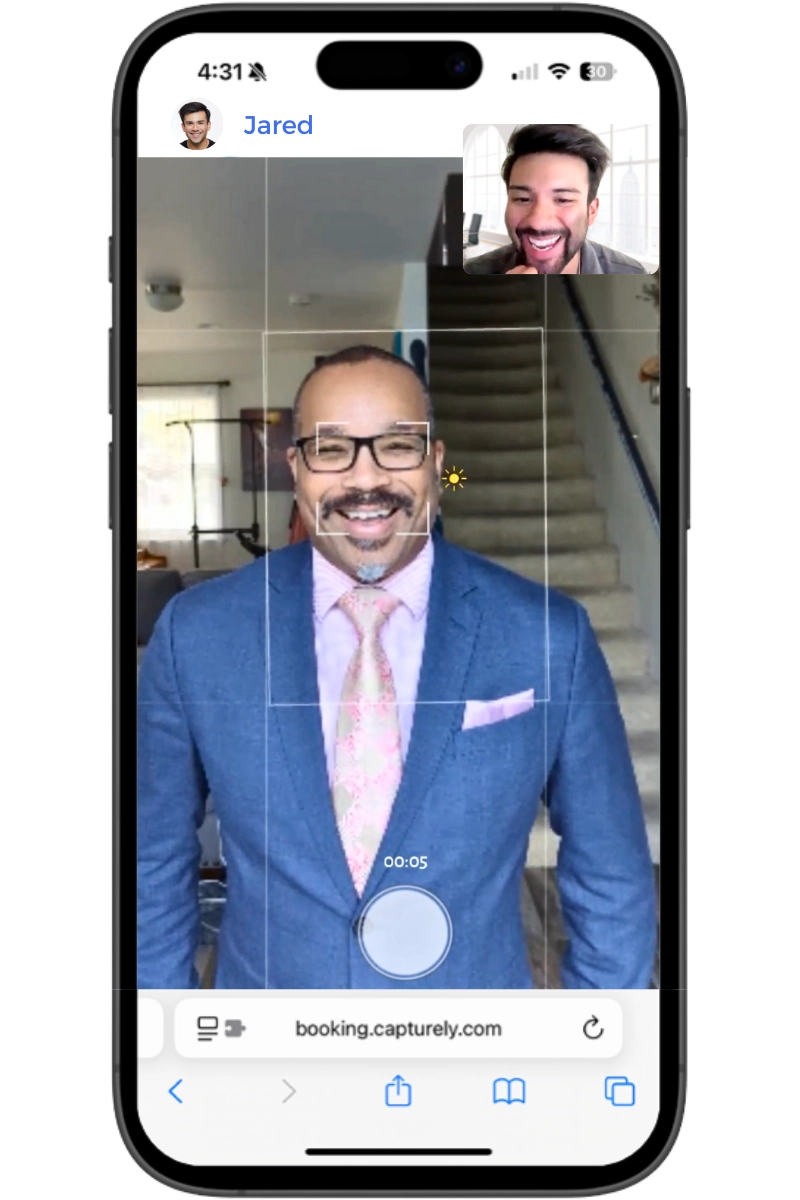
With a virtual session through Capturely, you connect with a live photographer via your phone’s rear camera — not the selfie camera. The photographer sees what the camera sees and coaches you in real time on positioning, expression, and yes, whether your outfit is working on camera. That’s one of the biggest advantages of having a real photographer directing the session: they catch wardrobe issues before a single final photo is taken.
A few virtual-specific tips:
- Check your outfit on your phone camera first. Hold your phone at arm’s length, rear camera facing you, and take a test shot. What looks fine in the mirror may look different through the lens.
- Natural light is your friend. Stand near a large window. Softer lighting is more forgiving of fabric wrinkles and color shifts than overhead fluorescents.
- Have your backup outfits ready nearby. Your photographer may suggest a switch. Being able to change in two minutes keeps the momentum going.
The whole session takes about 10 minutes. You get three professionally retouched images delivered within 24 hours. And because the photographer guided you through everything — including outfit adjustments — the first-time approval rate is over 98%.
Ready to get your headshot done right? Capturely’s 10-minute virtual sessions include live photographer direction, 3 edited images, and 24-hour delivery. No studio visit, no app download — just open a link on your phone. Book your session →
Frequently Asked Questions
What is the best color to wear for a professional headshot?
Navy blue is the most universally flattering color for headshots. Research shows blue tones receive the highest trust ratings, and navy works across every industry from tech to finance. Charcoal gray is a close second. Both create clean contrast against most backgrounds without competing with your face for attention.
Can I wear black or white in a headshot?
Avoid pure black and pure white. Black absorbs shadow and flattens dimension, especially against darker backgrounds. White blows out under camera exposure, washes out lighter skin tones, and dominates the frame. If you want light or dark, go charcoal instead of black and cream or soft ivory instead of white.
Should I wear a blazer for my headshot?
It depends on your industry. For finance, law, and formal corporate environments — yes, a blazer is expected. For tech, creative, and education — a blazer is optional but adds polish. The key is fit: a well-fitted blazer elevates any look, but a baggy one makes you look like you borrowed someone else’s jacket.
What should I wear for a casual corporate headshot?
Casual corporate means elevated basics: a fitted crew-neck sweater, a quality button-down without a tie, or a blazer over a simple top. Think “nice dinner out,” not “Saturday errands.” Stick with solid colors in navy, gray, or muted tones. This look works well for tech companies, startups, and organizations with relaxed dress codes.
Should I wear jewelry in my headshot?
Keep it minimal. Small studs, delicate necklaces, and classic watches add personality without competing for attention. Avoid large statement pieces, dangling earrings, and anything with prominent logos. Your face should be the focal point of the photo, and oversized accessories pull the eye elsewhere.
Should I wear my glasses in my headshot?
If you wear glasses daily, wear them in your headshot. People should recognize you. The main concern is glare — anti-reflective coating handles this. If your glasses don’t have AR coating, bring a pair without lenses as backup. Rimless or thin-framed glasses tend to photograph best because they don’t obscure your eyes.
How many outfits should I bring to a headshot session?
Bring 2-3 options. Even if you’re confident about your first choice, colors and fabrics can look different on camera than in the mirror. Having alternatives gives your photographer the flexibility to find what works best with your background, lighting, and skin tone. Hang everything on proper hangers — wrinkled backup outfits aren’t useful backups.
What should I avoid wearing for professional headshots?
Avoid busy patterns (they cause moire distortion on digital cameras), neon colors (they reflect onto skin), pure white (blows out), pure black (flattens dimension), large logos, sheer fabrics, and anything ill-fitting. Loose or baggy clothing adds visual bulk on camera. When in doubt, choose a well-fitted solid in navy, charcoal, or a jewel tone.
For more tips on getting the most from your session, check out our complete guide to professional headshots.