Healthcare headshots are professional photographs of physicians, nurses, and staff used in provider directories, hospital websites, telehealth platforms, and internal systems. They’re the first visual impression a patient forms — and 52% of patients will choose a provider with a professional photo and a 4-star rating over a provider with no photo and a 5-star rating (Healthgrades and The Health Management Academy, 2023). A photo outweighs an entire star.

Last updated: March 2026
For health systems with hundreds or thousands of providers spread across multiple facilities, the challenge isn’t convincing anyone that headshots matter. It’s getting them done — consistently, affordably, and without pulling a single provider away from patient care for longer than necessary. This guide covers how leading health systems like HCA Healthcare, WellSpan Health, and Intermountain Health handle provider headshots at scale, based on patterns from delivering over 100,000 headshots at Capturely.
Why Provider Photos Drive More Patient Bookings Than Star Ratings
Here’s the stat that should reframe every conversation about healthcare photography budgets: patients trust what they can see.
When Healthgrades and The Health Management Academy studied how patients choose providers, they found that a professional photo is more persuasive than higher ratings. That 52% preference rises to 59% among parents choosing pediatricians and 58% among millennials selecting any provider (Healthgrades, 2023).
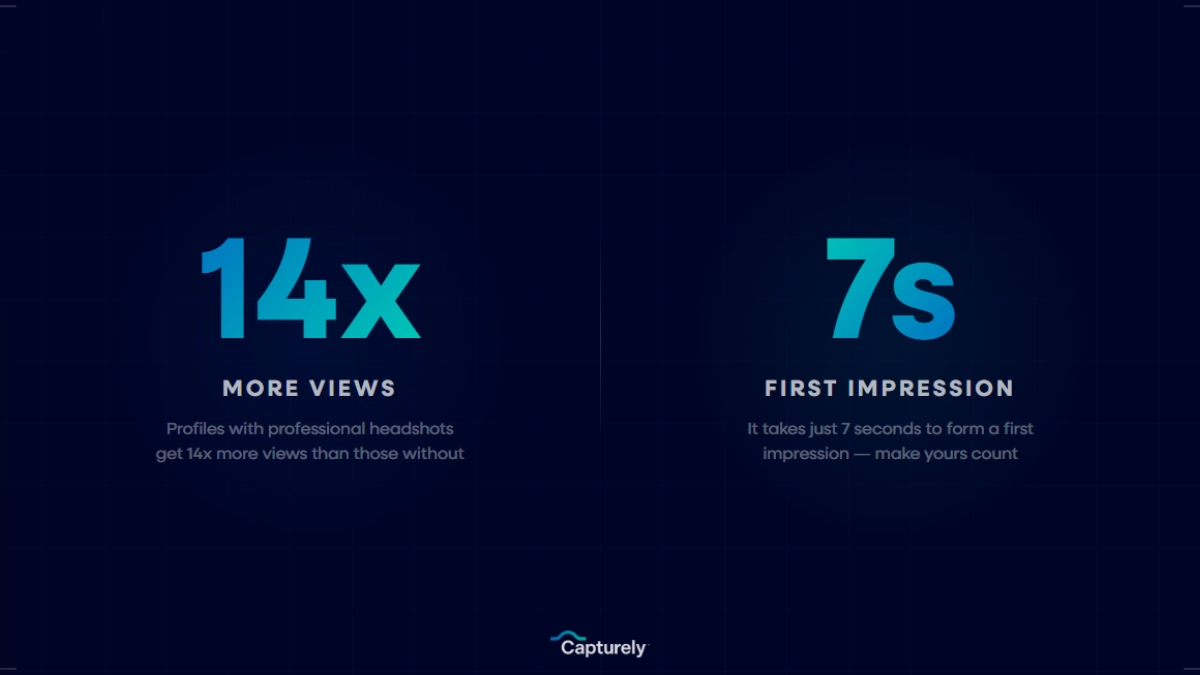
The data compounds. Providers with profile photos are viewed 2x as often as those without (Doximity, 2024). Provider profiles with photos get roughly 60% more patient interactions (Healthgrades, 2024). And providers with 4+ photos on their digital profiles are 5.8x more likely to get a booking than those with fewer images (Zocdoc, 2024).
This makes biological sense. People judge trustworthiness within 100 milliseconds of seeing a face (Willis and Todorov, Princeton University, 2006). In healthcare, where trust is the foundation of the patient-provider relationship, that snap judgment carries real weight.
According to Tatum Hindman, President and Marketing Strategist at TBH Creative, a healthcare marketing agency with 20+ years of experience: “Making personal connections and building trust with patients is vital. Professional headshots help physicians make a great first impression when potential patients see them across websites, directories, social media, and Google search results.”
John Hamby at Resilience Lab, a behavioral health practice, saw this firsthand after updating clinician headshots through Capturely: “The two clinicians that you originally did, they filled their caseloads faster than a lot of others have in the past.”
Ready to update your provider directory? Get an instant quote for your health system — configure your look, see volume pricing, done in 30 seconds. Get your instant quote →
The Provider Directory Trust Gap
Most health system websites have a “Find a Doctor” page. It’s typically the most-visited section of the site — and often the most neglected.
Walk through any large health system’s provider directory and you’ll find what Lisa Cavallaro at WellSpan Health, a system spanning 8 hospitals across central Pennsylvania, described to us: a patchwork. Some providers have professional headshots. Some have selfies. Some have photos that are clearly a decade old. And some have no photo at all — just a gray silhouette where a face should be.
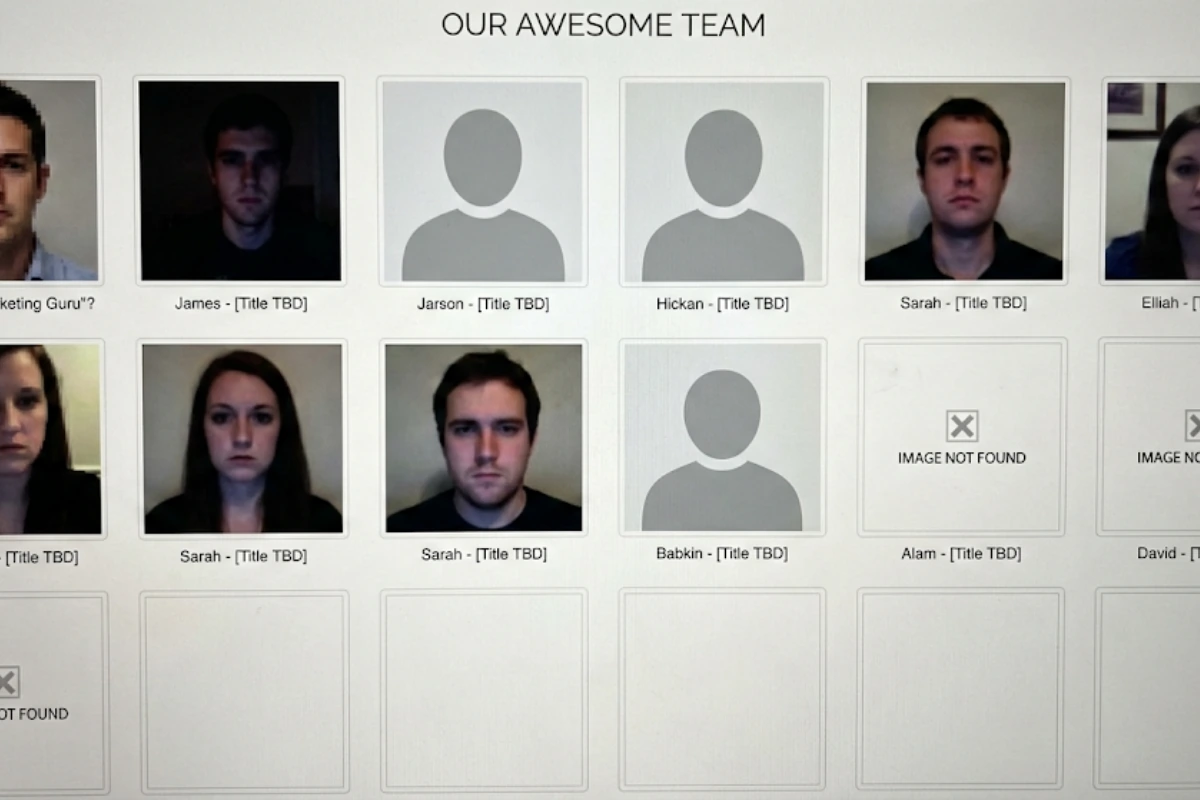
That gray silhouette is costing you patients. According to Zocdoc’s 2024 “What Patients Want” report, 92% of patients read a provider’s bio before booking an appointment (Zocdoc, 2024). And 74% specifically prefer providers with photos and staff bios (Healthgrades, 2024).
The gap between “has a photo” and “has a good photo” matters too. A professional headshot is rated roughly 50% more competent than a casual selfie of the same person, based on Photofeeler’s analysis of 60,000+ ratings across 800 photos (Photofeeler, 2023). For healthcare providers, where perceived competence directly affects whether a patient books or clicks away, that’s not a vanity metric. It’s a patient acquisition metric.
Here’s what we hear on discovery calls from healthcare marketing directors:
“I wish that I knew about you guys years ago, because I do the onboarding for our physicians and providers and to have something where I don’t have to send these people to — I mean, you have no idea how painful it is. Years ago, we sent them to JCPenney’s, then they would go to their own photographer. And we had some where they were spending $300 for a picture.” — Kelly O, Naran Neurology
The trust gap isn’t just about aesthetics. An eye-tracking study published in the Journal of Medical Internet Research found that provider headshots directly increased “affective trust” — the emotional confidence patients feel toward a physician before ever meeting them (PMC, 2019). In healthcare, that affective trust translates to appointments, adherence, and retention. High-trust patients are 3x more likely to recommend their provider and 2.6x more likely to follow treatment plans (Keona Health, 2024).
Why Traditional Healthcare Photography Falls Apart at Scale
Healthcare photography at scale has a logistics problem that no other industry quite matches.
Provider time is sacred. Every minute a physician spends not seeing patients costs the organization revenue and creates downstream scheduling pressure. Lisa Cavallaro at WellSpan Health explained it directly: “Part of what makes this so incredibly valuable for us is the provider’s time is so precious and it’s so hard to get time with them.”
The footprint is enormous. Health systems don’t have one office. They have hospitals, clinics, urgent care centers, and specialty practices spread across regions. WellSpan alone spans a two-and-a-half to three-hour driving radius. As Lisa described it: “You’ll get one priority — we need this one headshot and we need it fast. Do I really have to send a human three hours out and three hours back? That’s so wildly crazy.”

Turnover is relentless. The hospital turnover rate sits at 18.3%, with 1.03 million hospital employees exiting their positions in 2024 alone (NSI National Health Care Retention Report, 2025). That means a 500-provider health system needs to photograph roughly 90 new providers per year just to keep pace with departures — not counting growth. And physician credentialing alone takes 90 to 150 days (Verisys, 2024), meaning there’s a window where new providers have no professional headshot for their directory listing, their telehealth profile, or their ID badge.
Shifts make scheduling impossible. Healthcare operates 24/7. Night-shift nurses, weekend hospitalists, on-call surgeons — the people who most need headshots for patient-facing directories are often the hardest to schedule for a traditional photo session during business hours.
Multi-photographer inconsistency. When you hire different photographers for different facilities, you get different lighting, different backgrounds, different retouching styles. A dermatology practice in one city looks completely different from the cardiology group two hours away, even though they’re part of the same health system. That visual inconsistency — what Fuel Medical Group describes as giving “an impression of disorderliness” — undermines the brand cohesion that multi-facility systems spend millions building.

The result? Most health systems default to one of two modes: expensive, episodic photo days that miss half the staff, or simply giving up and letting providers submit whatever they have. Neither works.
How Health Systems Get Consistent Provider Headshots in 2026
There are five realistic approaches for healthcare organizations. Each has trade-offs. The right one depends on your size, distribution, and how much you care about consistency.
| Approach | Cost per Provider | Live Photographer | Works for Distributed Systems | Consistent Results | Turnaround |
|---|---|---|---|---|---|
| Traditional Studio / On-Site | $150–$450 | Yes | No | Varies by photographer | 1–3 weeks |
| On-Demand Marketplace (Snappr) | $89–$200+ | Yes (in-person) | Limited (major metros only) | Varies | 3–7 days |
| Self-Guided Virtual (Headshots.com) | $25–$60 | No | Yes | Low | 3 days |
| AI Headshot Generators | $29–$59 | No | Yes | Medium | Minutes |
| Live Virtual (Capturely) | $45–$79 | Yes | Yes | High | 24 hours |
Traditional studios still work for single-site practices. But for a health system with 10+ locations, the coordination tax makes it impractical. You’ll spend more admin hours managing the schedule than you will on the photography itself.
On-demand marketplaces like Snappr reduce the vendor management burden, but they’re still in-person. And consistency varies — different photographers in different cities means different results.
Self-guided virtual services remove the location barrier, but without a live photographer directing the session, quality drops. Multiple health systems have told us they switched away from self-guided services because of rejection rates: providers submit photos, get told they don’t meet standards, have to redo the whole process. That back-and-forth is exactly what time-strapped physicians won’t tolerate.
AI generators are cheap but introduce a problem unique to healthcare: the patient will see the real provider. On telehealth. In the exam room. If your AI-generated headshot doesn’t match reality, you’ve undermined the trust you were trying to build. Many health systems prohibit AI-generated imagery for patient-facing use entirely. As one healthcare marketing director told us: “As much as my industry loves AI, I don’t think we’re going there for people.”
Live virtual headshots — where a professional photographer directs the session in real time through the provider’s phone camera — combine the consistency of in-person photography with the scalability of a virtual model. Same backgrounds, same lighting direction, same retouching standards, whether the provider is at the main campus or at a satellite clinic 200 miles away. For a deeper look at all the options, see our corporate headshots guide.

How Virtual Healthcare Headshots Work
The concept sounds unusual until you see it. A phone camera producing directory-quality healthcare headshots? Here’s the actual process, step by step.
- Admin configures the program. Choose backgrounds (98+ options, including custom branded backgrounds for $200 one-time), set retouching preferences, and define delivery specifications that match your web templates and directory system.
- Providers receive a secure link. No app download required. No passwords. No IT tickets. Just a URL they open on their phone’s browser — from their office, their home, or between patient appointments.
- Provider connects with a live photographer. A professional photographer appears on screen, the provider switches to the rear camera (36–48 megapixels, not the selfie camera), and the photographer directs everything: “Chin down slightly. Turn your shoulders. Great — hold that.”
- The photographer catches what self-guided can’t. Bad lighting from an overhead fluorescent? The photographer repositions them near a window. Tense expression from a provider who hates being photographed? The photographer talks them through it. Lab coat collar folded wrong? Caught before the shutter clicks. This real-time direction is why reshoot rates stay under 2%.
- Three edited headshots delivered within 24 hours. Left angle, right angle, straight-on. Professional retouching — skin tone evening, minor blemish removal, color correction. Not filters. The admin sees them in the dashboard immediately.
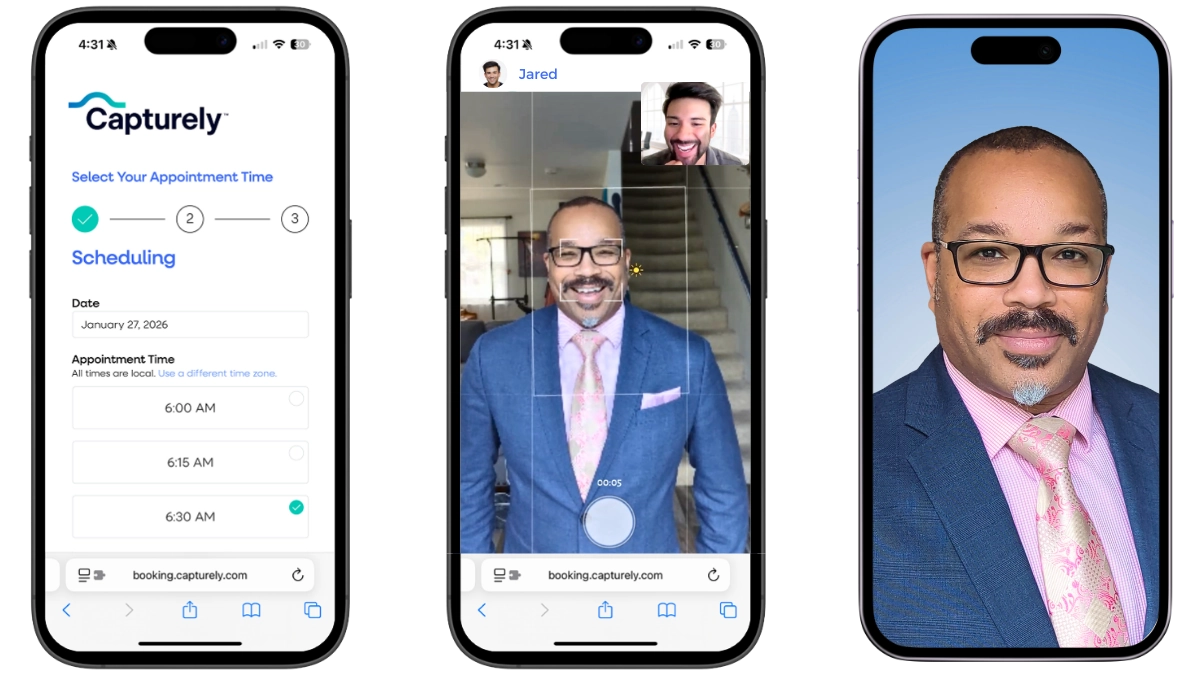
The entire session takes about 10 minutes. For a physician who just finished a 12-hour shift or has 15 minutes between clinic patients, that’s the difference between “I’ll do it” and “I’ll do it later” (which becomes never).
Leah at HCA Healthcare — the nation’s largest for-profit health system with 187 hospitals — described her team’s experience: “I’ve been really impressed with the photos and so have the people that have taken them. I literally don’t understand the technology, how they can be so clear, especially when some of these people’s phones are not that great. But I’m a believer.”
For a deep dive on the technology behind virtual headshot sessions, see our guide on virtual headshots for remote teams.
See the quality firsthand. Book a free demo session for your team — experience the virtual headshot process and see results before committing. Book a demo →
Managing Provider Headshots Across Multiple Facilities
Getting the photos taken is only half the problem. Managing the program — tracking who’s done, who hasn’t, downloading files in the right format, enforcing brand standards across every facility — is where most healthcare organizations hit a wall.
An admin dashboard built for enterprise healthcare changes the equation:
Scheduling visibility. See which providers have booked, completed, or need a reminder — across every facility, department, and role. No more manual tracking spreadsheets. No more chasing people through email chains.
Background and style presets. Set the background, cropping, and retouching preferences once. Every provider gets the same look regardless of when or where they complete their session. Brand standards enforced automatically.
Bulk download and integration. Access all completed headshots from one portal. Download individually, in bulk, or push to your web team in the exact specifications your directory template requires. Lisa Cavallaro at WellSpan described the impact: “Your images hit so many of our brand and tech specs, but they allow us to move faster with less internal touches.”
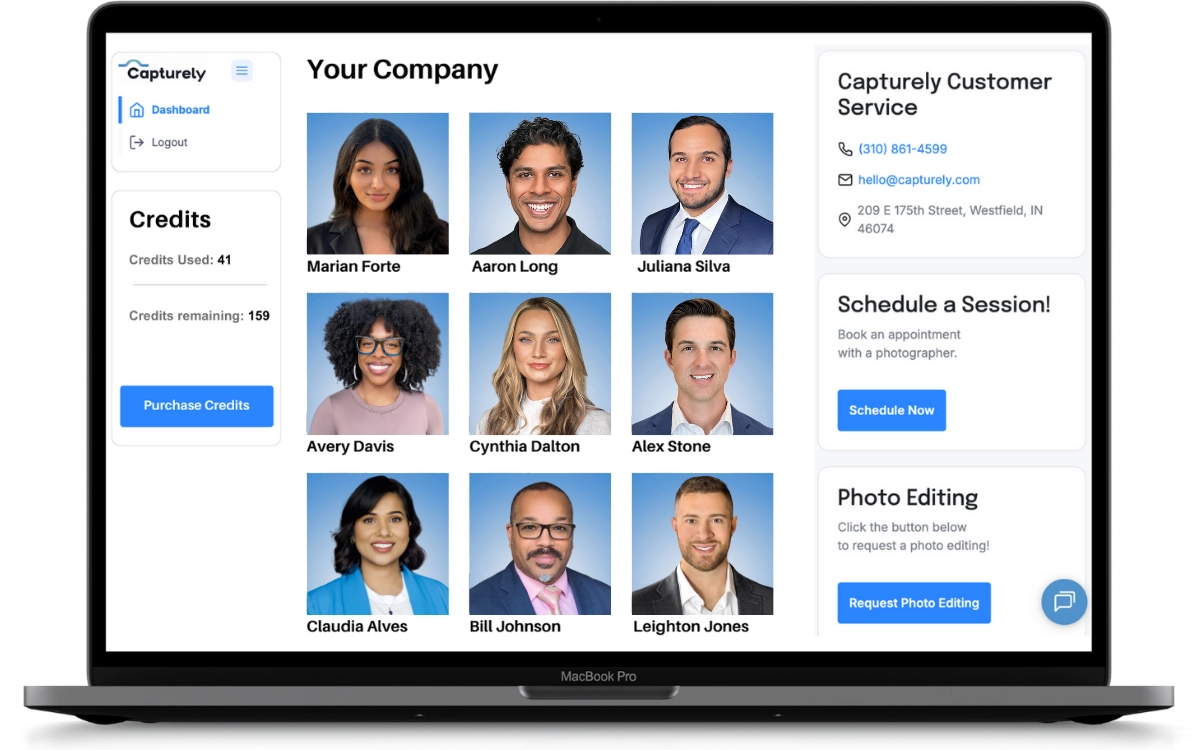
Credits model for ongoing coverage. Healthcare never stops hiring. With session credits valid for 12 months, new providers are covered as part of onboarding — no new purchase orders, no new contracts. Tracy at WellMed Medical Group explained why this matters: “We’re really pushing any of our new providers or anybody who needs a retake to use the platform, because it’s so convenient and it’s so cost effective.”
Metadata and integration. Custom data fields (provider ID, department, location) can be attached to each session, making it easier to route the right headshot to the right directory listing without manual matching.
Rachel Zelnick at Intermountain Health, which operates 33 hospitals and 385+ clinics across 7 states, tracked adoption closely: “We’ve seen adoption go up drastically the last few months to almost 100%.” That’s the kind of participation rate you get when the process respects provider time and the admin tooling actually works.
For a complete playbook on building a headshot program from scratch — including budget approval, rollout communication templates, and ROI measurement — see the HR manager’s guide to team headshot programs.
What Healthcare Providers Should Wear for Headshots
The wardrobe question comes up on every healthcare onboarding call. The answer depends on the provider’s role and your organization’s brand standards.
Physicians and advanced practice providers: A white lab coat over business professional attire is the most common choice for provider directories. It immediately communicates “doctor” to patients scanning listings. Dark base layers (navy, charcoal, black) under the coat photograph well against most backgrounds.
Nurses and clinical staff: Clean, pressed scrubs in your organization’s color are perfectly appropriate. Solid colors photograph better than patterned scrubs. If your system uses colored scrubs by department, maintain that consistency in headshots.
Administrative and non-clinical staff: Business professional or smart casual, depending on your organization’s culture. Solid colors in navy, charcoal, or jewel tones work best. Avoid busy patterns, logos, and overly casual clothing.
Universal tips:
- Avoid all-white clothing on light backgrounds — you’ll blend into the backdrop
- Remove lanyards, badge clips, and stethoscopes (they create visual clutter)
- Glasses are fine — your Capturely photographer will angle you to minimize glare
- Keep jewelry minimal and avoid anything that catches light distractingly
- If your system has a dress code guideline for headshots, set it up front — Capturely’s onboarding process can include wardrobe guidance in the session invitation
For a complete wardrobe guide broken down by industry, see what to wear for professional headshots.
Healthcare Headshot Backgrounds: Which to Choose
The most popular backgrounds for healthcare provider directories:
White or light gray — The industry default. Clean, clinical, reproduces well at any size. Most health system web templates are designed around light backgrounds.
Navy or dark blue — Adds authority without feeling cold. Common in academic medical centers and large health systems. Creates strong contrast with white coats.
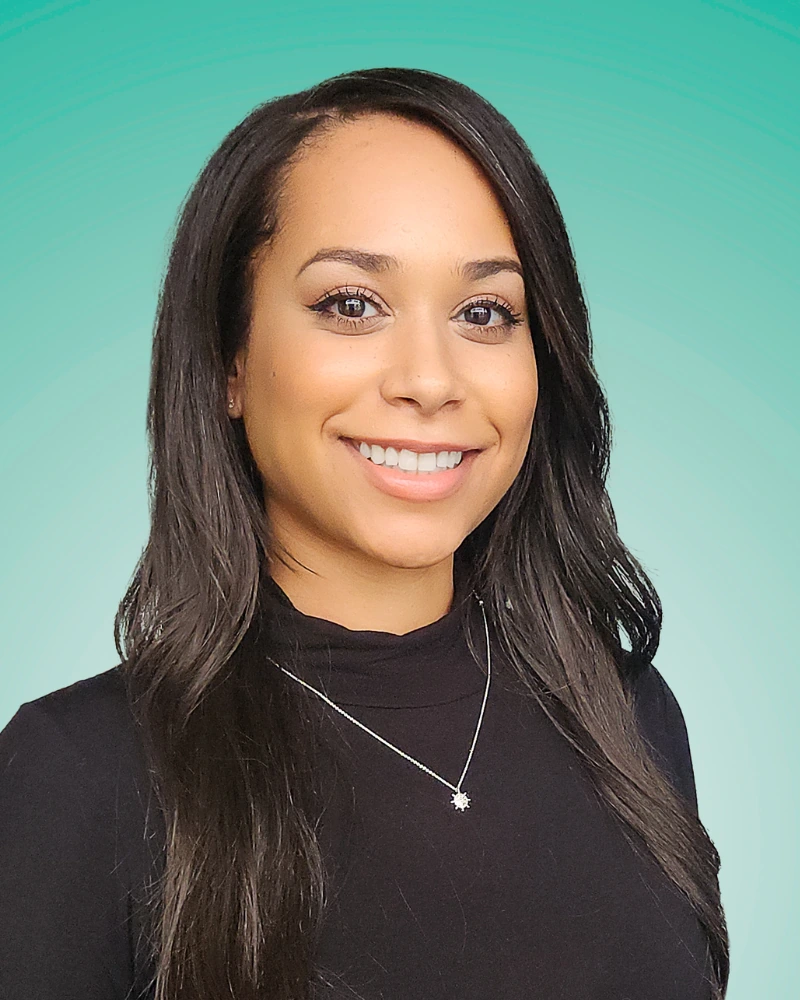
Teal or blue gradient — Modern and distinctive. Works well for health systems wanting to differentiate from the standard white-background directory photo.
Custom branded — Your health system’s exact brand color or gradient, applied uniformly to every provider. Capturely offers 98+ background options plus custom branded backgrounds for a $200 one-time setup fee.
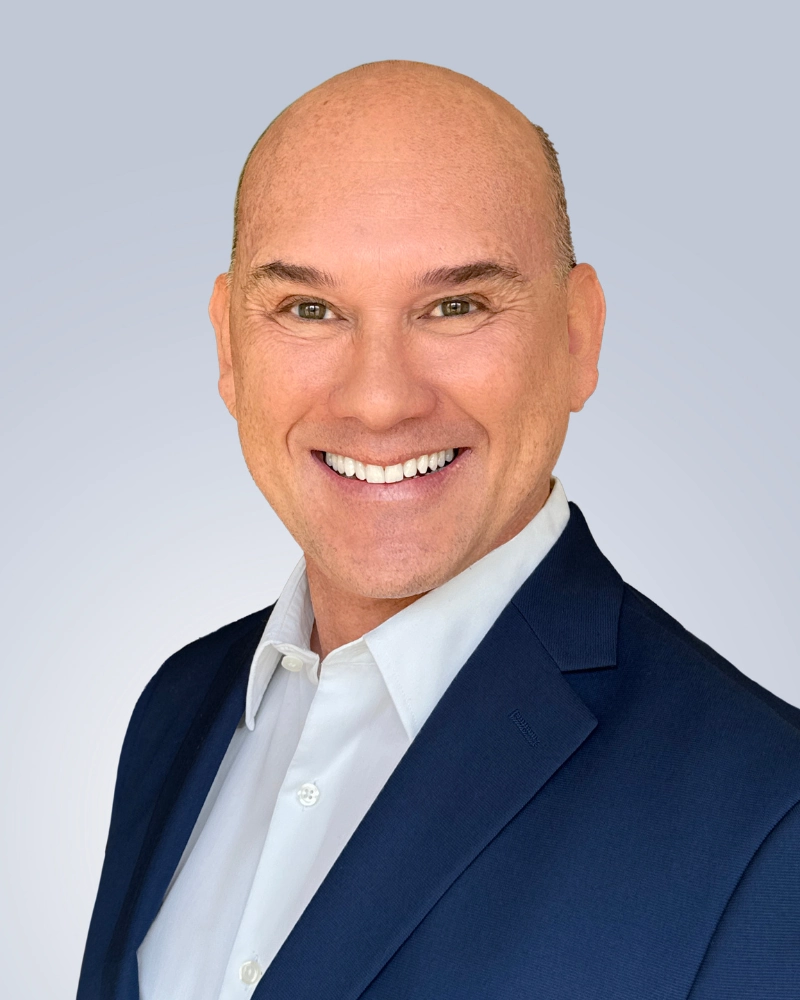
One thing to consider that most guides skip: your headshot background needs to work everywhere your provider’s photo appears — your website, Healthgrades, Doximity, Google Business Profile, internal directories, ID badges, and telehealth platforms. A solid, clean background with good contrast against the subject’s clothing works across all of them. Busy or environmental backgrounds that look fine on a desktop website can become illegible on a phone-sized directory listing.
For the full visual guide, see professional headshot backgrounds.
Where Healthcare Headshots Need to Appear
A single provider headshot needs to live in more places than most health systems realize:
- Provider directory — your “Find a Doctor” page (the primary use case)
- Third-party directories — Healthgrades, Vitals, WebMD, Zocdoc, Doximity
- Google Business Profile — shows up in local search and Maps results
- Telehealth platform — patients see the photo before joining a video visit
- Internal systems — HRIS, credentialing databases, Slack/Teams profiles
- ID badges — printed at various sizes and resolutions
- Marketing materials — brochures, print ads, community health event promotions
- LinkedIn and professional profiles — many providers maintain personal professional presence
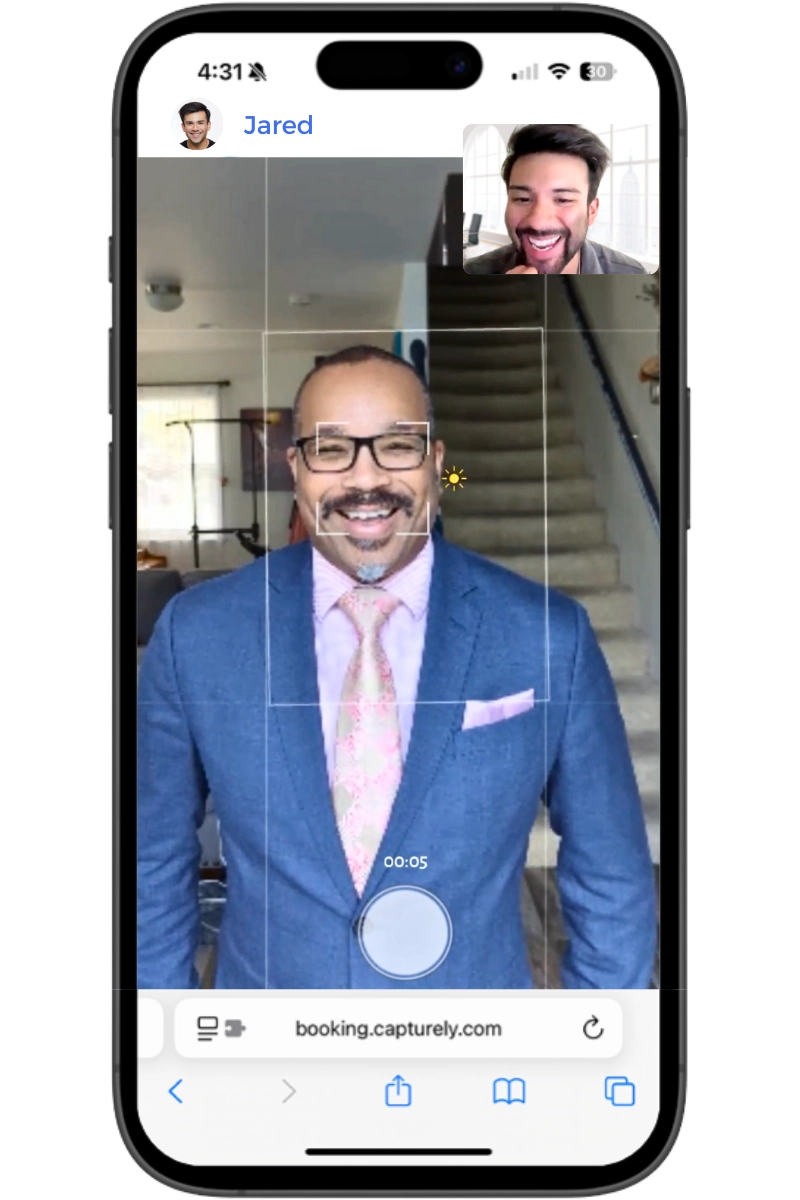
When you photograph once with high enough quality and get the right deliverable specs, that single session feeds every channel. When you use a patchwork approach — one photo for the website, a different crop for the directory, a selfie on Doximity — your provider’s visual identity fragments across the places patients research them.
Compliance Considerations for Healthcare Provider Photography
Good news: provider headshots are far simpler from a compliance standpoint than patient photography.
HIPAA primarily governs Protected Health Information, which is patient-related. Staff and provider headshots are not PHI and don’t trigger standard HIPAA photography rules (HIPAA Journal, 2026). That said, there are still considerations:
Consent for commercial use. California and several other states require written consent before using employee images for marketing purposes (SHRM). Best practice: have providers sign a broad photo release during onboarding that covers website, directory, and marketing usage.
Facility photography policies. If photographers enter healthcare facilities (for event headshots or on-site setups), they must follow facility-specific photography policies — staying out of patient care areas, wearing proper credentials, and avoiding capturing any background that could contain PHI.
Virtual sessions sidestep most of these concerns. When the provider takes their headshot from their own office, home, or any private space, there are no facility access issues, no credentialing of outside vendors, and no risk of inadvertent PHI capture. The camera accesses only what the provider points it at. Capturely’s platform accesses only the phone’s camera via API — no access to photos, storage, contacts, or personal data on the device.
Frequently Asked Questions
How much do healthcare headshots cost?
Costs range from $29 per person for AI generators (not real photos) to $450+ for traditional studio photography. Self-guided virtual services run $25–$60. Live virtual headshots with a professional photographer, like Capturely, cost $45–$79 per person depending on volume, with teams saving up to 45%. For a health system photographing 200+ providers, virtual headshot services typically cost 60–75% less than traditional on-site photography while delivering more consistent results. Full pricing breakdown: professional headshot cost guide.
Should healthcare providers use AI-generated headshots?
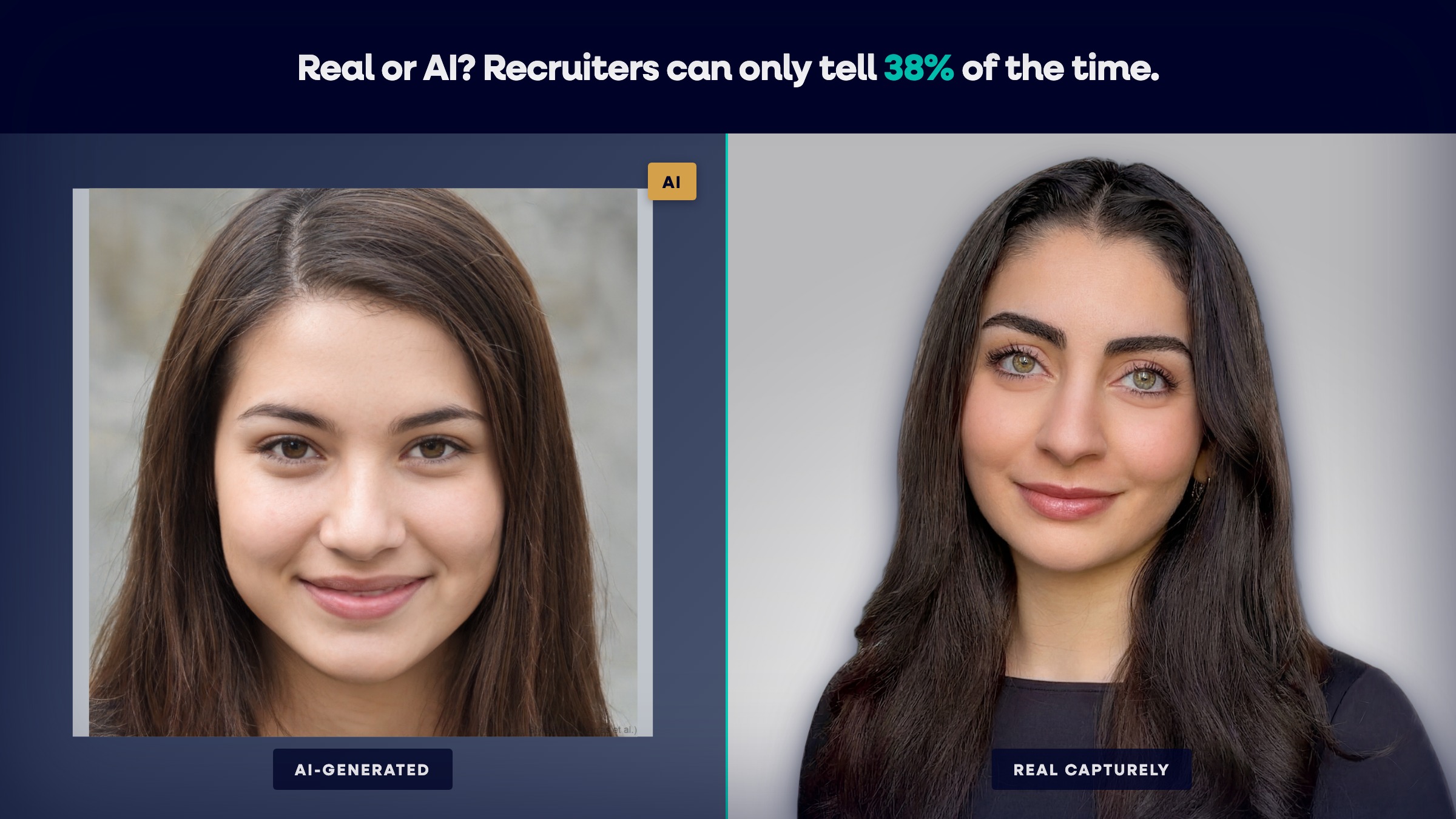
For most healthcare applications, AI-generated headshots create trust problems. Patients will see the actual provider on telehealth calls and in exam rooms — if the AI version doesn’t match reality, it undermines the trust the photo was meant to build. Research shows 38% of viewers describe AI-generated professional photos as “soulless.” Multiple health systems now prohibit AI-generated imagery for patient-facing provider profiles. If your providers do face-to-face patient care, real photographs are the safer investment.
How often should providers update their headshots?
Every 12–24 months, or whenever a provider’s appearance changes noticeably (new glasses, significant weight change, different hairstyle). Given healthcare’s 18.3% annual turnover rate, the more practical question is how to photograph new providers continuously rather than in episodic batches. A credits-based model where sessions are available year-round for onboarding eliminates the “batch photography” problem entirely.
Can a phone camera produce directory-quality healthcare headshots?
Yes. Modern smartphone rear cameras capture at 36–48 megapixels — more resolution than most directory systems require. The camera hardware isn’t the bottleneck. Lighting, composition, and expression coaching are. That’s why live virtual services pair the phone’s camera with a professional photographer who directs everything in real time. Capturely has delivered over 100,000 headshots this way for organizations including HCA Healthcare, Google, and UnitedHealth Group, with a 98% satisfaction rate.
Do healthcare headshots need to comply with HIPAA?
Provider and staff headshots are not Protected Health Information and do not fall under standard HIPAA photography restrictions. HIPAA governs patient imagery, not staff photos. However, health systems should still obtain written photo releases from providers covering website, directory, and marketing usage — especially in states like California that require employee consent for commercial use of their images.
What background is best for healthcare provider headshots?
White and light gray are the industry defaults — clean, clinical, and compatible with most web templates. Navy and dark blue add authority for academic medical centers. The most important factor is consistency: every provider in your system should use the same background so your directory looks unified. Capturely offers 98+ backgrounds plus custom branded options for health systems with specific brand guidelines.
How do you manage headshots for a multi-facility health system?
Use a service with enterprise admin tools — scheduling visibility across all facilities, background and style presets applied automatically, bulk download capabilities, and a credits model that covers ongoing hiring. The goal is a centralized program that works the same way whether a provider is at your flagship hospital or a satellite clinic 200 miles away. For the full playbook: HR manager’s guide to team headshot programs.
How long does a virtual healthcare headshot session take?
About 10 minutes from opening the link to finishing the session. Three professionally retouched headshots — left angle, right angle, and straight-on — are delivered within 24 hours. No app download, no travel, no waiting room. For physicians with 15 minutes between clinic patients, the time commitment is minimal enough to actually get done.
Your Provider Directory Is a Patient Acquisition Channel
The average patient now brings $10,000 to $20,000 to a healthcare organization over their lifetime (MFG Wellness, 2025). Patient acquisition costs range from $247 to $1,435 per new patient (First Page Sage, 2025). Your provider directory is one of the highest-leverage touchpoints in that acquisition funnel — and the quality of your provider headshots directly influences whether a patient books or bounces.
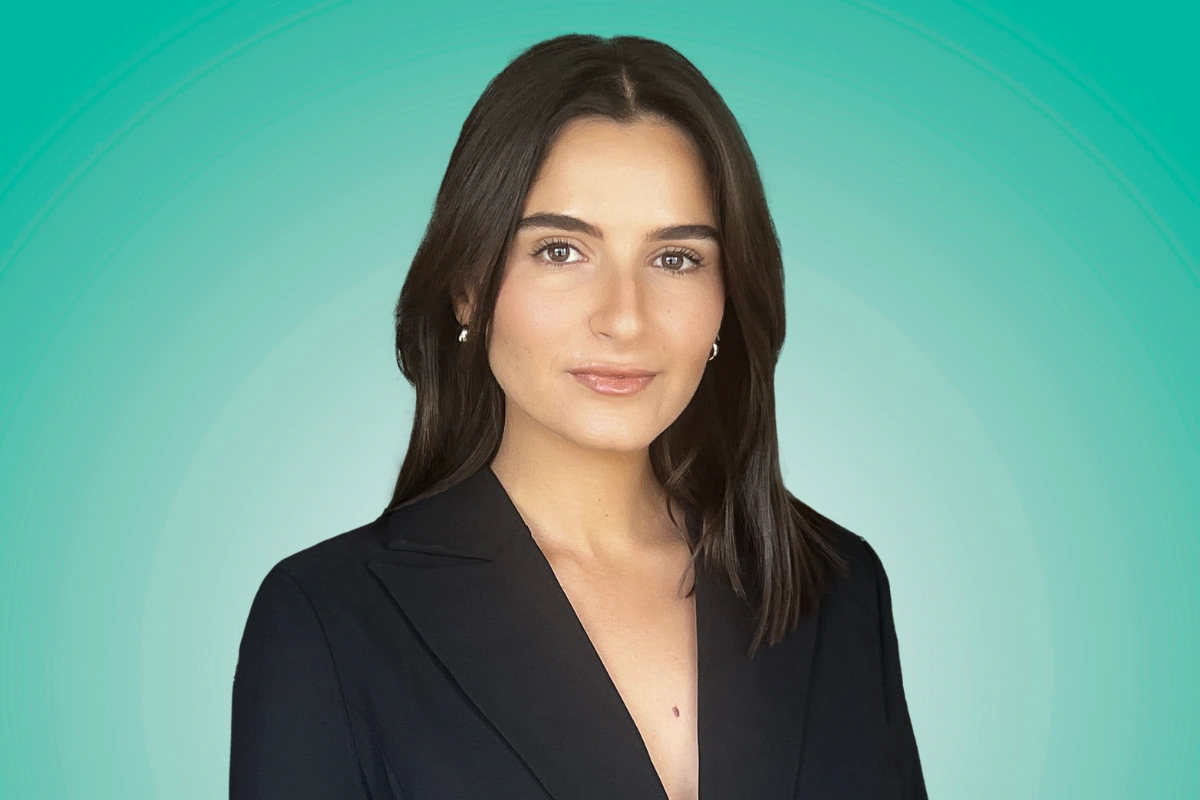
Health systems like HCA Healthcare, WellSpan, Intermountain Health, Novant Health, and MUSC already treat provider photography as infrastructure — not a nice-to-have, but a core component of their digital patient experience. With virtual headshot services, getting every provider photographed with consistent, professional quality no longer requires the logistical gymnastics that made it impossible before.
As John Hamby at Resilience Lab put it: “First impression is everything in this field.”
Ready to upgrade your provider directory? Get a free instant quote for your health system — real photographers, real photos, 10 minutes per provider, 24-hour delivery. Consistent headshots for 15 to 5,000+ providers. Get your instant quote →