
Real estate team headshots are professional, uniform photographs of agents and staff used across MLS listings, brokerage websites, business cards, yard signs, and online profiles like Zillow and Realtor.com. In an industry where 47% of buyers hire the first agent they contact — with the decision often made during online research before that first call (Zillow Consumer Housing Trends Report, 2025) — a professional headshot is the most-viewed marketing asset an agent owns.

Last updated: March 2026
For brokerages with agents spread across multiple offices — or scattered across a state as independent contractors — the challenge is getting everyone to look like they belong to the same company. This guide covers why consistency matters more in real estate than almost any other industry, where the current approach breaks down, and how brokerages like Coldwell Banker, Cutler Real Estate Group, and Sea Coast Advantage handle agent headshots at scale. Based on patterns from delivering over 100,000 headshots at Capturely.
Why Real Estate Is the Most Headshot-Dependent Industry
No other profession puts a face on every piece of marketing the way real estate does.
A doctor’s headshot appears on a directory page. A lawyer’s sits on the firm website. But a real estate agent’s headshot appears on the listing, the yard sign, the business card, the postcard, the magazine ad, the Zillow profile, the Realtor.com page, the brokerage website, the email signature, the Facebook page, and the Instagram bio. One person, one face, ten or more placements — each one a potential first impression with a buyer or seller.

The math is stark. People judge trustworthiness in roughly 100 milliseconds — one-tenth of a second — based on a face (Willis and Todorov, Princeton University, 2006). A professional headshot is rated 75.93% more competent than a casual photo of the same person (Photofeeler, 2023). And on LinkedIn, profiles with professional photos get 14x more views and 36x more messages (LinkedIn, 2023).
In real estate, those aren’t vanity metrics. They’re lead flow.
The shift is accelerating. In 2018, only 15% of sellers found their agent through online channels. By 2025, that number hit 36% (Zillow Consumer Housing Trends Report, 2025). For buyers, 33% say online research played a key role in choosing their agent. And 59% of sellers hire the first agent they speak with — meaning the hiring decision happens before the first conversation, based on what they see online.
As NAR’s own guidance to agents puts it: “A perfect headshot can project likability, trustworthiness and competence to prospects before you even meet them” (NAR Magazine, 2025). That’s not soft advice. That’s the industry’s largest trade association telling 1.5 million members that a photograph drives business.
Ryan Maurer at Cutler Real Estate Group went through the evaluation process firsthand: “We looked at AI options and other photo services, but Capturely delivered the real, professional look our agents needed.”
There are over 102,000 brokerages in the US, averaging 14.6 agents each (RubyHome, 2025). Among the 1.5 million NAR members competing for business (NAR, 2025), the ones with outdated, blurry, or inconsistent headshots are losing that fight before it starts.
The Brokerage Brand Problem: When Every Agent Uses a Different Photo
Here’s what most brokerage team pages actually look like: one agent has a studio portrait from 2018. Another has a cropped vacation photo. A third used an AI generator. The new agent has nothing at all — just a gray silhouette or a company logo placeholder.

It looks amateurish. And in real estate, looking amateurish costs deals.
The problem compounds with scale. A boutique agency with five agents can coordinate a single photo shoot. A brokerage with 60 offices spread across a region? That’s a different problem entirely.
Alan Tucker at Coldwell Banker Advantage / Seacoast Advantage described the reality: “We’ve had myself and another person kind of beta testing it and in our immediate group we have five offices that are spread out over about an hour but with the main group we have probably 60 offices.”
Jeff Maldonado at AmeriLife — a national insurance distribution company with a similar distributed-agent model — put it more directly: “Our agents are everywhere — they’re national. We had no mechanism to ensure their headshots met our brand standards. Capturely solves that. We now have standards of formatting, consistent delivery, and everyone’s been on the nose of where we needed to be.”
The distributed agent model that makes real estate brokerages hard to photograph is the same model that makes consistency so important. When every agent is a walking billboard for the brand, every mismatched headshot dilutes it.
Get your brokerage on the same page — literally. Consistent headshots for every agent, every office, delivered in 24 hours. Get an instant quote in 30 seconds. Get your instant quote →
Where Real Estate Agents Need Professional Headshots
The average professional has about 7 places to use a headshot. Real estate agents have closer to 12. Here’s where a single, consistent headshot needs to appear — and why using different photos in different places hurts more than it helps.
| Placement | Why It Matters | Photo Specs Needed |
|---|---|---|
| MLS Listings | Buyers see agent photo alongside every listing | Varies by MLS — typically JPEG, specific dimensions |
| Zillow / Realtor.com / Redfin | Top platforms where buyers research agents | Square crop, minimum 200x200px |
| Brokerage Website | Team page, agent bio, office directory | Consistent background and style across all agents |
| Business Cards | Handed out at every showing, open house, networking event | High-res for print (300 DPI) |
| Yard Signs / For Sale Signs | Physical presence in the neighborhood | High-res, weather-resistant print quality |
| Email Signature | Every email sent is a branding touchpoint | Small file size, web-optimized |
| LinkedIn Profile | Where referral partners and high-end clients research you | 400x400px minimum, professional background |
| Facebook / Instagram | Social media presence drives agent discovery | Platform-specific crops from same base image |
| Direct Mail / Postcards | “Just Sold” and farming mailers need a face | High-res for print |
| Magazine / Print Ads | Local real estate publications and community magazines | CMYK, 300 DPI minimum |
| Open House Materials | Sign-in sheets, flyers, welcome displays | Varies |
| Google Business Profile | Shows in local search results and Maps | Square, minimum 250x250px |

Alan Tucker at Coldwell Banker noted the versatility factor: “We’re able to get the images and start using them in multiple ways other than just business cards and other media stuff. So that’s good too.”
When an agent uses the same high-quality headshot across all 12 placements, clients recognize them before they’ve ever met. That recognition builds trust. When they use a different photo everywhere — or worse, a great headshot on Zillow and a blurry selfie on the yard sign — that trust fractures. For more on how professional headshots affect your LinkedIn presence specifically, see our guide on the best professional headshot for LinkedIn.
How Real Estate Teams Currently Handle Headshots (And Why It Breaks)
Most brokerages fall into one of four approaches. None of them work well at scale.
| Approach | Cost per Agent | Live Photographer | Works for Distributed Teams | Consistent Results | Turnaround |
|---|---|---|---|---|---|
| Traditional Studio / On-Site | $150–$450 | Yes | No | Varies by photographer | 1–3 weeks |
| On-Demand Marketplace (Snappr) | $89–$200+ | Yes (in-person) | Major metros only | Varies | 3–7 days |
| Self-Guided Virtual (Headshots.com) | $25–$60 | No | Yes | Low — high rejection rate | 3 days |
| AI Headshot Generators | $29–$59 | No | Yes | Medium | Minutes |
| Live Virtual (Capturely) | $45–$79 | Yes | Yes | High | 24 hours |
The scheduling problem: Real estate agents aren’t salaried employees sitting at desks. They’re independent contractors running between showings, closings, and client meetings. Good luck scheduling 50 agents for a Tuesday afternoon photo shoot. Half won’t show. The other half will be in the car between appointments.
The turnover problem: Real estate has brutal attrition. Of agents who closed their first deal in 2022, 49% failed to close a second transaction the following year (Relitix, 2024). NAR membership dropped by roughly 150,000 agents between late 2022 and mid-2025 (NAR, 2025). For brokerages, that means constant onboarding of new agents who need headshots — and constant departures of agents whose photos need to be removed. A one-time photo day doesn’t solve an ongoing problem.
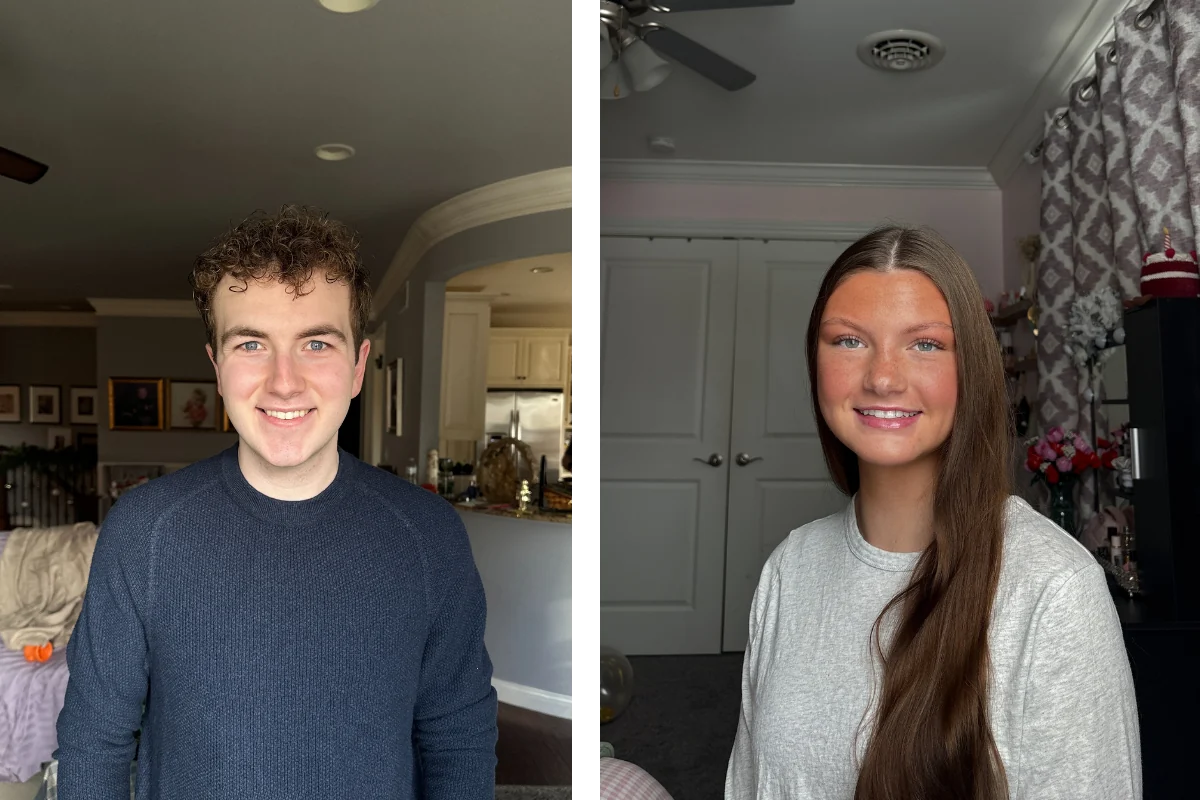
The consistency problem: When you tell agents to “go get a headshot” on their own, you get 50 different backgrounds, 50 different crops, and 50 different quality levels. Some agents will invest in a $300 studio session. Others will point their phone at the bathroom mirror. The team page looks like a collage, not a brand.
The AI problem: AI generators are tempting — $35 per agent, instant results. But AI-generated headshots don’t look like the actual person. When a buyer meets an agent at an open house and the agent looks nothing like their Zillow photo, that’s a trust violation. In an industry built on personal trust, that’s a dealbreaker. As one broker told us on a discovery call: “As much as it looks like me, there’s… you can always tell it was AI generated.”
For a full pricing breakdown across all these methods, see our professional headshot cost guide.
How to Get Consistent Headshots Across a Distributed Agent Network
The approach that works for distributed real estate teams is virtual headshots with a live photographer. Here’s why — and exactly how the process works.
Instead of bringing agents to a studio or bringing a photographer to every office, each agent connects with a professional photographer through their phone. The photographer directs everything in real time — posing, lighting, expression — using the phone’s rear camera (36–48 megapixels, not the selfie camera). Same backgrounds, same style, same quality, whether the agent is in the main office or working from their kitchen table two states away.

The step-by-step process:
- Brokerage admin configures the program. Choose from 98+ backgrounds (or create a custom branded background for a $200 one-time fee), set style preferences, and define delivery specs for your MLS, website, and print materials.
- Agents receive a secure session link. No app download. No passwords. No IT involvement. Just a URL they open on their phone browser — from their office, their car between showings, or their home.
- Agent connects with a live photographer. A professional appears on screen, switches them to the rear camera, and directs the entire session: “Shoulders back. Chin down slightly. Turn your head just a bit to the right. Perfect.”
- The photographer catches what self-guided can’t. Bad lighting from overhead fluorescents? Repositioned near a window. Stiff expression from a camera-shy agent? Talked through it. Collar flipped wrong? Fixed before the shot. This is why reshoot rates stay under 2%.
- Three edited headshots delivered within 24 hours. Left angle, right angle, straight-on — professional retouching, not filters. The admin sees them in the dashboard immediately.

The whole session takes about 10 minutes. For an agent between closings, that’s doable. A 3-hour studio appointment? That’s a deal they didn’t close.
Logan Wells at Sea Coast Advantage — a brokerage that’s already using the platform — summed it up: “Obviously, it’s going well, or I wouldn’t have recommended you folks.”
For a deeper dive on how virtual headshots work and why the quality matches studio photography, see our corporate headshots guide.
See the quality for yourself. Book a free demo session and experience the virtual headshot process before committing your brokerage. Book a free demo →
What Real Estate Agents Should Wear for Headshots
Wardrobe matters more in real estate headshots than most agents realize. Your headshot appears on marketing materials that target everyone from first-time buyers to luxury sellers. The goal: look professional enough for a $2M listing presentation and approachable enough for a nervous first-time buyer.
Best choices for real estate headshots:
- Solid colors in navy, charcoal, black, or jewel tones. These photograph well against every background and project authority without stuffiness.
- Business professional for luxury and commercial agents. A well-fitted suit or blazer communicates that you operate at a high level.
- Smart casual for residential agents. A blazer over a solid top, or a crisp button-down, hits the right note — polished but human.
- Avoid busy patterns, large logos, and overly trendy pieces. Your headshot needs to look current for 2–3 years. That bold geometric print won’t age well.

For brokerage-wide consistency: Set a dress code guideline before distributing session links. “Dark blazer over a solid top, no patterns, no logos” gives agents enough flexibility while ensuring the team page looks cohesive. Capturely’s onboarding process can include wardrobe guidance in the session invitation so agents know what to wear before they schedule.
For the complete wardrobe breakdown by industry and role, see our guide on what to wear for professional headshots.
Best Headshot Backgrounds for Real Estate Teams
The background you choose says something about your brokerage’s brand. Here’s what works — and what to avoid.
Gray or light neutral — The safe pick. Clean, modern, works on every platform from MLS to print. Most brokerage websites use white or light backgrounds, so agent headshots on gray integrate without visual friction.
Navy or dark blue — Projects authority. Especially popular with luxury brokerages and teams that want a more premium look. Creates strong contrast with lighter clothing.
White — Classic and minimal. Works well for brokerages with clean, modern websites. The downside: agents in light clothing can blend into the background.
Custom branded — Your brokerage’s exact brand color or a gradient that matches your marketing materials. Capturely offers 98+ standard backgrounds plus custom options for a $200 one-time setup. Some brokerages match their franchise brand guidelines (Keller Williams red, RE/MAX blue, Compass navy).

The critical rule: every agent in the brokerage should use the same background. A team page with five different background colors looks disjointed. One background, one style, one look — that’s how you communicate “we’re a team, not a collection of freelancers.”
For the full visual guide with examples across all 98+ options, see professional headshot backgrounds.
Managing Agent Headshots at Scale: The Admin Side
Getting headshots taken is half the battle. Managing the program — tracking who’s done, downloading files for specific placements, onboarding new agents, removing departed ones — is where brokerages hit a wall.
An admin dashboard changes the equation:
Scheduling visibility. See which agents have booked, completed, or need a nudge — across every office. No more tracking in spreadsheets or email chains.
Background and style presets. Set them once. Every agent gets the same look regardless of when they complete their session. Brand standards enforced automatically, not manually.

Bulk download and delivery. Need all headshots in a specific format for your website redesign? Download them all at once. Need just the new agents’ photos for a marketing update? Filter and grab those. Alan Tucker at Coldwell Banker Advantage found this made life measurably easier: “Everything that you need right there is on one portal.”
Credits model for ongoing agent onboarding. Real estate brokerages don’t hire in batches — agents join (and leave) year-round. Session credits are valid for 12 months, so new agents get photographed as part of onboarding without requiring a new purchase order every time. Buy 50 credits at the start of the year. Use them as agents come on board.
Teams save up to 45%. Individual sessions run $79. Volume pricing drops to $45–$79 per person depending on team size. For a 30-agent brokerage, that’s $1,350–$2,370 for consistent headshots across the entire team — less than the cost of a single traditional photo day with a studio photographer at many metro rates. Full pricing details: professional headshot cost guide.
For the complete playbook on building a headshot program from scratch — including budget justification, rollout templates, and adoption strategies — see the HR manager’s guide to team headshot programs.
When to Update Real Estate Headshots
The rule of thumb in real estate is to update headshots every 2–3 years, or sooner if your appearance has changed noticeably. But there are specific triggers that should prompt an immediate update:
- New agents joining the brokerage — headshot should be part of onboarding, done in the first week
- Brokerage rebrand — new colors, new logo, new positioning means new backgrounds and style
- Website redesign — the new site will look polished; the old headshots won’t match
- Franchise change — switching from RE/MAX to Compass (or any brand transition) requires a visual reset
- Agent complaints — “that doesn’t look like me anymore” means it’s overdue
- MLS or platform requirement change — some MLSs have started requiring more recent photos

Given real estate’s high agent turnover — with 71% of active agents not closing a single transaction in 2024 (The National Desk, 2025) and 49% of new agents failing to close a second deal within a year of their first (Relitix, 2024) — most brokerages need to photograph 20–30% of their roster every year just to keep pace with churn. A credits model that covers year-round onboarding is more practical than annual photo days.
Real Estate Headshot Examples: What Works
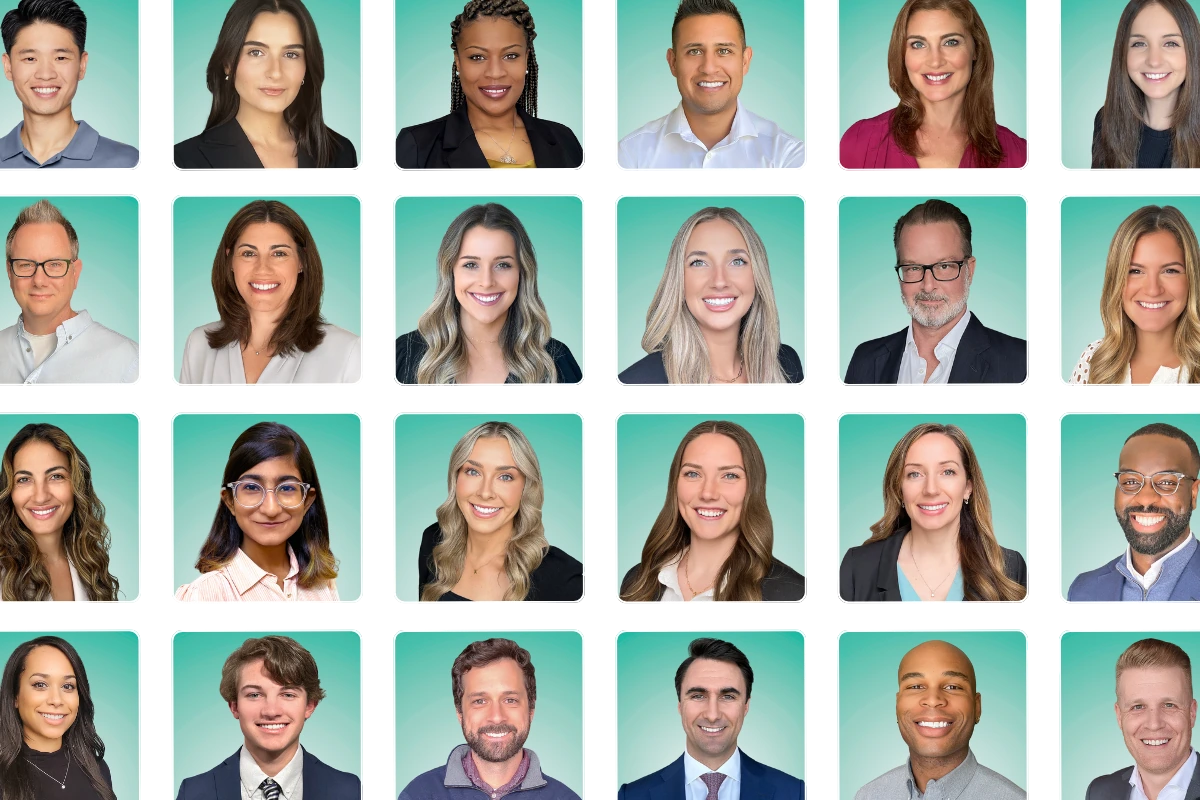
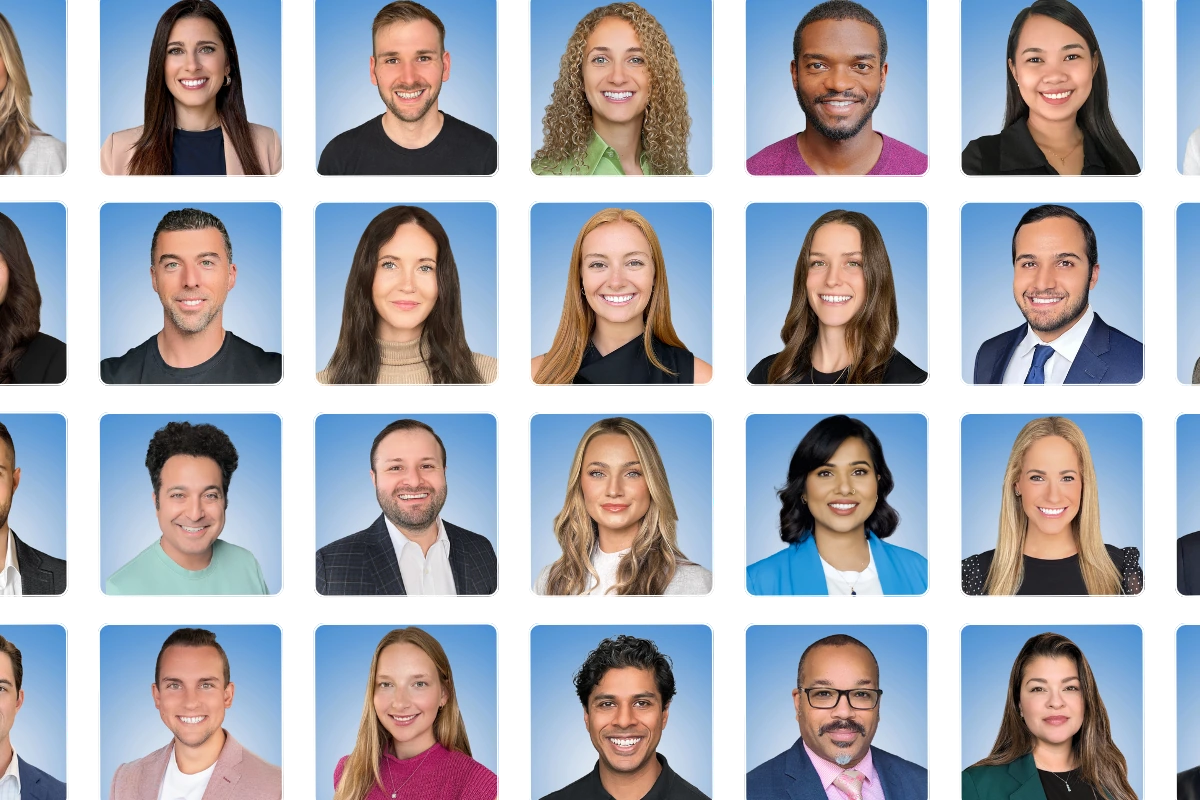
The best real estate headshots share four qualities: professional lighting, a clean background, genuine expression, and appropriate attire. Here’s what that looks like in practice.

What makes these work:
- Eyes are sharp and focused. Direct eye contact creates connection with the viewer — the potential client scrolling through agent profiles.
- Expression is warm but professional. A slight smile (closed or open, depending on personality) beats a stone-faced “passport photo” look every time. You want approachable authority.
- Background is clean and consistent. Solid color, no distractions. The focus stays on the face.
- Framing is head and shoulders. Tight enough to see expression clearly, wide enough to show posture and attire. This crop works everywhere — from a 2-inch business card to a full-width website banner.
The difference between “good enough” and “actually good” is the direction. A self-guided app can capture the image. A live photographer captures the person. That’s the gap — and it’s why Capturely’s 765+ reviews sit at 4.9 stars. For a gallery of professional headshot examples across industries, see our business headshots guide.

Ready to upgrade your brokerage’s headshots? Get consistent, professional photos for every agent — 10-minute sessions, 24-hour delivery, zero logistics. Teams save up to 45%. Get your instant quote →
Frequently Asked Questions
How much do real estate team headshots cost?
Costs range from $29 per agent for AI generators (not real photos) to $450+ for traditional studio sessions. Self-guided virtual services run $25–$60. Live virtual headshots with a professional photographer cost $45–$79 per person depending on volume, with teams saving up to 45%. For a 30-agent brokerage, that’s roughly $1,350–$2,370 total — less than the cost of a single traditional photo day in most metro areas. Full breakdown: professional headshot cost guide.
Should real estate agents use AI-generated headshots?
For most real estate applications, AI headshots create a trust problem. Buyers and sellers will meet the agent in person — at showings, open houses, closings. If the AI version doesn’t match reality, you’ve undermined the trust you were building. Research shows 38% of people describe AI-generated professional photos as “soulless.” Many brokerages now prohibit AI-generated imagery for agent-facing profiles. Real photographs taken by a live photographer are the safer investment for client-facing professionals.
How often should real estate agents update their headshots?
Every 2–3 years minimum, or immediately after significant appearance changes, a brokerage rebrand, or a franchise transition. With 49% of new agents failing to close a second deal within a year (Relitix, 2024), brokerages should plan to photograph 20–30% of their roster annually just to keep pace with churn. A credits-based model that covers year-round onboarding is more practical than scheduling annual photo days.
Can a phone camera produce headshots good enough for MLS listings?
Yes. Modern smartphone rear cameras capture at 36–48 megapixels — more resolution than any MLS, Zillow, or print material requires. The camera hardware isn’t the bottleneck; lighting, composition, and expression coaching are. That’s why live virtual services pair the phone’s camera with a professional photographer who directs everything in real time. Capturely has delivered over 100,000 headshots this way for companies including Google, Netflix, and McKinsey, with a 98% satisfaction rate.
What background is best for real estate agent headshots?
Gray and navy are the most popular choices for real estate teams. Gray is clean and modern, works on every platform, and pairs well with most clothing. Navy adds authority for luxury and commercial agents. The most important factor isn’t which color — it’s that every agent in the brokerage uses the same one. Capturely offers 98+ background options plus custom branded backgrounds that match your brokerage’s brand guidelines.
How do you coordinate headshots for a brokerage with multiple offices?
Virtual headshots eliminate the coordination problem entirely. Each agent receives a session link, schedules at their convenience, and connects with a live photographer from wherever they are — their office, home, or between appointments. The admin dashboard tracks completion across all offices. Background and style presets ensure every agent gets the same look. For 5 offices or 60, the process is identical.
What should real estate agents wear for headshots?
Solid colors in navy, charcoal, black, or jewel tones photograph best. Luxury and commercial agents should lean toward suits or blazers. Residential agents can go smart casual — a blazer over a solid top works well. Avoid busy patterns, large logos, and trendy pieces that won’t age well. For brokerage consistency, set a dress code guideline before distributing session links. Full wardrobe guide: what to wear for professional headshots.
Your Agents’ Faces Are Your Brand
In real estate, the agent IS the brand. Every listing photo, every yard sign, every Zillow profile — it all comes back to a face. And when that face is a blurry crop from a 2017 family photo, potential clients notice. They may not say it. But they scroll past.
Brokerages like Coldwell Banker Advantage, Cutler Real Estate Group, and Sea Coast Advantage have figured out that consistent, professional headshots aren’t a vanity project — they’re infrastructure. As fundamental as branded signage and a functioning website. The ones still treating headshots as an afterthought are competing with one hand tied behind their back.
As Logan Wells at Sea Coast Advantage put it after rolling out the program to their team: “It sounds like you’ve got a really impressive product. I love the concept of it. It sounds like the simplicity of it.”