Business headshots are professional head-and-shoulders photographs used across company websites, LinkedIn profiles, email signatures, directories, and client-facing materials. They typically cost between $29 and $450 per person depending on the method — AI generators at the low end, traditional studios at the high end, and virtual sessions with a live photographer in between. The right option depends on your team size, quality requirements, and how many places you’ll use the photos.
Last updated: March 2026

That’s the quick answer. But if you’re the person responsible for actually booking business headshots — for yourself or for a team of 50 — the details matter. How much should you really spend? What’s the difference between a $29 AI headshot and a $300 studio session? Where will these photos actually get used? And what should you look for in a provider?
This guide covers every question we hear from marketing directors, HR managers, and business owners before they book. It’s informed by patterns from over 100,000 headshots Capturely has delivered to companies like Google, Netflix, McKinsey, and UnitedHealth Group — plus research from LinkedIn, Princeton, Stanford, and PhotoFeeler. For a broader overview of all headshot types, see our complete professional headshots guide.
Why Do Businesses Invest in Headshots?
Because they measurably change how people perceive your company. And that perception forms faster than you’d expect.
Princeton researchers found that people form trustworthiness judgments from a face in just 100 milliseconds (Willis & Todorov, 2006). A tenth of a second. Before anyone reads your bio, your credentials, or your company’s About page — they’ve already decided whether you look competent, trustworthy, and approachable.
According to Alexander Todorov, Professor of Psychology at Princeton and author of Face Value, “All it takes is a tenth of a second to form an impression of a stranger from their face, and longer exposures don’t significantly alter those impressions.” Trustworthiness, his research shows, is the trait humans judge fastest and most confidently.
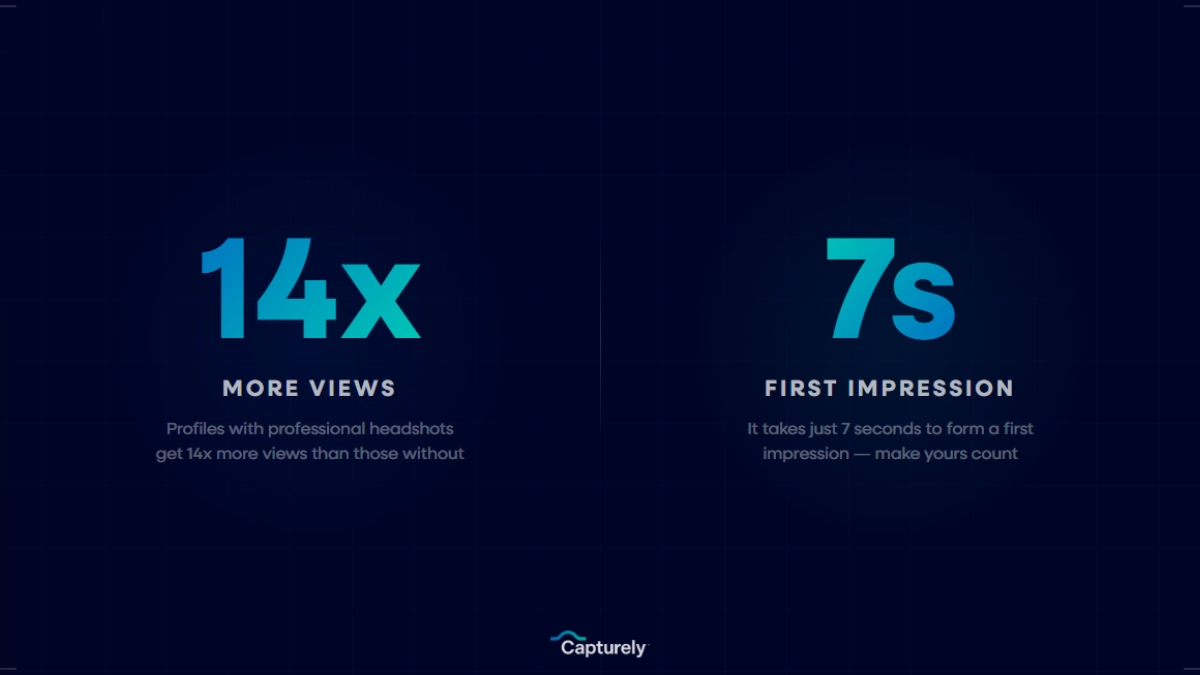
That snap judgment carries real business consequences:
- 14x more profile views when professionals have a photo on LinkedIn (LinkedIn, 2018)
- 21x more views and 36x more messages with a professional photo specifically (LinkedIn, 2018)
- 75% of consumers judge a company’s credibility based on its website design — and team photos are the most human element on any site (Stanford Web Credibility Project, 2002)
- 52% of website visitors say the About Us page is the first thing they want to see (KoMarketing, 2015)
- +76% perceived competence when professionals upgrade to a new headshot (PhotoFeeler, 60,000+ ratings)
When 160 Driving Academy replaced a stock image on their website with a real photo of an actual student, form submissions increased 161% (VWO). A separate A/B test found replacing a generic icon with a personal photo generated 48% more conversions (VWO). Real faces outperform everything else.
And here’s the number that should make this an easy budget conversation: companies with consistent professional headshots across their team are perceived as 58% more trustworthy than those with mismatched or missing photos. That’s not a nice-to-have. That’s a measurable credibility gap between you and the competitor whose team page actually looks put together.
Where Do Business Headshots Get Used?
The average professional now uses their headshot in seven or more places. Most businesses only think about one or two of them when booking — then scramble when they need photos for the rest. Here’s the full inventory.
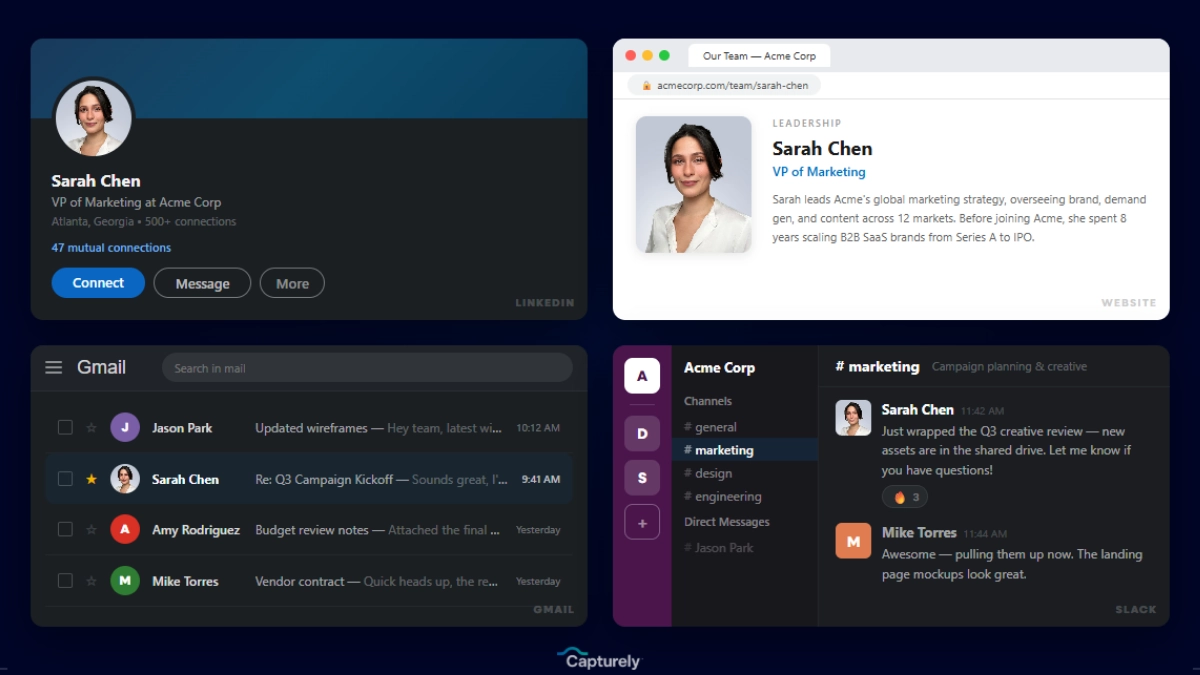
| Use Case | Where It Shows Up | Why It Matters |
|---|---|---|
| LinkedIn profile | Profile photo circle (200px) | 21x more views, 36x more messages with a professional photo (LinkedIn, 2018) |
| Company website | About/Team page, leadership bios | 52% of visitors check the About page first (KoMarketing, 2015) |
| Email signature | Every outbound email | Emails with a personal photo see up to 42% higher click-through rates (Vero) |
| Slack / Microsoft Teams | Every message, every meeting | Internal visibility — coworkers see your photo hundreds of times per week |
| Google / Zoom profile | Video call thumbnails | Your face shows before you even join the meeting |
| Professional directories | Industry listings, provider pages | Patients, clients, and prospects research you here before making contact |
| Proposals and pitch decks | Team slide in competitive bids | Putting faces to the team builds trust in high-stakes procurement |
| Press and media | Speaker bios, press releases | Journalists need a downloadable high-res headshot on short notice |
| Business cards | Networking events | A professional photo makes the card memorable |
| Internal directories / HRIS | Employee profiles, org charts | Helps new hires put names to faces in large organizations |
Employee-shared content on LinkedIn gets 800% more engagement than the same posts from brand accounts. Your team’s headshots aren’t just personal branding — they’re your most visible marketing channel. When those photos look amateur, outdated, or inconsistent, every single touchpoint above suffers.
As Alan Tucker at Coldwell Banker Advantage put it after updating his team’s photos: “We’re able to get the images and start using them in multiple ways other than just business cards and other media stuff.” Most companies don’t realize how many places those headshots will end up until after they’ve booked them.
Need business headshots for your team? Get a free instant quote — configure your look, see volume pricing, done in 30 seconds. Real photographers. Real photos. 24-hour delivery. Get your instant quote →
How Much Do Business Headshots Cost?
Business headshot pricing ranges from free (DIY with your phone) to $450+ per person (premium studio in a major metro). The method you choose determines both the cost and the quality ceiling. Here’s an honest comparison as of early 2026.
| Method | Cost Per Person | Turnaround | Live Direction | Real Photos | Best For |
|---|---|---|---|---|---|
| Premium Studio | $295–$450+ | 1–3 weeks | Yes | Yes | C-suite, public-facing executives |
| Standard Studio | $150–$300 | 1–2 weeks | Yes | Yes | Individual professionals in major markets |
| Virtual + Live Photographer | $45–$79 | 24 hours | Yes | Yes | Teams of any size, distributed/remote |
| AI Generator | $29–$59 | Minutes | No | No (fabricated) | Budget-conscious individuals, low-stakes |
| DIY at Home | $0–$20 | Immediate | No | Yes | Absolute minimum budget |
One caveat on AI pricing that most comparison pages skip: independent reviewers consistently find that only 10–20% of AI-generated headshots are professionally usable. That means a $29 package producing one or two usable images out of ten is effectively $145–$290 per usable headshot — approaching studio prices. Price-per-headshot and price-per-usable-headshot are very different numbers.
For a detailed cost breakdown with volume pricing, geographic variation, and hidden costs to watch for, see our complete professional headshot pricing guide.
How to Get Business Headshots: Every Method Compared
Each method makes sense for a different situation. Here’s what to actually expect from each one.
Traditional Photography Studio
Book a local photographer, visit their studio, get photographed with professional lighting and equipment. This is still the gold standard for individual executives who want maximum control — dedicated lighting, multiple outfit changes, extended session time.
The limitation shows up at scale. Coordinating studio visits for 20+ people across multiple locations is the logistical headache that makes HR managers lose sleep. Different photographers mean different lighting, different backgrounds, different retouching styles. Your team page ends up looking like a collage of photos from six different decades.
As one prospect told us: “The cost and the time and the scheduling just threw us.”
Virtual Session With a Live Photographer
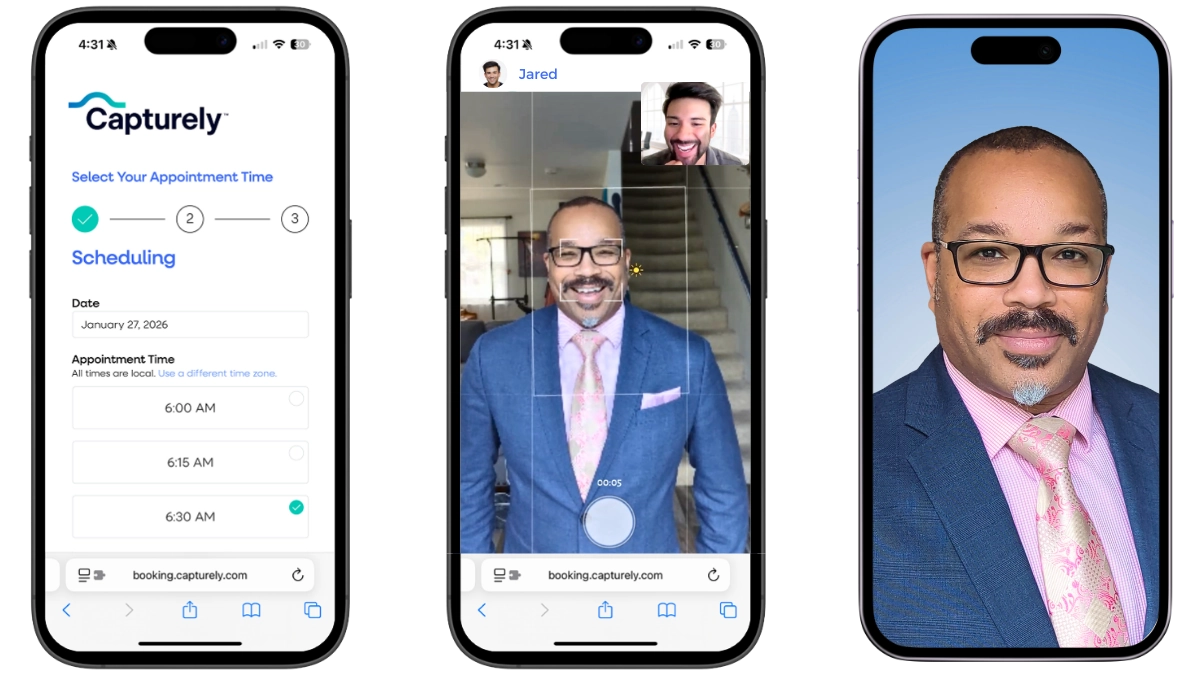
This is the method most people don’t know exists. You receive a secure link on your phone, open it (no app download), and connect with a professional photographer who directs the entire session in real time through the rear camera. The photographer handles posing, lighting adjustments, expression coaching, and framing — exactly what a studio photographer does, minus the commute.
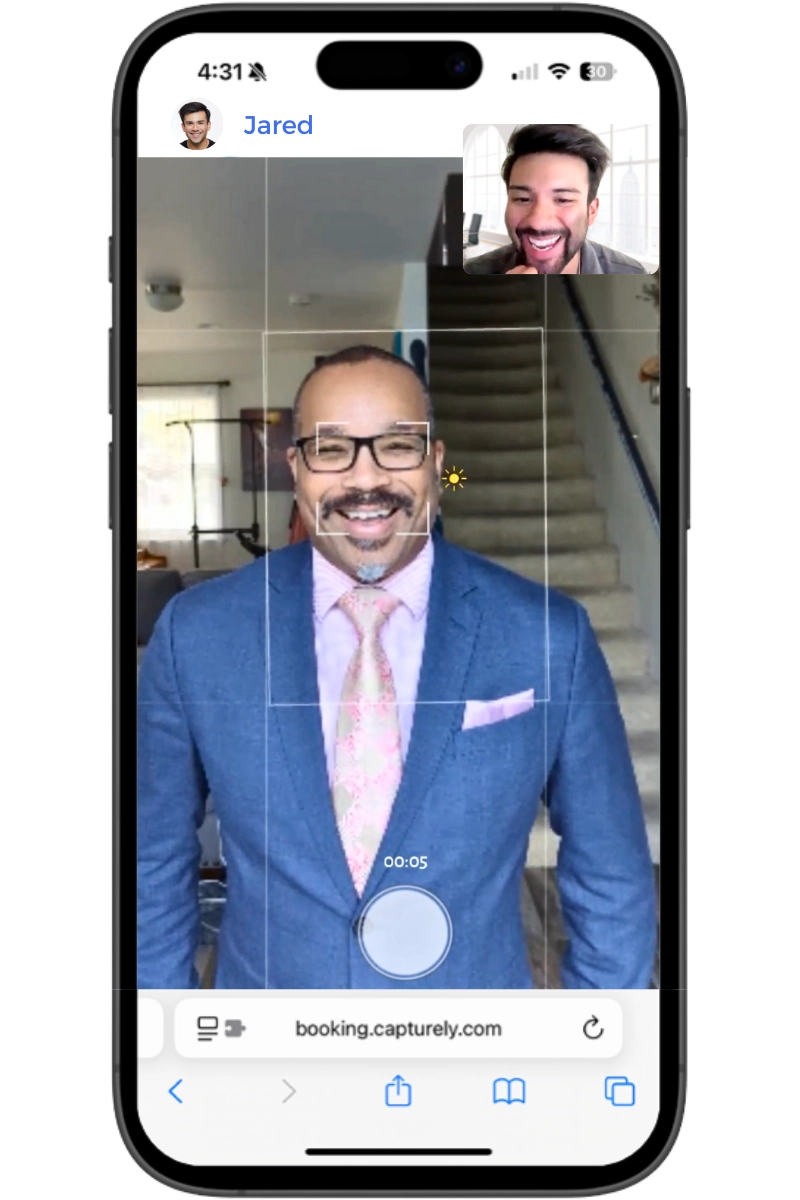
This is what Capturely built — and it’s why companies like Google, Amazon, McKinsey, and HCA Healthcare use it for their teams. The session takes about 10 minutes. You get three fully retouched images (left angle, right angle, straight-on) delivered within 24 hours. Individual sessions run $79; teams save up to 45% at $45–$79 per person depending on volume.
The key advantage: every headshot comes out consistent. Same quality, same backgrounds, same retouching standards — regardless of whether your team is in New York, Indianapolis, or working from home in rural Oregon. Session credits last 12 months, so new hires and role changes are covered without re-purchasing.
AI Headshot Generators
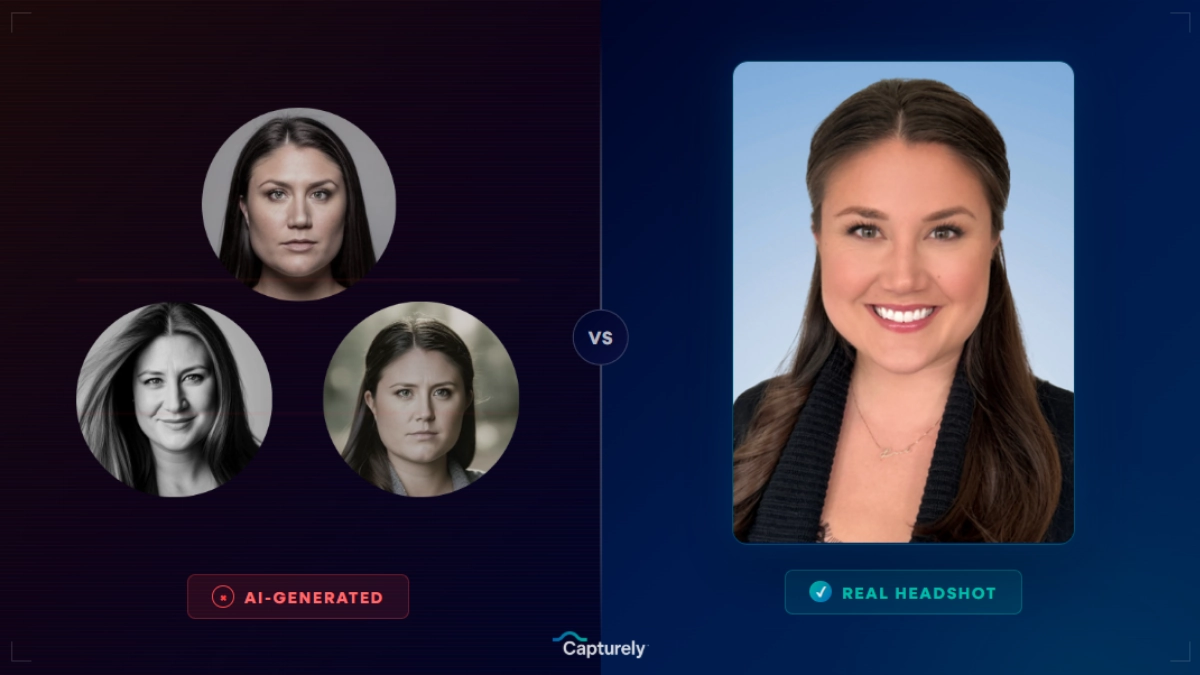
Upload 10–15 selfies, receive AI-fabricated headshots in minutes. Services like HeadshotPro and BetterPic charge $29–$59 per person. Fast, cheap, and increasingly realistic at first glance.
But they’re not photographs. They’re digital fabrications trained on your face data. A consumer poll of 1,600 people found that 38% described AI-generated headshots as “soulless” (Photography Industry Survey, 2024). The bigger problem: when you show up to a video call and look noticeably different from your headshot, whatever trust the image built evaporates instantly. Multiple enterprises now prohibit AI-generated headshots for client-facing roles — one prospect on a discovery call told us flatly, “Our company does not allow us to use AI anyway.”

Works fine for: solo professionals on a tight budget with low-stakes use cases. Falls short for: teams, high-trust industries (healthcare, finance, law), and anyone who needs their headshot to actually look like them on Zoom.
DIY at Home
Face a large window for natural light. Use a clean wall as your background. Have someone else take the photo using your phone’s rear camera (not the selfie camera — rear cameras capture at 36–48 megapixels with better lenses). Take 50+ shots and hope for three good ones.
It’s free, and the technical quality can be decent with good light. But without someone catching the slight head tilt that makes you look confident instead of confused, or the shoulder angle that flatters instead of adds weight, most people end up with photos that are technically adequate but don’t actually do anything for them. For a full DIY walkthrough, see our guide on how to take professional headshots.
Want to try the virtual option? Book a free demo session and experience it firsthand — or get an instant quote for your team in under 30 seconds. Get started →
What to Wear for Business Headshots
PhotoFeeler’s analysis of 60,000+ profile photo ratings found that formal dress produced the largest score gains of any single variable: +0.94 in Competence and +1.29 in Influence (PhotoFeeler). Nothing else came close.
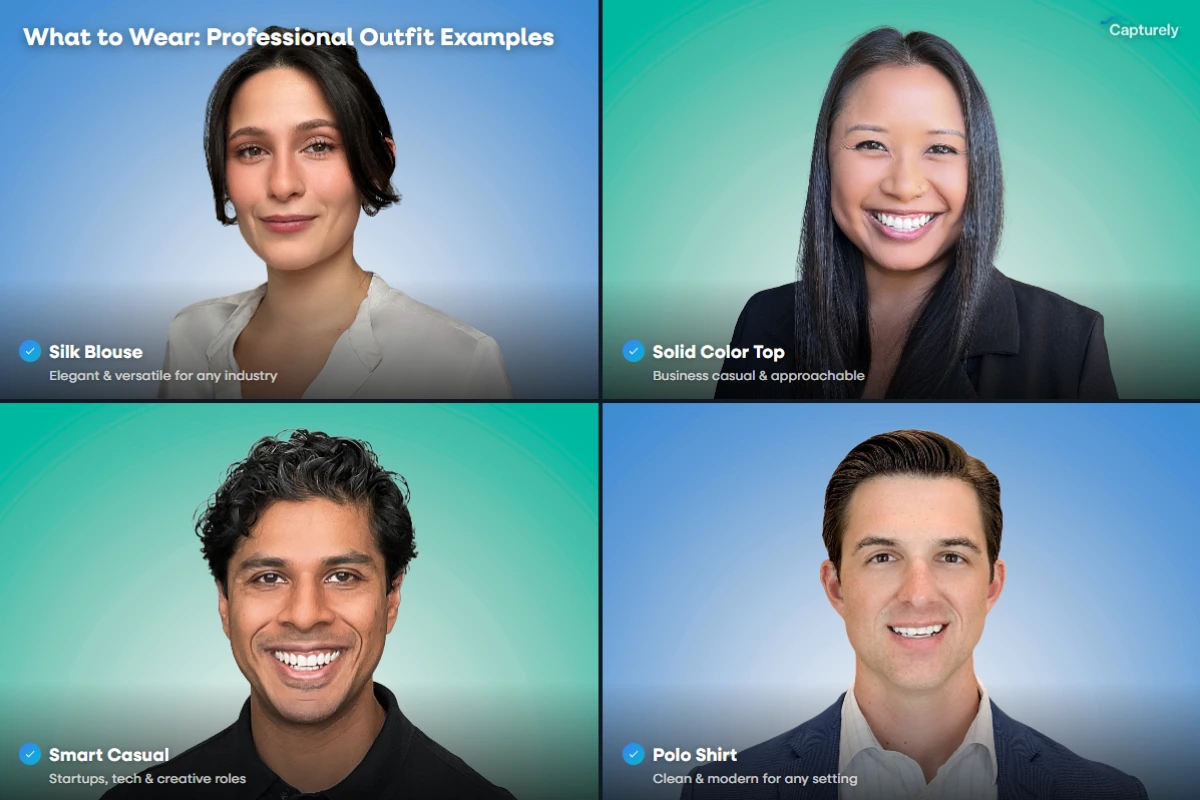
That doesn’t mean everyone needs a three-piece suit. The rule is simple: dress one level above your daily norm. Jeans-and-t-shirt culture? Add a blazer over a solid-color shirt. Business casual daily? Add a structured jacket. The goal is looking like you on a day you’re meeting someone important.
Some universals that apply regardless of industry:
- Solid colors photograph better than patterns. Stripes and small prints create a distracting moiré effect on camera.
- Blue conveys trustworthiness. It tests well across every industry and skin tone.
- Long sleeves beat short sleeves. Even in casual industries. The extra structure adds authority.
- Avoid logos, neon colors, and anything that draws attention away from your face.
- Fit matters more than formality. A well-fitted casual blazer beats an ill-fitting suit every time.
For detailed wardrobe guidance segmented by industry — tech, finance, healthcare, law, real estate, and more — see our full guide on what to wear for professional headshots.
How to Choose a Business Headshot Provider
Not all headshot services are equal, and the cheapest option is rarely the best value. Here’s what to look for — and what should make you walk away.
Questions to Ask Before Booking
- How many final edited images are included? Some services deliver one; others deliver three or more. More angles means more flexibility across use cases.
- What retouching is included? Professional retouching (skin smoothing, blemish removal, background cleanup) is non-optional with modern high-resolution cameras. Make sure it’s included, not an upsell.
- What’s the turnaround time? Traditional studios often take one to three weeks. Virtual services like Capturely deliver within 24 hours. AI tools generate in minutes but require sorting through unusable outputs.
- Do I receive full usage rights? Some photographers retain rights to your images, limiting how you can use them. You should own your business headshots outright.
- How do you handle distributed teams? If you have people in multiple locations — or working remotely — ask how the provider maintains consistency across all of them.
- Can I see a full team gallery? Not just the three best photos on their portfolio page. Ask to see 20+ headshots from a single client to judge true consistency.
- Is there a satisfaction guarantee? You’ll want a reshoot policy for anyone who isn’t happy. With live-directed sessions, reshoot rates tend to be very low — Capturely’s is under 2% — but the guarantee matters.
Red Flags
- No portfolio of business headshots specifically (wedding photographers who “also do headshots” produce different results)
- No retouching included or unclear retouching policy
- No guidance on wardrobe or preparation sent before the session
- Pricing that doesn’t scale — same per-person cost whether you have 5 or 500
- Very long turnaround (3+ weeks for edited images)
- No plan for handling remote or distributed employees
Peter Hurley, one of the world’s most recognized headshot photographers, describes a professional headshot as a “virtual handshake” — it’s the first thing people notice before deciding whether to engage. That’s exactly why the provider you choose matters. The difference between a competent headshot and a forgettable one often isn’t the camera — it’s the direction.
How to Get Consistent Business Headshots Across Your Team
This is the question most business headshot guides completely ignore. If you’re not just getting a headshot for yourself — if you’re responsible for 20, 200, or 2,000 people looking professional and consistent — the logistics get complicated fast.
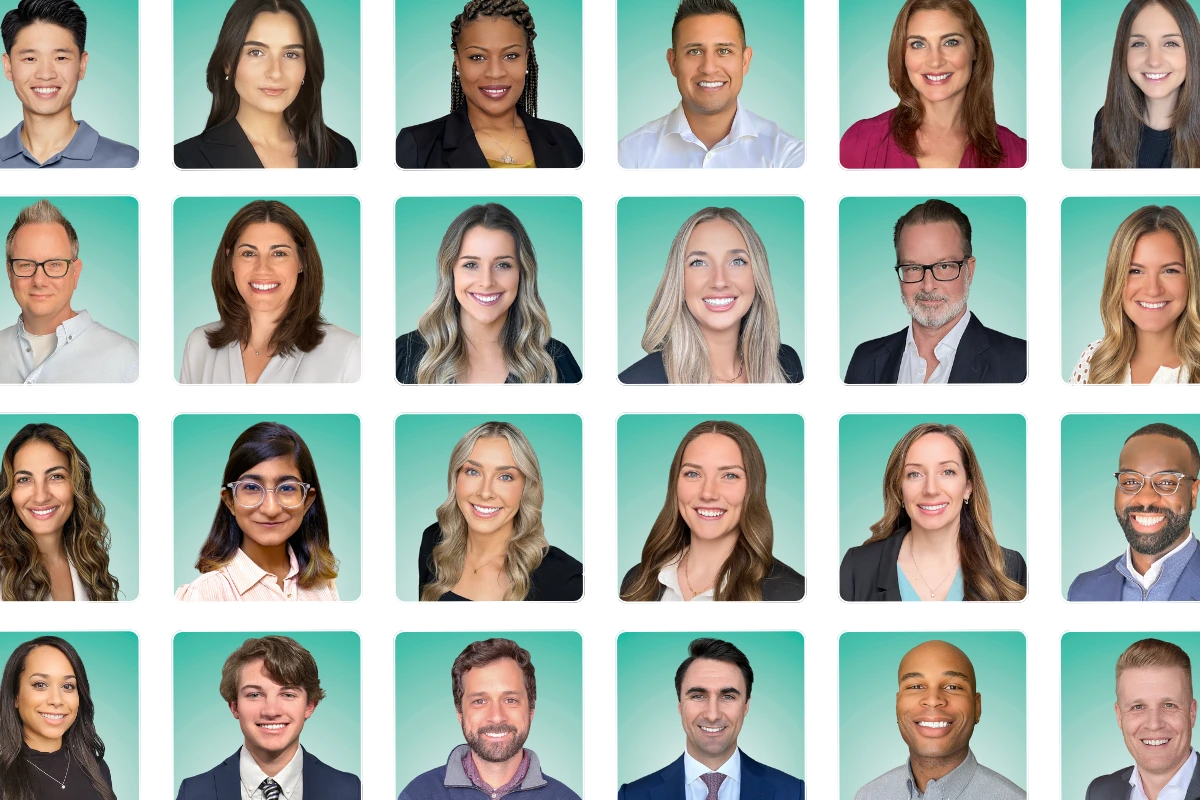
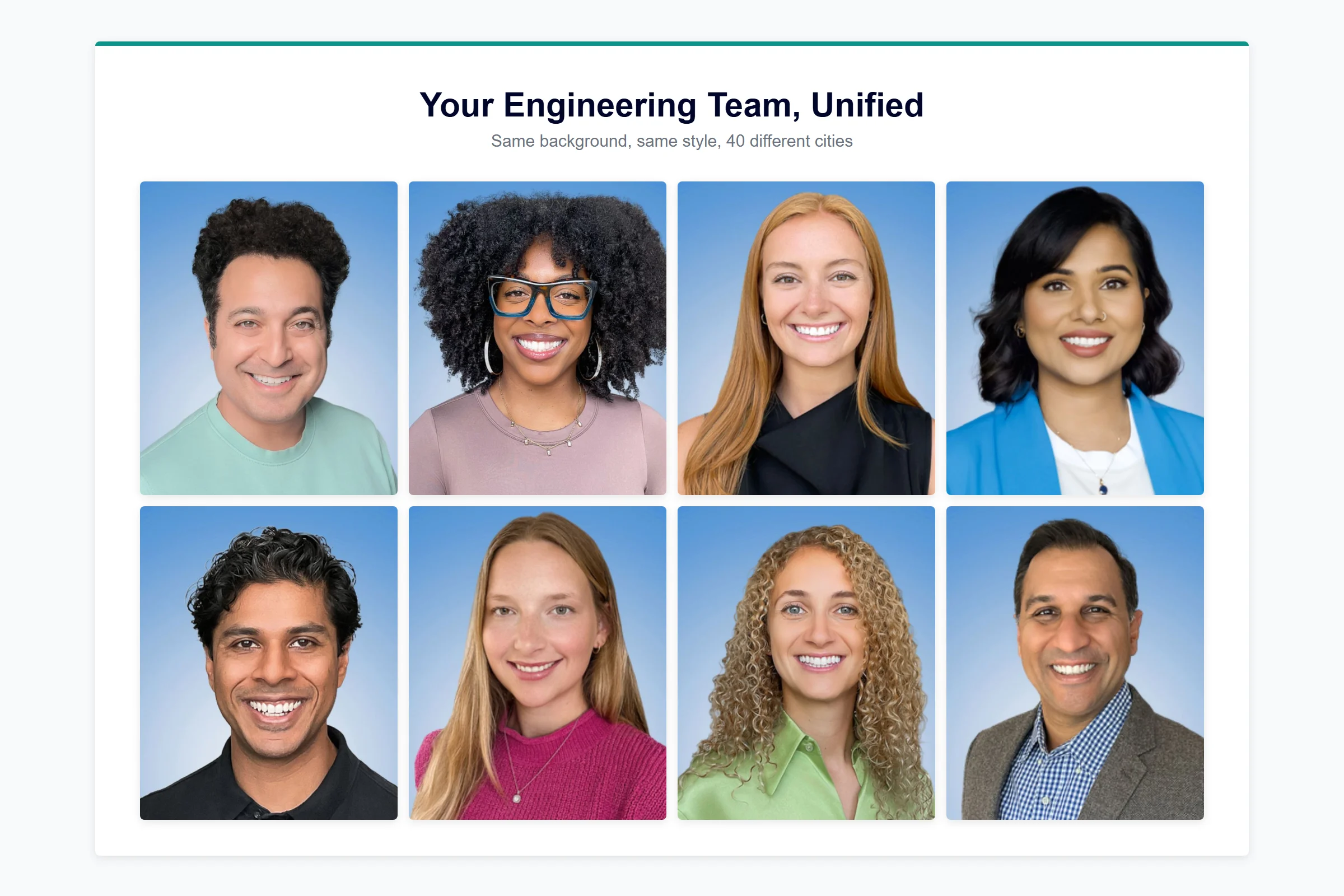
The problem: different people, different locations, different photographers, different lighting, different backgrounds. Your team page ends up looking like a yearbook collage spanning three decades. One person has a studio headshot. Another has a cropped selfie. Four people have no photo at all.
As Poppy Behrens at Modern Storage Media described their experience before switching: “People send us their photos — it was just like, oh my god, what were you thinking.”
The solution is standardizing three things: background, framing style, and retouching level. Then getting every person photographed to those same standards regardless of where they are.
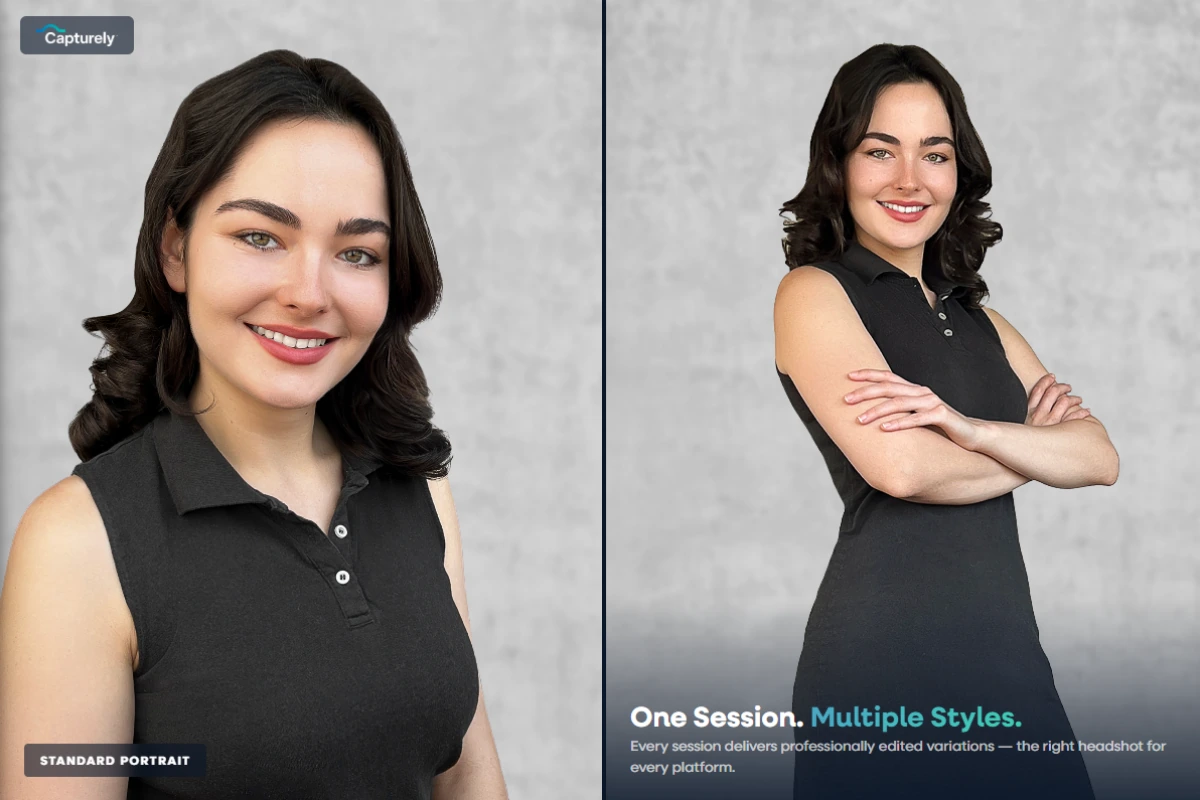
Virtual headshot services were built for exactly this problem. With Capturely, admins set the brand standards once — background, cropping, retouching specs — distribute session links, and every employee gets the same professional result whether they’re in Chicago, London, or their living room. An admin dashboard gives visibility into who’s scheduled, who’s completed, and who needs a nudge.
As Jeff Maldonado at AmeriLife put it: “We had no mechanism to ensure their headshots met our brand standards. Capturely solves that. We now have standards of formatting, consistent delivery, and everyone’s been on the nose of where we needed to be.”
Session credits are valid for 12 months, covering new hires, role changes, and the inevitable people who miss the first round. Some clients integrate headshots directly into onboarding — one HR manager at Lojistic told us: “I have a template that I send to new hires saying, the first thing you do please set up a session.”
How to Prepare for Your Business Headshot Session
Whether you’re shooting in a studio or through your phone, preparation takes about 15 minutes and makes a noticeable difference in the final result.
- Pick your outfit the night before. Solid colors, one level above your daily wear. Iron or steam it. Bring a backup option if possible.
- Groom as you would for an important meeting. Get a haircut a week before (not the day of — fresh cuts can look too sharp on camera). Trim facial hair. Keep makeup natural.
- Find your light. For virtual sessions, position yourself facing a large window. Avoid overhead lighting and backlighting. Your photographer will help adjust in real time.
- Clear your background. If shooting at home, find a clean wall. Remove clutter, photos, and anything distracting behind you. The retouching team will replace the background, but starting clean produces better results.
- Relax your face before you start. Scrunch your face tight, then release. Roll your shoulders back. Take a deep breath. Tension in your jaw and forehead shows in photos more than you’d think.
- Have water nearby. Dry lips show up in high-resolution images. Stay hydrated.
- Block 15 minutes with no interruptions. Virtual sessions take about 10 minutes, but give yourself buffer so you’re not rushing.
For a deeper dive into posing tips and what to do if you hate being photographed, see our guide on how to take professional headshots.
Ready to book business headshots? Get a free instant quote for professional headshots — individually or for your team. Real photographers, 10-minute sessions, 24-hour delivery, 98+ background options. Over 1,500 five-star reviews at 4.9 stars. Get your instant quote →
Frequently Asked Questions
What is the difference between a business headshot and a corporate headshot?
Functionally, very little. “Business headshot” is the broader term — any professional photograph used for business purposes. “Corporate headshot” typically implies a specific company-standardized style with matching backgrounds and framing across all employees. If you’re an individual professional, you need a business headshot. If you’re managing headshots for a team with brand guidelines, you’re building a corporate headshot program. The photography itself is the same.
How much do business headshots cost?
Business headshots range from $29 to $450+ per person depending on method. AI generators cost $29–$59 but only 10–20% of outputs are usable. Virtual sessions with a live photographer (like Capturely) run $45–$79 per person for teams. Traditional studios charge $150–$450 depending on the market. Premium studios in New York and San Francisco can exceed $500. For teams, virtual sessions typically offer the best balance of quality, consistency, and cost.
Are business headshots tax-deductible?
In most cases, yes — business headshots qualify as a deductible business expense under the IRS, similar to other professional services. For companies, headshot costs are a standard operating expense. For self-employed professionals, they can be deducted as a business expense on Schedule C if used for professional purposes (LinkedIn, website, marketing materials). Consult your accountant for specifics, but the short answer for businesses purchasing headshots for employees: it’s a normal, fully deductible operating cost.
How often should I update my business headshot?
Every one to two years, or immediately after any significant appearance change — new hairstyle, new glasses, notable weight change. For client-facing roles in sales, consulting, and executive leadership, annual updates are worth it. A 2023 study found that 50% of LinkedIn users have kept the same photo for three to six-plus years, and 56% of respondents have met someone whose real appearance didn’t match their profile photo. If your headshot is more than three years old, it’s overdue.
Can I take a professional business headshot with my phone?
Yes. Modern smartphone rear cameras capture at 36–48 megapixels — more than enough for professional headshots. The camera hardware isn’t the bottleneck. Lighting, composition, and direction are. That’s why virtual headshot services pair phone capture with a live photographer who coaches you through posing, lighting, and expression in real time. If going fully DIY, use the rear camera (not the selfie camera), face a window for natural light, and have someone else hold the phone.
Should I smile in my business headshot?
Yes — with teeth showing, in most cases. PhotoFeeler’s analysis of 60,000+ profile photo ratings found that a teeth-showing smile boosts perceived Likability by +1.35, Competence by +0.33, and Influence by +0.22 (PhotoFeeler). It’s the single largest positive impact of any element they tested. The exception: certain authority-heavy roles in law or senior finance where a confident, closed-mouth expression may be more appropriate. For 90% of business professionals, showing teeth wins.
What background is best for business headshots?
The specific color matters less than keeping it clean and uncluttered. PhotoFeeler’s data shows background color has no statistically significant impact on Competence, Likability, or Influence scores — but solid-colored backgrounds boost trust ratings by 41% compared to busy or distracting backgrounds. The most common choices are white or light gray (universal), navy or charcoal (authority), and blue or teal (distinctive). Pick one that contrasts with your skin tone and clothing. Capturely offers 98+ background options and custom branded backgrounds for $200.