Tech company headshots are professional photographs designed for startup and technology team pages, LinkedIn profiles, pitch decks, and careers sites—balancing the casual, personality-forward culture of tech with the professional credibility that enterprise clients, investors, and recruits expect. The best tech headshots look consistent across a distributed team without looking corporate or stiff. For fast-growing startups adding employees monthly, that consistency becomes an operational challenge, not just a creative one.
Last updated: March 2026
The tech sector added over 900,000 jobs in 2025 (TechTarget, 2025), and the Bureau of Labor Statistics projects 317,700 annual openings in computer and IT occupations through 2034 (BLS, 2025). That’s a lot of new faces on a lot of team pages. And with 42–55% of tech roles now hybrid or remote (Robert Half, 2025), you can’t just book a conference room and a photographer anymore. This guide covers what modern tech headshots look like, how to solve the fast-growth logistics problem, how to maintain consistency across time zones, and when the triggers hit that make headshots a priority. It draws on Capturely’s experience delivering headshots to teams at Google, Amazon, Microsoft, Netflix, and hundreds of startups scaling from 20 to 2,000 employees.
The Tech Company Headshot Paradox: Casual Culture, Professional Stakes
Tech companies live in a weird middle ground. The culture says hoodies and ping-pong tables. But the website’s “About” page—one of the most visited pages on most company sites—is where enterprise buyers evaluate whether your team looks credible enough to handle their $200K contract. Sixty-seven percent of job candidates visit career pages before applying (HR Dive, 2022). Investors spend 15% of their total pitch deck review time on the team slide alone (DocSend, 2023).
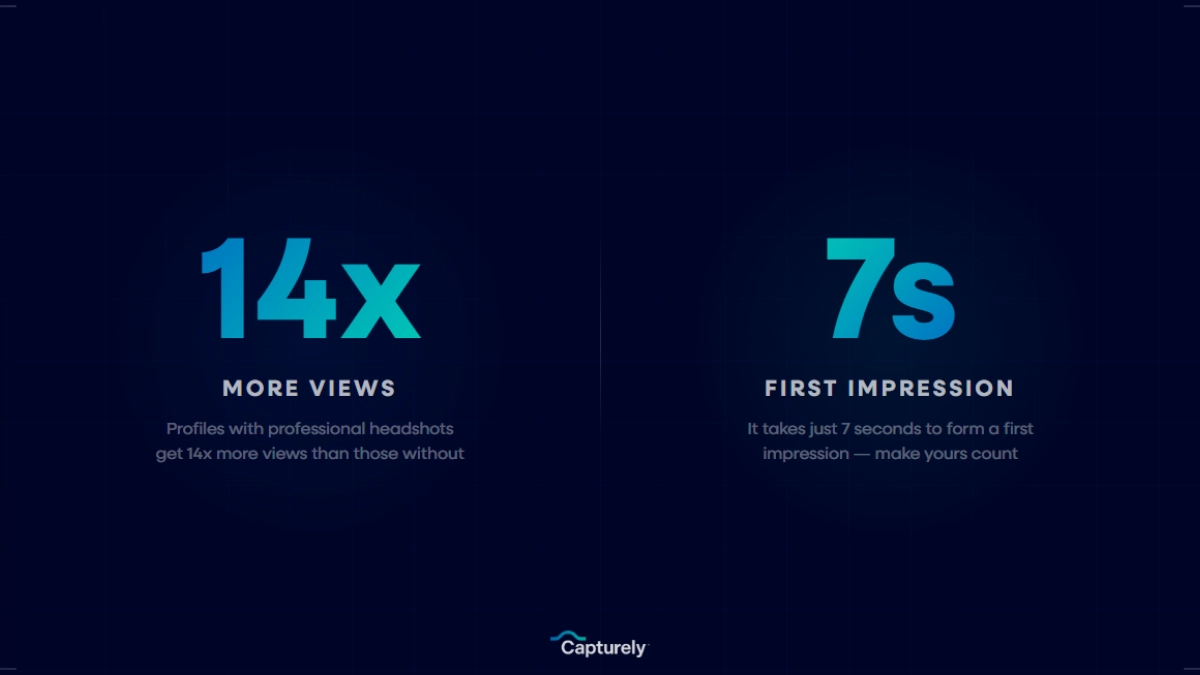
The paradox: if your headshots are too polished—dark suits, dark backgrounds, hands-folded-on-desk—you look like an insurance company. If they’re too casual—grainy Zoom screenshots, conference badge crops, the selfie someone took at a bar—you look unserious. Neither builds trust.
According to Serge Bejjani, CEO of Shootday (global photography production across 150+ cities): “When you look at most careers pages, you’ll see the same thing: smiling team stock photos and soulless generic office shots. There’s no authenticity, no personality, just plenty of empty hype” (Corporate Vision Magazine, 2026). He adds that “Millennials and Gen Z candidates focus on culture, flexibility, and lived experience. They want to see what it actually feels like to work somewhere.”
The solution isn’t choosing between casual and professional. It’s finding the intersection: headshots that show personality while maintaining a consistent, polished standard across every team member. That’s the sweet spot where corporate headshots meet startup culture.
What Modern Tech Company Headshots Actually Look Like
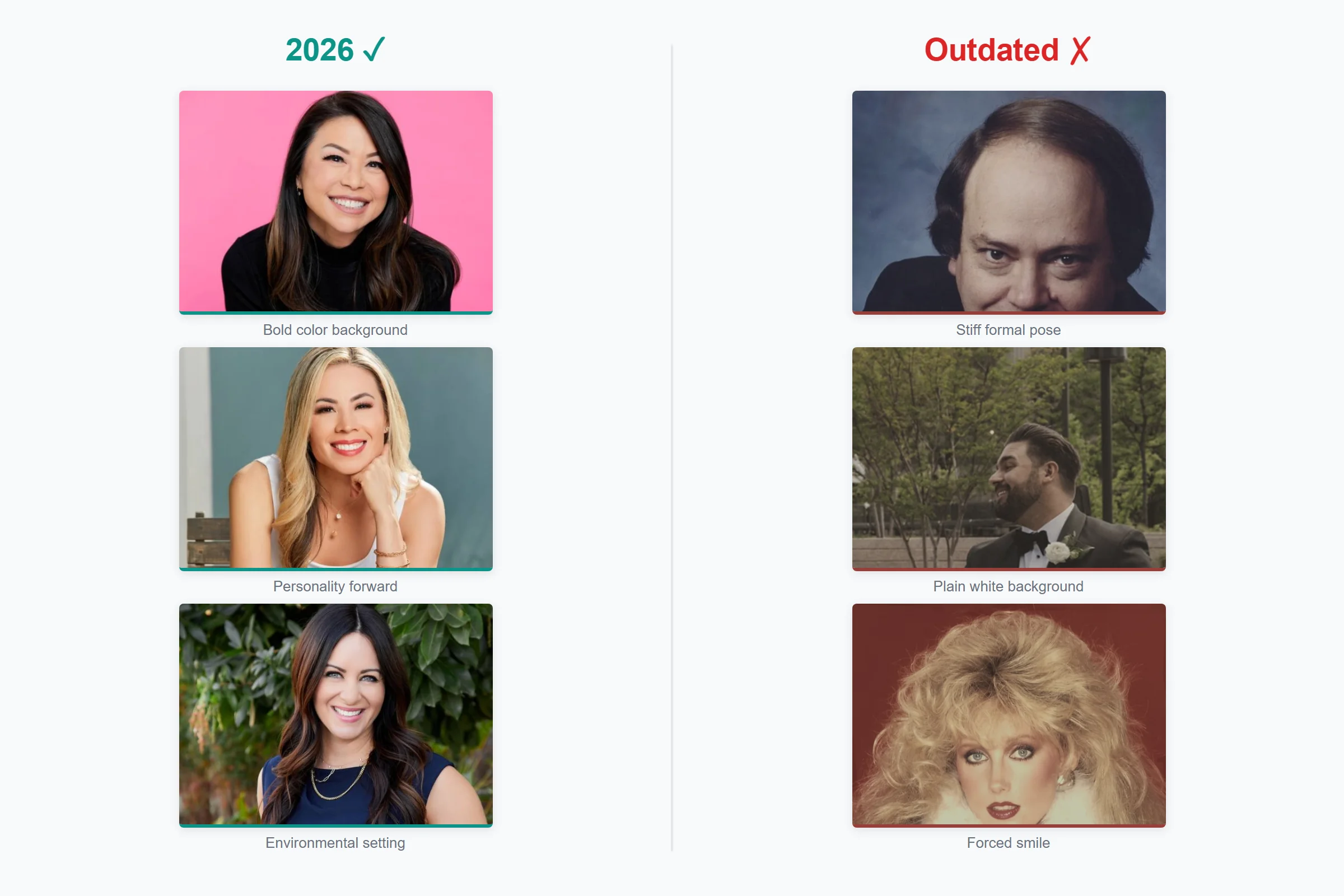
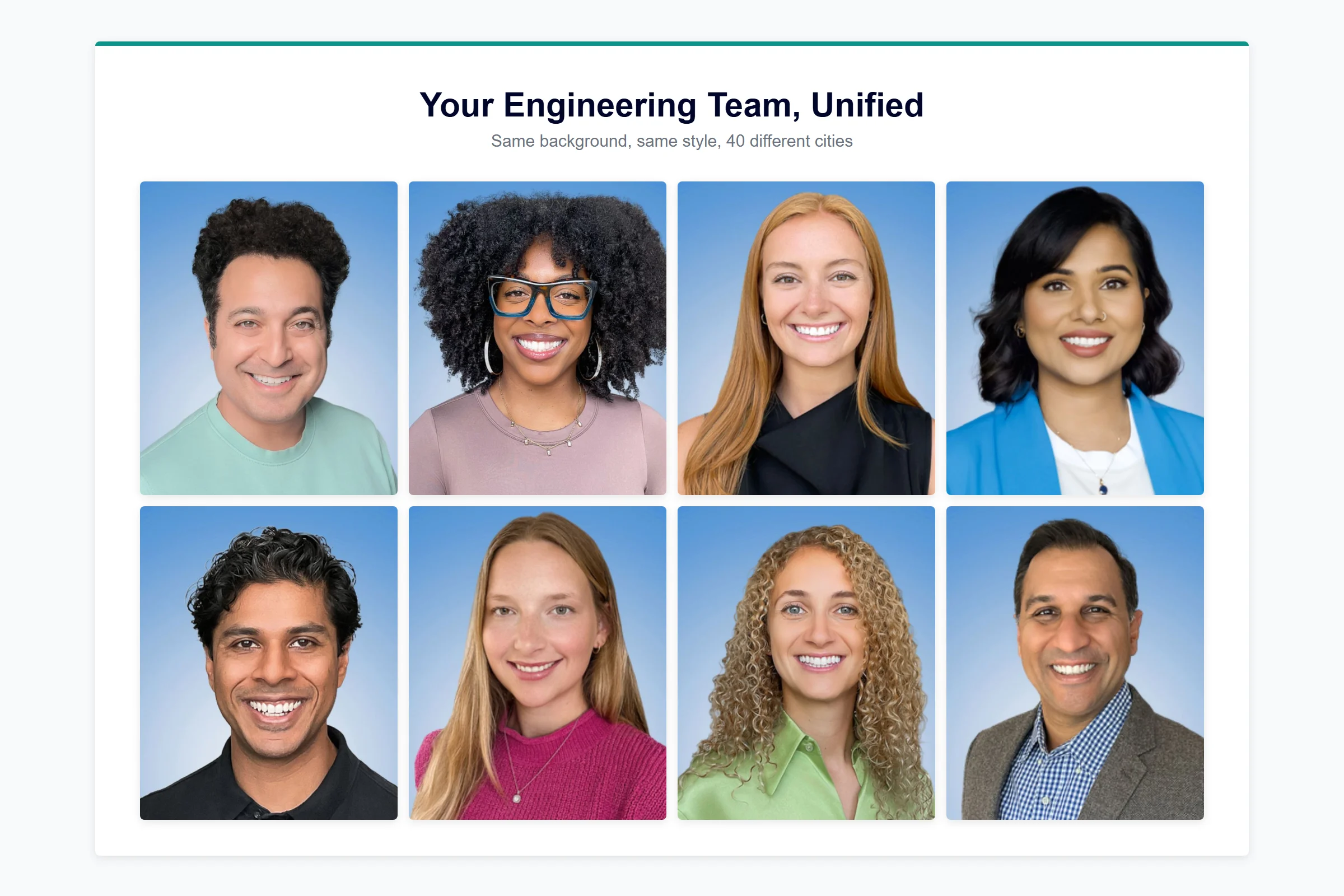
The best tech headshots in 2026 share a few characteristics. They’re personality-forward—meaning the person’s expression and energy come through, not a blank executive stare. They use clean, modern backgrounds (teal, blue, light gray) instead of the traditional navy-suit-dark-wall look. And they’re consistent without being identical. Same background family, same crop, same lighting direction—but each person’s wardrobe and expression reflects who they actually are.

Style Guidelines by Role
Not everyone on a tech team needs the same look. An engineering lead presenting at a dev conference has different visual needs than a VP of Sales meeting enterprise clients. The wardrobe should match the audience, not a one-size-fits-all policy.
| Role | Recommended Style | Background | Attire |
|---|---|---|---|
| Founder / CEO | Polished but approachable | Teal, navy, or brand color | Blazer over button-down, no tie |
| VP Sales / Customer Success | Confident, trustworthy | Navy or dark blue | Business casual to suit depending on market |
| Engineering / Product | Personality-forward, relaxed | Teal, blue, or gray | Crew neck, henley, or casual button-down |
| Marketing / Design | Creative, expressive | Brand-aligned or colorful | Stylish casual, personality showing |
| HR / People Ops | Warm, approachable | Lighter neutrals, warm tones | Smart casual, inviting expression |
The key: everyone uses the same background family and the same lighting setup. That creates visual cohesion on the team page even when the CTO is in a t-shirt and the CFO is in a blazer. For deeper guidance on wardrobe choices, our what to wear for professional headshots guide covers the specifics.

The Diversity Advantage
Tech companies are under more scrutiny than ever on diversity and representation. Your team page is the first place candidates assess how serious your D&I commitments are. Professional headshots that accurately represent every team member—with lighting and retouching that works across skin tones, hair textures, and features—signal that your company pays attention to the details. Ben Krantz, a corporate headshot photographer in Oakland, emphasizes that “not everyone knows how to photograph or edit people who don’t look like them. If people have different skin tones or hair textures, it requires different lighting and editing” (Ben Krantz Studio, 2023).

Consistent headshots, zero logistics. Capturely’s live photographers direct every session in real time through your phone’s rear camera. 10 minutes, 3 edited images, 24-hour delivery. 98+ background options to match your brand. Get a quote for your team →
The Fast-Growth Problem: New Hires Every Month, Headshots Always Out of Date
Here’s the operational reality that most headshot guides skip entirely. A hyper-growth startup typically starts at roughly 25 employees and grows to 60+ within a year (Tomasz Tunguz, 2023). Mid-stage startups can hit 88% headcount growth annually. Tech employee turnover runs at 17.4% (Ravio, 2025), with average tenure of just 2–3 years (FutureCode IT Consulting, 2025).
Do the math on a 200-person tech company: 35 new hires per year from turnover alone, plus whatever growth adds. That’s potentially 3–5 people per month who need headshots, plus the existing employees whose photos are now two years old and no longer match their appearance. A once-a-year “photo day” can’t keep up.
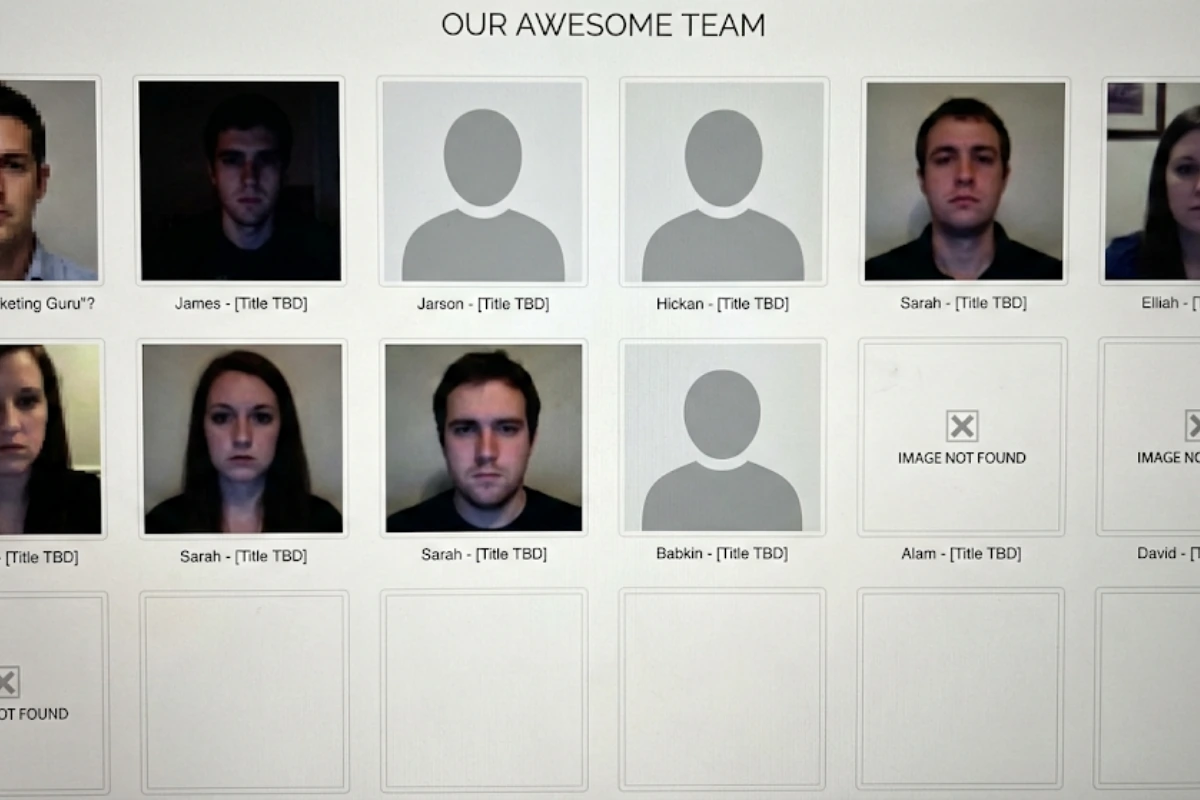
The result? Team pages that look like a collage from different decades. One person has a crisp studio shot from last quarter. Another has a photo from their previous company. Someone else cropped their face out of a group photo. And three new hires just have gray silhouettes where a headshot should be. Consistent brand presentation increases revenue by up to 33% (Marq/Demand Metric, 2019). Those mismatched headshots quietly erode that consistency every time someone visits your site.
As one tech company marketing lead told Capturely’s team: “I didn’t know a company like this existed and there are lots of inconsistencies. As we’re trying to build our brand to that next level of professionalism, as soon as I saw the email, I was like, this might be a perfect option to add some level of consistency” — Rachel Alex Crist, The Ray.
How Tech Startups Manage Headshots at Scale
The companies that get this right treat headshots as onboarding infrastructure, not a one-time project. The same way you set up a new hire’s email, laptop, and Slack account on Day 1, you schedule their headshot session.
Step 1: Build It Into Onboarding
Tracy Murphy at Lojistic describes how her team automated it: “I have a template that I send to new hires saying, the first thing you do please set up a session. And then it’s nice because we’re notified when the session is complete and the picture’s ready. And then our marketing team kind of does what they do with the headshots.”
That’s the model. Headshots as a standard Day 1 task, not something that gets pushed to “when we get around to it.” For a deeper playbook on rolling this out, see our HR guide to team headshot programs.
Step 2: Use a Credits Model for Ongoing Needs
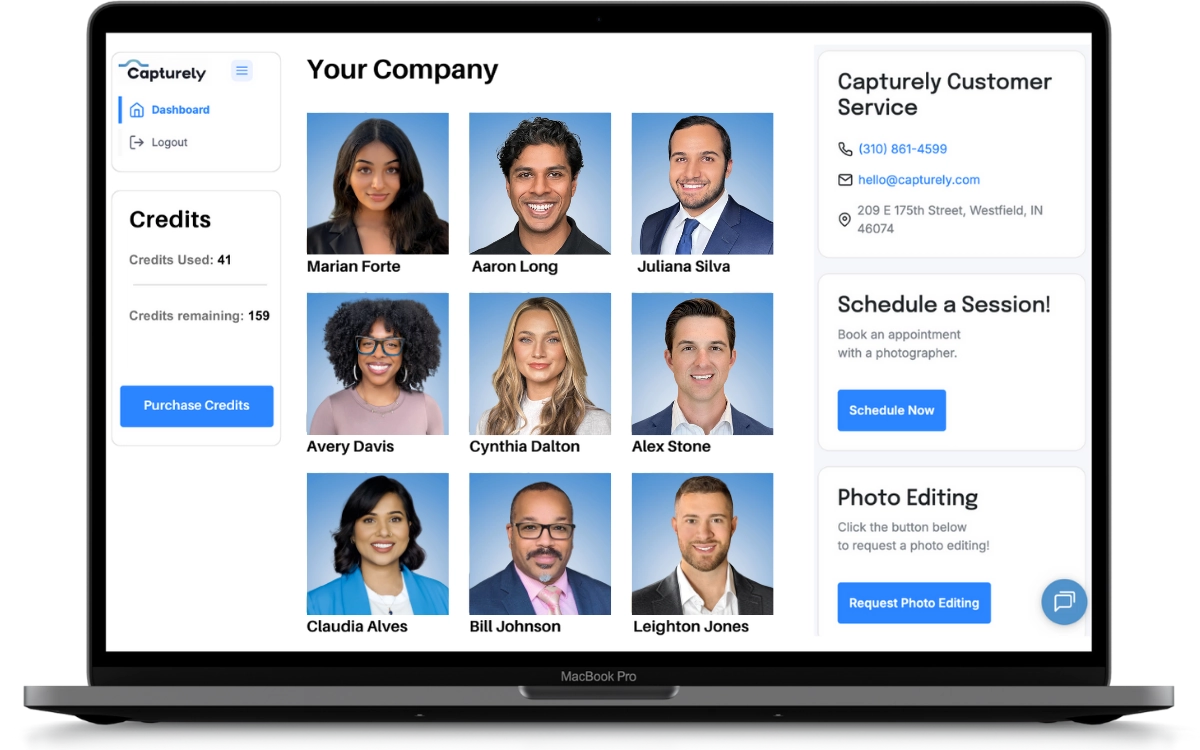
Booking a photographer every time someone new joins is a logistical headache. A credits-based system works better for fast-growing companies: purchase a bank of session credits, distribute them through onboarding, and use them throughout the year as new hires arrive and existing employees need updates. Credits-based headshot services let you avoid renegotiating contracts or rebooking vendors quarterly. Capturely’s credits are valid for 12 months—designed specifically for companies with ongoing turnover and growth.
Step 3: Set a Style Guide Once
Define your headshot standard upfront: background color (or 2–3 approved options), crop ratio (head-and-shoulders vs. waist-up), attire guidelines by department, and retouching preferences. Lock these in with your headshot vendor so every session matches, whether it’s the first hire or the 500th. This is how firms like Capturely’s clients at Google, McKinsey, and Amazon maintain visual consistency across thousands of employees.
Step 4: Automate Delivery Into Your Systems
The headshot shouldn’t sit in someone’s inbox waiting to be manually uploaded to five platforms. One Capturely client described their integration: “Whenever someone does the photo shoot with Capturely, it automatically will flow into our asset management system. And so that’s been great.” API integrations that push finished headshots directly into your DAM, HRIS, website CMS, and Slack profiles eliminate the manual work that makes headshot programs stall.
Remote-First Tech Teams: Consistent Photos Across Time Zones
Fifty-five percent of computer and IT roles now offer hybrid or remote work—the highest of any industry (Robert Half, 2025). That means your engineering team might span San Francisco, Austin, Berlin, and Bangalore. Traditional headshot logistics—hiring a photographer, booking a conference room, corralling everyone into the same building on the same day—simply don’t work.
One company going through a rebrand reported their IT Director quoted $13,000 and two months to coordinate traditional headshots for 45 employees across multiple locations (Reddit r/b2bmarketing, 2024). For a 200-person distributed startup, that math gets painful fast.
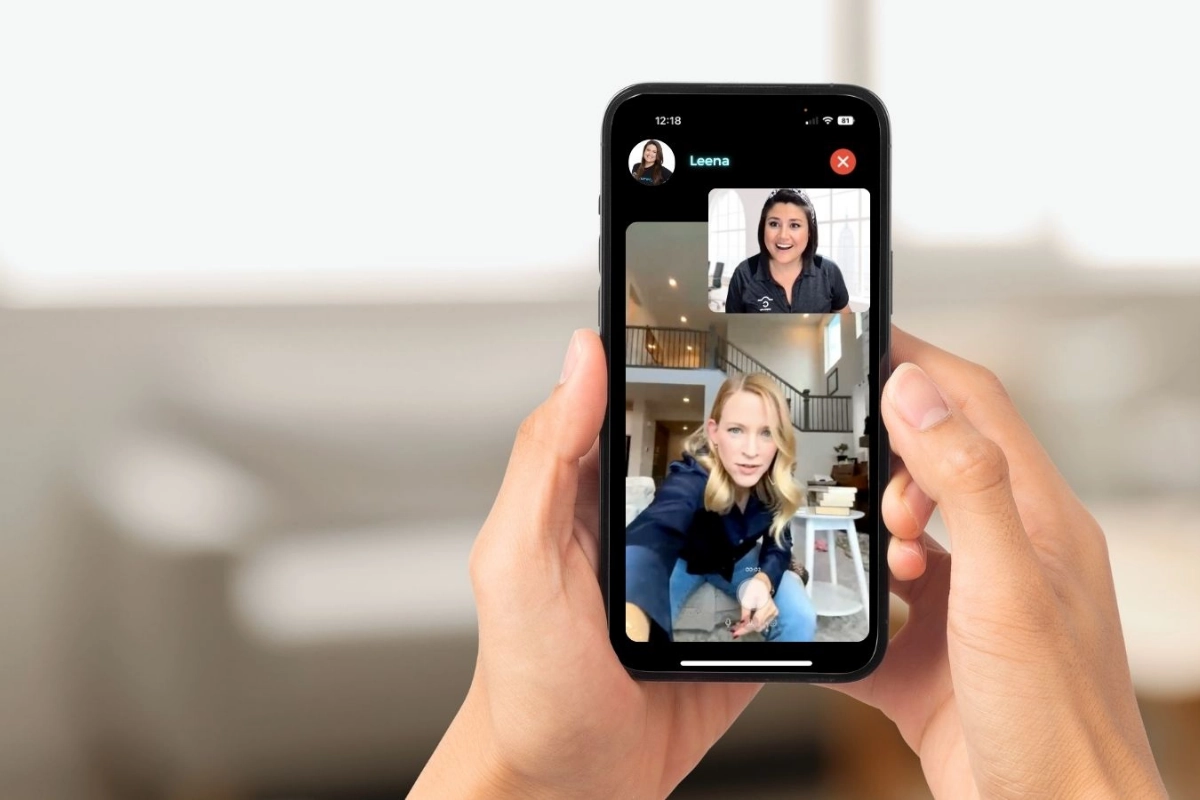
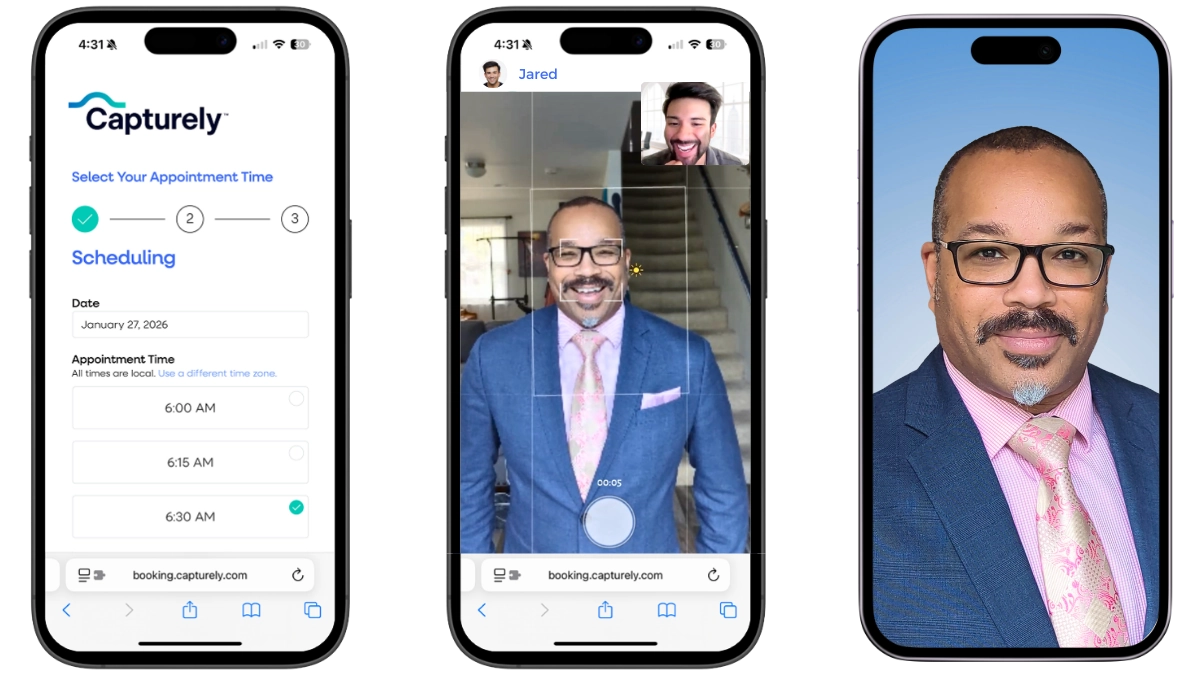
Virtual headshot sessions solve the geography problem entirely. Each employee opens a link on their phone—no app download needed—and a live photographer directs the session in real time through the rear camera (36–48 megapixels). The photographer coaches posture, expression, lighting, and camera angle. Ten minutes, three fully retouched images, delivered within 24 hours. Same photographer network, same editing standards, same background options whether the engineer is in their apartment in Brooklyn or a co-working space in Lisbon.
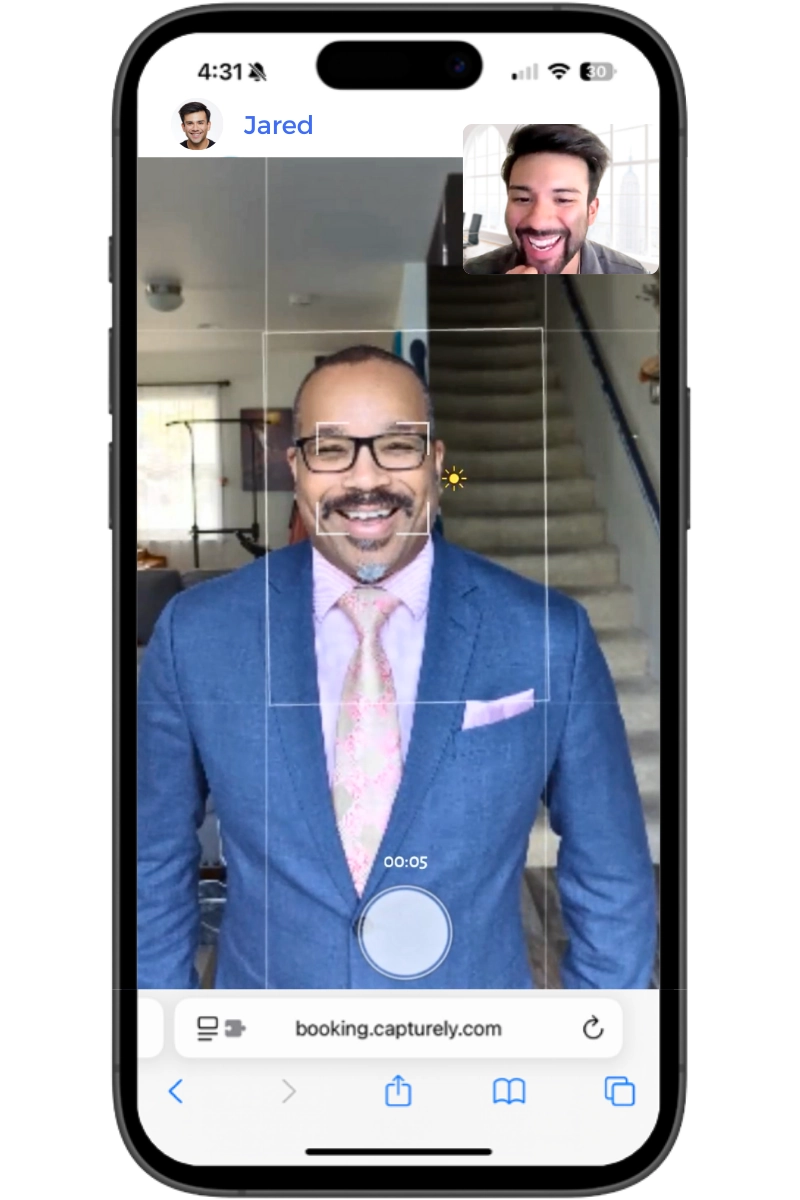
Thomas OBanion at a software company described it simply: “It sounds pretty straightforward. I think it’s pretty cool that you guys can offer the professional shoot being remote. So that would be really helpful.” For the full story on how virtual headshots compare to traditional approaches, see our virtual headshots for remote teams guide.
Your team is everywhere. Your headshots should match anyway. Capturely delivers consistent, professional headshots to distributed tech teams—no scheduling, no travel, no coordination. 765+ reviews at 4.9 stars. Teams save up to 45%. See how it works →
What Tech Company Headshots Cost
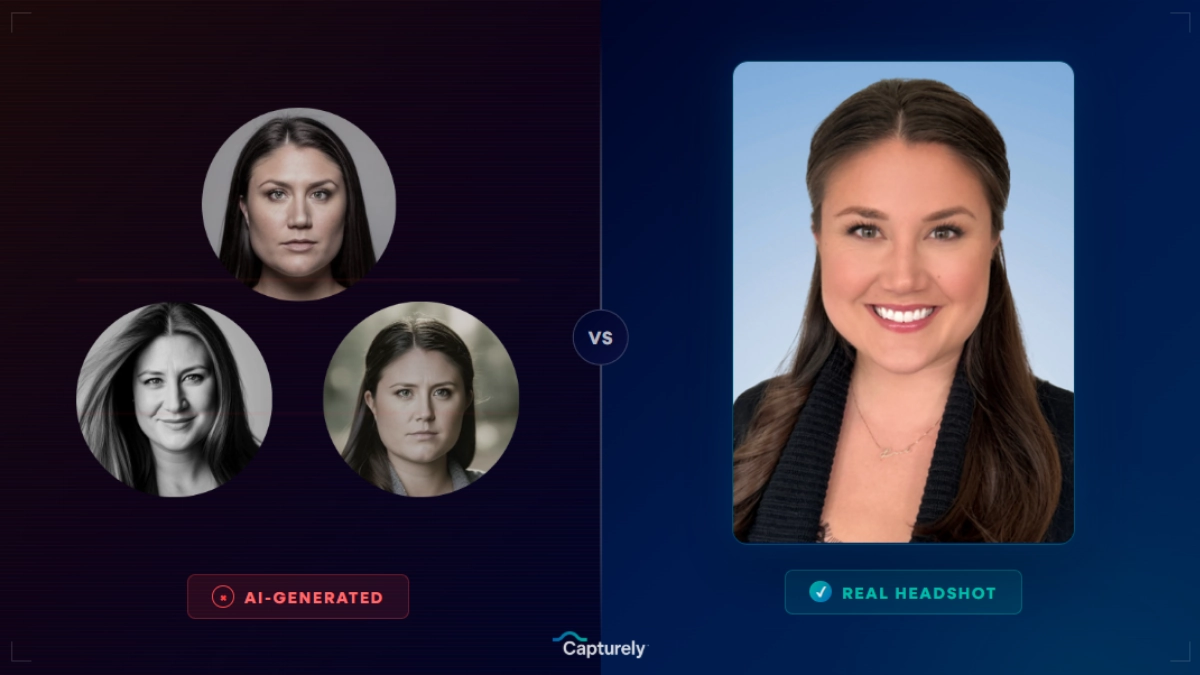
Budget matters at a startup. The good news: you don’t need to spend $250–$400 per person on traditional studio sessions anymore. The bad news: the cheapest option (AI generators) creates images that aren’t real photographs—and 66% of recruiters say AI photos would put them off once they realize what they are (SaleSo, 2025).
| Option | Price Per Person | Turnaround | Real Photos? | Best For |
|---|---|---|---|---|
| Traditional studio | $150–$400+ | 2–4 weeks | Yes | Small local teams, single office |
| On-site photographer (team day) | $125–$275/person | 2–3 weeks | Yes | Co-located teams under 50 people |
| Virtual with live photographer (Capturely) | $45–$79/person | 24 hours | Yes | Distributed teams, ongoing onboarding |
| Self-guided virtual (Headshots.com, Snapbar) | $25–$60/person | 2–5 days | Yes (lower quality) | Budget-constrained, low-stakes use |
| AI-generated (HeadshotPro, BetterPic) | $20–$50/person | Minutes to hours | No | Internal profiles only |
The real cost comparison isn’t just per-person pricing—it’s total cost including logistics. Traditional studio sessions carry hidden costs: setup fees ($200–$500), travel coordination, retouching add-ons, rush delivery surcharges, and usage rights. A “$200/person” studio quote often becomes $340 when the extras stack up (Daily Emerald, 2025). Virtual sessions have no travel, no setup fees, and include retouching in the base price. For a detailed cost breakdown across all options, see our professional headshot pricing guide.
Why AI Headshots Are Risky for Tech Companies
It’s tempting. $30 per person, instant results, no scheduling. But AI headshots are fabricated images that don’t accurately represent how your team actually looks. When a client hops on a Zoom call and the person looks nothing like their headshot, trust breaks before the meeting starts. Andrea at VES, a technology company, put it plainly: “We do like the fact that you guys don’t just use AI. The AI headshots always look kind of weird.” For the full AI vs. real comparison, see our AI headshots vs. real headshots analysis.
When Tech Companies Need New Headshots
Headshots aren’t a set-it-and-forget-it project. Specific milestones and events trigger the need for updated team photography. Missing these windows means your brand is out of date when it matters most.

After a Funding Round
Post-Series A or Series B is one of the most common headshot triggers. You’ve likely doubled the team, you’re updating the website, and investors want professional-looking team pages for their portfolio showcases. The team slide appears in 100% of pitch decks (DocSend, 2023), and investors spend 15% of their review time on it. Grainy photos next to your $20M Series B announcement sends the wrong signal. For headshot guidance during major transitions, see our merger and rebrand headshot guide.
During a Rebrand or Website Redesign
A rebrand without updated team photos is a half-finished rebrand. New colors, new typography, new messaging—but the same mismatched headshots from 2023 on the “About” page. If you’re investing in a website redesign, budget 10 minutes per employee for headshot sessions. It’s the highest-ROI visual investment on your site.
IPO Preparation
Companies heading toward an IPO must have an investor relations website live on pricing day with current executive bios and professional headshots (InvestorRelations.com, 2024). This isn’t optional—it’s a regulatory and procedural requirement. Executive headshots at this stage need to project gravitas and institutional credibility.
New Careers Page Launch
If you’re about to open 30 positions and your careers page shows stock photos or a team page with half the headshots missing, you’re handicapping your recruiting before it starts. Strong employer brands reduce cost-per-hire by 50% (LinkedIn, 2017). Real team photos on career pages convert at 35% higher rates than stock imagery (Marketing Experiments, 2012). If you’re struggling to get team participation, our guide on getting your team to take headshots covers every objection and how to handle it.
Ongoing: Every New Hire
This is the one most companies miss. A headshot program shouldn’t be an event—it should be a process. Every new hire gets a headshot link in their onboarding kit. Every employee gets a refresh prompt at 18 months. Lisa Cavallaro at WellSpan Health described scaling this approach: “Our onboarding team is going to start a full launch implementation. Even ahead of our landing page, they’re going to begin using it as the primary sharing, even ahead of full-time employment.” That level of integration is what separates companies with consistently great team pages from companies that do a shoot once and watch it decay.
Onboard every new hire with a professional headshot—automated, no logistics. Capturely integrates into onboarding workflows with admin dashboard scheduling, automatic delivery notifications, and credits that last 12 months. $79/session for individuals, teams save up to 45%. Start your headshot program →
Frequently Asked Questions
How much do tech company headshots cost?
Traditional studio headshots run $150–$400+ per person with 2–4 week turnaround. Virtual headshot sessions with a live photographer cost $45–$79 per person through services like Capturely, with 24-hour delivery and 3 edited images included. AI-generated headshots are $20–$50 per person but produce fabricated images, not real photographs. For distributed tech teams, virtual sessions are typically the best value because there are no travel, setup, or coordination costs on top of the per-person rate.
What should tech employees wear for headshots?
Match attire to the employee’s audience. Customer-facing roles (sales, success, executive) should wear a blazer or smart business casual. Engineering and product teams can go with a crew neck, henley, or clean casual button-down. Avoid busy patterns, large logos, and shiny fabrics. Solid colors in navy, charcoal, teal, and jewel tones photograph best. Bring 2–3 options so the photographer can advise. See our wardrobe guide for detailed recommendations by role.
How do you get consistent headshots for a remote team?
Use a virtual headshot service with a single photographer network and standardized editing process. Each employee completes a 10-minute session from wherever they are—a live photographer directs the shoot through the phone’s rear camera, coaching posture, expression, and lighting. The same background options, cropping standards, and retouching workflow apply to every session, whether the employee is in New York or Nairobi. That consistency is impossible to achieve by hiring different local photographers in each city.
Should tech startups use AI-generated headshots?
Not for external-facing materials. AI headshots produce fabricated images that don’t accurately represent how employees look, which erodes trust when clients or candidates meet them in person or on video. Sixty-six percent of recruiters say AI photos would put them off once they realize the images are generated (SaleSo, 2025). For a Slack avatar or internal wiki, AI might be fine. For your website, LinkedIn, pitch deck, or careers page, use real photographs.
How often should tech companies update team headshots?
Every 12–18 months for existing employees, plus immediately for new hires during onboarding. Specific triggers include funding rounds, rebrands, website redesigns, leadership changes, and IPO preparation. Photos older than two years create credibility issues—especially in tech, where teams change rapidly. A credits-based headshot model lets you handle updates continuously rather than organizing an annual photo day.
Do professional headshots help with recruiting in tech?
Yes. Sixty-seven percent of candidates visit career pages before applying (HR Dive, 2022), and websites using authentic team photos see 65% higher trust scores than those using stock imagery (Kelly Heck Photography, 2024). Strong employer branding reduces cost-per-hire by 50% (LinkedIn, 2017). In a market where 88% of job seekers consider employer brand before applying (DSMN8, 2024), professional team photos are a competitive advantage, not a nice-to-have.
What backgrounds work best for tech company headshots?
Modern tech companies typically use clean, mid-tone backgrounds—teal, blue, or light gray—rather than the traditional dark navy or charcoal of financial or legal firms. These lighter backgrounds convey energy and approachability while still looking professional. Capturely offers 98+ background options, and custom branded backgrounds are available for a one-time $200 fee. Choose 2–3 approved backgrounds and standardize across the team for consistency. See our headshot backgrounds guide for a full visual comparison.