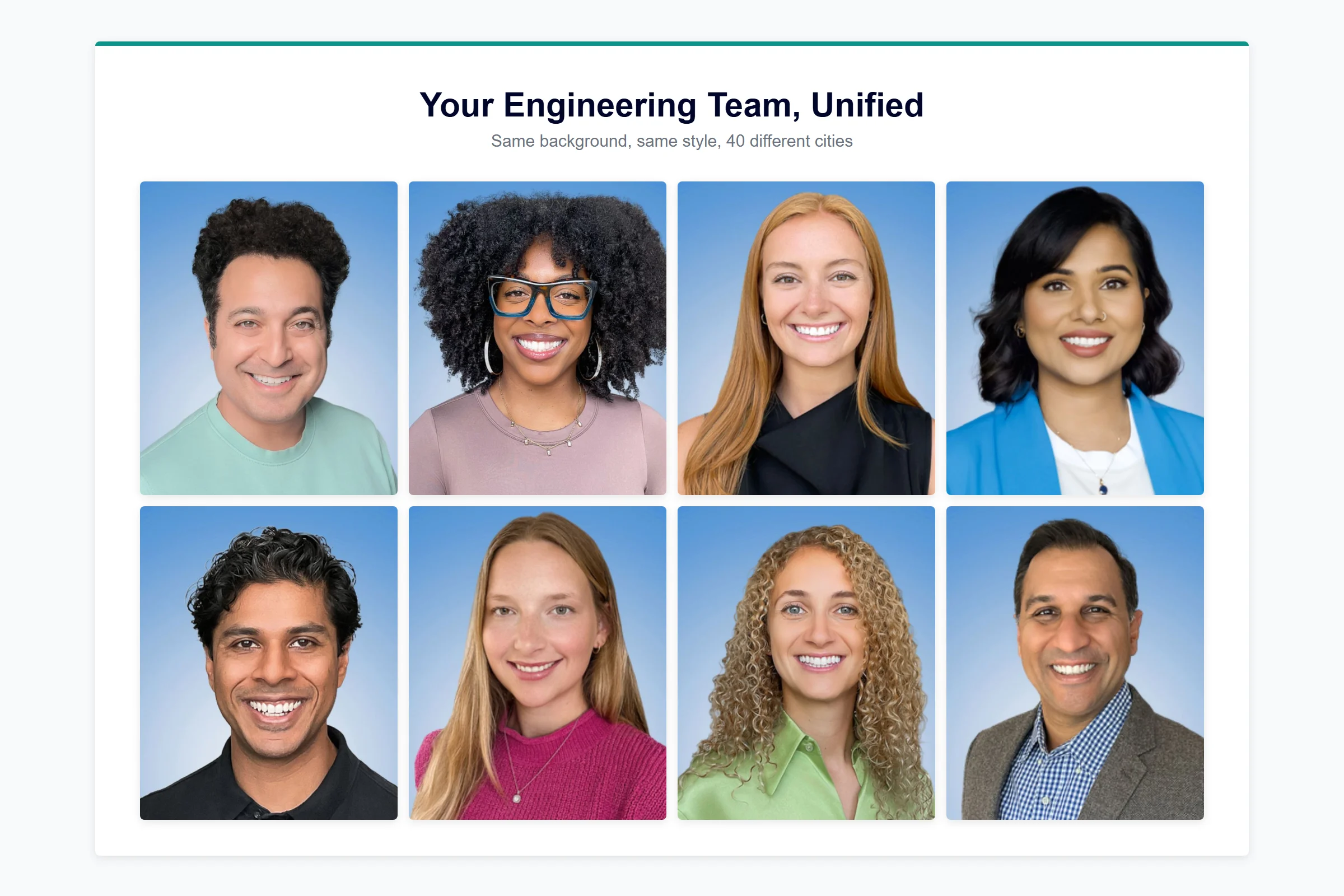
The key to getting employees to actually take their headshots is removing friction until saying yes requires less effort than saying no. That means virtual sessions employees complete from anywhere in under 10 minutes, leadership modeling the behavior first, multi-channel communication that frames the headshot as a personal benefit rather than a corporate task, and specific accommodations for camera-shy team members.
Last updated: March 2026
Most employee headshot programs fail not because of budget or quality concerns, but because nobody planned for the hardest part: participation. After delivering over 100,000 headshots at Capturely, we’ve seen what separates 30% completion from 95% completion. It’s not the camera. It’s not the budget. It’s the rollout strategy. This playbook covers what actually works — based on patterns from organizations like HCA Healthcare, Crum & Forster, Intermountain Health, and AmeriLife that have solved the participation problem at scale.
Why Employee Headshot Participation Is the Real Challenge
Here’s a stat that should recalibrate your expectations: voluntary corporate program participation averages 20–40%, with most programs landing around 30–35% usage (RAND Corporation / U.S. Department of Labor, 2024). If your headshot program hits 35% without a deliberate participation strategy, that’s not a failure — it’s the default outcome for any optional workplace initiative.
The problem compounds for headshot programs specifically because photos trigger emotional resistance that other corporate programs don’t. Not everyone dreads a wellness screening. But ask someone to pose for a camera? Different story entirely.
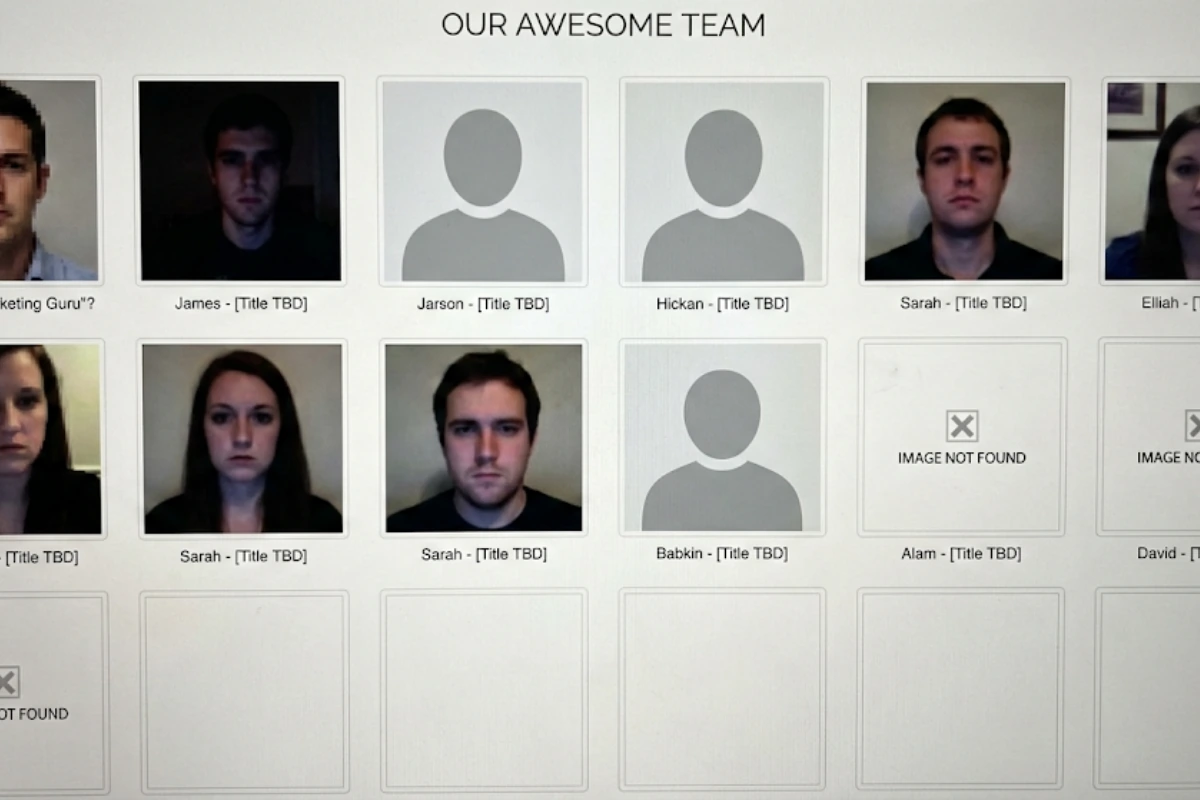
We hear this on discovery calls constantly. One prospect described the challenge exactly: “Every time I ask her to come get her photo taken, the day before or the day of she comes up with this lame excuse.” Another told us: “It’ll be like six months before someone sends it, or they don’t send it at all.”
The gap between “everyone needs headshots” and “everyone has headshots” is where most programs stall. Closing that gap requires understanding why employees resist — and building a rollout plan that addresses each type of resistance directly.
What Actually Stops Employees From Scheduling Their Session?
Resistance to headshot programs falls into four predictable categories. Each one needs a different intervention.
| Resistance Type | What It Sounds Like | Root Cause | What Fixes It |
|---|---|---|---|
| Camera anxiety | “I hate having my photo taken” | Self-consciousness, past bad experiences | Private sessions, professional direction, virtual option |
| Priority mismatch | “I’ll do it later” (never does) | Headshots feel unimportant vs. actual work | Frame as career benefit, set deadline, automate reminders |
| Logistical friction | “I don’t have time / I’m remote” | Process is too complicated or location-dependent | 10-minute virtual sessions from anywhere |
| Skepticism | “My current photo is fine” / “Phone photos won’t look good” | Don’t see the value or don’t trust the quality | Show before/after examples, cite LinkedIn data |
Camera anxiety is more common than you think. Research from Dove found that 77% of women feel self-conscious having their photo taken (Dove Global Research, 2013). A separate study found that 35% of people say they’re too shy to be on camera at all (Animoto, 2024). These aren’t edge cases. They’re a third to three-quarters of your workforce.
Change fatigue is real. Employee willingness to support organizational change dropped from 74% in 2016 to 38% in 2022 (Gartner, 2022). When you announce yet another corporate initiative — even a well-intentioned one like headshots — many employees’ default response is skepticism, not enthusiasm.
The fix isn’t forcing compliance. It’s making participation feel like a benefit employees want, not a task the company assigned them.
How to Announce Your Employee Headshot Program
The announcement is where most programs start losing people. A single all-hands email that says “we’re doing headshots” and links to a scheduling tool gets you 25% participation at best. Here’s what organizations with 85%+ completion rates do differently.
Frame It as a Personal Benefit, Not a Corporate Mandate
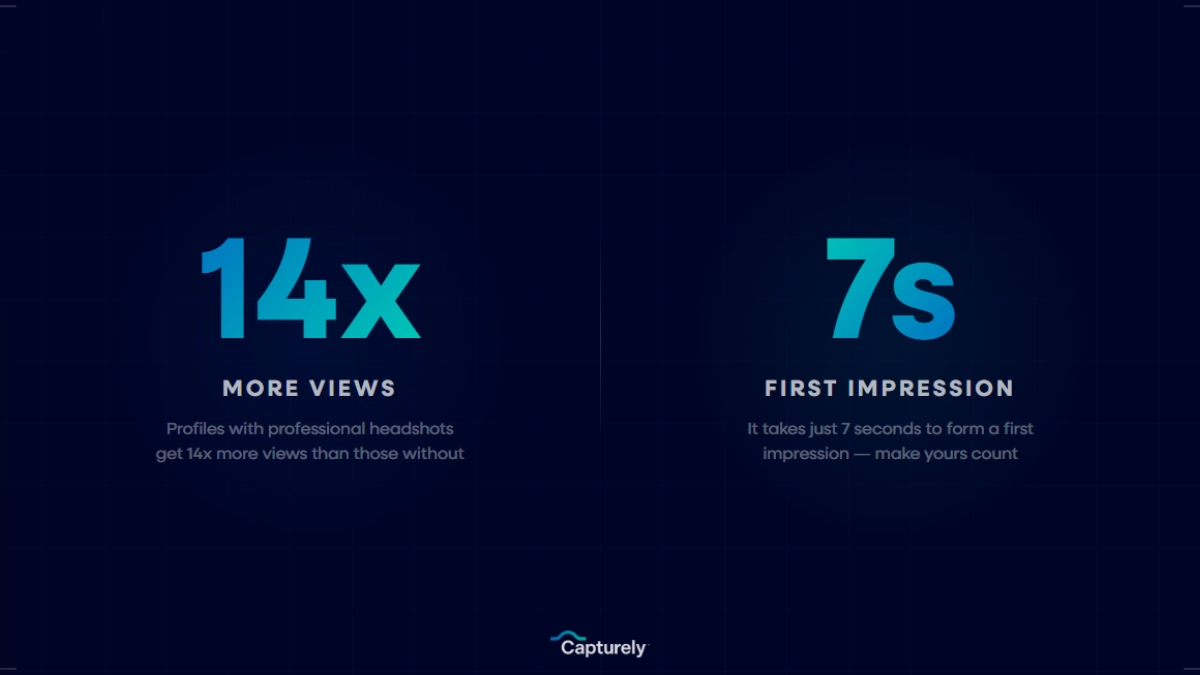
The data is on your side. LinkedIn profiles with professional photos get 21x more views and 36x more messages (LinkedIn, 2024). People form trustworthiness judgments in 100 milliseconds of seeing a face (Willis & Todorov, Princeton University, 2006). And 71% of recruiters have dismissed a candidate based on their profile picture alone (SaleSo, 2026).
Those stats reframe the entire conversation. You’re not asking employees to do something for the company. You’re giving them a professional asset worth $150–$450 at a studio — for free.
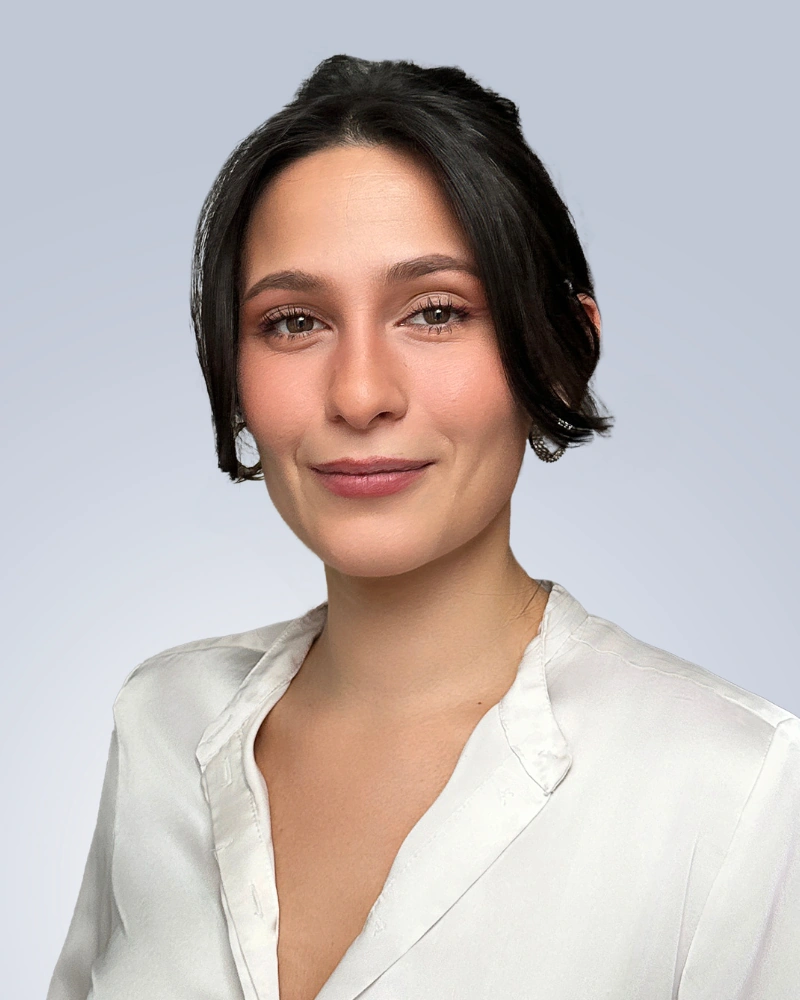
Your announcement should lead with what employees get, not what the company needs:
- Lead with: “We’re investing in professional headshots for everyone on the team — use yours on LinkedIn, email signatures, and anywhere you need a polished photo”
- Not: “As part of our rebranding initiative, all employees are required to complete a headshot session”
The framing difference matters more than you’d expect. Employees who understand how a program benefits them personally participate at roughly double the rate of those who don’t (WellSteps / Employee Benefit Research Institute, 2024).
Use a Multi-Touch, Multi-Channel Sequence
One email won’t cut it. Only 29% of employees are very satisfied with the internal communications they receive (Staffbase, 2025). Your announcement is competing with every other Slack message, email, and meeting invite that day. You need a multi-touch cadence.
Here’s the sequence that works based on what we’ve seen across hundreds of rollouts:
- Week 1: Announcement email from a senior leader. Frame the “why” with LinkedIn stats and career benefits. Show 2–3 example headshots. Link to scheduling.
- Week 1: Slack or Teams message from the coordinator. Shorter, more casual. “Quick heads up — [Company] is offering free professional headshots. Takes 10 minutes from your phone. Link to schedule.”
- Week 2: Reminder email with social proof. Share reactions from early adopters. “Here’s what [colleague name] said after their session…” Include a before/after.
- Week 2: Manager nudge. Ask team leads to mention headshots in their 1:1s or team standups. Peer influence outperforms corporate email every time.
- Week 3: Direct follow-up to non-responders. Personal, not mass. “Hey [Name], haven’t seen you on the schedule yet — want me to book a slot for you?”
- Week 4: Final push with deadline. “Last chance” framing with a specific cutoff date. Loss aversion is powerful.
Katie Pacheco at Crum & Forster saw this work in real time: “When I went to the dashboard on that day, you could see the usage ticked up in terms of scheduling. So, we did get adoption after that email, which is why I think when we send out another one in January, it’ll be good.”
Alicia Ebaugh at Lunchtime Solutions put it bluntly: “An email every three days seems like a lot, but honestly, they need to schedule it.”
Need help planning your rollout? Capturely includes admin tools that track who’s scheduled, who’s completed, and who needs a nudge — across your entire organization. See how it works →
How to Get Camera-Shy Employees to Take Headshots
Camera anxiety is the biggest silent killer of headshot program participation. The employees who are most reluctant are rarely the ones who tell you they’re reluctant — they just quietly never schedule.
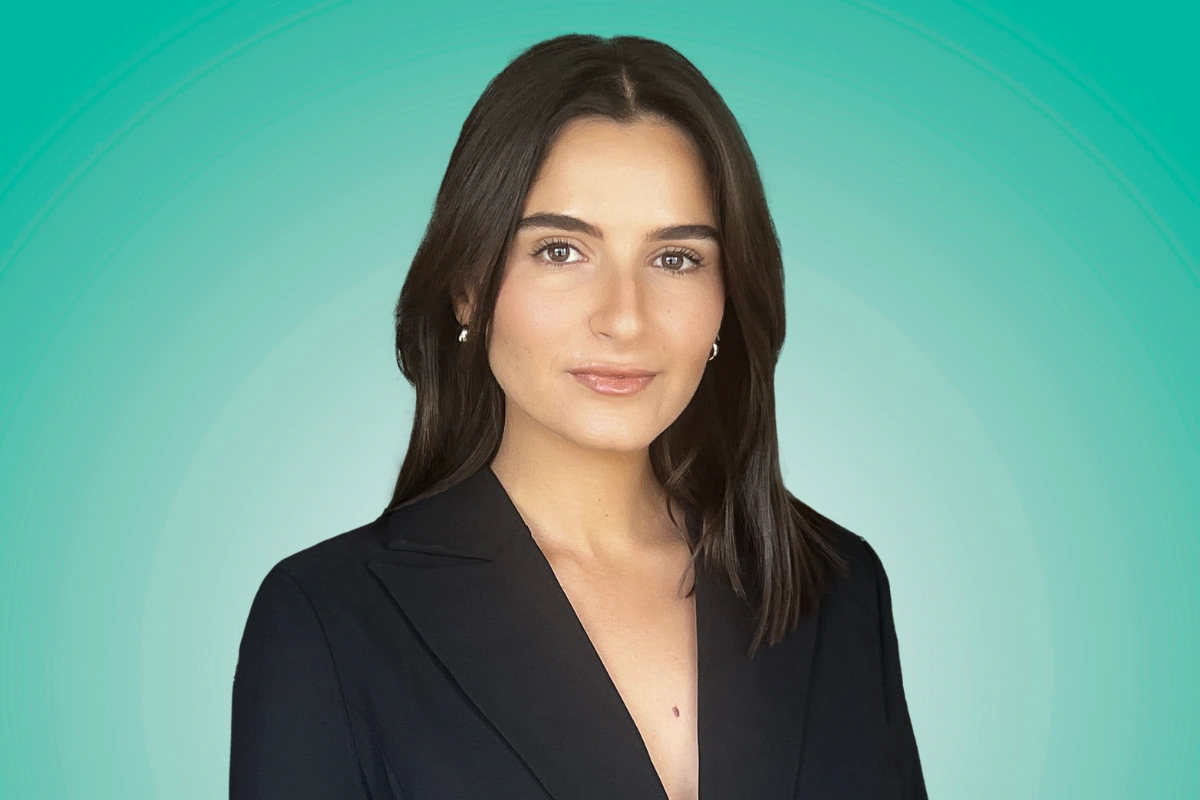
Here’s what actually helps, based on working with tens of thousands of camera-shy professionals.
Give Them a Private, Low-Pressure Experience
On-site photo days in a conference room with a line of coworkers waiting? That’s a nightmare for anxious employees. One prospect described the dynamic perfectly: “I think most of this product is making people feel comfortable because having these photos taken in other positions, you’d be the only person in the room that would put something really awkward.”
Virtual headshot sessions flip this entirely. The employee is in their own space — home office, private room, wherever they’re comfortable. No audience. No line. No coworkers watching them try to figure out their “good side.”
Professional Direction Changes Everything
The difference between “take a photo of yourself” and “a photographer will guide you through it” is the difference between a self-guided nightmare and a 10-minute conversation. According to Hillary Manning, Coordinator at International Responder Systems: “Having a photographer to help assist for anybody who might be nervous or trying to figure out the best angle — that’s very helpful.”
When a live photographer says “Chin down slightly, great, now relax your shoulders — perfect, hold that,” the anxious employee doesn’t have to make any decisions. They just follow directions. That’s dramatically less stressful than staring at a phone screen trying to position themselves.
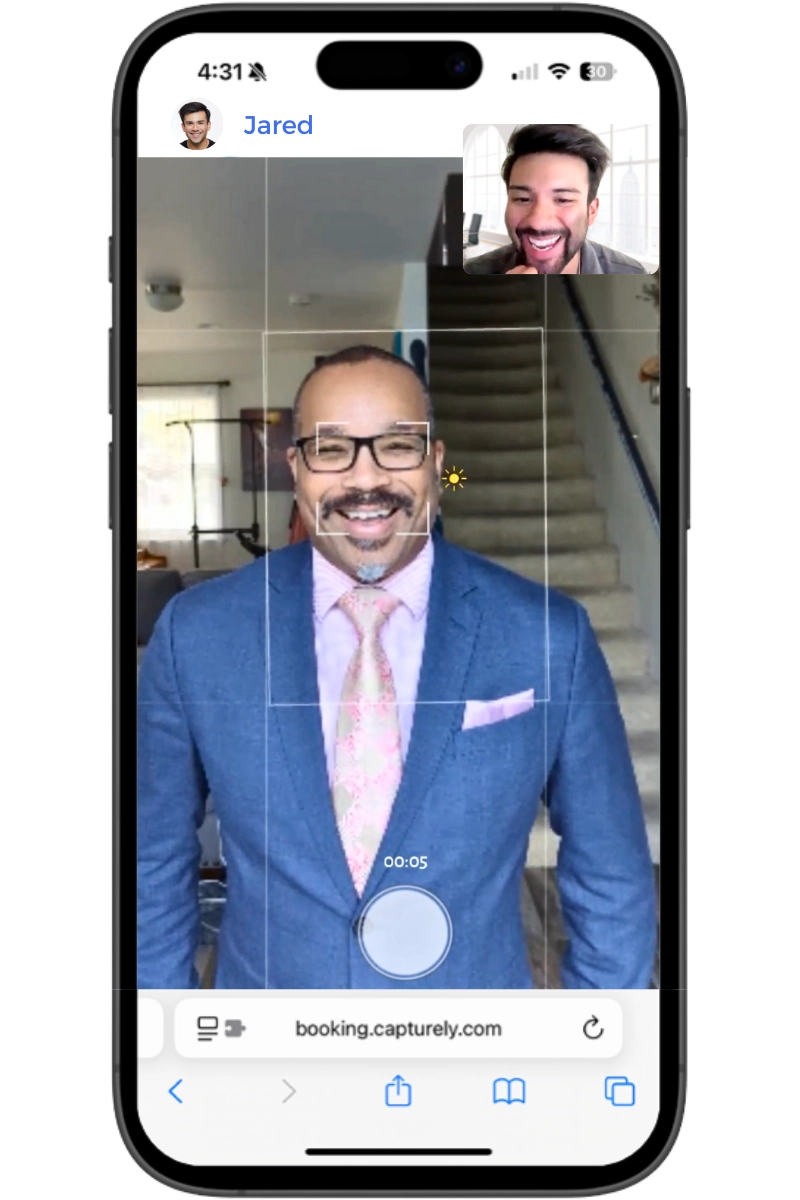
Let Them See Results Before They Commit
Skepticism drops to zero once someone sees what the photos actually look like. Jennea Bono at Cohere Life put it this way: “I was a little heavier than I normally am and I was really happy with them. So that’s like a huge win right there.”
Offer demo sessions to your most reluctant employees. When they see their own results — and realize it took 10 minutes — they become your biggest advocates. Lizzie Stevenson’s reaction was typical: “It’s been great. So great that we’re like, okay, let’s extend to more people. We did a small group at first and we’re like, okay, leadership has done it now. We’re extending it to a larger crowd.”
For tips employees can use before their session — including posing, lighting, and what to wear — share our guide on how to take professional headshots.
Camera-Shy Accommodation Checklist
- Offer virtual sessions from a private space (home or private office) — not just in-office photo days
- Pair them with a live photographer who directs every shot (removes decision paralysis)
- Share example photos beforehand so they know what to expect
- Allow them to preview and select their favorites before anything is published
- Never post headshots to the company website or directory without explicit consent
- Guarantee they can retake if they’re not satisfied — removing the “what if I hate it?” fear
Why Convenience Drives More Participation Than Mandates
You can make headshots mandatory. Some companies do. But mandates create resentment, and resentment shows in the photos. Forced smiles look forced.
The better approach: make the process so easy that opting out feels like more effort than opting in.
| Friction Point | Traditional Approach | Low-Friction Approach |
|---|---|---|
| Scheduling | Coordinate with photographer, admin, and employee calendars | Employee self-schedules from a link, picks any open slot |
| Location | Must come to the office or studio | Any room with a window — home, office, hotel |
| Time commitment | 30–60 minutes (travel + wait + session) | 10 minutes total |
| Technology | Studio, lighting equipment, backdrop | Phone + a browser — no app download |
| Remote employees | Fly them in or leave them out | Same experience as anyone else |
| Rescheduling | Wait for the next photo day (3–6 months) | Reschedule online in 30 seconds |
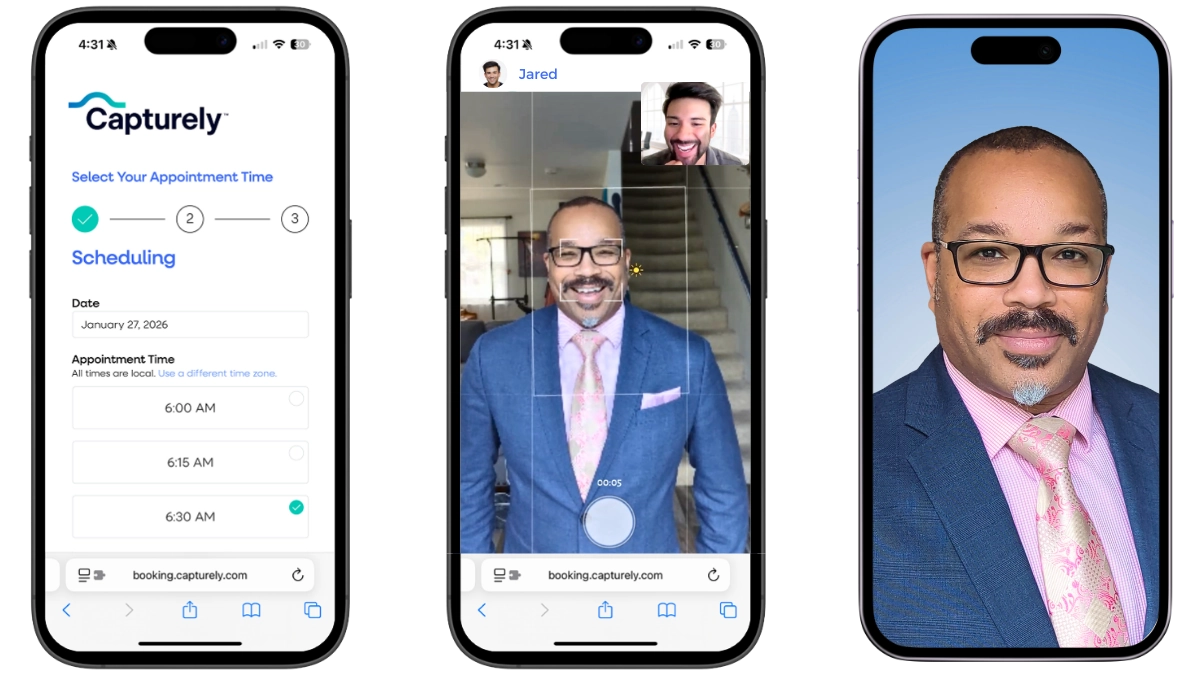
Joan Mirabile at USAIG summarized it well: “It was painless, it was fast. We didn’t have to go to a studio. That came out good.”
Tracy Murphy at Lojistic built the headshot into her onboarding workflow: “I have a template that I send to new hires saying, the first thing you do please set up a session. And then it’s nice because we’re notified when the session is complete and the picture’s ready.”
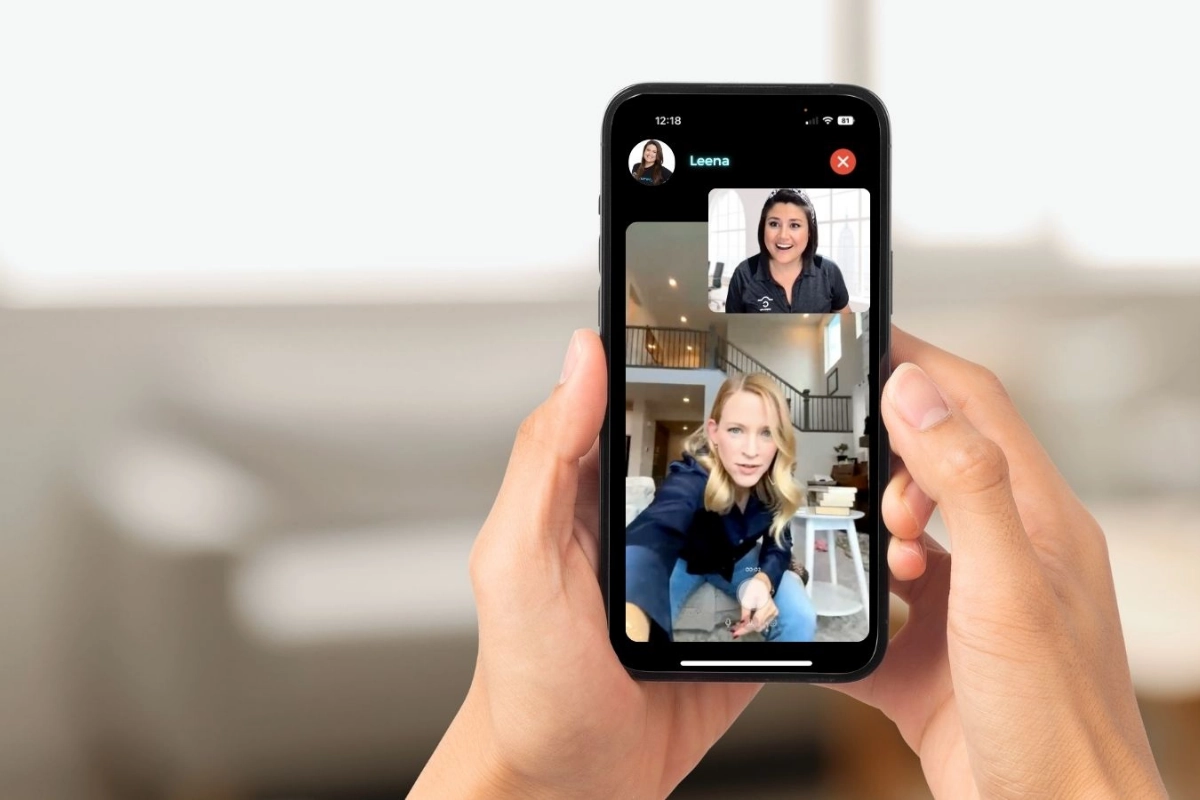
When you reduce the ask from “block an hour to go to a studio” to “open this link for 10 minutes,” the participation math changes completely. Approximately 32.6 million Americans now work remotely — about 22% of the workforce (Robert Half, 2025). For those employees, a location-dependent headshot program isn’t inconvenient. It’s impossible. A virtual option means nobody gets left out because of where they sit.
How Leadership Buy-In Changes Participation Rates
The single most effective participation tactic is also the simplest: have your CEO or senior leaders go first and share their results.
This isn’t a nice-to-have. When employees see leadership modeling a behavior, adoption increases by up to 30% (Mooncamp, 2025). Seventy percent of change programs fail, and the primary reason is lack of visible leadership support (McKinsey, cited 2024).

In practical terms, here’s the playbook:
- Start with a pilot group of 5–10 leaders. Let them experience the process firsthand. Capturely offers free demo sessions for exactly this purpose — so decision-makers can see the quality before rolling out to the full organization.
- Share leadership results internally. Slack channel, all-hands meeting, internal newsletter. When the VP of Sales posts their new headshot and says “That took 10 minutes and I actually like how it turned out,” it gives everyone else permission to participate.
- Have department heads include headshots in team goals. Not as a mandate — as a milestone. “By end of Q2, our entire department has updated, consistent headshots on the website.”
JT Healy at Crum & Forster saw this dynamic play out: “Everyone’s really excited about this. I mean, this is kind of like company wide. So, I think people are finally excited to get rid of their 1994 headshot.”
The pilot-then-expand approach works because it builds social proof inside the organization. People trust what their colleagues have already done more than what an email tells them to do.
How to Keep Participation Going After the Initial Push
The initial rollout gets the first 60–70%. The last 30% requires sustained momentum. Here’s how organizations maintain participation over time.
Build Headshots Into Onboarding
The easiest time to get someone’s headshot is when they’re brand new and motivated to make a good impression. Tracy Murphy at Lojistic made it automatic: “I have a template that I send to new hires saying, the first thing you do please set up a session.”
When headshots are part of Week 1 onboarding — alongside IT setup, benefits enrollment, and org chart orientation — completion rates approach 100%. Nobody pushes back on a headshot during their first week when it’s framed as “here’s a free professional photo for your LinkedIn and company profile.”
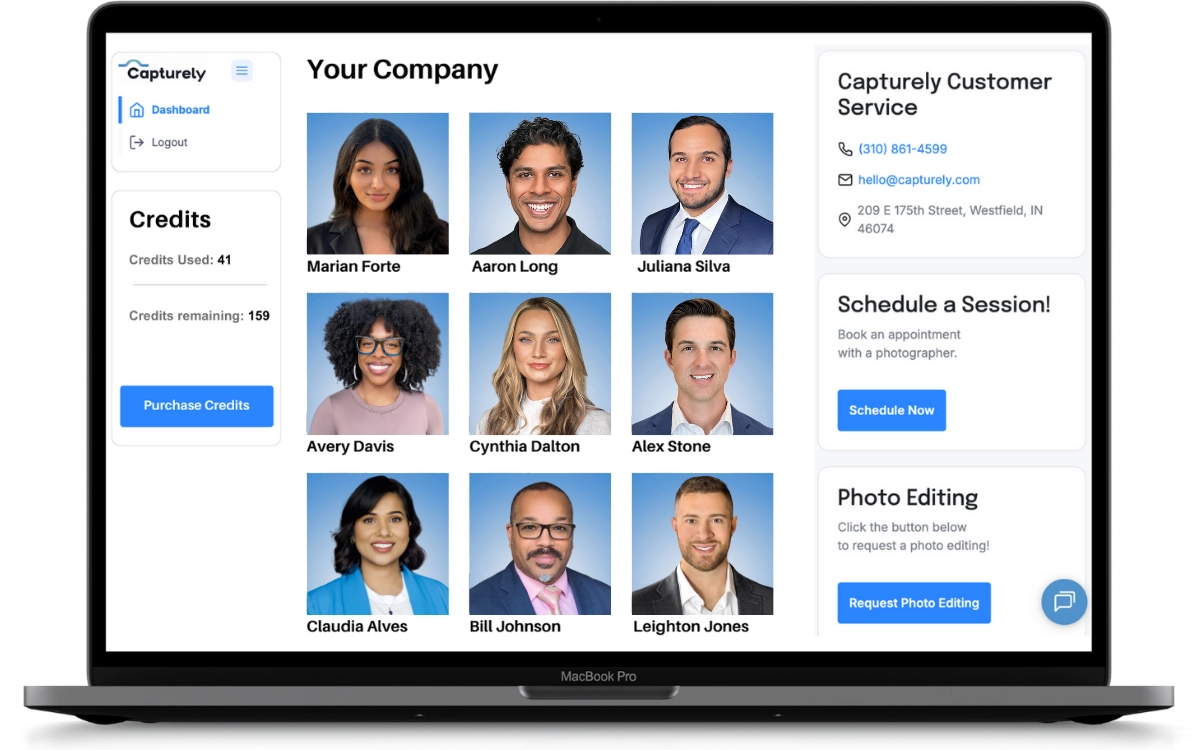
Use the Admin Dashboard to Track and Nudge
You can’t manage what you can’t see. An admin dashboard that shows who’s completed, who’s scheduled, and who hasn’t started gives you the data to target your outreach instead of blasting the whole company again.
Katie at Crum & Forster watched the numbers in real time: “When I went to the dashboard, you could see the usage ticked up in terms of scheduling.”
Rachel Zelnick at Intermountain Health tracked adoption systematically: “We’ve seen adoption go up drastically the last few months to almost 100%.” That kind of result takes sustained attention, not a single announcement.
Celebrate Results Publicly
When employees see their colleagues’ headshots on the website, in the team directory, or on LinkedIn, it creates organic social proof. Nick Lombardino at CultureCon described the reaction: “Holy smokes, the amount of emails I got from people after the experience saying, this was so incredible. I feel like I have the confidence behind my likeness to present it to the world.”
Alyssa Shuman at HCA/MedCity saw similar enthusiasm: “It was a great experience. I think everyone really loves their headshot.”
Post a before/after comparison in your internal Slack channel. Feature the new team page in a company-wide update. Let the results sell the program. For more on building the operational foundation for your headshot program, see the HR manager’s guide to team headshot programs.
Want to see what high participation looks like? Book a free demo session — experience the 10-minute virtual headshot process yourself, then share your results with the team. Book your free demo →
What Headshot Program Success Looks Like
Most companies don’t set participation targets for headshot programs. They should. Without a benchmark, “going pretty well” could mean anything from 40% to 95%.
Based on patterns from 500+ Capturely clients, here’s what we typically see:
| Metric | Below Average | Average | Best-in-Class |
|---|---|---|---|
| Completion rate (first 30 days) | Under 40% | 50–65% | 80%+ |
| Completion rate (90 days) | Under 60% | 70–80% | 90%+ |
| New hire coverage (within 30 days of start) | Under 30% | 50–70% | 90%+ |
| Employee satisfaction with photos | Under 80% | 85–92% | 95%+ |
| Reshoot rate | Over 10% | 5–8% | Under 3% |
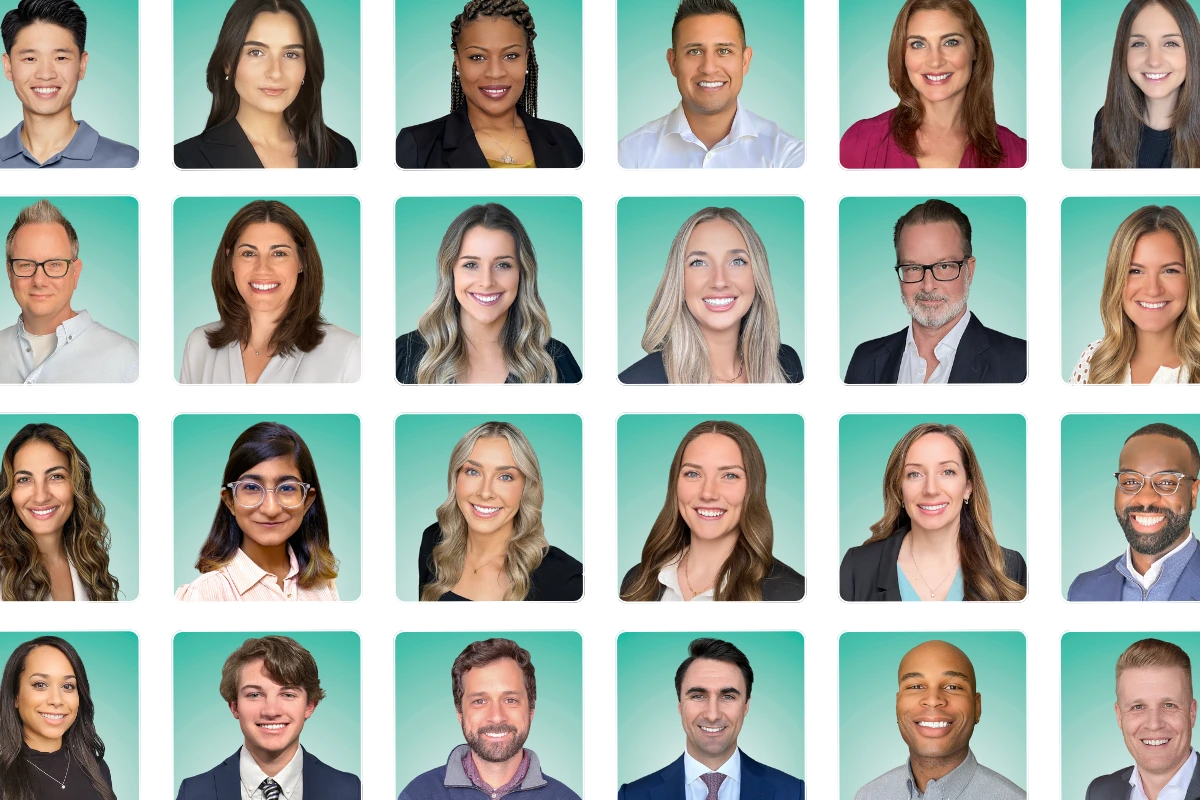
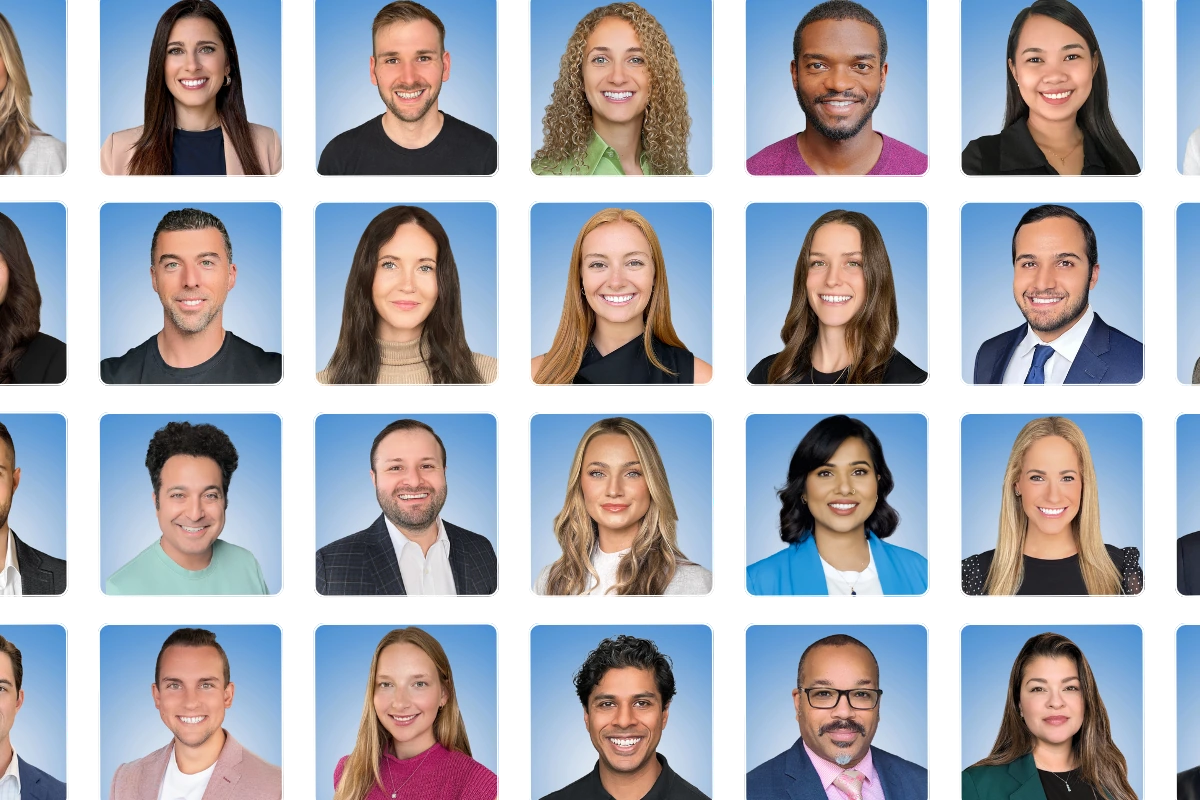
The organizations hitting best-in-class numbers share three traits: leadership went first, the process was virtual and took under 15 minutes, and they used automated reminders with a specific deadline.
Jill Rein tracked satisfaction carefully: “I have had 100% positive feedback about the process. And everybody except for one person liked their photographs.” That’s the kind of feedback that makes the next round even easier — because word of mouth does your recruiting for you.
According to Jeff Maldonado, VP at AmeriLife, which manages a national network of insurance agents: “Our agents are everywhere — they’re national. We had no mechanism to ensure their headshots met our brand standards. Capturely solves that. We now have standards of formatting, consistent delivery, and everyone’s been on the nose of where we needed to be.” When the experience is good and the results are consistent, participation stops being a problem you have to solve and becomes a program that runs itself. For more on managing headshots across distributed teams, see our corporate headshots guide.
Frequently Asked Questions
Can my employer require me to take a headshot?
In most states, yes — employers can require professional headshots similar to requiring a name badge or uniform. However, California and several other states have “right of publicity” laws requiring written consent before using employee photos for marketing (SHRM). Best practice: get written photo releases during onboarding that specify where photos will be used, and accommodate religious or disability-related requests on a case-by-case basis.
How do you get camera-shy employees to take headshots?
Offer virtual sessions from a private space instead of on-site photo days with an audience. Pair employees with a live photographer who provides real-time direction — this removes the guesswork that makes camera-shy people freeze. Share example photos beforehand so they know what to expect, and guarantee retakes if they’re unsatisfied. With live photographer direction, reshoot rates stay under 2% because issues are caught during the session, not after.
How far in advance should you announce an employee headshot program?
Give employees 2–3 weeks between the announcement and the first available sessions. Shorter notice creates scheduling conflicts. Longer than 3 weeks causes procrastination — people assume they have plenty of time and forget entirely. Follow the initial announcement with a reminder at day 7, a social proof email at day 10 sharing early results, and a “last chance” deadline email around day 18–20.
What participation rate should I expect for an employee headshot program?
Without a participation strategy, expect 25–40% completion — consistent with voluntary corporate program averages (RAND Corporation, 2024). With leadership buy-in, multi-channel communication, virtual sessions, and automated reminders, organizations regularly hit 80–95% within 90 days. The biggest variable is whether leadership models the behavior first. Pilot programs with executives going first consistently outperform mass rollouts.
How do you announce a headshot day to employees?
Lead with what employees get (“free professional headshot for your LinkedIn, email signature, and career”) rather than what the company needs. Include 2–3 example photos, a direct scheduling link, and a specific time commitment (“10 minutes from your phone”). Send the announcement from a senior leader for credibility, then reinforce through Slack or Teams, manager mentions in 1:1s, and targeted follow-ups to non-responders over the next 2–3 weeks.
Should I make employee headshots mandatory or optional?
Optional with strong encouragement consistently outperforms mandatory. Mandates create resentment that shows in the photos — forced smiles, minimal effort, negative word-of-mouth that poisons future rounds. Instead, make participation the path of least resistance: 10-minute virtual sessions, self-scheduling, no travel required. When the process is genuinely painless and the results look good, most employees participate voluntarily without being told they must.
How long does an employee headshot session take?
A virtual headshot session takes about 10 minutes — from opening the scheduling link on your phone to finishing the shoot. Three professionally retouched headshots (left angle, right angle, straight-on) are delivered within 24 hours. No app download, no studio visit, no waiting in line. The brevity is the point: 10 minutes is short enough that nobody can reasonably claim they don’t have time.
What if employees don’t like their headshots?
Services with a happiness guarantee let employees retake their session at no extra cost. In practice, reshoot rates with live-directed virtual sessions stay under 2% because the photographer catches lighting, posing, and expression issues in real time rather than after. Letting employees preview and approve their photos before publication also eliminates the “what if I hate it” anxiety that keeps reluctant people from scheduling in the first place.
Ready to run a headshot program that actually gets done? Get an instant quote — configure your team’s look, see volume pricing, and plan your rollout in under 30 seconds. Get your instant quote →