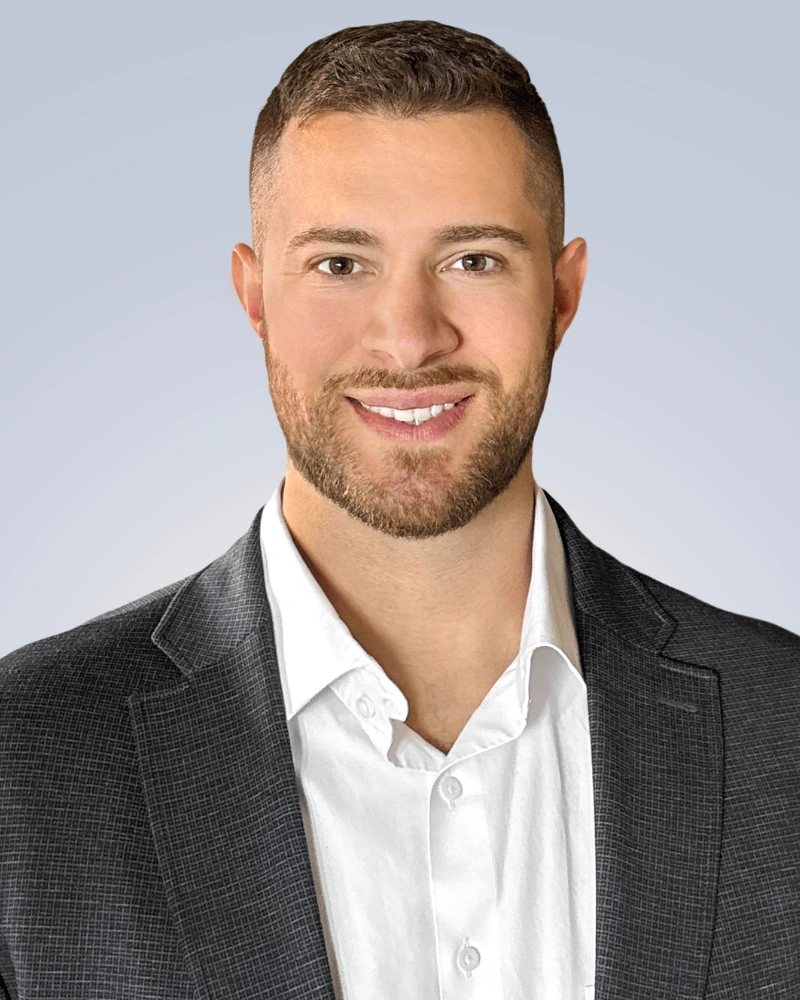
Professional headshots for men are head-and-shoulders photographs taken with controlled lighting and a clean background, designed for LinkedIn, corporate websites, email signatures, and industry directories. The best men’s headshots match your industry’s dress code, use a slight shoulder angle for dimension, and capture a natural expression that balances confidence with approachability. A 10-minute session with a skilled photographer will outperform any selfie or AI-generated image.
Last updated: March 2026
Men tend to put less thought into their headshots than women. PhotoFeeler’s analysis of over 1 million ratings (2019) found that men in their 20s make the worst first impression of any demographic group—largely because they put significantly less effort into their profile photos. But men over 35 who invest in a polished headshot are perceived as more competent and influential than any other group. The gap between “didn’t bother” and “took it seriously” is enormous.
This guide covers what actually matters: which style fits your industry, what to wear, how to pose, and what the session looks like from start to finish. We’ve drawn on Capturely’s experience delivering 100,000+ professional headshots to companies like Google, McKinsey, Capital One, and Amazon to show you exactly what works.
What Makes a Great Professional Headshot for Men?
A great headshot does three things in under a second: it looks like you, it signals competence, and it fits the context where it will be used.
According to Alexander Todorov, Professor of Psychology at Princeton University, “All it takes is a tenth of a second to form an impression of a stranger from their face, and longer exposures don’t significantly alter those impressions” (Willis & Todorov, Psychological Science, 2006). That fraction of a second is all your headshot gets.
What separates a headshot that works from one that doesn’t:
- Sharp eyes and natural expression. A Duchenne smile (where your eyes crinkle, not just your mouth) is rated significantly higher on attractiveness, sincerity, and competence than a forced grin (Reis et al., European Journal of Social Psychology, 1990).
- Proper fit and contrast. Clothes that are too loose bunch up on camera. Colors too close to your skin tone erase your jawline. Navy, charcoal, and light blue create the strongest contrast for most skin tones.
- Clean background that doesn’t compete. Capturely offers 98+ background options, but the point is the same everywhere: the background should frame you, not distract from you.
- Current. If your headshot could have its own driver’s license, it’s time for an update. People need to recognize you when they meet you in person.
LinkedIn members with professional headshots receive 21x more profile views and up to 36x more messages (LinkedIn, 2016). For men specifically, the ROI on a good headshot increases with age—PhotoFeeler data shows male perceived competence improves at 6x the rate of women’s as they get older (PhotoFeeler, 2019).
Ready for a headshot that actually works? Capturely connects you with a live photographer for a 10-minute virtual session—no studio visit needed. 3 edited images delivered in 24 hours. Get your headshot →
Headshot Styles for Men by Industry
The biggest mistake men make with headshots is dressing for the wrong industry. A suit and tie at a startup signals “doesn’t get the culture.” A hoodie at a law firm signals “doesn’t take this seriously.” Your headshot style needs to match the expectations of the people who will see it.
| Industry | Attire | Background | Expression |
|---|---|---|---|
| Finance / Banking | Tailored suit, white or light blue shirt, conservative tie | Navy blue or charcoal | Composed, subtly confident |
| Law / Legal | Dark suit, light shirt, tie required (especially litigators) | Neutral gray or navy | Serious to subtly confident |
| Consulting | Dark suit or blazer, white/blue shirt, tie optional | Light gray or white | Warm but polished |
| Technology / Startups | Collared shirt or blazer over crew-neck, no tie | Dark (charcoal, slate, navy) | Relaxed, approachable smile |
| Healthcare | White coat or business casual, depending on role | Light gray or light blue | Warm, trustworthy |
| Creative / Media | Statement pieces, jewel tones, bowtie, no rules | Bold colors (teal, warm tones), textured | Expressive, personality-forward |
Finance and Banking
This is the most conservative headshot environment outside of law. A well-tailored suit in navy or charcoal, a white or light blue dress shirt, and a conservative tie that complements without becoming the focal point. Research consistently shows blue is perceived as more trustworthy by a ratio of nearly 3:1 over other colors—which is why navy dominates financial services headshots.
Technology and Startups
Full suits look out of place at most tech companies. The sweet spot: a crisp collared shirt without a tie, or a blazer over a quality crew-neck. Think “nice dinner out, not Saturday errands.” Dark backgrounds (charcoal, slate) read as modern and authoritative without the formality of traditional corporate photography.
Law and Legal
The most conservative of all industries. Ties are expected, especially for litigating attorneys. A neutral or composed expression works better than a warm smile here—clients facing legal issues need to see someone who looks capable of handling serious matters. For more on law firm headshot standards, we’ve written a separate deep dive.
Consulting and Professional Services
Consultants need to match or exceed their clients’ expectations, which means dressing at the same level as finance. Dark suits, white or light blue shirts, minimal accessories. The difference: expression can be slightly warmer. You need to look like someone a C-suite executive would trust and want to work with. Our business headshots guide covers what consulting and professional services firms specifically need.
Creative Industries
Maximum flexibility. Bold background colors (teal, warm orange, deep red), statement pieces, patterned ties or bowties. Your headshot should signal that you think visually and aren’t afraid to be distinctive. If every headshot example on your team page looks identical, something’s wrong.
What to Wear for a Professional Headshot (Men)
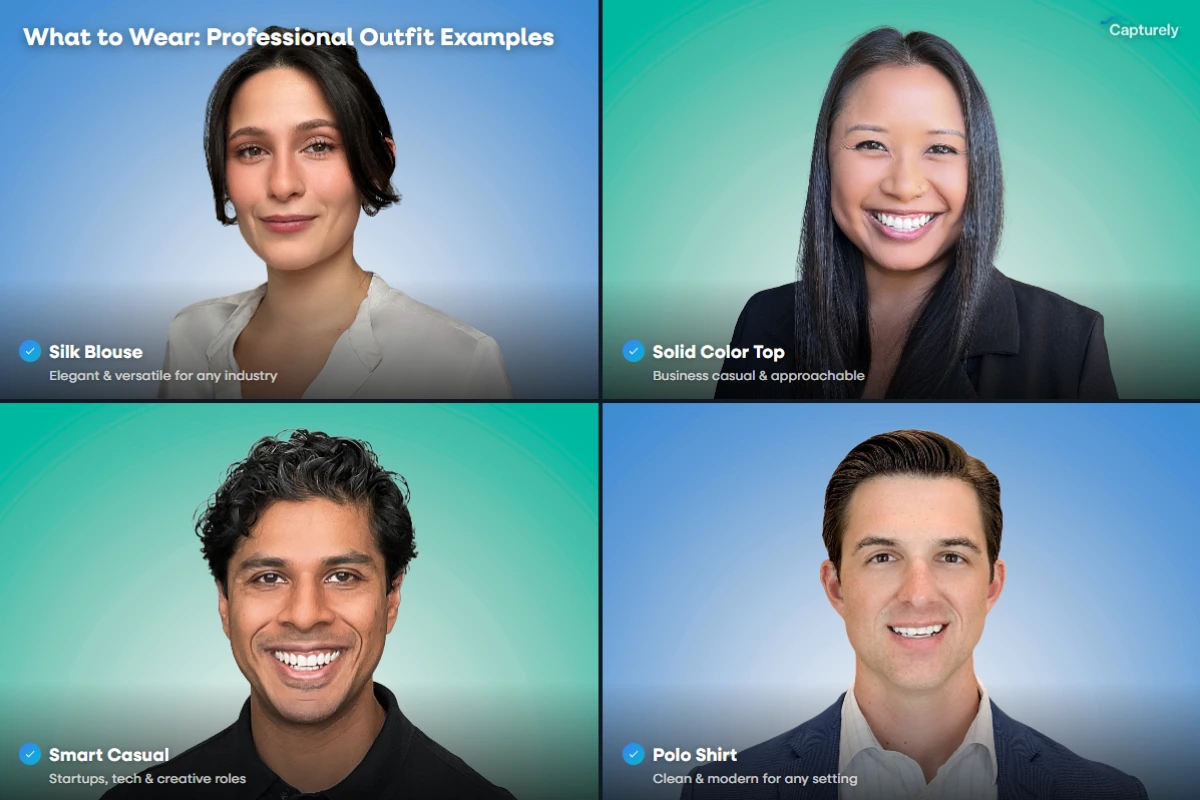
Wardrobe is the single variable most men can control that has the biggest impact on their headshot. PhotoFeeler’s analysis of 60,000+ ratings found that formal dress adds +0.94 to perceived competence and +1.29 to perceived influence on a 10-point scale. That’s not marginal—it’s the largest single factor they measured.
Suit and Tie vs. Business Casual vs. Creative
The decision is simpler than most guides make it: dress one level above your daily norm.
- Full suit + tie: Finance, banking, law, insurance, management/executive positions. If your clients or colleagues wear ties, you should too.
- Blazer, no tie: Consulting, corporate roles in relaxed companies, accounting, senior leadership in non-traditional industries. A blazer elevates any outfit. This is where the majority of professionals now land.
- Collared shirt, no jacket: Tech, startups, healthcare administration, education, nonprofit. A crisp button-down in navy, gray, or muted tones.
- Creative casual: Advertising, design, media, entertainment. More latitude for personality, but it still needs to look intentional.
When unsure: Bring a tie and a blazer to the session. You can always remove layers, but you can’t add what you didn’t bring. For a complete wardrobe breakdown, see our headshot wardrobe guide.
Colors That Photograph Well on Men
| Color | What It Signals | Best For |
|---|---|---|
| Navy Blue | Trust, reliability, confidence | Universal—works for every industry |
| Charcoal Gray | Sophistication, authority | Versatile across all fields |
| Light Blue | Calm, approachable | Dress shirts under blazers |
| White | Clean, crisp | Dress shirt under dark suit only |
| Burgundy / Deep Red | Leadership, energy | Accent only (tie, pocket square) |
| Forest Green / Teal | Balance, creativity | Creative industries, differentiation |
Colors to avoid: Bright white (washes out on camera), neon anything, busy patterns, clothing with logos, and anything that matches your skin tone too closely—your jawline will disappear.
Facial Hair: Grooming Tips for Headshots
Your headshot should look like you. If a beard is part of your identity, keep it—but make sure it’s groomed.
- Commit to a look. Full beard, moustache, or clean-shaven. Scruffy stubble reads as “forgot to shave,” not “intentional style.”
- Trim 1-2 days before the session, not the morning of. A freshly buzzed beard looks too clean on camera.
- Use beard oil the day of the shoot. It adds subtle shine and controls flyaways that high-resolution cameras pick up.
- If clean-shaven: Shave the morning of. Use a sharp razor and soothing aftershave to reduce redness.
- Don’t forget the details: Stray eyebrow hairs, nose hair, and ear hair all show up in high-resolution photos. Check these before the session.
Get a haircut 3-5 days before your session—not the day before. The cut needs time to settle so it looks natural, not freshly barbered.
How to Pose for Men’s Headshots
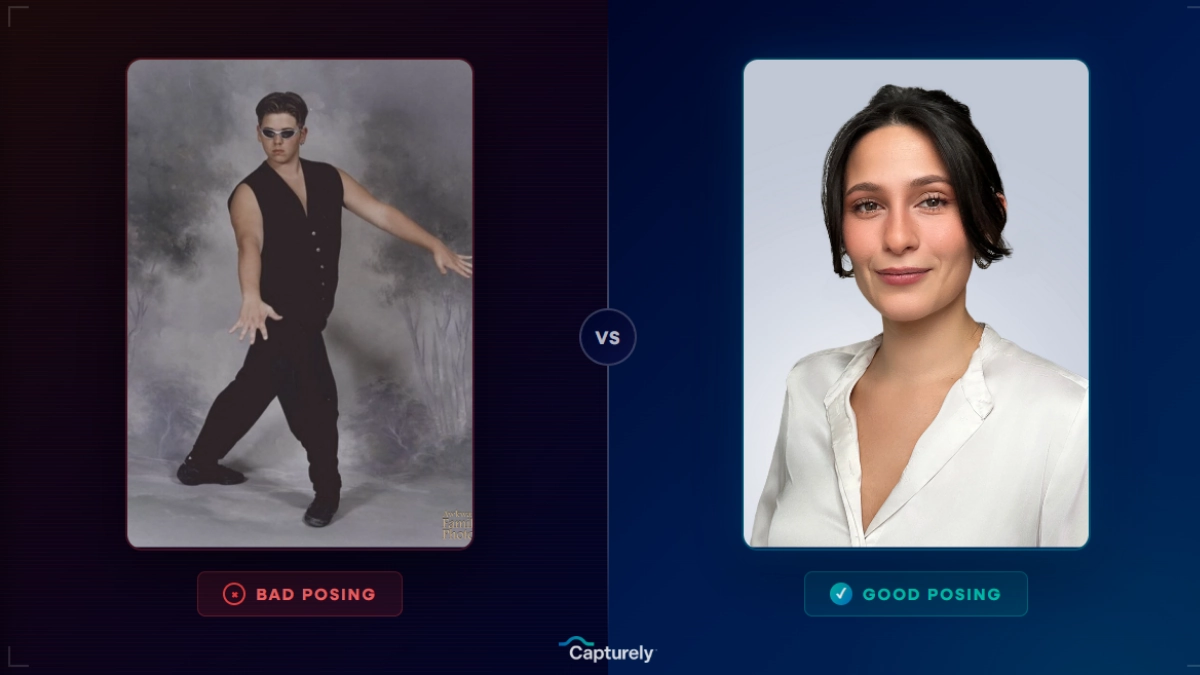
Posing makes or breaks a headshot. The good news: three adjustments fix 90% of common problems.
Shoulder Angle and Body Position
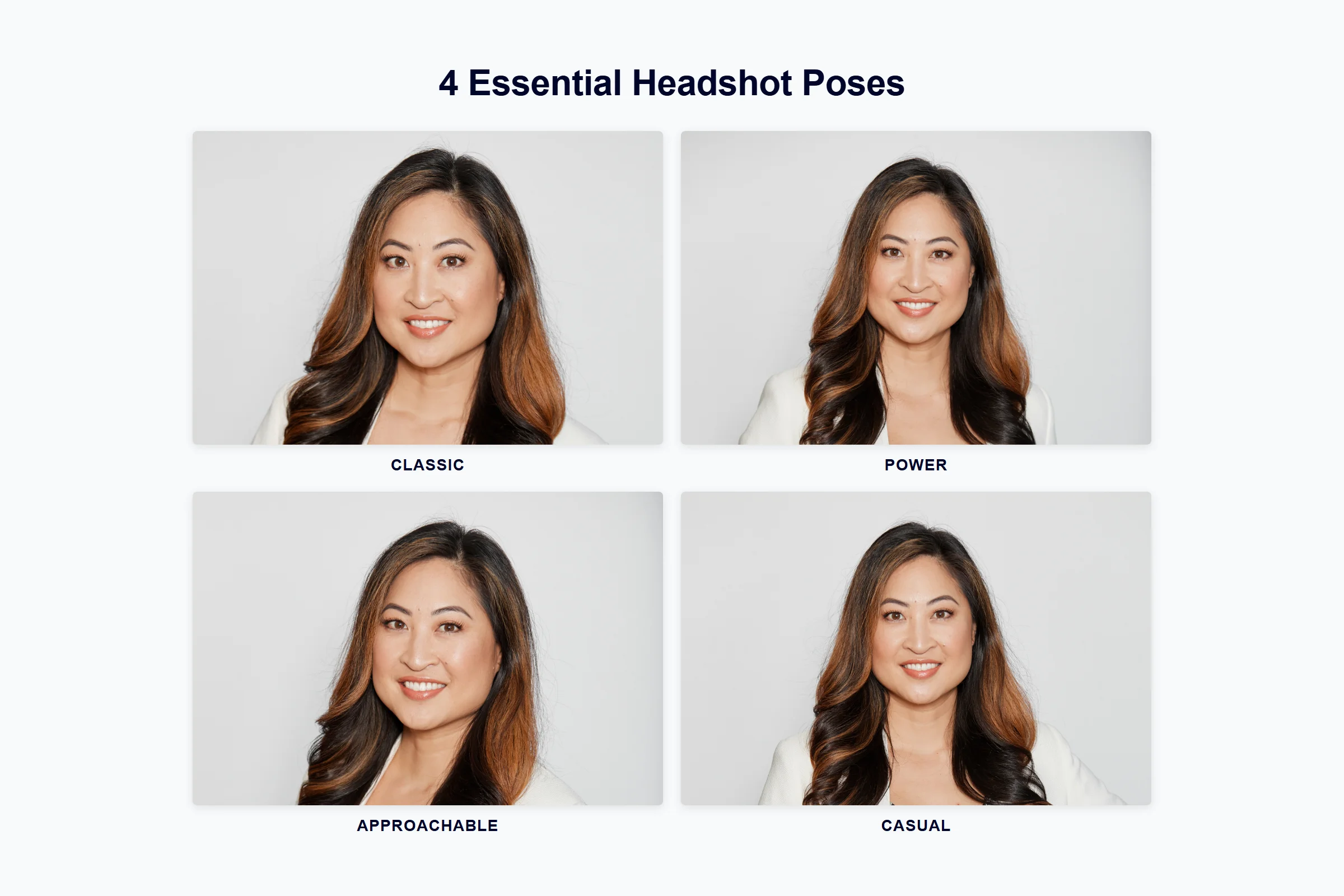
Never face the camera dead-on. Square shoulders make you look wider and flatter—more passport photo than professional headshot. Turn your body 20-45 degrees from the camera and lead slightly with one shoulder. Roll your shoulders back and down to open your chest. If you’re tense, your shoulders creep toward your ears and the photo looks stiff.
Jawline Techniques
The single most important pose adjustment for men: extend your chin slightly forward (like a neck stretch), then lower it just a touch. Photographers call it the “turtle.” It defines the jawline and eliminates any double-chin appearance. Lightly clenching your teeth adds even more definition.
This matters more than most men realize. If your clothing color is too close to your skin tone, the jawline softens or disappears entirely on camera. That navy suit isn’t just about trust—it’s creating the contrast your face needs.
Should You Smile in Your Headshot?
A slight, natural smile outperforms both a stern expression and a full grin. PhotoFeeler’s data shows smiling with teeth boosts likability by +1.35 and competence by +0.33 on a 10-point scale (PhotoFeeler, 2019). But there’s a catch: it has to be genuine.
A Duchenne smile—where your eyes crinkle along with your mouth—is rated as more authentic, attractive, and trustworthy than a mouth-only smile. A forced smile is actually worse than no smile at all.
Industry-specific guidance:
- Authority-focused roles (law, finance, academia): Neutral to subtly confident works best.
- Client-facing and creative roles: Warmer smiles build connection.
- Most professionals: A natural, relaxed expression with a slight smile is the safe bet.
For more detailed posing guidance that applies across genders, see our corporate headshot posing guide and our upcoming guide to the best headshot poses.
Glasses, Beards, and Bald Heads: Specific Tips
These three topics come up constantly, and most headshot guides cover them in a single sentence. Here’s what actually matters.
Glasses
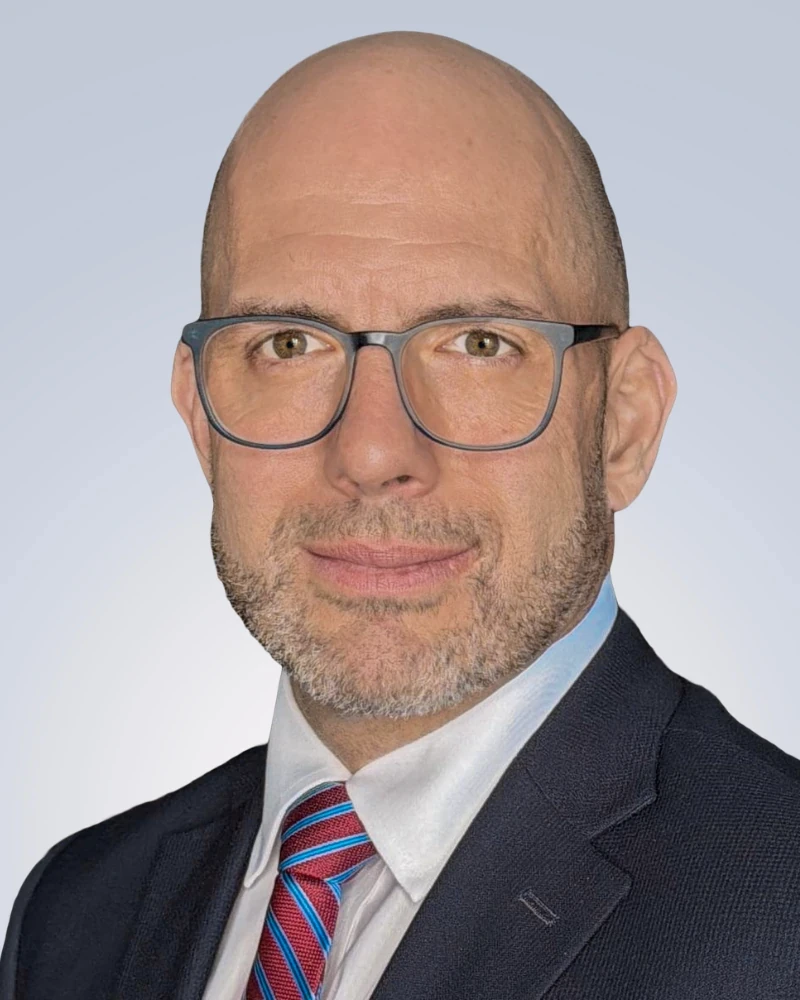
If you wear glasses daily, wear them in your headshot. People should recognize you. The challenge is glare. Anti-reflective coating helps, but the real fix is positioning: tilting your chin slightly down and angling your head toward the camera while holding your shoulders still eliminates most reflections. Your photographer will handle this.
Best frames for headshots: thin or rimless in black, gray, or tortoise. Clean your lenses thoroughly before the session—dust and smudges are invisible to you but glaring in high-resolution photos. We cover this topic in depth in our guide to headshots with glasses.
Bald and Balding Men
Tell your photographer ahead of time. Lighting changes significantly—the key light should be softer and positioned lower than normal, and the hair light (which is designed for hair, not scalp) should be removed or substantially reduced. Blot any oiliness on your forehead and scalp before the session. A light dusting of translucent powder controls shine.
Background matters too: avoid bright or white backgrounds if you have a lighter complexion, as your head can blend into the backdrop. A medium gray, navy, or teal background creates separation. Since a headshot is all about your face when there’s no hair to frame it, pay extra attention to eyebrow grooming and skin hydration.
Beards
As covered above: keep it if it’s part of your look, but make it neat. The key addition for beard-wearers: beard oil on the day of the shoot controls flyaways that high-resolution cameras exaggerate. And make sure there’s good contrast between your beard color and your clothing—a dark beard against a dark shirt creates a visual muddle.
10 minutes. 3 edited photos. 24-hour delivery. Capturely’s virtual headshot session is guided by a live photographer who coaches your pose, expression, and lighting in real time. No studio visit required. Book your session →
How Much Do Professional Headshots for Men Cost?
Professional headshot pricing varies wildly depending on the photographer, market, and format. Here’s what the landscape looks like in 2026:
| Option | Price Range | What You Get |
|---|---|---|
| AI-Generated | $29–$79 | Upload selfies, receive AI-styled images. Not real photography. |
| Budget Photographer | $50–$150 | 10-15 min, minimal direction, basic retouching |
| Capturely (Virtual) | $79/session ($45–$79 for teams) | Live photographer, 10-minute session, 3 edited images, 24-hour delivery |
| Mid-Range Studio | $150–$350 | 20-45 min, posing direction, multiple backgrounds, professional retouching |
| Premium Photographer | $350–$850+ | 45-90 min, wardrobe consultation, multiple looks, advanced retouching |
| Luxury / Major City | $850–$2,500+ | Full styling, hair/makeup, 1-2 hours, art-directed |
The national average for a standard headshot session runs approximately $250–$350 (415Headshots, 2026). Major markets run higher: NYC averages $450–$800 for a standard session. Capturely delivers a photographer-guided session at $79—77% below the national mid-range average. For a full cost breakdown, see our professional headshot pricing guide.
What to Expect During Your Headshot Session
If you’ve never had a professional headshot taken, the process is simpler than you think. With a virtual session like Capturely, it’s even more straightforward.
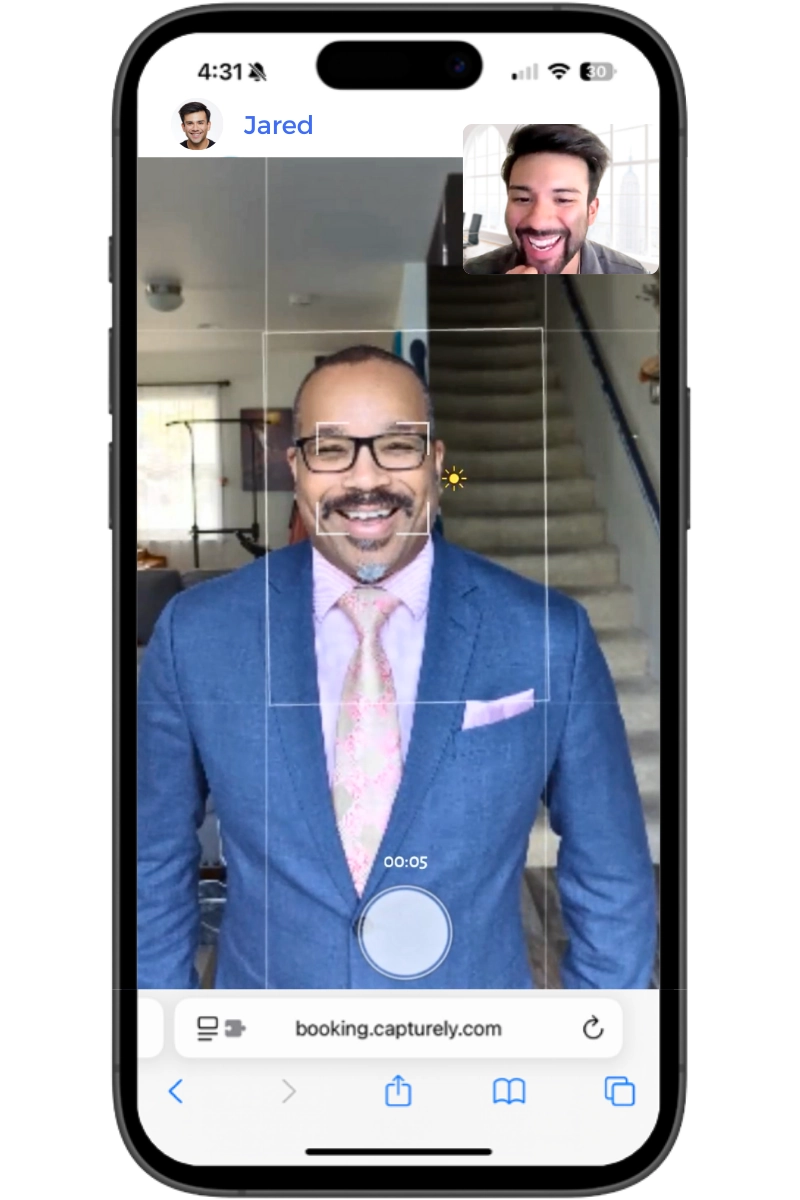
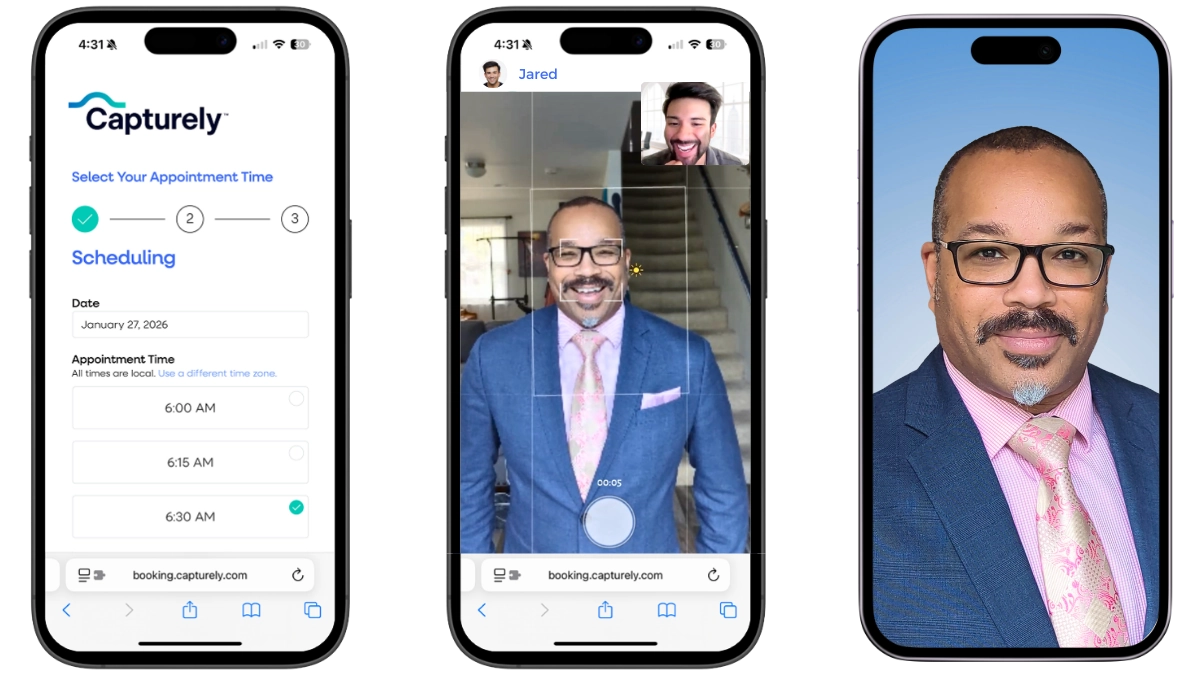
- Click your session link. No app download required. Open the link on your phone and your rear camera (36-48 megapixels) activates.
- Connect with your photographer. A live, professional photographer joins and directs the entire session in real time—coaching your posture, lighting, and expression.
- Shoot for about 10 minutes. The photographer captures multiple angles and expressions. They’ll guide you through the shoulder angle, jawline, and smile techniques covered above.
- Choose your backgrounds. Select from 98+ options, or use a custom branded background ($200 one-time fee for teams). Your photographer helps you pick what works best for your industry.
- Get your edited photos in 24 hours. You receive 3 fully edited images (left angle, right angle, straight-on) with professional retouching. Unlimited revisions if you want adjustments.
The 10-minute format is intentional. Peter Hurley, one of the most recognized headshot photographers in the world, has said that “headshots are 10 percent photography and 90 percent communication.” The photographer’s direction matters more than session length—a skilled photographer gets the shot fast because they know exactly what to look for.
For a complete prep checklist covering everything from wardrobe to day-of grooming, see our headshot session checklist.
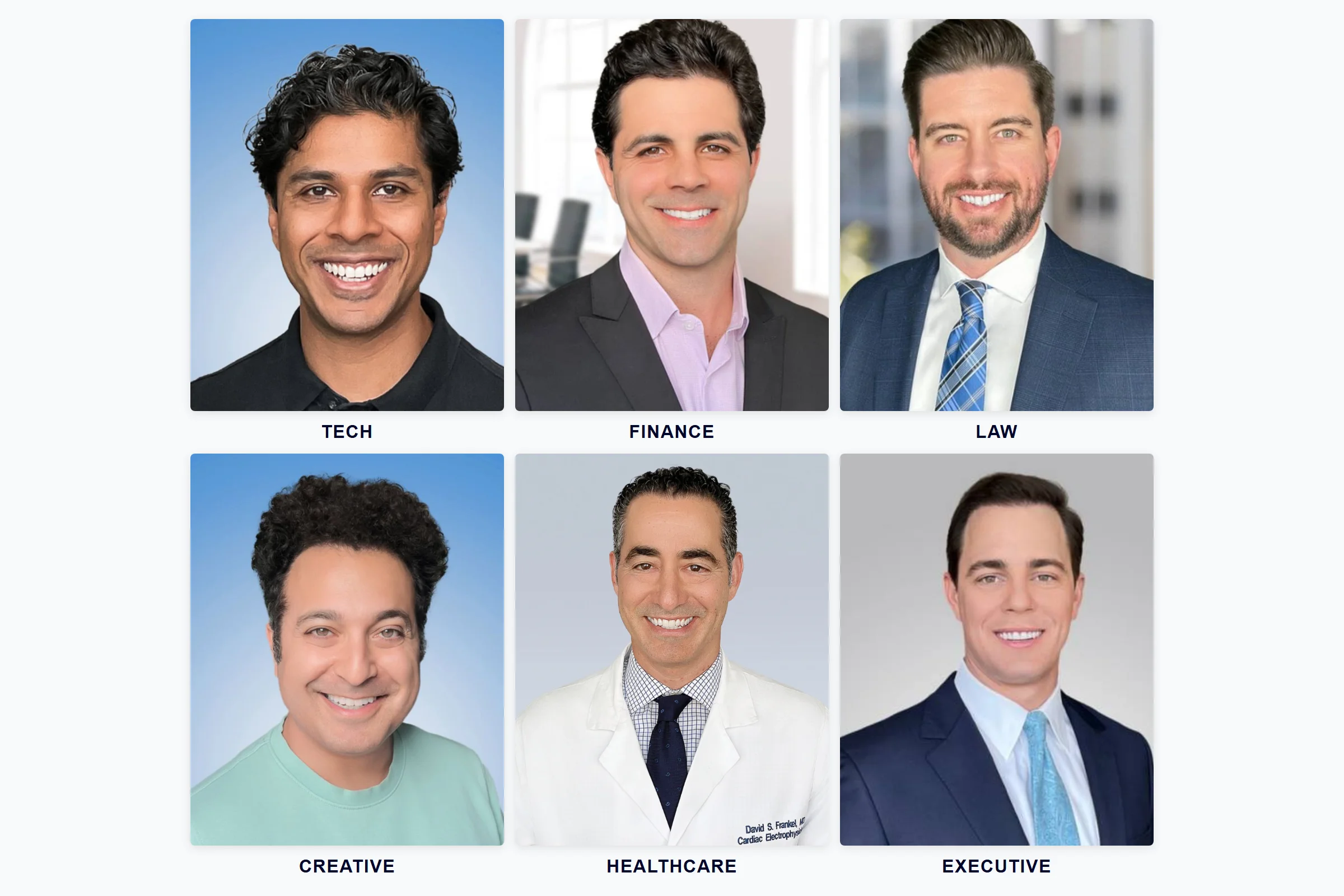
Men’s Headshot Examples by Industry
The best way to understand what works is to see it. Here are examples of professional headshots for men across different industries and styles.
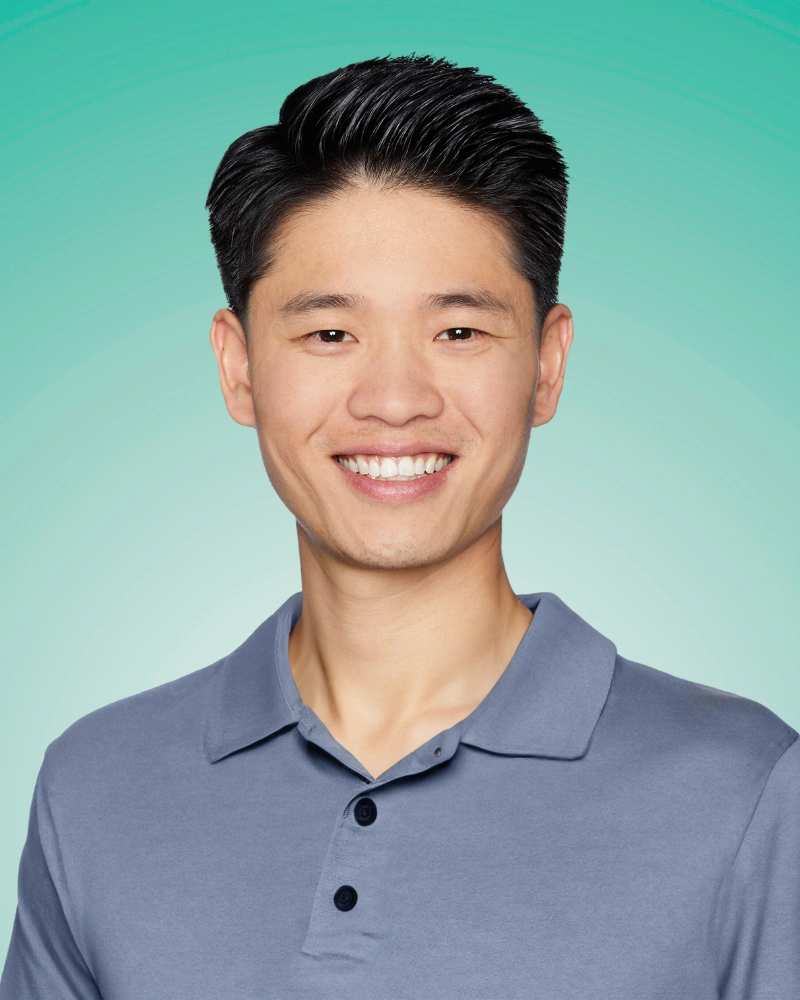
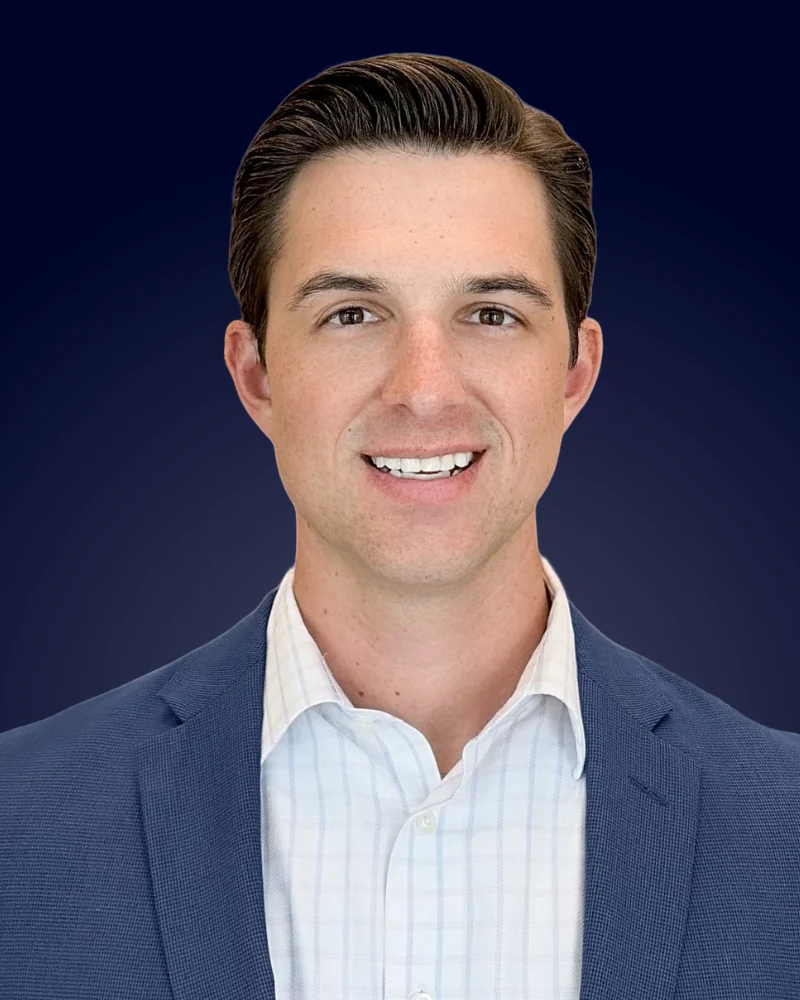
Notice the pattern: regardless of industry, the strongest headshots share sharp eye contact, a defined jawline, and clothing that creates clear contrast with the background. The differences are in formality—not quality. For a broader gallery spanning dozens of industries, see our professional headshot examples page.
Looking for the women’s counterpart? We’ve written a parallel guide to professional headshots for women covering the same ground with gender-specific wardrobe, posing, and styling guidance.
Your headshot is your first impression. Capturely has delivered headshots to teams at Google, Netflix, McKinsey, Amazon, and 765+ five-star reviews. $79/session for individuals, teams save up to 45%. Get started →
Frequently Asked Questions
What should a man wear for a professional headshot?
Wear solid colors in navy, charcoal, or light blue—one level above your daily work attire. Finance and law call for a suit and tie. Tech and startups work best with a collared shirt or blazer, no tie. Avoid busy patterns, logos, and bright white, which washes out on camera. Bring 2-3 options so your photographer can test what photographs best.
How much do professional headshots for men cost?
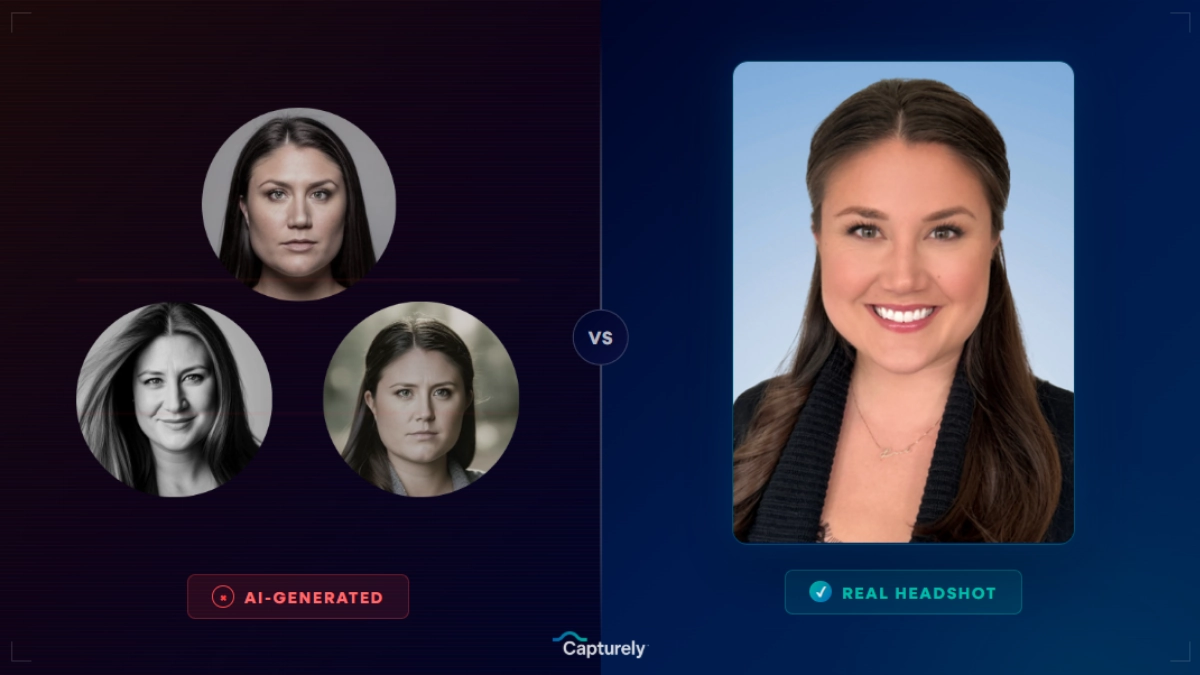
Professional headshots range from $79 to $2,500+ depending on format and market. Virtual sessions with a live photographer (like Capturely) start at $79 per session. Mid-range studio sessions run $150–$350. Premium photographers in major cities charge $350–$850+. AI-generated headshots cost $29–$79 but are not real photography and can damage credibility if detected.
Should men smile in professional headshots?
A slight, natural smile outperforms both a stern look and a full grin for most industries. PhotoFeeler data shows smiling with teeth boosts likability by +1.35 and competence by +0.33 on a 10-point scale (PhotoFeeler, 2019). Exception: authority-focused fields like law and finance benefit from a more composed, neutral expression.
How should a man pose for a headshot?
Turn your body 20-45 degrees from the camera instead of facing it square-on. Roll shoulders back and down. Push your chin slightly forward, then lower it a touch to define your jawline—photographers call this the “turtle.” Keep your expression relaxed and let your photographer guide you through micro-adjustments.
Should I keep my beard for a professional headshot?
Yes, if it’s part of your regular appearance. Your headshot should look like you. Trim 1-2 days before the session (not the morning of), use beard oil for subtle shine and flyaway control, and make sure your beard creates good contrast with your clothing color. Clean-shaven men should shave the morning of the session.
Can I wear glasses in my professional headshot?
Wear them if you normally do—people should recognize you. Glare is manageable: anti-reflective coating helps, and your photographer will adjust the angle of light and your head position to eliminate reflections. Clean your lenses thoroughly before the session, as dust and smudges that are invisible to you show up clearly in high-resolution photos.
How long does a professional headshot session take?
Traditional studio sessions run 20-45 minutes. Virtual sessions with Capturely take about 10 minutes—a live photographer directs you via your phone’s rear camera, coaching posture, expression, and lighting in real time. You receive 3 fully edited images within 24 hours. No app download, no studio visit required.
How often should men update their professional headshot?
Update every 2-3 years, or whenever your appearance changes significantly (new hairstyle, gained or lost weight, grew or removed facial hair, started wearing glasses). If colleagues or clients wouldn’t recognize you from your current headshot, it’s overdue. Companies like Google and McKinsey use Capturely for ongoing updates as teams change. Read our guide on professional headshots for more on keeping your image current.