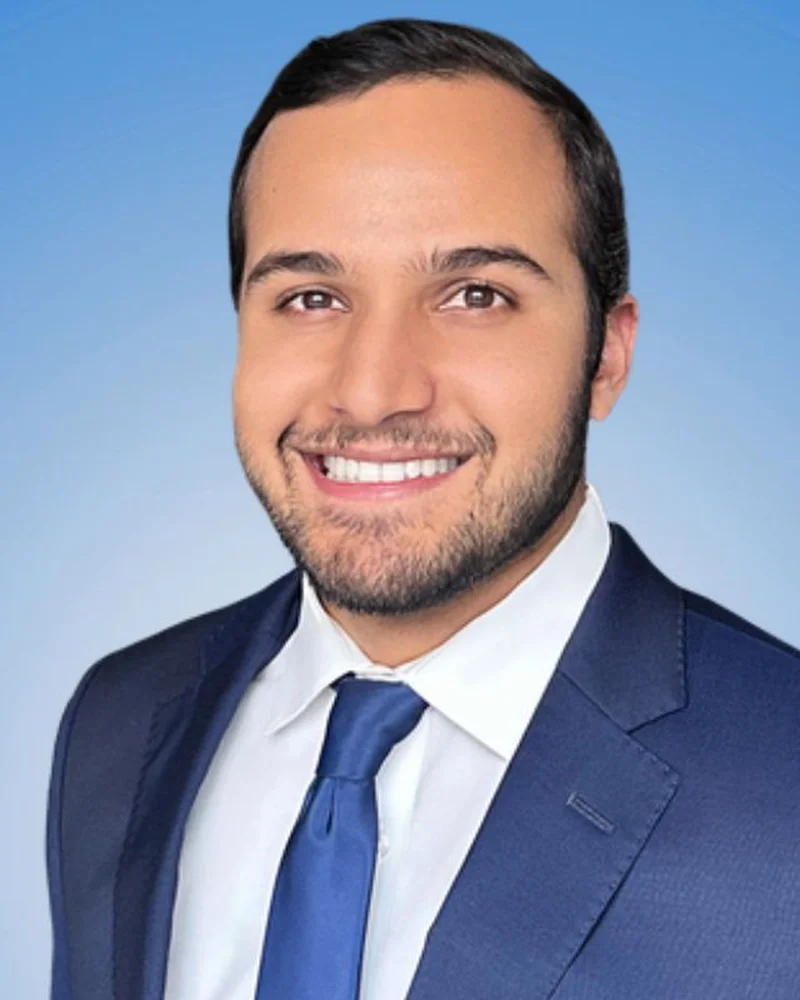
The best headshot poses share three things: a slight body angle (30–45 degrees from the camera), chin pushed forward and tilted slightly down to define the jawline, and a genuine expression that lands somewhere between “friendly” and “confident.” That combination—shoulders angled, jaw defined, eyes engaged—is what separates a headshot that builds trust from one that gets scrolled past in 100 milliseconds (Willis & Todorov, Psychological Science, 2006).
Last updated: March 2026
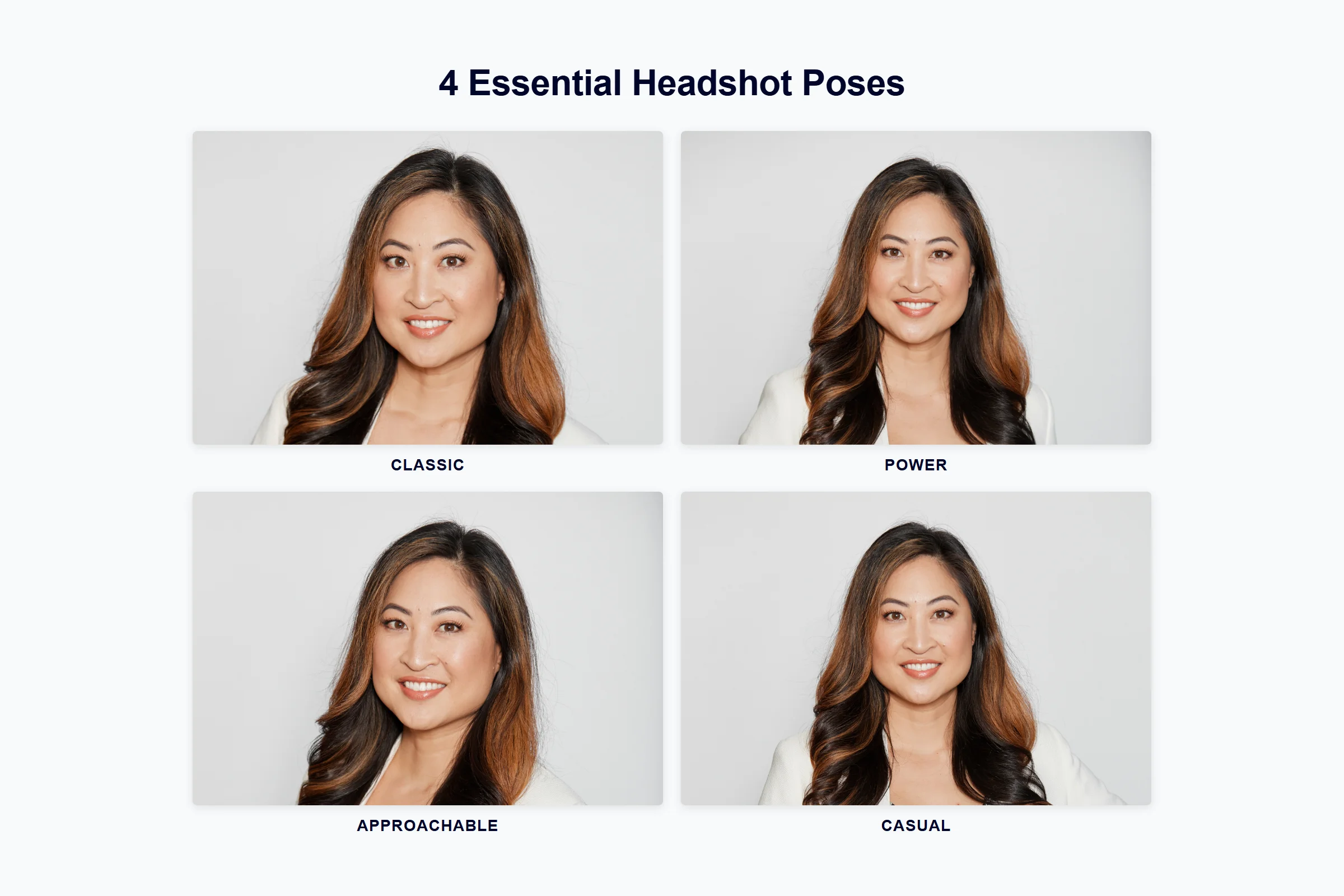
But knowing that in theory and executing it in front of a camera are two different problems. 87% of people don’t consider themselves photogenic (Saint Joseph’s University, 2022). The poses that feel natural in a mirror look stiff in a photo. The smile you rehearsed at home disappears the second someone points a lens at you.
This guide breaks down the five foundational headshot poses that work across every profession, shows how to adapt them by industry, covers the mistakes that ruin otherwise good photos, and explains why having a real photographer direct your pose—even virtually—changes the outcome entirely. Based on 100,000+ headshots delivered by Capturely to teams at Google, Netflix, Amazon, McKinsey, and hundreds of other organizations.
The 5 Headshot Poses Every Professional Should Know
Every great headshot is a variation of one of these five poses. Master the mechanics of each, and you can adapt to any industry, any platform, any mood.

1. The Classic (Straight-On With a Slight Head Tilt)
Face the camera directly, shoulders square or with a very slight angle. Tilt your head about 5 degrees—just enough to add warmth without looking like you’re confused. Chin forward and slightly down. This is the most versatile pose in professional photography because it works everywhere: LinkedIn, company websites, email signatures, provider directories.
The research backs this up. A study from Johannes Gutenberg University found that eye-level, front-facing shots elicited the greatest trust ratings from viewers. Raising or lowering the camera angle by 30 degrees decreased perceived trustworthiness (Baranowski & Hecht, Empirical Studies of the Arts, 2018).
Best for: Healthcare providers, financial advisors, attorneys, anyone whose audience expects authority and trustworthiness.
2. The Power Pose (Angled Shoulders, Direct Gaze)
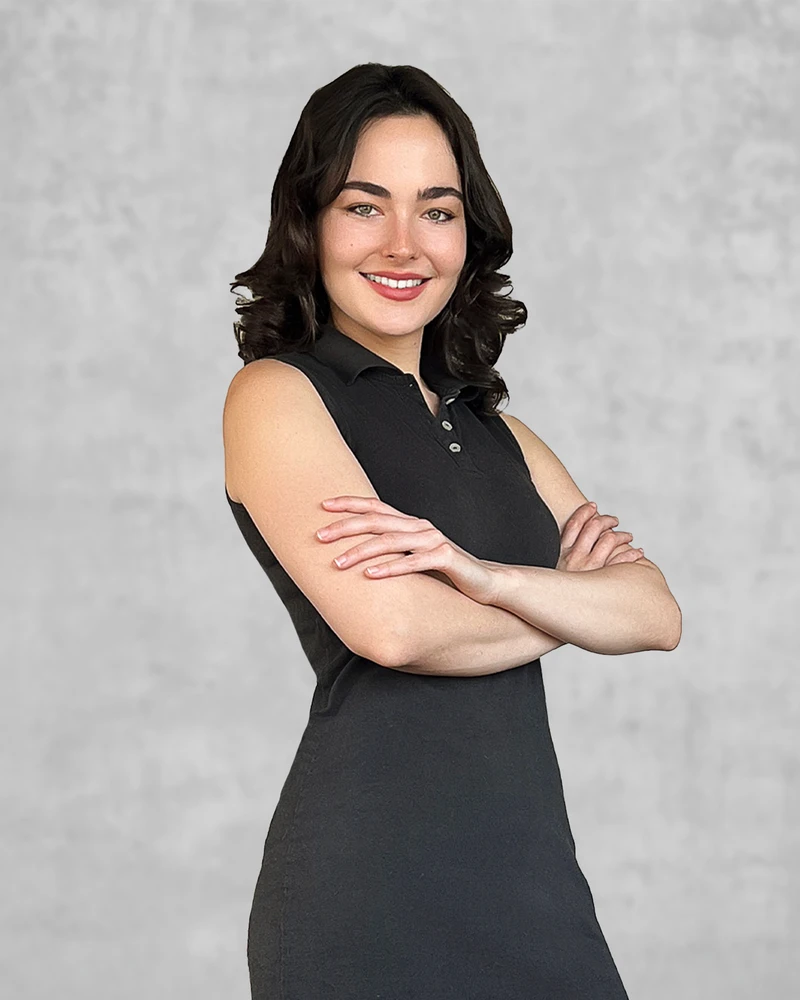
Turn your body 30–45 degrees away from the camera, then turn your head back toward the lens. Direct eye contact. No smile, or a very subtle one—lips closed, eyes engaged. This is the pose that says “I run things.”
The physics here are simple: angling the shoulders narrows your visual profile, creates depth, and makes you look more three-dimensional than a flat straight-on shot. The direct gaze signals confidence without the rigidity of a military portrait.
Best for: Executives, C-suite leadership, partners at professional services firms, anyone who needs to project authority on a website or speaking bio.
3. The Approachable (Three-Quarter Turn, Warm Smile)
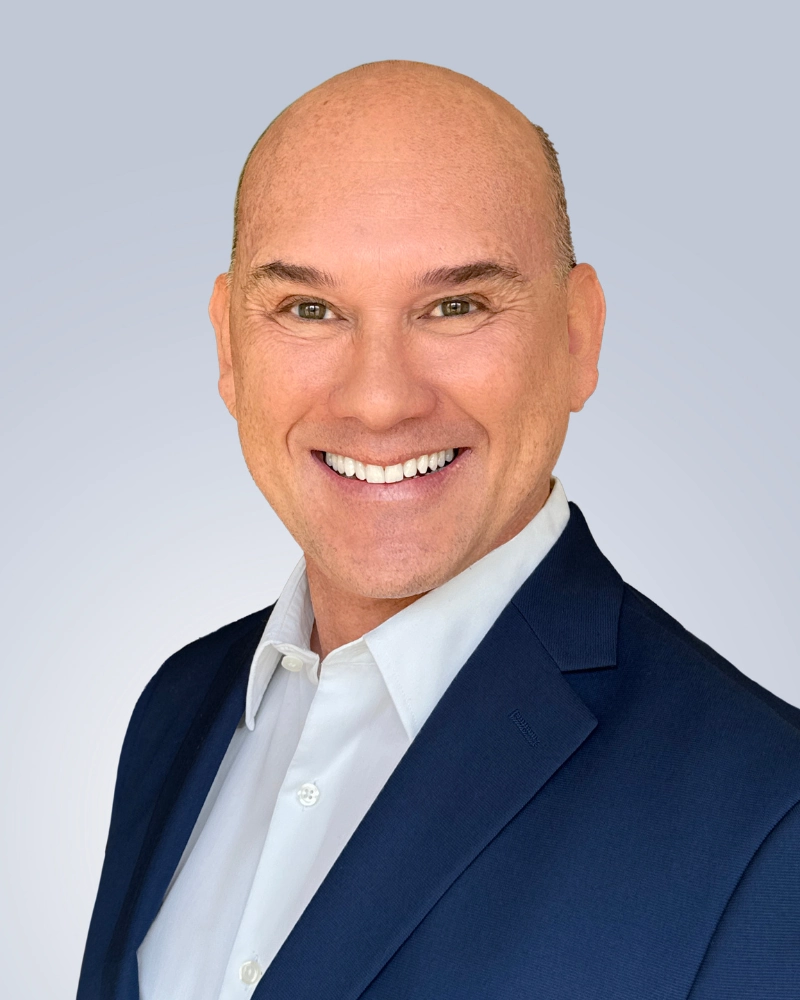
This is the money pose for most professionals. Body turned about 45 degrees, one shoulder closer to the camera than the other. Genuine, teeth-showing smile. Head tilted slightly toward the higher shoulder—this reads as warm and inviting.
PhotoFeeler analyzed 60,000+ ratings across 800 photos and found that a teeth-showing smile increased Likability scores by +1.35 points—the single largest positive factor they measured (PhotoFeeler, 2015). Separately, a 2024 study in the Journal of Consumer Research found that smiling photos increased Airbnb booking demand by 3.5% overall and 8.7% for male hosts (Zhang et al., 2024). Smiles work. Genuine ones, anyway.
Best for: Real estate agents, coaches, consultants, salespeople, therapists—anyone whose job depends on building personal trust fast.

4. The Editorial (Dramatic Angle, Strong Jawline)
Body at a sharper angle (60+ degrees from camera), chin down, eyes looking up through the brow. This is the Peter Hurley zone. He calls it the “squinch”—slightly narrowing the lower eyelids to project confidence rather than the deer-in-the-headlights look of wide-open eyes. As Hurley puts it: “Confidence is squinching. The opposite of confidence is the deer-in-the-headlights look” (Peter Hurley Photography).
PhotoFeeler data confirms the squinch works: it added +0.37 to Influence scores (PhotoFeeler, 2015). Not a huge number, but meaningful when you’re competing for attention on a page of 50 faces.
Best for: Creative professionals, speakers, authors, anyone whose headshot needs to stop someone mid-scroll.
5. The Casual (Relaxed Lean, Natural Expression)
Lean against a wall or surface, or simply let your weight shift to one hip. Arms relaxed at your sides, or one hand in a pocket. Expression somewhere between a smile and neutral—the face you make when a friend says something interesting at dinner. This pose works because it looks unposed, which reads as authentic.
The trick: it still needs structure underneath the casualness. Chin stays forward. Posture stays upright (no slouching). The “lean” is slight—maybe 10 degrees off vertical. You’re relaxed, not collapsing.
Best for: Tech professionals, startup founders, designers, marketers—industries where formality reads as out of touch. For deeper guidance on men’s styling and posing, see our professional headshots for men guide.
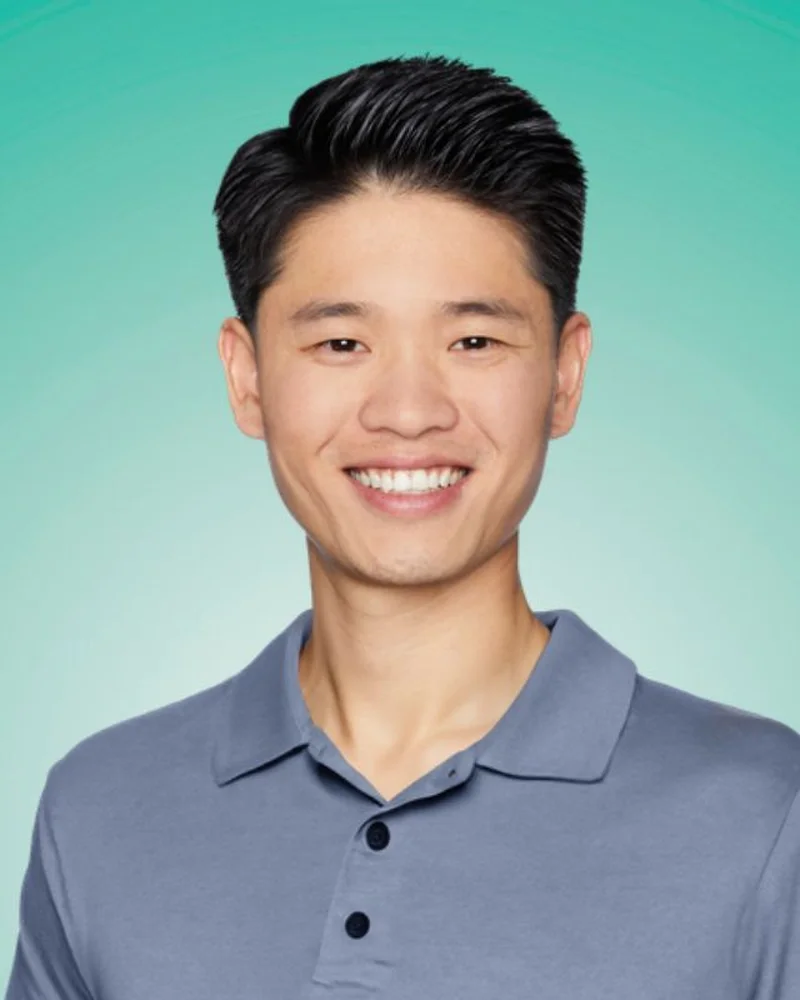
Your photographer handles the posing. Capturely’s live photographers direct your pose, expression, and jawline in real time—10 minutes, 3 edited images, 24-hour delivery. No app download required. Book your session →
Best Headshot Poses by Industry
The “right” pose depends entirely on who’s looking at your photo. A casual lean that builds trust in a startup pitch deck undermines it on a law firm partner page. Here’s what works where.

| Industry | Recommended Pose | Expression | Why It Works |
|---|---|---|---|
| Corporate / Finance / Law | Classic or Power Pose | Subtle, closed-mouth smile or neutral confidence | Clients need to trust you with money or legal outcomes. Authority matters more than warmth. |
| Healthcare | Classic with genuine smile | Warm, open, teeth-showing smile | Patients pick providers partly on headshots. Warmth and competence both matter (healthcare headshots guide). |
| Tech / Startups | Casual or Approachable | Relaxed, genuine, not forced | Formality reads as “I don’t get it” in startup culture. Polished but approachable is the bar. |
| Real Estate | Approachable | Big, teeth-showing smile | Relationship-driven business. Agents with professional photos earn roughly 2x the commission of those without (Art of Her, 2024). |
| Creative / Marketing | Editorial or Casual | Expressive, personality-forward | Your headshot demonstrates the creative work you do. Standing out is the point. |
| Consulting | Approachable or Power Pose | Confident but warm | Clients buy expertise AND the person delivering it. Balance authority with accessibility. |
For a deep dive into posing specifically for corporate settings, see our full corporate headshot posing guide. For women-specific advice, our professional headshots for women guide covers everything from angles to expression.
Headshot Poses for Men vs. Women: What Actually Matters
Traditional posing advice draws hard gender lines: women tilt their head, men don’t. Women angle their body more, men stay square. That framework is outdated.
Ben Marcum, a photographer in Peter Hurley’s Headshot Crew, puts it directly: “It’s geometry, not gender. I’ve never thought, ‘This person needs to pose like a man.’ Or ‘tilt like a woman.’ That’s not how good headshots work” (Ben Marcum, 2025).
What actually matters is bone structure, neck length, shoulder width, and how light interacts with your specific features. A photographer adjusts the angle based on what flatters your face—not a gendered template.
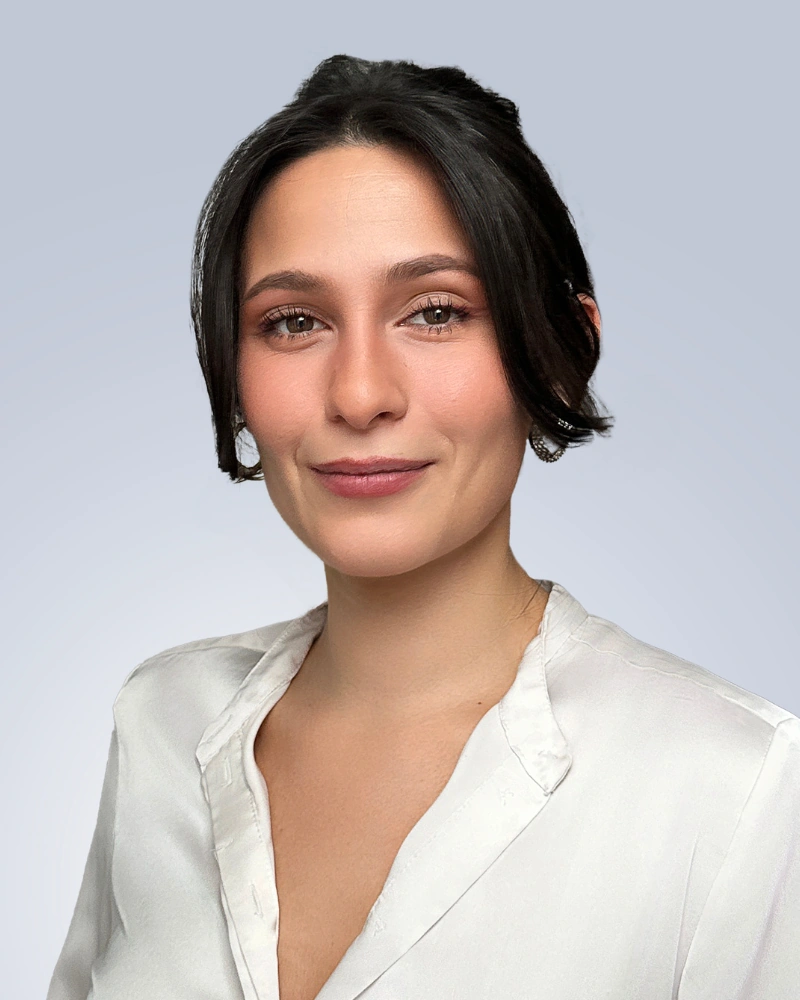
That said, some general patterns hold across the research:
| Element | Typical Guidance for Men | Typical Guidance for Women | What Actually Matters |
|---|---|---|---|
| Head tilt | Minimal to none | Slight tilt toward higher shoulder | 5 degrees adds warmth for anyone. 15 degrees looks confused regardless of gender. |
| Shoulder angle | Square or slight angle | Angled 30–45 degrees | Angling narrows the visual profile and creates depth. Works for everyone. |
| Expression | Neutral or subtle smile | Warmer, more open smile | Duchenne (genuine) smiles build trust for all genders (Gunnery & Hall, Cognition and Emotion, 2014). |
| Jawline | Emphasized (chin forward and down) | Softened but still defined | Pushing the chin forward flatters everybody—it defines the jaw and eliminates double-chin. |
The biggest actual difference between men and women in headshots isn’t posing. It’s comfort level. Research shows 77% of women report feeling camera-shy, compared to lower rates among men. A live photographer who knows how to put people at ease matters more than any posing formula.
7 Common Headshot Posing Mistakes (and How to Fix Them)
Most bad headshots aren’t ruined by the camera or the lighting. They’re ruined by posing mistakes that are easy to fix once you know what to look for.
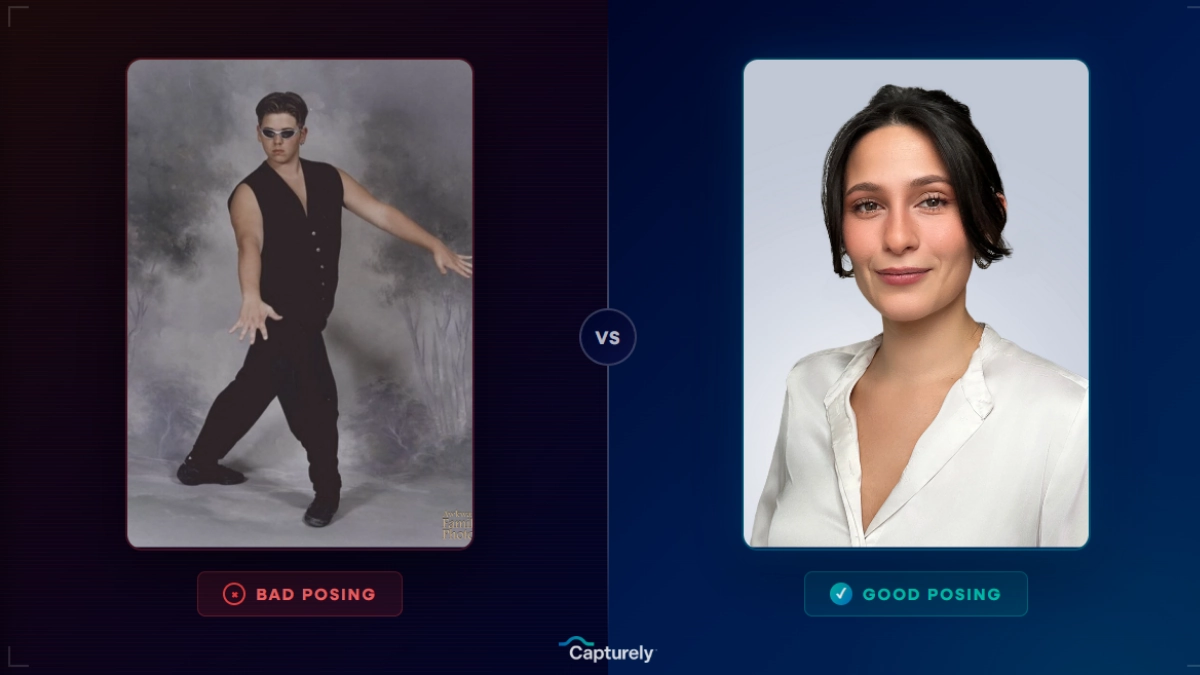
- Chin up too high. Lifting your chin exposes your nostrils, minimizes the impact of your eyes, and makes you look like you’re posing for a statue. Fix: push your forehead toward the camera and bring your chin slightly down. Photographers call this the “turtle”—it feels weird, looks great.
- Shoulders square to the camera. Standing flat-on makes most people appear wider than they are. Fix: turn your body 30–45 degrees, then rotate your head back toward the lens.
- Forced, toothy grin. The jaw-clenched, gum-showing smile that happens when someone says “say cheese” looks as fake as it feels. Fix: think about something that genuinely amused you. A good photographer will prompt this instead of asking you to smile on command.
- Eyes forced wide open. Overcorrecting for squinty eyes creates the most unnatural expression you can put on camera. Your eyes naturally narrow slightly when you smile. Let them. A slight squint (the “squinch”) actually increases perceived influence (PhotoFeeler, 2015).
- The arm-cross claw. Crossing your arms is fine. Splaying your fingers across your bicep so the camera sees every knuckle is not. Fix: tuck one hand out of sight, let the other rest lightly near the bicep with relaxed fingers (Gary Hughes, Fstoppers).
- Busy patterns and accessories. That bold plaid jacket or chunky necklace competes with your face for attention. In a headshot, your face should win. Fix: solid colors in navy, charcoal, or jewel tones. Minimal accessories. See our full what to wear guide.
- Trying too hard to look like someone else. Dressing in clothes you’d never wear, forcing poses you saw on Pinterest. Discomfort shows in photos instantly. Fix: wear what you’d wear to your best client meeting. Pose how you naturally stand when you’re relaxed and engaged in conversation.
As headshot photographer Gary Hughes describes his directing cadence: micro-commands like “tilt a millimeter,” “chin forward, then down a centimeter,” and asking for a breath right before the shutter “to release tension in the brow and mouth” (Fstoppers). That kind of incremental coaching builds expressions that feel earned rather than staged.
Skip the posing anxiety. Capturely’s photographers coach you through every angle, expression, and jawline adjustment in real time. 765+ reviews at 4.9 stars. $79/session for individuals, teams save up to 45%. Get started →
Why a Live Photographer Makes Posing Easy
Here’s the problem with every posing guide on the internet, including this one: reading about poses and executing them in front of a camera are completely different skills. You can memorize “chin forward, slight angle, genuine smile” and still freeze up the second you see your own face on a screen.
Professional headshot photographers solve this not by giving you better instructions, but by removing the need for you to think about posing at all. They watch what your face does naturally, then make micro-adjustments: “Drop your left shoulder a bit. Push your chin forward. Now think about something that happened last weekend that made you laugh—not a big smile, just that thought.” They catch the exhale moment when your jaw unclenches. They notice your shoulders rising every 30 seconds and remind you to drop them before it shows up in the frame.
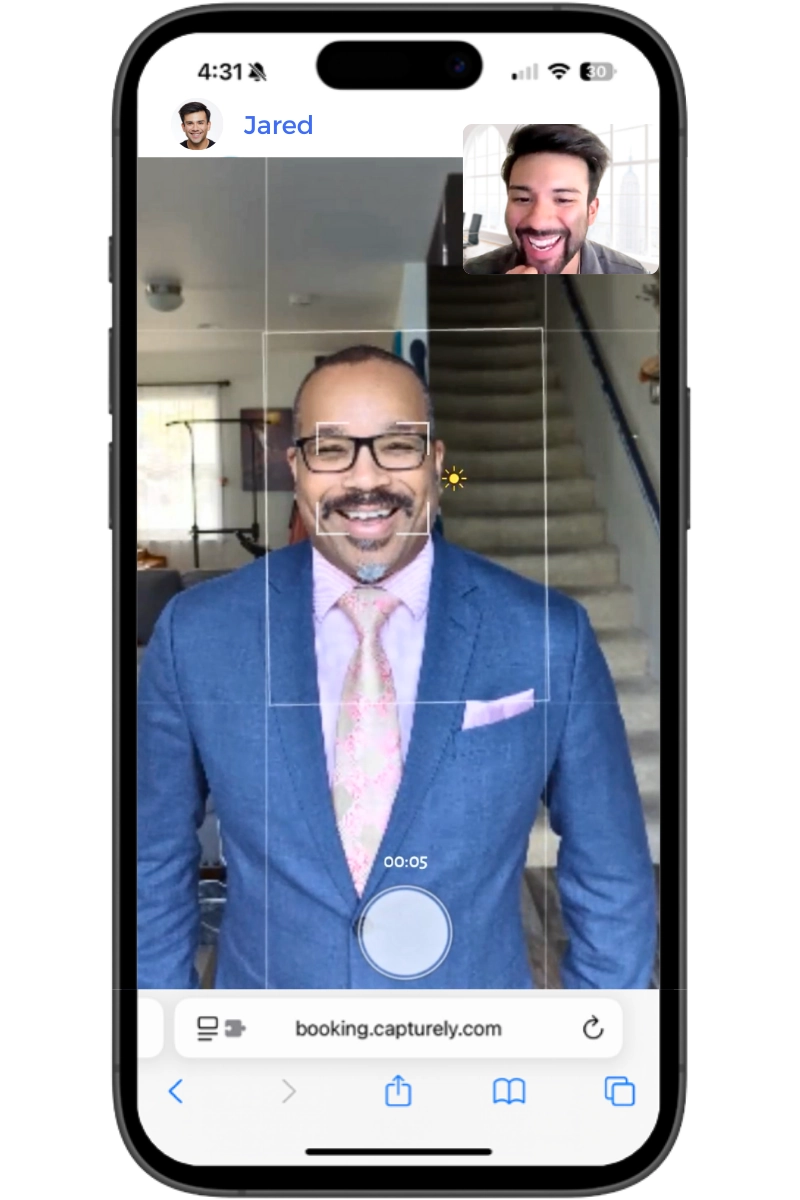
This is exactly how Capturely’s virtual sessions work. A live professional photographer connects with you through your phone’s rear camera (36–48 megapixels) and directs the entire shoot in real time. They position your body, coach your expression, find the best light in whatever space you’re in, and capture multiple frames for each angle—left-facing, right-facing, straight-on. Ten minutes total. No app download. No mirror-practicing poses beforehand.
As one client described it: “That was one of the things that when we were looking at different options—having a photographer to help assist for anybody who might be nervous or trying to figure out the best angle. That’s very helpful” (Hillary Manning, International Responder Systems, 2025).
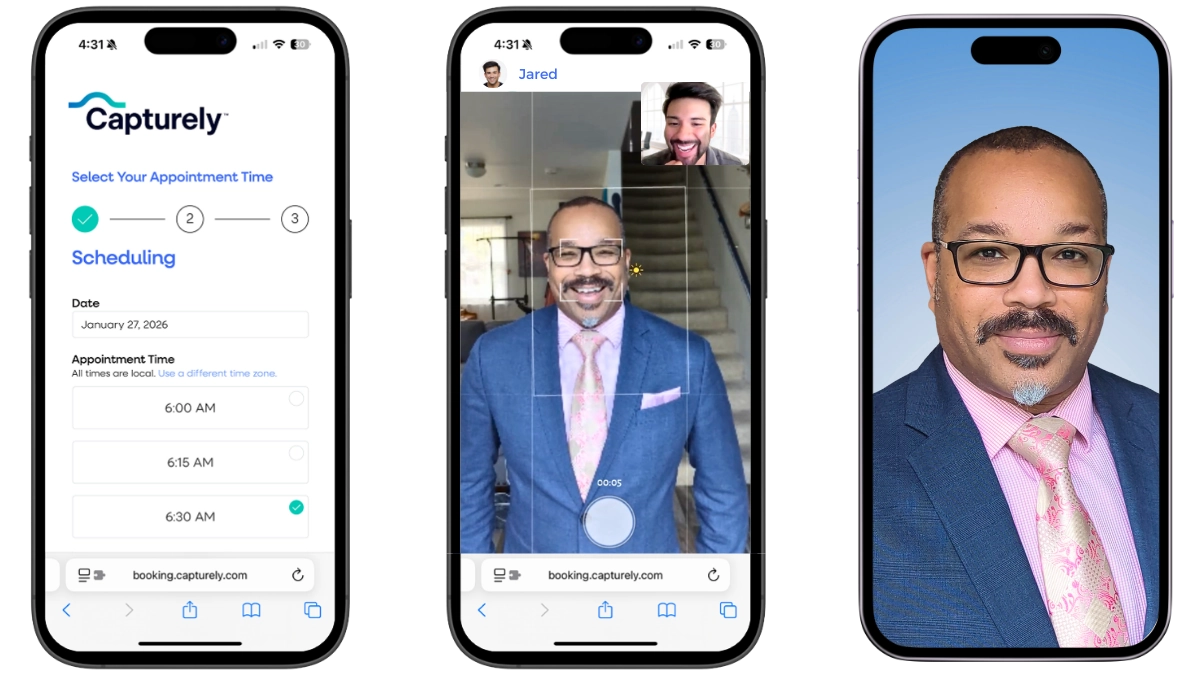
The difference between self-directed posing and photographer-directed posing is measurable. Professional headshots increase perceived competence by 76% compared to self-taken photos (PhotoFeeler, 2015). And as Nick Lombardino of CultureCon put it after his team’s sessions: “The magic of Capturely is still that personal interaction that you get with the photographer during the process” (CultureCon, 2025).
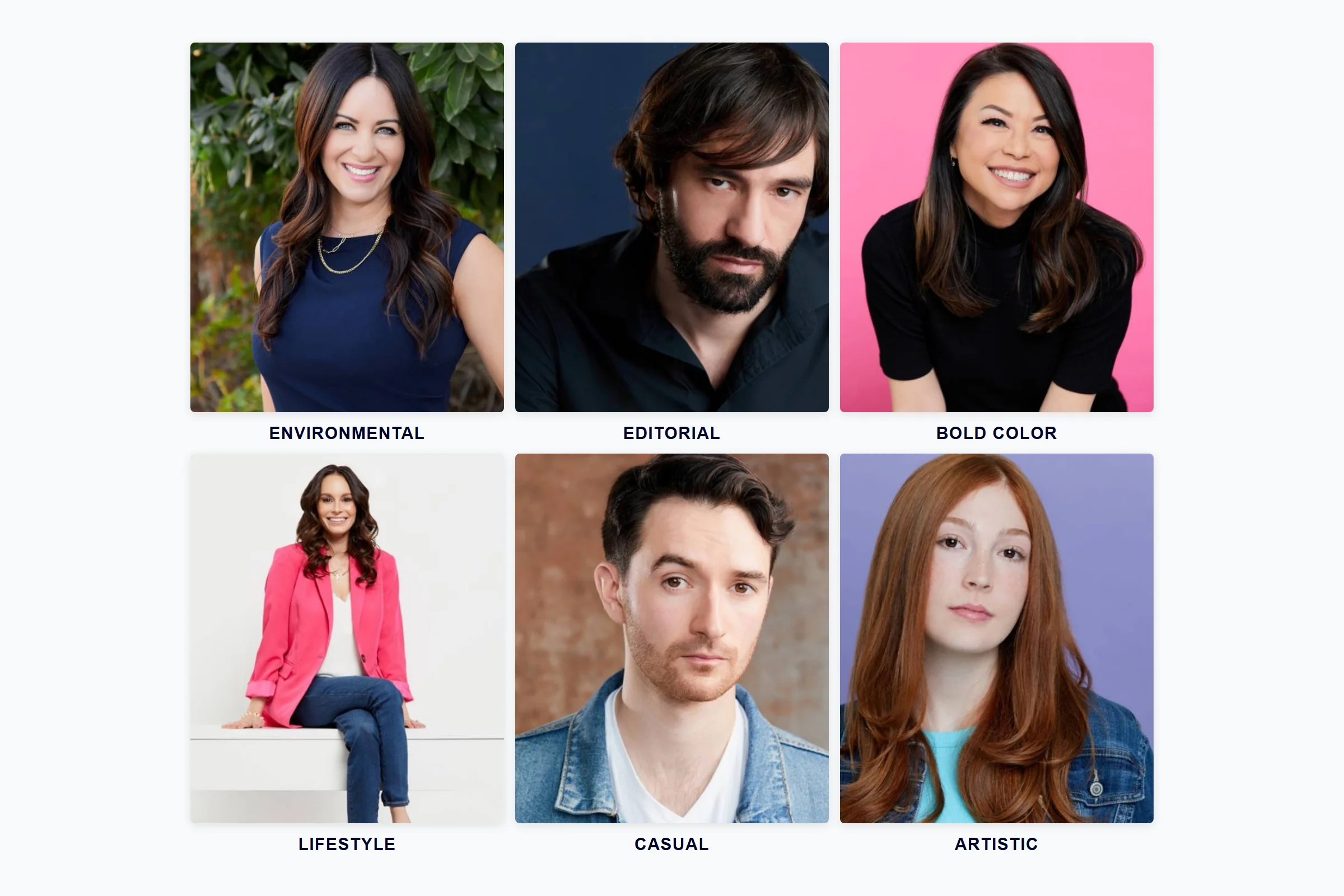
For a complete look at what Capturely delivers—examples across dozens of industries and styles—browse our professional headshot examples gallery. For a full walkthrough of what to expect, see our guide to taking professional headshots.
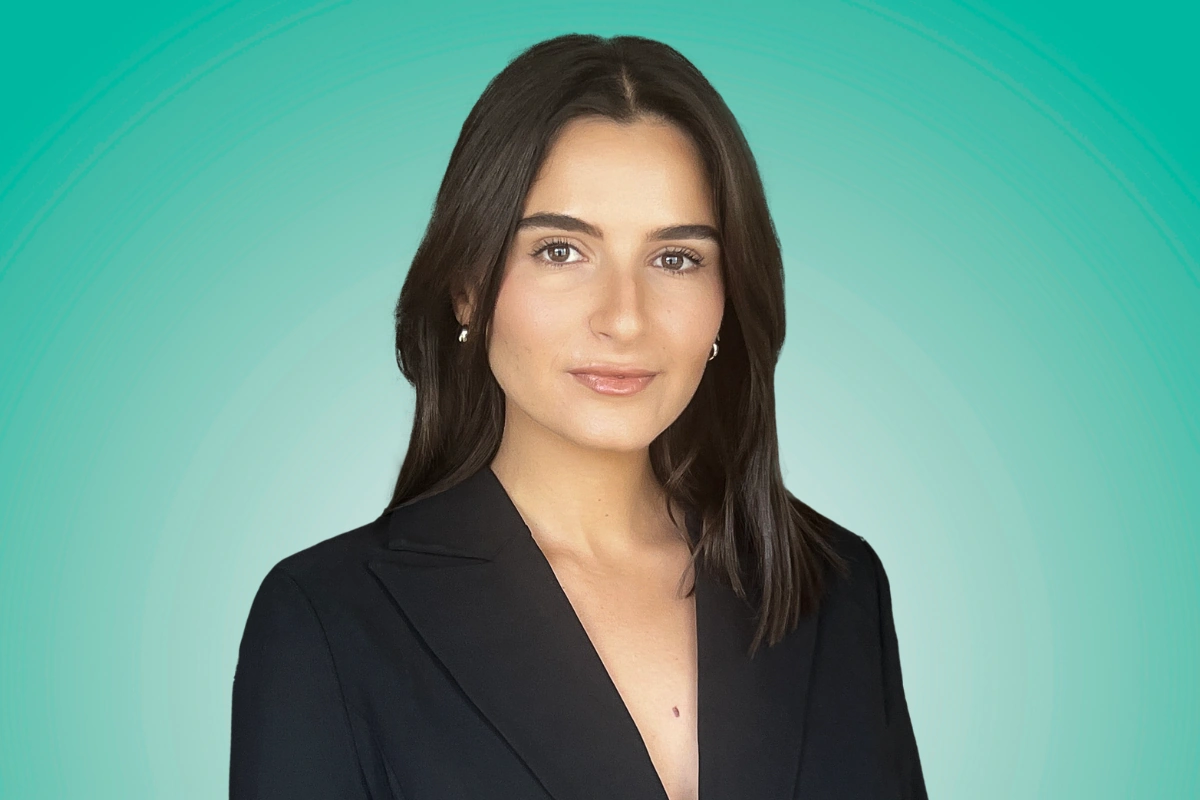
Real photographer. Real poses. Real results. Capturely delivers 3 professionally edited headshots in 24 hours—with live direction so your pose, expression, and angle are perfect. 98+ backgrounds, unlimited retouching, happiness guarantee. Book your session →
Frequently Asked Questions
What is the best pose for a professional headshot?
The three-quarter turn is the most universally flattering professional headshot pose. Angle your body 30–45 degrees from the camera, turn your head back toward the lens, push your chin slightly forward and down, and give a genuine smile. This combination narrows your visual profile, defines your jawline, and projects both confidence and approachability. It works across corporate, healthcare, tech, and creative industries.
Should you smile in a professional headshot?
Yes—in most cases. PhotoFeeler’s analysis of 60,000+ ratings found that a teeth-showing smile increased Likability by +1.35 points, the single largest positive factor measured (PhotoFeeler, 2015). A genuine Duchenne smile—one that engages the muscles around your eyes—signals warmth and trustworthiness. The exception: dramatic editorial headshots for actors or executives may use a neutral expression for intentional effect.
How do I avoid looking stiff in a headshot?
The number one cause of stiffness is trying to hold a pose. Instead, let your photographer direct micro-adjustments in real time. Between shots, shake out your shoulders, take a breath, and drop your jaw to release tension. Movement helps—shift your weight slightly, adjust your head angle, blink naturally. Capturely’s live photographers actively coach relaxation during virtual sessions because they see tension forming before you do.
What do I do with my hands in a headshot?
For most professional headshots, your hands are below the frame—the standard crop is head and shoulders only. If hands are visible, keep them relaxed: rest one on your hip, put one in a pocket, or let them hang naturally. For crossed arms, tuck one hand out of sight and let the other rest lightly near the bicep with softly curled fingers. Avoid splaying fingers toward the camera—they compete with your face for attention.
Where should I look in a headshot?
Look directly into the camera lens for maximum trust and connection. Eye-level shots with direct gaze scored highest for trustworthiness in peer-reviewed research (Baranowski & Hecht, 2018). Looking slightly off-camera creates an editorial or candid feel, which works for creative industries. For corporate, healthcare, and professional services, direct eye contact is the standard.
Does camera angle affect how my headshot looks?
Significantly. Camera at eye level produces the most trustworthy result. Camera from below (low angle) increases perceived power but can look unflattering. Camera from above (high angle, common in selfies) makes you appear smaller and less authoritative—which is why photographers universally advise against using a selfie as a professional headshot. The phone’s rear camera at arm’s-length or tripod height produces much better results.
How many poses should I try during a headshot session?
Professional headshot sessions typically cover 3–5 distinct poses across left-facing, right-facing, and straight-on angles. Capturely sessions deliver 3 fully edited final images from a 10-minute session. Your photographer captures dozens of frames across multiple poses and selects the best for professional retouching. You don’t need to prepare poses in advance—your photographer directs every adjustment. For complete session prep, see our professional headshots guide.