



Law Enforcement Headshots for Officers and Departments
Shot on any shift, without coming off patrol
Law enforcement headshots are professional portraits used on department websites, press releases, ID credentials, recruiting materials, promotion packets, and officer directories. Capturely captures them virtually. An officer opens a link on their phone, a photographer directs the session live, and edited images arrive within 24 hours, matched to one department standard across every shift and every division. No studio, no travel, and nobody coming in on a day off. We have delivered more than 100,000 headshots to date.
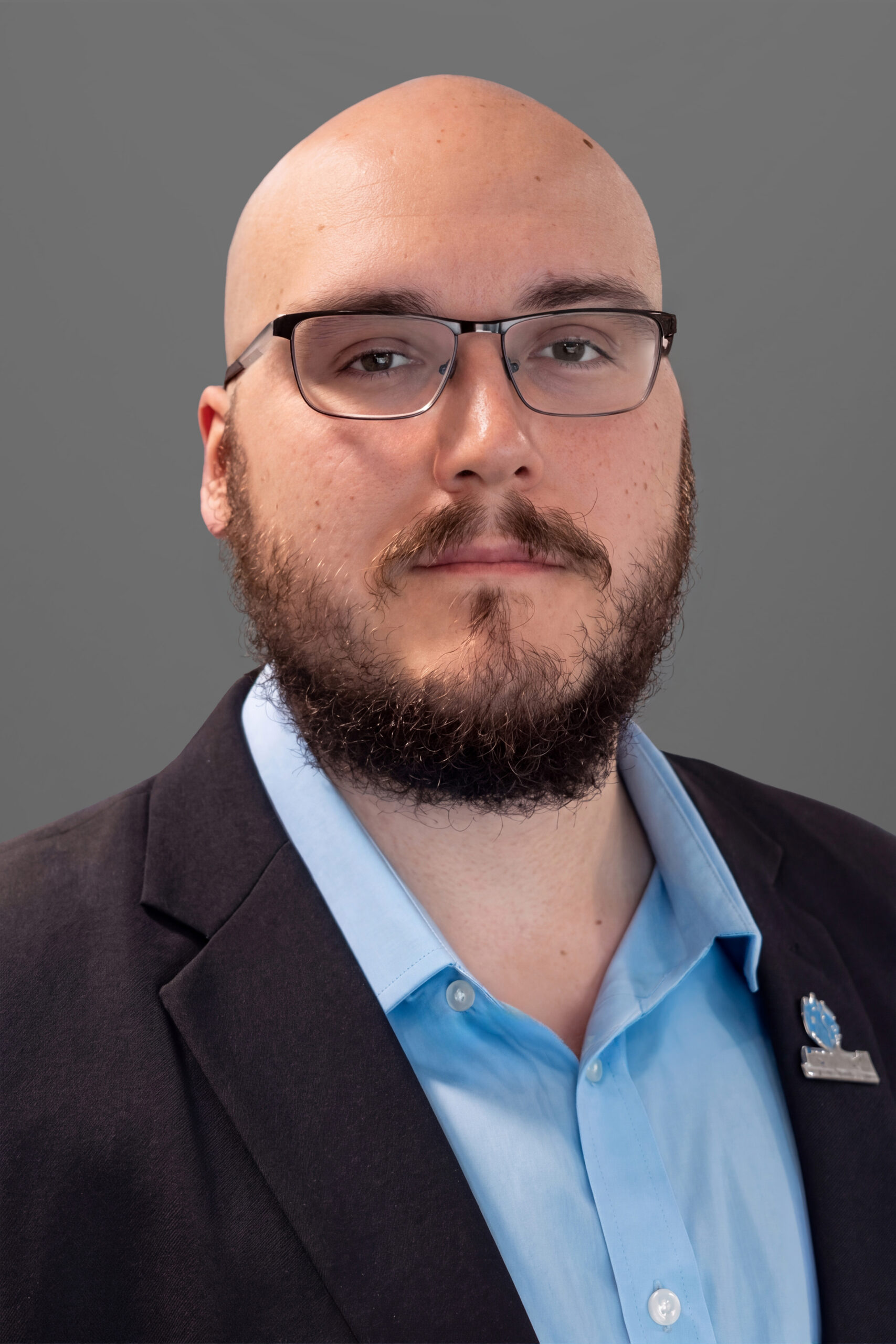
The Photo You Have on File Is the Photo That Runs
When something happens involving one of your officers, a photograph of that officer is going to be published. Your agency does not control whether. It controls what.
If the department has a current, properly made portrait on file, that is the image that goes out with the release and that is the image the newsroom uses. If it does not, the newsroom uses what it can find: a still pulled from body-camera footage, an academy photo from a decade and two ranks ago, or a face cropped out of a group picture on the department’s own social media.
This applies to good news as well. A commendation, a promotion, a retirement, a community award, an officer-of-the-year announcement. All of them put a face in front of the public, and all of them draw from the same file.
Most departments have never made a decision about this. They have made it by default, by not having current photos, which is the same decision with a worse outcome. Keeping a current portrait on file for every sworn officer is one of the cheapest pieces of preparedness an agency can do, and unlike most preparedness it also pays off on ordinary days. It is the core of our government and public safety headshots program.
Patrol Cannot Come to a Photo Day
A department does not have a time when everyone is available. It has shifts, and the shifts are the whole point.
Days, swings, and midnights rotate. Officers work four-tens, or five-eights, or a schedule built around court appearances. Detectives keep different hours than patrol. The people who were on last night are asleep now, and asking them to drive in on a rest day for a photograph is how a department ends up with half a roster photographed and a sergeant chasing the other half by email for two months.
Add the thing that makes policing different from almost any other shift work: officers get pulled. A scheduled slot does not survive a call. Any plan that depends on a specific officer being in a specific place at a specific time is a plan that will partly fail, and the failures will be the busiest officers, who are usually the ones you most want photographed.
The fix is to stop scheduling. An officer photographs at the start of a shift, at the end of one, during a quiet stretch, or at home on a day off. Same direction, same standard, same result. Night shift and day shift come out matching, which is the thing a photo day has never once delivered.
Recruiting Is a Visual Argument
Police recruiting is harder than it was, departments know it, and the recruiting page is one of the few tools they fully control.
A candidate deciding between two agencies is doing what every candidate does: trying to picture themselves there. A recruiting page with current photos of real officers across ranks, divisions, and backgrounds makes that easy. A page with a stock photo of a generic patrol car, or with four officer photos in four different styles from four different years, makes it hard, and it quietly signals an organization that does not attend to detail.
The same images do double duty on community-facing pages. A “meet your officers” page, a neighborhood policing directory, a school resource officer page, or a precinct contact page all work better with a face attached, and all of them are trust instruments as much as informational ones. Many departments also recruit separating service members, where our guide to military headshots covers the transition photograph.
Rank Changes, and So Does the Photo
Promotions are the maintenance problem nobody budgets for.
An officer makes sergeant, and the insignia on the photo is now wrong. A sergeant makes lieutenant, and it is wrong again. A detective moves to a unit with different attire. A chief is appointed and needs an official portrait before the first press conference, not six weeks after it.
With a traveling photographer, each of these is a scheduling event, which means most of them never happen and the department’s directory drifts out of date one promotion at a time. With a stored standard and on-demand capture, a promotion photo is a ten-minute task the week it happens, matched to a department standard set years earlier.
Law Enforcement Photography, Beyond the Portrait
Agencies searching for a law enforcement photographer are usually solving more than one problem. Recruit class photos at academy graduation. Command staff portraits for the agency website. Promotion and swearing-in ceremonies. Unit and division group photos. Award presentations.
Our model covers the portrait side of all of these without travel, and covers it for every officer rather than only for whoever could attend. Events that genuinely require a photographer physically present are a different service and we will say so rather than pretend otherwise. And when a city photographs police and fire together, the same stored standard covers both; see our guide to firefighter headshots.
Two Ways to Shoot It
Live Photographer or Agentic Photographer
Capturely offers two capture methods with the same delivery standard, the same editing team, and the same 24-hour turnaround. What changes is who directs the session.
Live Photographer Sessions. A professional photographer directs the session live over video, adjusting framing, light, posture, and expression in real time, and shooting when it is right. Best for the chief, command staff, PIOs, and anyone whose photo represents the agency itself.
Agentic Photographer Sessions. Our agentic photographer directs the session instead, reading the frame, coaching position and expression, and capturing when the shot is right. It runs on demand at any hour, which is the part that matters for a department: an officer finishing a midnight shift at six in the morning can be photographed at six in the morning. Best for full-roster rollouts, recruit classes, and continuous onboarding.
Neither one generates a face. AI headshot generators are trained on millions of other people and produce an image of someone who does not exist wearing your approximate features. Capturely never does that. Our agentic director does what a human photographer does: it runs the shoot. It coaches framing, posture, angle, and expression, and the camera captures what is actually in front of it. Real camera, real light, real you. It directs the shoot. It never invents the picture.
For law enforcement this is not a stylistic preference. A photograph that may be released to the media, attached to a public report, or entered into a personnel file has to be a photograph of the officer. A generated likeness is not that, no matter how good it looks, and an agency that published one would have a problem it did not need.
From Setup to Delivery
How It Works
Background, crop, uniform and insignia guidance, retouching level, and the formats your website, your records system, and your credentialing system each require. We load them once and they apply department-wide.
They get a link. No app, no account, nothing for agency IT to review and approve.
From the station, a vehicle, a desk, or home. On duty or off. The phone’s rear camera does the capturing, because it is the better lens. The session is directed throughout.
Matched across every shift, division, and rank, in every format you specified.
The standard is stored, so a recruit photographed in March matches a sergeant photographed two years earlier.
Frequently Asked Questions
Can a police officer’s department photo be released to the media?
In many states a public employee’s official photograph is a releasable public record, which is why department photos appear in news coverage. Most states have exemptions, commonly for undercover officers and certain investigative personnel, and some agencies restrict release by policy. Your records officer or agency counsel should confirm how your state’s statute applies to your agency.
How do you photograph officers who work nights?
Sessions run on demand at any hour. An officer finishing a midnight shift can be photographed at the end of it. Night shift and day shift come out matching the same department standard.
Can you handle uniform, rank, and insignia consistency?
Yes. Uniform guidance, crop, and insignia placement are part of the standard stored before the first session, so every photo matches regardless of when it was taken or who took it.
What about officers who should not be publicly photographed?
Simple: do not enroll them. Undercover and certain investigative personnel are typically excluded from department photo programs entirely, and your agency decides who is in scope before we send a single invitation.
Are the photos AI generated?
No. The photos are real. Our agentic photographer directs the session, coaching framing and expression the way a human photographer does, and the camera captures what is actually in front of it. We never synthesize a face.
Do you work with purchase orders?
Yes. We can provide a formal written quote for a requisition and invoice against a purchase order rather than requiring payment at checkout.
Photograph the Whole Department Without a Photo Day
Tell us how many officers and staff you need photographed and we will put together a plan and a formal quote. Groups qualify for a complimentary session so you can see the output before you commit.

Looking for an individual session? Click here