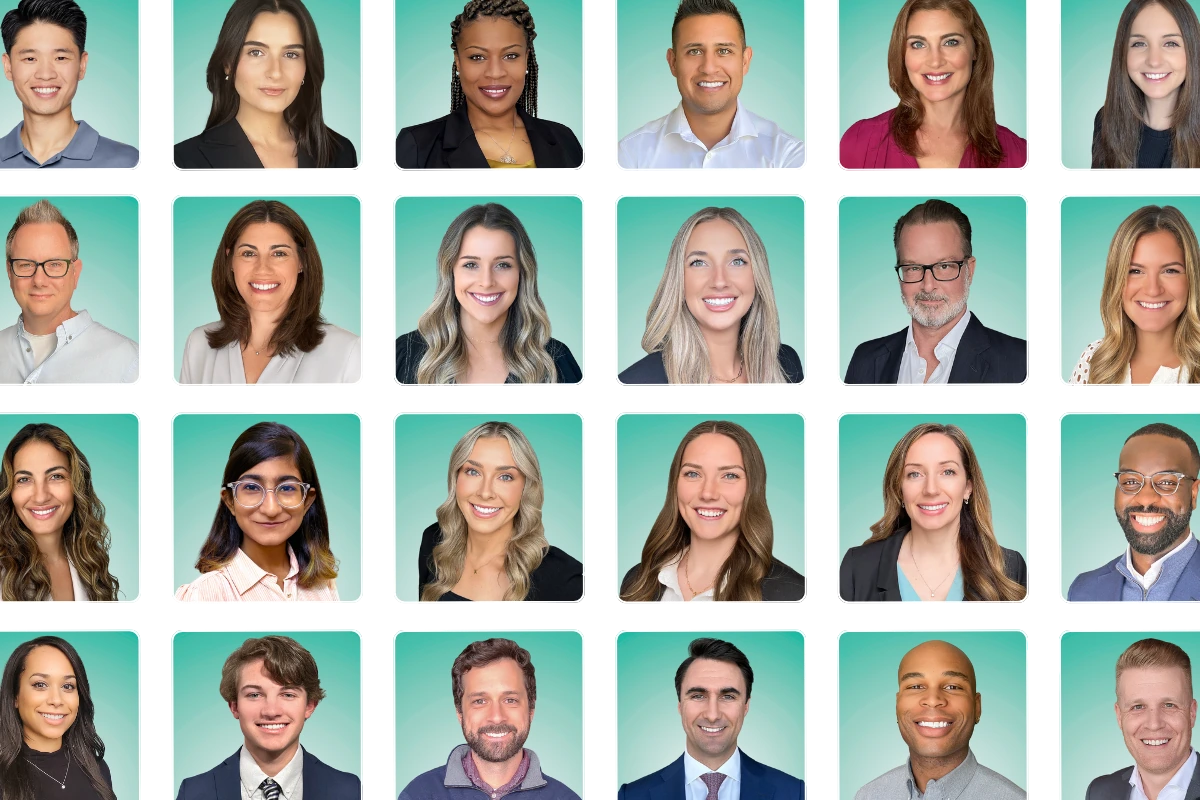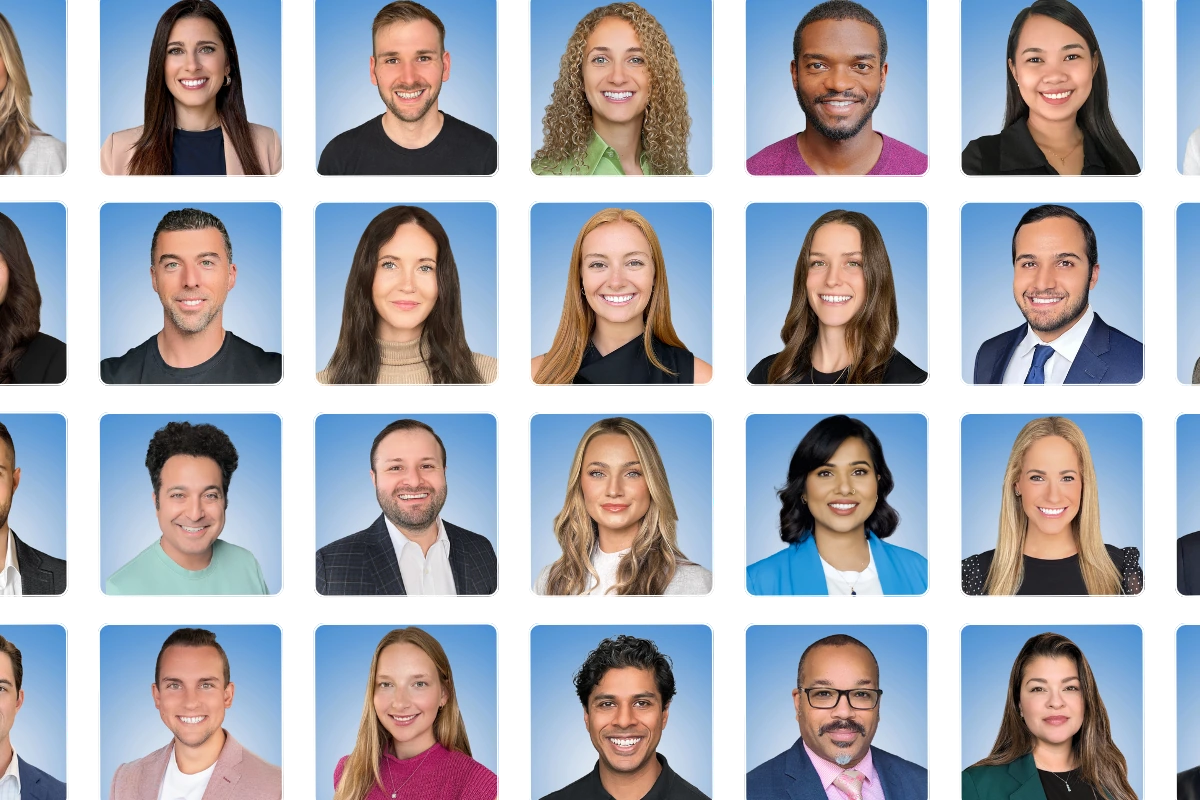
Headshots.com is one of the most recognized names in virtual headshots. They built a real business helping distributed teams get professional-looking photos without coordinating an in-person photo day. Capturely does the same thing — but with a fundamentally different approach to how the photo actually gets taken.
Last updated: March 15, 2026 · Written by Brian Confer, Co-founder & COO at Capturely
Both services produce real photographs. Both use professional human editors. Both work from a smartphone. The difference is what happens during capture: Headshots.com gives you a video tutorial and sends you on your way. Capturely puts a live professional photographer on the other end of your phone, directing your session in real time.
That might sound like a small distinction. It isn’t. And it’s why teams are switching from self-guided services to photographer-directed ones — sometimes mid-contract. As one prospect told us directly: “We’re not really loving the process… it’s really difficult to get the right picture for them to approve… employees getting dressed, taking headshots, submitting, then getting rejection in 24-48 hours.”
Here’s the full, honest comparison.

Quick Verdict: Headshots.com vs Capturely
Choose Headshots.com if you have a team of confident self-photographers who are comfortable directing their own shots, don’t mind a potential back-and-forth rejection process, prefer a lower per-headshot cost for larger volumes, and can wait 3 business days for delivery. Their coordination platform is solid and the editing quality is genuinely good.
Choose Capturely if your team includes people who freeze up in front of a camera (that’s 87% of the population, according to portrait photography research), you need results in 24 hours, consistency matters across a large or growing team, or you’ve already tried a self-guided service and hit the rejection loop. The live photographer direction gets the shot right the first time — which is why Capturely’s reshoot rate sits below 2%.
For teams of 50+, the per-person cost difference is modest. For the experience difference, it’s not close.
Headshots.com vs Capturely: Side-by-Side Comparison
| Factor | Headshots.com | Capturely |
|---|---|---|
| How it works | Self-guided: follow a video tutorial, take your own photo | Live photographer directs your session in real time via phone |
| Live photographer? | No | Yes — every session |
| Price per headshot | $60 individual; $40–$55 for teams (volume tiered) | $79 individual; teams save up to 45% ($45–$79/person) |
| Turnaround | 3 business days | 24 hours |
| Session length | Varies — depends on how many attempts it takes | 10 minutes |
| Photos delivered | 1 edited headshot per credit | 3 edited headshots per session (left/right/straight-on) |
| Editing | Human hand-editing (background, retouching, color correction) | Human professional retouching (skin, lighting, color correction) |
| Photo rejection rate | Higher — multiple reviewers report resubmitting several times | Below 2% — photographer catches issues before the shutter clicks |
| Background options | Custom backgrounds, brand matching available | 98+ backgrounds, custom branded backgrounds ($200 one-time) |
| Admin dashboard | Yes — scheduling, reminders, downloads | Yes — scheduling, status tracking, downloads, brand controls |
| Credit validity | Never expire (per their Terms) | 12 months |
| Best for | Budget-focused teams comfortable directing their own photos | Teams that want studio-quality results without the guesswork |

How Headshots.com Works: The Self-Guided Approach
Headshots.com — formerly Heroic Headshots before rebranding in 2022 — uses a self-capture model. Here’s the process:
Step 1: An admin sets up the team account, chooses background colors and style preferences, and uploads team member email addresses. Headshots.com sends invitations with automatic follow-up reminders.
Step 2: Each team member follows a pre-recorded video tutorial that walks through how to take their own headshot using a cell phone. The guide covers lighting position (find natural light), framing, and basic posture.
Step 3: After uploading their photo, a production manager reviews it against quality standards. If it doesn’t pass — wrong lighting, bad angle, too much shadow — the employee gets an email explaining what to fix and resubmits. This can happen multiple times.
Step 4: Once approved, a dedicated human editor hand-edits the photo: background replacement, lighting correction, skin retouching, teeth whitening, color and tone matching across the team. A final QA pass checks consistency.
Step 5: Delivered in approximately 3 business days.

What Headshots.com Does Well
Credit where it’s due. Headshots.com has genuine strengths:
- Team coordination platform: Their dashboard handles invitations, reminders, and tracking. For HR managers juggling 200 people, this matters.
- Human editing quality: Reviews consistently praise the editing. One graphic designer wrote that the “editing quality was great” and the background removal was “impressive.” This isn’t AI filtering — it’s real editors doing real work.
- Enterprise traction: Kaiser Permanente, PwC, Boeing, Toyota, JPMorgan. They’ve earned those logos.
- Happiness guarantee: Free revisions until you’re satisfied, or money back.
- Credit storage: Buy credits and use them on your schedule — credits never expire per their Terms and Conditions. Headshots.com recommends purchasing enough for 18 months of hiring to maximize volume discounts.
Where Headshots.com Falls Short
The rejection loop. This is the pain point that comes up in review after review. Users submit a photo. It gets rejected. They reshoot. Maybe rejected again. One reviewer described needing “several submissions” before landing an approved photo. Another said the process took “a little longer than I anticipated.” When you’re coordinating hundreds of people, every extra cycle adds days to your timeline.
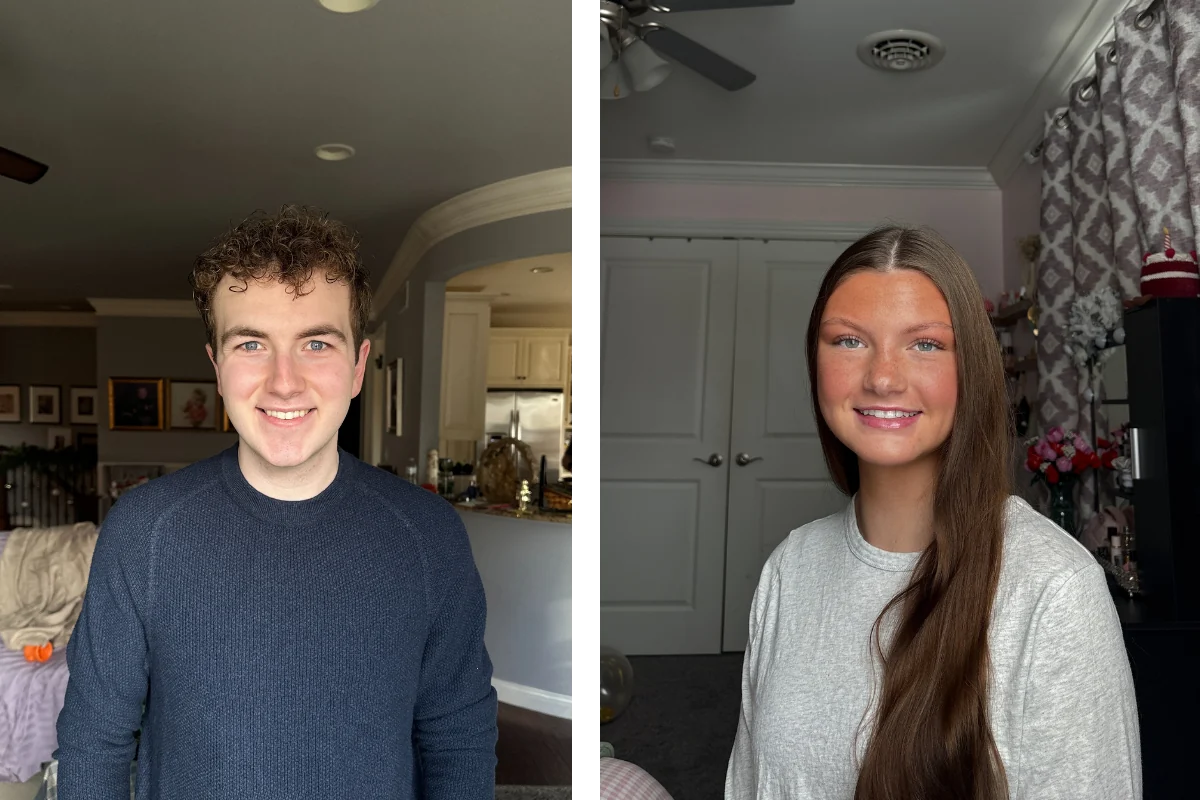
No real-time coaching. A video tutorial can show you where to stand near a window. It can’t tell you that your jaw is clenched, your shoulders are up by your ears, or that there’s a shadow across half your face. Those micro-adjustments — the ones that separate an OK photo from a great one — require a human seeing you in real time.
Three-day wait. In a world of same-day and next-day delivery for most services, 3 business days feels slow. For urgent situations — a new hire starting Monday, a rebrand launching next week — it’s a constraint.
Pricing just went up. In January 2025, Headshots.com raised prices by $10 across every tier — their first price increase ever. Individual headshots are now $60 (up from $50). Teams of 51-100 are $55 (up from $45). For a service with no live photographer, this narrows the price gap with photographer-directed alternatives considerably.
The AI contradiction. Headshots.com built their brand on being anti-AI. Their FAQ still says “No fake AI headshots here.” But in early 2026, they launched a $15 AI headshot product. The pivot makes business sense — they’re chasing the budget segment — but it muddies a positioning that was previously clear. If you chose Headshots.com specifically because they were the “real photos” company, this is worth noting.

Tired of the rejection loop? Capturely’s live photographers get it right the first time — 98% satisfaction, 24-hour delivery. Get your free instant quote →
How Capturely Works: The Live-Photographer Approach
Capturely takes a different bet: put a real photographer in every session, even though it costs more to deliver. The reasoning is simple — most people can’t direct themselves through a professional photo, and the quality difference between “did my best” and “photographer-directed” is the quality difference between a headshot that builds trust and one that doesn’t.

Here’s how it works:
Step 1: Employee receives a secure link. No app download. Opens it on their phone’s browser.
Step 2: A professional photographer appears — live, face-to-face, like a FaceTime call. The photographer has you switch to the rear camera (36-48 megapixels, far better than the selfie camera) and starts directing.
Step 3: For about 10 minutes, the photographer coaches everything: posture, head angle, expression, chin position, shoulder drop. They catch the tension you don’t notice. They tell you to take a breath. They crack a joke to get a genuine smile. They adjust for the lighting in your specific environment, not some generic tutorial advice.
Step 4: Professional human retouching — not AI filters — with delivery in 24 hours. Each session produces 3 fully edited images (left-facing, right-facing, and straight-on), giving teams options for different use cases.


What Sets Capturely Apart
Near-zero rejection rate. When a photographer is directing the shot live, problems get fixed before the shutter clicks — not days later via email. Capturely’s reshoot rate is below 2%. For teams that have experienced the self-guided rejection cycle, this is the single biggest reason they switch.
24-hour turnaround. Session to delivered, edited headshots in one day. For context, that’s 3x faster than Headshots.com’s standard delivery.
Three photos per session. Each session delivers three fully edited images — left, right, and straight-on — instead of one. Teams use different angles for different contexts: website team page, LinkedIn, email signatures, internal directories.
The comfort factor. This is harder to quantify but shows up in every review. People who hate being photographed — and that’s most people — relax when there’s a real human making them laugh, coaching their expression, and telling them they look great. One client described it as: “I hate taking photos of myself, and somehow came out of this with a fairly gorgeous new headshot.” That quote is actually from a Headshots.com review, which tells you the editing is good — but imagine that same person with a live photographer instead of a video tutorial.
Admin dashboard. Full visibility into scheduling, completion status, and downloads. Background and style enforcement. Credits valid for 12 months to handle onboarding, turnover, and promotions without starting over. Capturely has delivered 100,000+ headshots for companies like Google, Netflix, McKinsey, Amazon, and UnitedHealth Group with 765+ reviews at 4.9 stars.
The Direction Gap: Why 87% of People Need a Photographer
Here’s a number that explains everything about why self-guided headshots struggle: 87% of people don’t think they’re photogenic. Portrait photography research has documented this consistently — the vast majority of adults are uncomfortable being photographed and have no idea what to do with their face, hands, or body when a camera appears.

Dig into that further: 56% specifically worry about not knowing how to pose, and 43% feel nervous before any photography session. These aren’t edge cases. They’re the majority of your team.
Now put those people in front of a self-guided video tutorial and ask them to take their own professional headshot. What happens?
They find a window. They prop up their phone. They try to smile naturally while also holding their chin at the right angle, checking the lighting, remembering what the tutorial said about shoulder positioning, and wondering if they look as awkward as they feel. The photo gets submitted. Maybe it passes. Maybe a production manager emails them two days later saying the lighting was off, try again. They sigh, get dressed up again, find the window again, and hope the second attempt goes better.
Multiply that by 200 employees, and you have a project that was supposed to take two weeks still grinding along a month later. One Headshots.com case study described a 300-person project taking about a month — and that coordinator had a dedicated account manager helping.
Now put those same 87% in front of a live photographer. The photographer sees their tension. “Drop your shoulders — good. Tilt your chin down just a touch. Now look past me, like someone across the room just said something funny. Perfect.” Ten minutes. Done. No rejection email. No reshoot.

The direction gap isn’t about skill. It’s about the nature of photography itself. You can’t see yourself while you’re being photographed. You can’t know that your jaw looks clenched, or that a shadow fell across your nose, or that your eyes squinted just as the photo was taken. A photographer can. That’s the job.
As researcher Janine Willis at Princeton demonstrated, people form trustworthiness judgments from a face in 100 milliseconds. Your headshot gets one fraction of a second to build or break trust. The question is whether you want that fraction of a second captured by someone directing the shot — or left to chance.
Your team deserves better than trial and error. See how live-directed virtual headshots work — configure your look and get a free instant quote in 30 seconds. Get your instant quote →
Head-to-Head: Three Real Scenarios
Scenario 1: Onboarding a new hire who needs a headshot by Friday
Headshots.com: Send invitation Tuesday. New hire watches tutorial, takes a photo Wednesday. Maybe it passes QA. If not, they reshoot Thursday. Editing takes 3 business days from accepted upload. Best case: ready by the following Monday. Realistic case: middle of next week.
Capturely: Send session link Tuesday. New hire books a 10-minute virtual session for Wednesday. Photographer directs the shot. Retouched, delivered by Thursday morning. On the team page before their first all-hands.
Winner: Capturely. By several days.
Scenario 2: Rebranding 200 people across five offices
Headshots.com: Strong coordination platform handles the invitations and reminders. But 200 people self-directing their own photos means a wide range of input quality. Expect multiple rejection-reshoot cycles. Timeline: realistically 3-6 weeks to get everyone through the process. Editing quality will be consistent — that’s their strength — but getting to the editing stage is the bottleneck.
Capturely: Same coordination tooling. But each session takes 10 minutes and gets it right the first time. With parallel scheduling, a 200-person rollout can complete in 2-3 weeks. Credits cover the stragglers who miss the first push, plus new hires over the next 12 months.

Winner: Capturely. Faster timeline, fewer bottlenecks, same consistency on the output.
Scenario 3: The employee who “hates having their picture taken”
Every team has them. The person who’s been dodging photo day for three years. The one who, as a discovery call prospect described it, “every time I ask her to come get her photo taken, she comes up with this lame excuse.”
Headshots.com: Sends a tutorial video. This person watches it, dreads it, procrastinates, takes a half-hearted selfie, gets rejected, gives up, and their spot on the team page stays blank.
Capturely: The photographer makes it conversational. Ten minutes. The employee shows up expecting to hate it and leaves saying “that wasn’t nearly as bad as I thought” — which is the most common post-session response from camera-shy clients, across the industry. The live human connection turns a dreaded chore into something surprisingly painless.
Winner: Capturely. And it’s not about the technology. It’s about having a person on the other end who knows how to make uncomfortable people comfortable.
The Real Cost Comparison
Let’s do the math for a 100-person team:
Headshots.com: At the 101-250 tier, that’s $50/headshot × 100 = $5,000. You get one edited photo per person, 3-day delivery, and should budget extra time for the rejection-reshoot cycles that are part of the self-guided process.
Capturely: Team pricing with volume discounts ranges from $45–$79/person depending on team size. For 100 people, estimate roughly $5,500–$6,500. You get three edited photos per person, 24-hour delivery, live photographer direction, and a sub-2% reshoot rate.

The per-person price gap is real but narrow — roughly $5–$15 more per person for Capturely at scale. For that difference, you get: live direction (no rejection loop), 3x the photos, 3x faster delivery, and a dramatically better employee experience. For most teams, that math works.
Both options are a fraction of traditional in-person studio photography, which runs $150–$450 per person before you factor in travel, coordination, and the inevitable no-shows. For a full breakdown of every pricing model, see our professional headshot cost guide.

Frequently Asked Questions
Is Headshots.com legit?
Yes. Headshots.com (formerly Heroic Headshots) has been operating since 2020 and serves 4,000+ brands including Kaiser Permanente, PwC, Boeing, and Toyota. They have a 4.8-star Google rating with consistently positive reviews praising their editing quality and customer support. It’s a legitimate service with real traction. The question isn’t whether they’re legit — it’s whether the self-guided capture model produces the results your team needs.
How much does Headshots.com cost?
As of their January 2025 price increase, Headshots.com charges $60 per individual headshot. Team pricing is tiered by volume: $55/headshot for 51-100 people, $50 for 101-250, $45 for 251-500, and $40 for 501-1,000. They also offer a new AI-edited option at $15 per download. Credits never expire per their Terms and Conditions.
What’s the difference between self-guided and photographer-directed virtual headshots?
Self-guided services (like Headshots.com) give you a video tutorial and let you take your own photo. If it doesn’t meet quality standards, you reshoot and resubmit. Photographer-directed services (like Capturely) connect you live with a professional photographer who coaches posture, expression, and lighting in real time through your phone. The key difference: photographer-directed sessions catch problems before the photo is taken, while self-guided services catch them after — requiring the back-and-forth rejection loop that slows down team rollouts.
Does Headshots.com use AI?
As of early 2026, yes — partially. Their core product still uses human editors for hand-editing uploaded photos (no AI in that workflow). But they recently launched a separate $15 AI headshot product where you upload a selfie and get AI-generated results. This is a notable shift from their previous anti-AI positioning. Their FAQ still states “No fake AI headshots here,” which creates some messaging inconsistency with the new offering.
Can a phone really take professional-quality headshots?
Yes — but the camera isn’t the hard part. Modern smartphone rear cameras capture 36-48 megapixels with excellent dynamic range. The challenge is everything else: posture, expression, lighting, head angle, framing. Those variables are what separate a professional headshot from a glorified selfie. With live photographer direction (as in Capturely’s model), the photographer handles all of those variables in real time. That’s how companies like Google, Netflix, McKinsey, and UnitedHealth Group get studio-quality results from phone-based virtual sessions.
Why do some companies switch from Headshots.com to Capturely?
The most common reason is the rejection-resubmission cycle. Self-guided capture means some employees need multiple attempts to get an approved photo, which extends project timelines and frustrates participants. One prospect described it plainly: “It took me forever. It failed… those aren’t good enough. And I was like, this is so painful.” Companies that need faster turnaround (24 hours vs. 3 days), higher first-pass approval rates, or better experiences for camera-shy employees tend to make the switch.
Which service is better for large teams (200+ people)?
Both have team coordination platforms with dashboards, invitations, and tracking. The advantage shifts to Capturely at scale because the rejection loop compounds — 200 people self-guiding means dozens of resubmissions, each adding days. With live photographer direction, the vast majority of sessions complete successfully in one take. The per-person cost gap narrows at higher volumes, making the experience and speed advantages of photographer-directed sessions more meaningful. For a broader comparison of every team headshot option, see our guide to corporate headshots.
What’s the best alternative to Headshots.com?
It depends on what you’re optimizing for. If you want the closest direct alternative with live photographer direction, that’s Capturely. If budget is the primary constraint, AI generators like HeadshotPro ($29-$59) cost less but produce digitally fabricated images, not real photographs — see our AI vs real headshots comparison for why that matters. If you need in-person photography, Snappr books local photographers on-demand. For most teams evaluating Headshots.com, Capturely is the natural upgrade: same convenience (virtual, smartphone-based), same real photos, but with the live photographer direction that eliminates the friction.
The Bottom Line
Headshots.com built a real business solving a real problem. They deserve credit for that. Their editing quality is strong, their coordination platform works, and they’ve earned their enterprise client list.
But the self-guided capture model has a ceiling. When 87% of people don’t think they’re photogenic and 56% don’t know how to pose, asking them to direct their own professional headshot introduces friction that no amount of editing can fully compensate for. The photo has to be good before the editing starts.
That’s what live photographer direction solves. Not a tutorial. Not a checklist. A real person, seeing you in real time, making micro-adjustments that turn a stiff, self-conscious phone photo into a headshot that builds trust in 100 milliseconds.
Both services produce real photographs with real human editing. The difference is what happens in the 10 minutes before the edit begins. For teams that have lived through the rejection loop — the resubmissions, the delays, the employees who just never complete the process — the upgrade to photographer-directed sessions pays for itself in time, completion rates, and the quality of what ends up on your team page.
See the difference a live photographer makes. Get a free instant quote for your team — configure your look and see pricing in under 30 seconds. Get your instant quote →
Want to see how the entire virtual headshot category compares? Read our AI headshots vs real headshots comparison, or explore the complete guide to corporate headshots for managing team photography at scale.