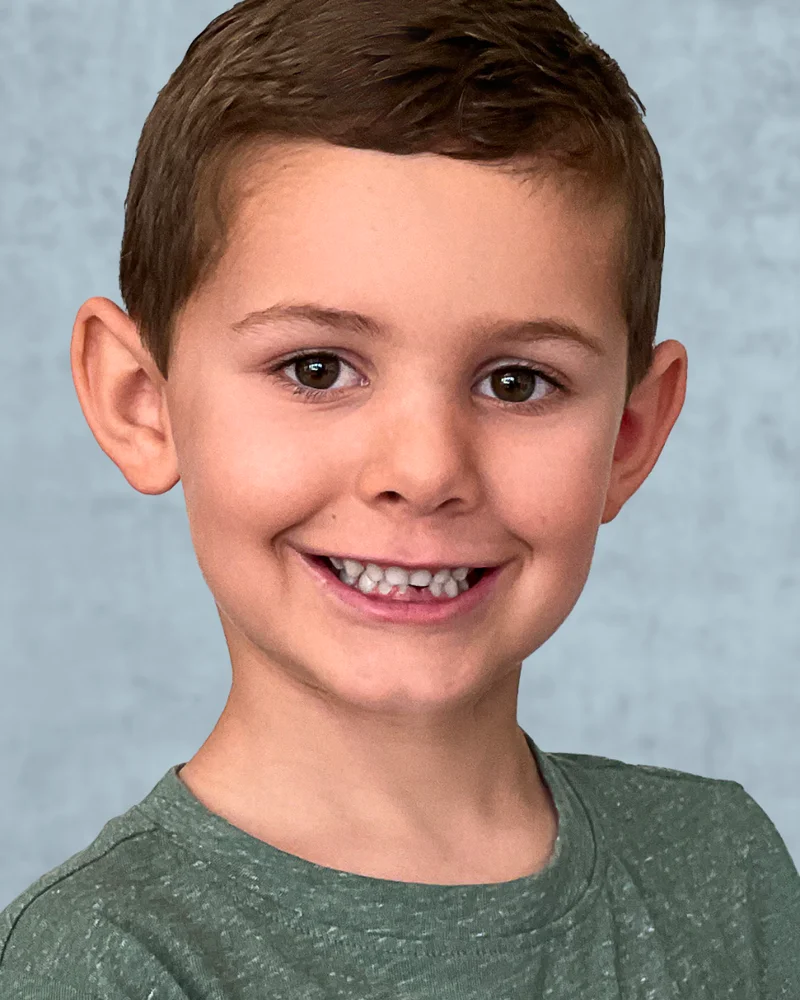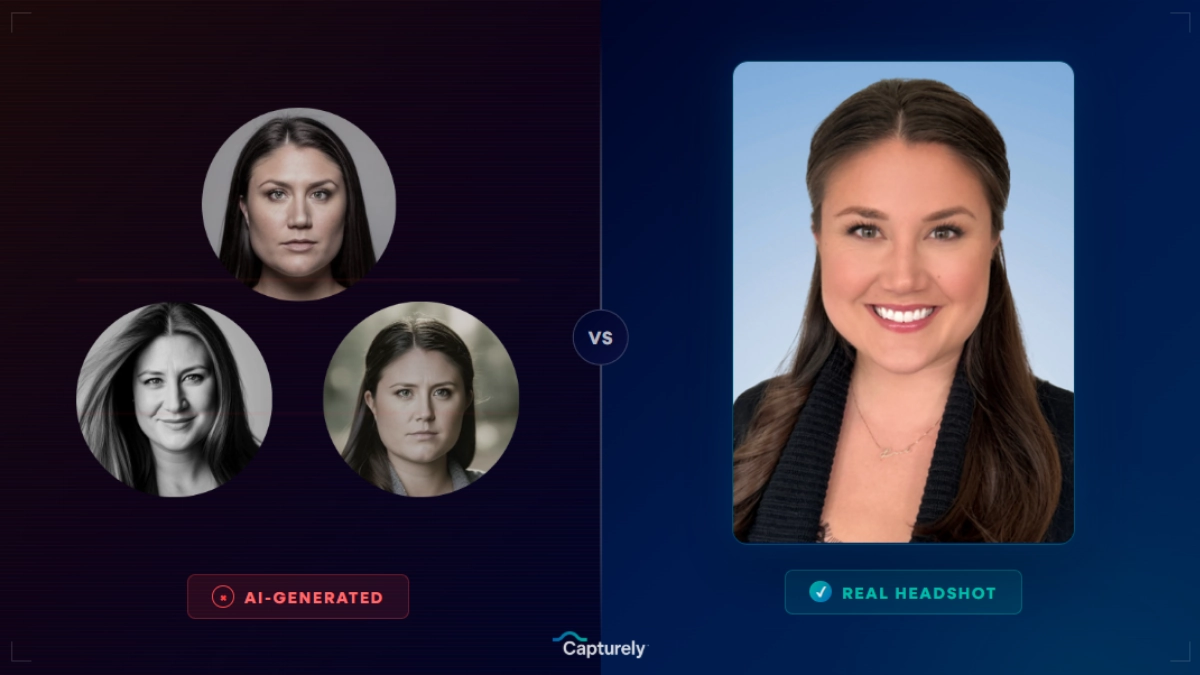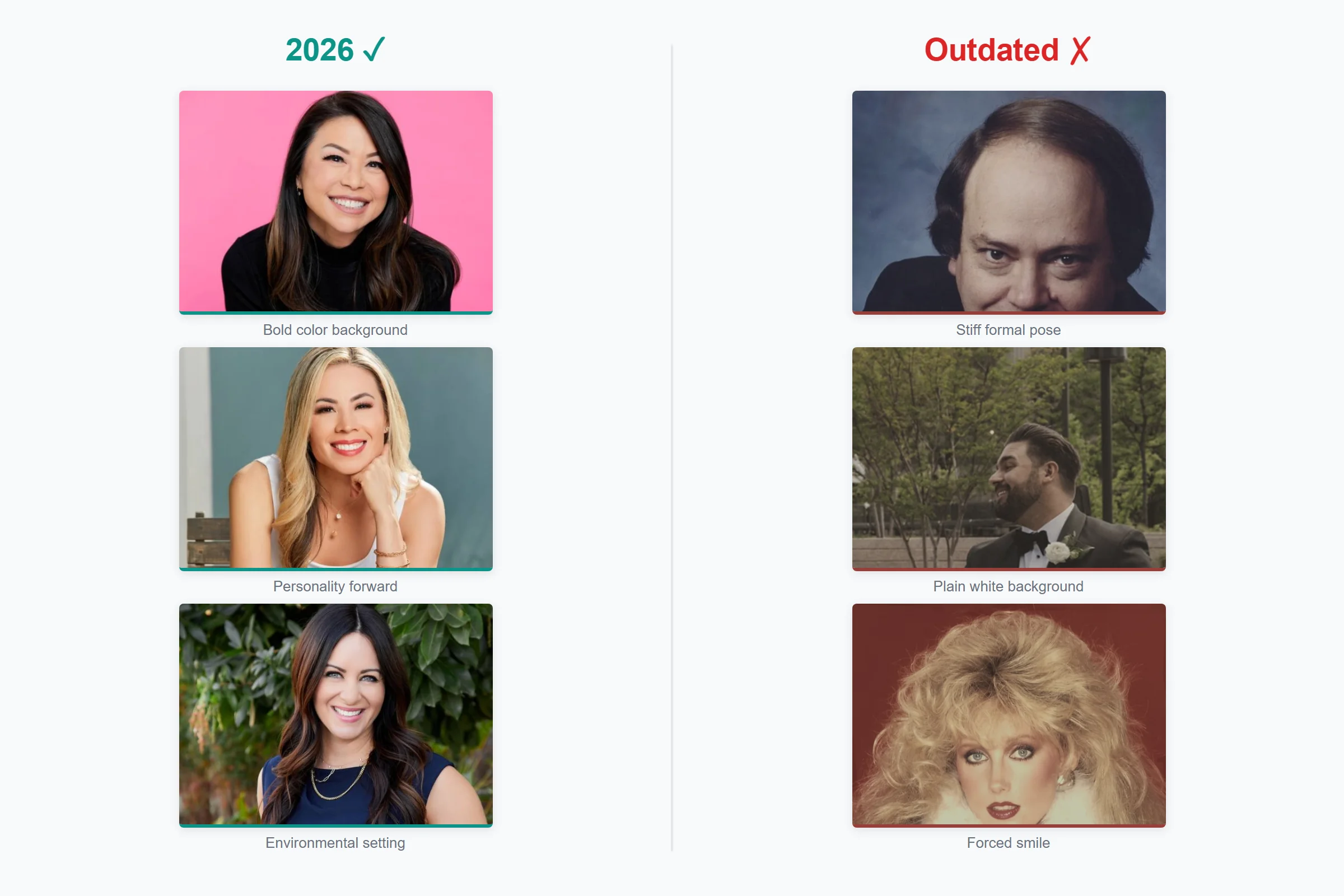
Commercial headshots and theatrical headshots are the two core styles every working actor needs. A commercial headshot is warm, approachable, and smile-forward — designed to sell products and book advertising work. A theatrical headshot (also called a “legit” headshot) shows emotional depth, character complexity, and range — built for film, TV drama, and stage roles.
Last updated: March 2026
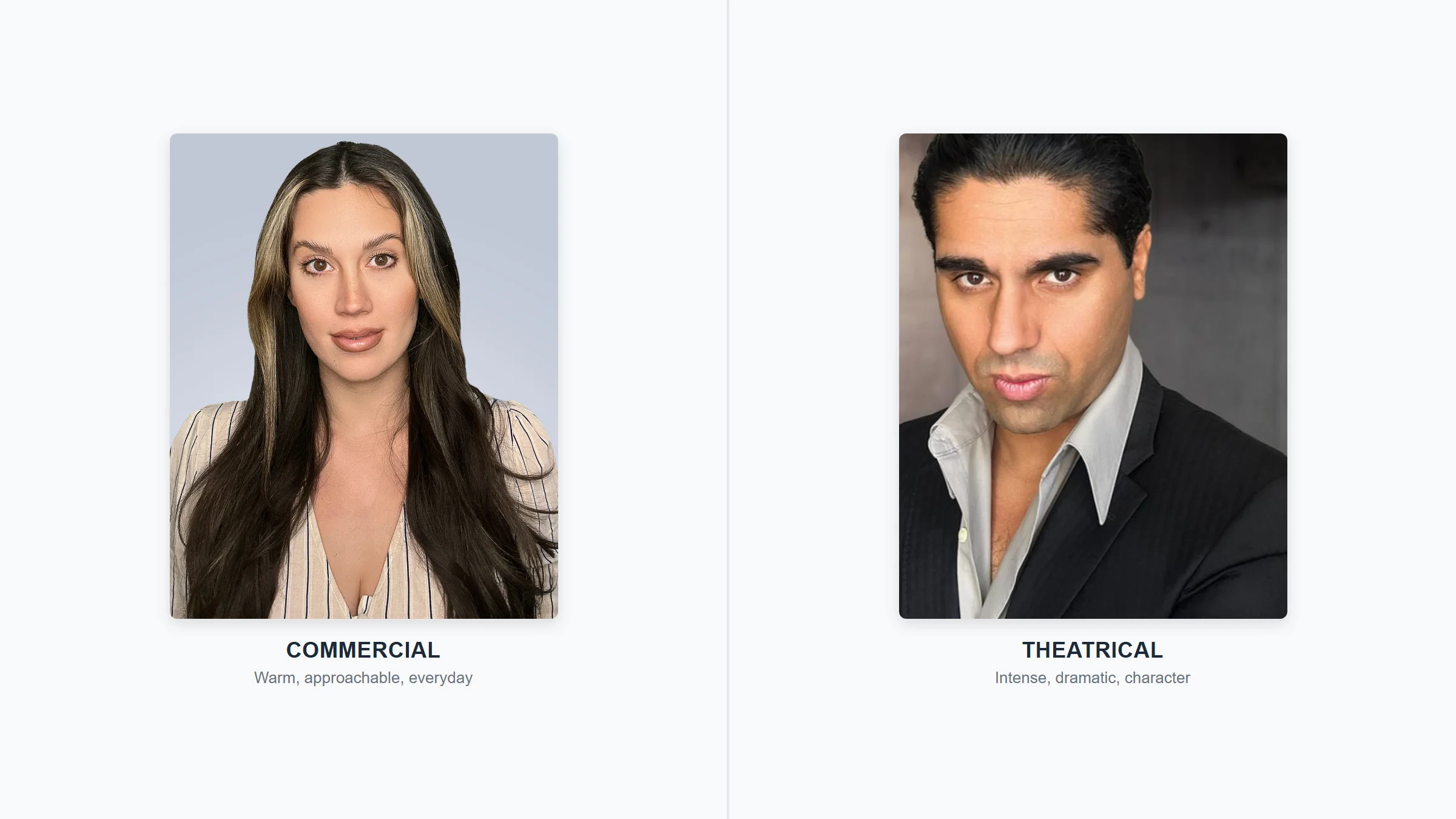
Most casting directors expect to see both in your portfolio. The problem is that most actors — especially those just starting out — don’t understand the difference clearly enough to get both right. According to casting director Laurie Records (CCDA), “Casting directors look at (no exaggeration) thousands of headshots per role. If I’m not taken with your headshot right away, I’ll never get to your resume, training, and skills” (Casting Networks, 2024).
This guide breaks down exactly what commercial and theatrical headshots require in 2026, what casting directors actually select for, how many looks you need, and how to get both styles without spending $800+ at an LA studio. Everything here draws from casting director interviews, talent agency guidelines, and patterns from over 100,000 headshots delivered by Capturely for organizations including Google, Netflix, and Amazon. For a broader overview of headshot fundamentals, see our professional headshots guide.
What Are Commercial Headshots?
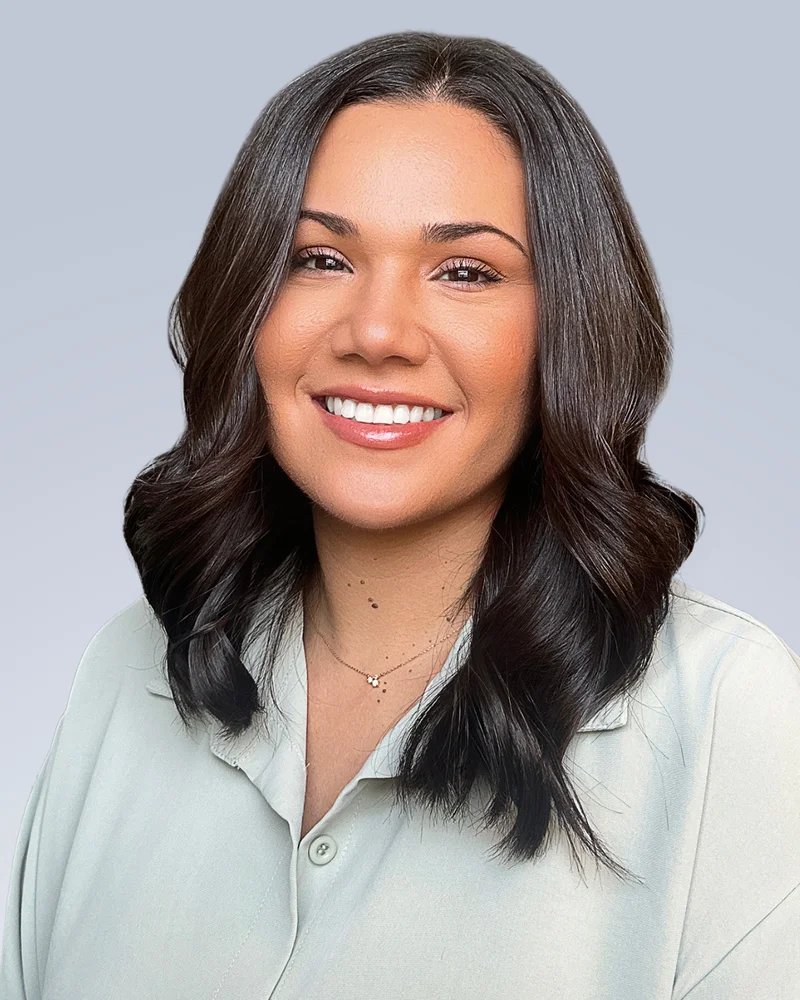
A commercial headshot is a bright, energetic photograph designed to make you look approachable, trustworthy, and castable for advertising work. The goal: a casting director sees your thumbnail and thinks, “That person could sell me a Toyota.”
Expression
Smiling is the default. Not a forced grin — a genuine, warm expression that reads as friendly and relatable. Marc Cartwright, an LA headshot photographer with 25+ years of experience, puts it this way: “For commercial headshots, it really depends on your type — but for the most part, smiling is recommended” (Backstage, 2022). If you typically play tougher characters, your commercial shot should be “your character on a good day.”
Wardrobe
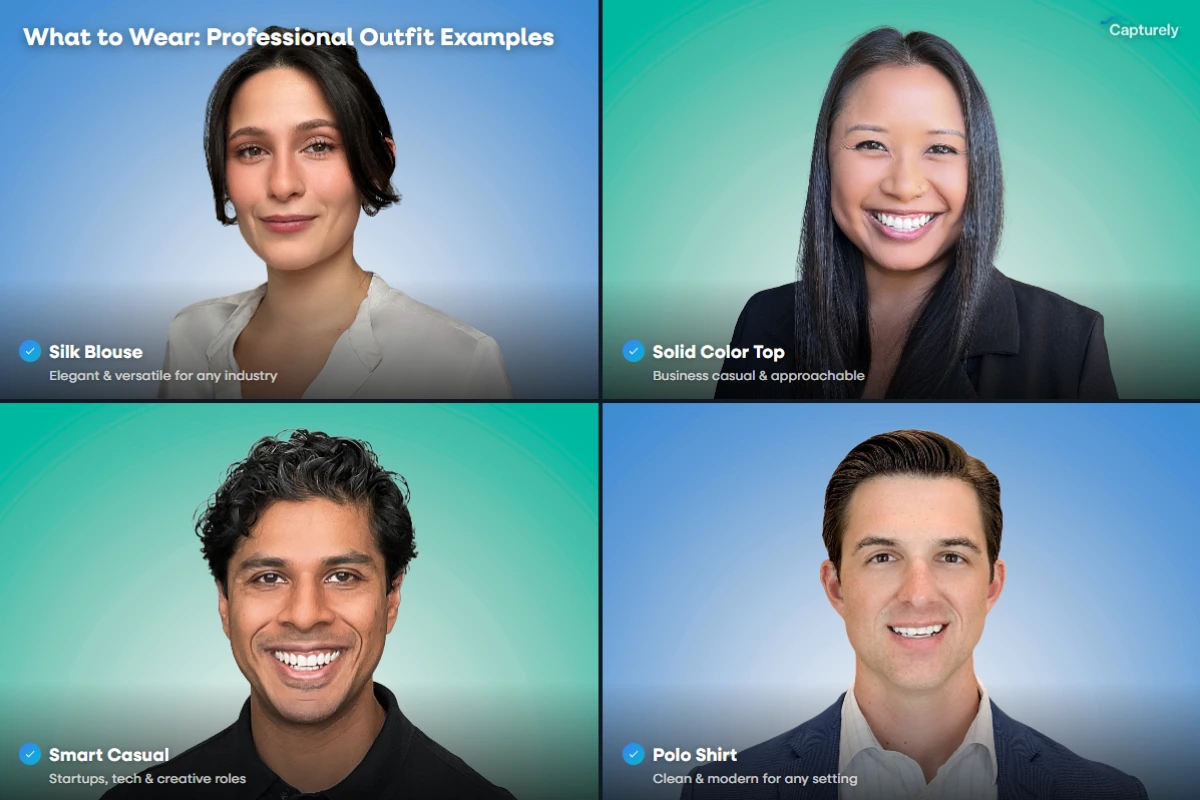
Warm, bright colors that pop. Jewel tones — soft blue, coral, emerald — draw attention without overshadowing your face. Avoid blacks and grays, which “tend to take away from the warmth and energy” of a commercial shot. Think casual button-ups, layered tees, and cardigans. The advice from Laurie Records is blunt: “If you’re a helpful Best Buy or Honda type, you’d better have a headshot with you in a polo. Don’t get creative” (Casting Networks, 2024). For more wardrobe guidance, see our what to wear for headshots guide.
Background and Lighting
Light, bright, and clean. Even, diffused lighting that creates a warm, welcoming feel. Outdoor natural light with soft blur can also work. No dramatic shadows, no moody atmospherics. The background should never compete with your face.
What Commercial Headshots Are Used For
TV commercials, print ads, branded content, hosting gigs, sitcoms, infomercials, corporate videos, and lifestyle casting. Essentially, any role where you’re representing a product, service, or brand to a consumer audience.
What Are Theatrical Headshots?
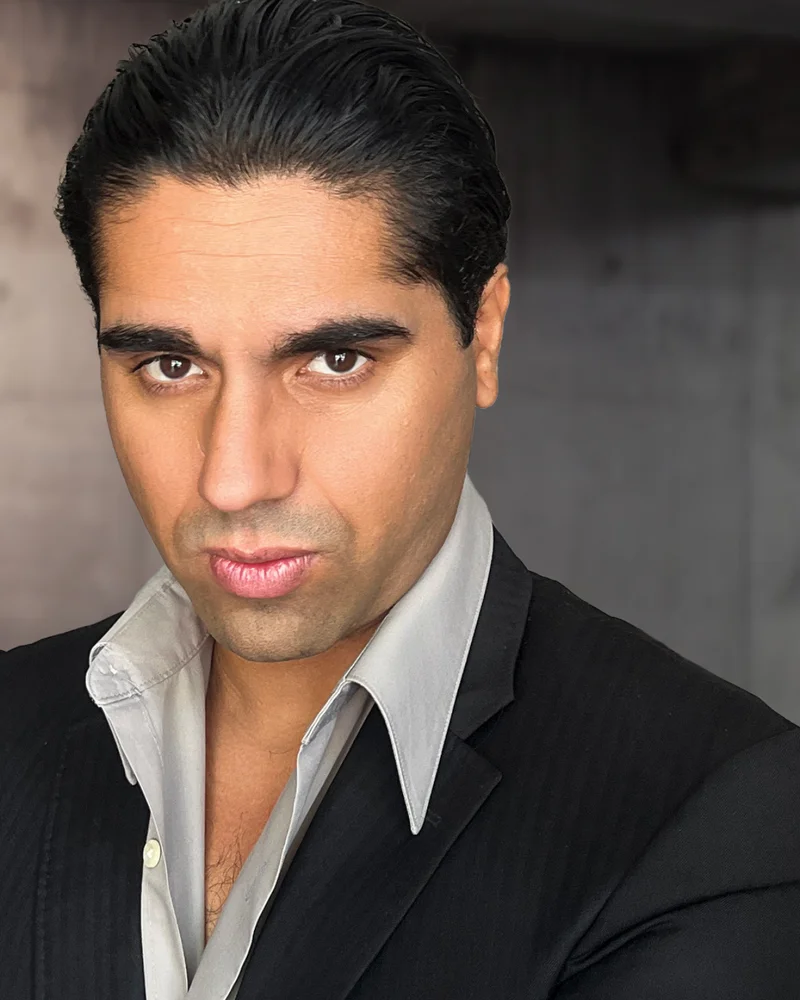
A theatrical headshot — also called a “legit” headshot — prioritizes emotional depth over friendliness. The goal: a casting director sees your thumbnail and thinks, “That person has layers.”
Expression
Confident, grounded, and layered. This does not mean angry or brooding. Cartwright notes that “sometimes a knowing smirk or vulnerability behind the eyes better exemplifies who you are as an actor” than a stoic stare (Backstage, 2022). The theatrical headshot should reveal something about your personality — “whether it’s a trustworthy one or not.”
Wardrobe
Earthy, muted tones. Navy, olive, burgundy, charcoal, and deep brown. Avoid pure black or white. Simple, timeless silhouettes — plain tees, henleys, fitted button-ups. Minimal jewelry. The wardrobe should be “rich in color to stand out, but still subtle enough to give focus to the actor” (Cartwright, Backstage, 2022).
Background and Lighting
Solid neutrals — light gray, charcoal, or muted tones. Lighting is edgier than commercial: contoured with deliberate shadow placement that adds dimension. Catch lights in the eyes are non-negotiable. The background should disappear so your expression does the talking.
What Theatrical Headshots Are Used For
Film (drama, indie, features), prestige TV series, theater auditions, and serious character work. Think HBO, A24, Broadway — anywhere the role demands complexity.
Commercial vs Theatrical Headshots: Side-by-Side Comparison
| Element | Commercial Headshot | Theatrical Headshot |
|---|---|---|
| Expression | Warm smile, approachable, energetic | Grounded, layered, emotionally complex |
| Wardrobe Colors | Bright jewel tones — coral, blue, emerald | Earthy muted tones — navy, olive, burgundy |
| Background | Light, bright, or soft natural blur | Solid neutral — gray, charcoal, muted |
| Lighting | Flat, even, diffused — soft and inviting | Contoured, directional — adds depth and shadow |
| Mood | Fun, relatable, trustworthy | Grounded, intense, character-driven |
| Purpose | Sell a product to a demographic | Sell a personality type for a role |
| Typical Roles | TV ads, branded content, sitcoms, hosting | Film drama, prestige TV, theater, character work |
| Retouching | Clean, bright, natural color correction | Subtle, maintains texture and imperfections |
The table above covers the traditional distinction. But here’s what most guides miss: the line between commercial and theatrical has blurred. LA headshot photographer Vanie Poyey, with 13+ years of experience, explains: “Most looks cross-over from commercial to theatrical. What changes from the commercial version to the theatrical version is the context — in a headshot, what we change in place of context is your essence” (Poyey Photos, 2018). Streaming platforms now produce content that blends genres freely, and casting has followed suit. A “Suburban Mom” look can book a Tide commercial and a Netflix drama — what changes between the two submissions is the emotional register in the eyes, not the outfit.
Need commercial and theatrical headshots? Capturely delivers both styles in a single 10-minute virtual session — shot with your phone’s rear camera, directed by a live photographer. 3 edited images in 24 hours. Get your headshots →
Do You Need Both Commercial and Theatrical Headshots?
Yes. Almost every agent and casting director expects both.
Andrea Kelly of Unlimited Talent Management is direct: “I look for choices, especially when working with a new actor. If casting doesn’t know them or their work, it’s important for there to be some specific shots to catch the casting agent’s attention” (Poyey Photos, 2023).
Having only one type limits your submissions. If you only have a theatrical headshot, you’re invisible for commercial breakdowns — and vice versa. Agents actively request both when signing new clients. Patch Mackenzie of Cutler Management advises: “Ask your reps who they like and the kinds of shots they will need to sell you. Know your type” (Poyey Photos, 2023).
For child and teen actors, the need is even more pressing — children update their headshots every 6 months, and agents expect both commercial and theatrical options from the start. See our child actor headshots guide for specifics.
How Many Looks Should You Prepare?
The sweet spot is 3 to 5 distinct headshots. Two is the absolute minimum (one commercial, one theatrical). But working actors — and actors who want to be working — should have more.
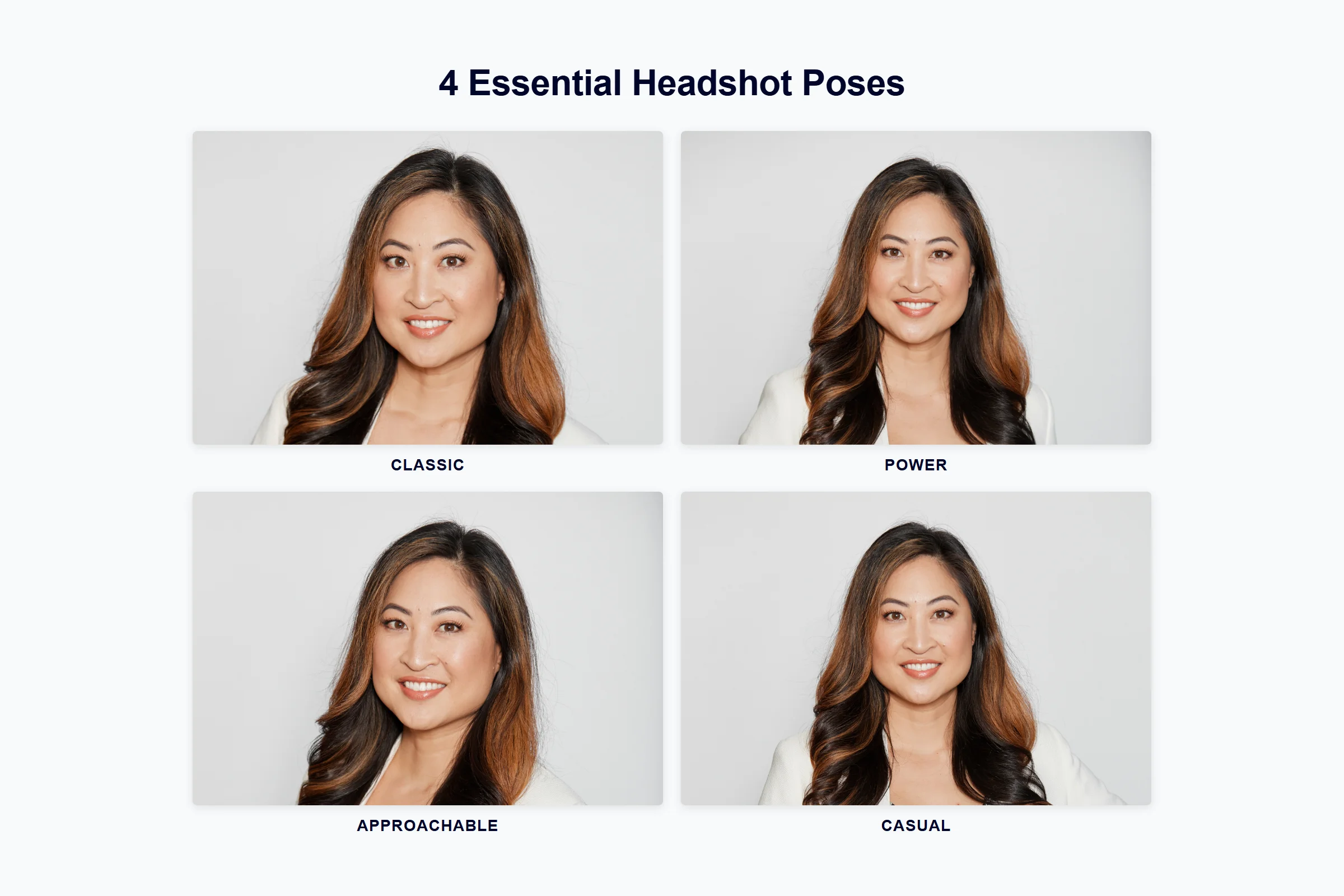
Casting director Thom Hammond confirms: “You need more than just one. There’s such a thing as having too many. More than 10 is too many, less than two isn’t enough. I feel like the sweet spot is about four to six” (Spotlight, 2024).
Here’s a practical breakdown of what a well-rounded portfolio includes:
- Commercial — warm and approachable. Your “I could sell you a minivan” shot.
- Theatrical — grounded and layered. Your “I have secrets” shot.
- Comedic — personality-forward. Marc Cartwright describes this as “a middle ground between theatrical and commercial — light personality like commercial but more character” (Backstage, 2022). For sitcoms, standup, and romantic comedies.
- Character-specific. If you’re frequently cast as a doctor, lawyer, or detective, have a look that reads that way instantly.
- Casual or lifestyle. A relaxed, “off-duty” look for indie projects and modern streaming content.
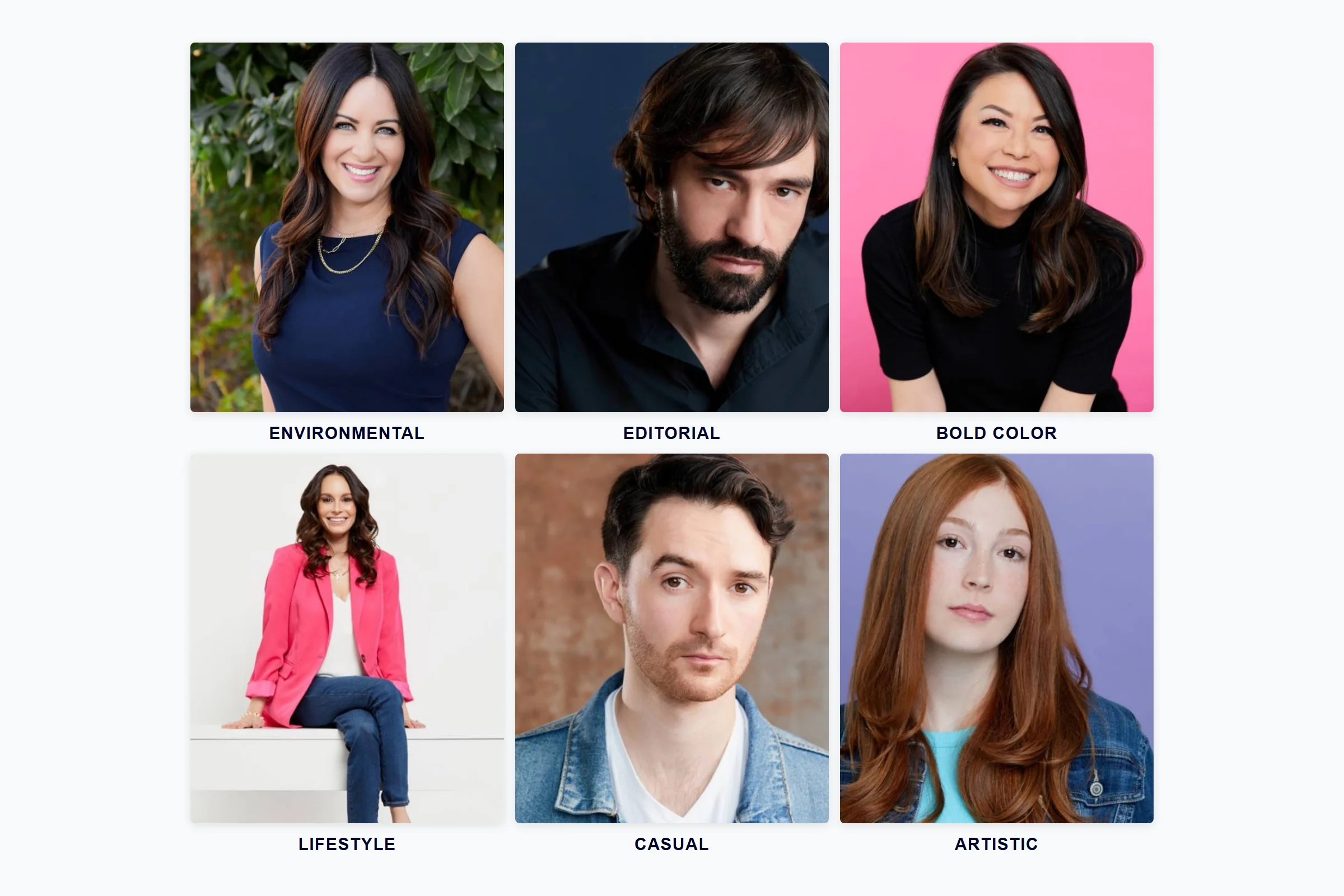
Brandon Andre, an LA headshot photographer, recommends starting with at least 3 looks and updating yearly (Brandon Andre Photography, 2023). For guidance on the physical mechanics of each look, our how to pose for headshots guide covers the fundamentals that transfer directly to acting headshots.
What Do Casting Directors Actually Look For in 2026?
Forget the glossy, over-produced headshot. In 2026, casting directors want three things: authenticity, strong eyes, and thumbnail impact.
Authenticity Over Perfection
Over-retouching is the single fastest way to get your headshot tossed. Oliver Carnay of International Artists PR and Talent Management says it plainly: “It is also important that it is not obviously retouched. If an actor has freckles, it should also be intact. The actor should appear exactly how he looks like in person” (Poyey Photos, 2023).

Frank Moiselle, a casting director, reinforces this: “There’s no point having a headshot that is years old or where you look too young or touched up in such a way that it doesn’t represent you” (Spotlight, 2024). The industry rule of thumb: if someone meeting you says “you don’t look like your headshot,” it’s over-retouched.
Eyes That Pop at Thumbnail Size
Tree Petts, a casting director, reviews “48 to 96 thumbnails a page” (Spotlight, 2024). At that size, your eyes are the only thing that communicates.
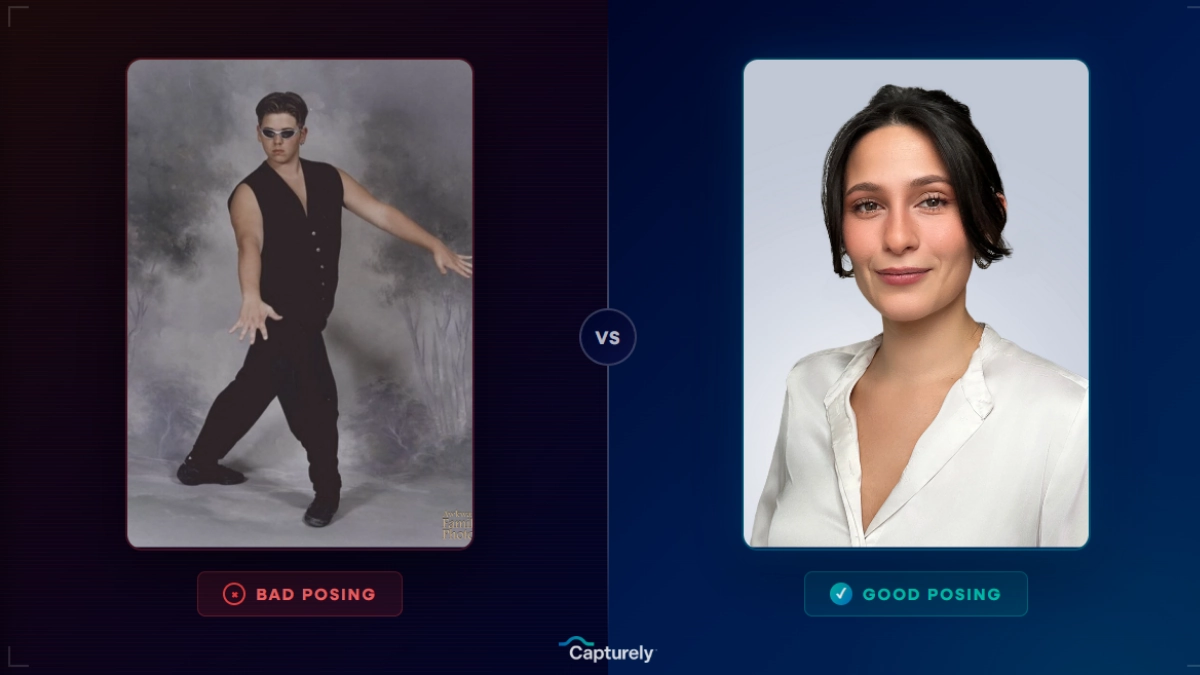
Lisa Berman of Berman/Sacks Talent Agency looks for “big, open eyes so I can see eye color, full heads (not cut off at top of head)… and open body language” (Poyey Photos, 2023). She also recommends facing open to the left of the shot, since “casting looks at several tiny photos in thumbnails on one screen at a time, and our eyes read from left to right.”
The Numbers Behind the Competition
Understanding the scale of competition explains why your headshot matters more than your resume. Anthropologist Dr. Scott Frank, who has studied Hollywood casting processes, found that a single role can receive 7,000 submissions. At that volume, casting professionals “pick based on impulse and instinct” — “a quick glance and an instinctual response is the only way to pore through all of that data” (Poyey Photos, 2019).
Casting director Bonnie Gillespie shared concrete numbers: for a SAG short film with nine roles, she received 3,500 submissions, filtered down to 500 based “almost entirely on look,” scheduled 200 prereads, and brought 35 to callbacks (BonnieGillespie.com, 2020). That’s an 86% elimination rate at the headshot stage alone.
With roughly 85% of auditions now conducted via self-tape (SAG-AFTRA, 2024), your headshot is often the only visual a casting director sees before deciding whether to press play on your tape. Self-tapes also increased submission volume by 5 to 20 times compared to in-person auditions, because requesting tapes costs production companies nothing (Variety, 2023).
Look like yourself, not a Hollywood version of yourself. Capturely connects you with a live photographer who directs your session via your phone’s rear camera — 36-48 megapixels, professionally retouched, delivered in 24 hours. Book your session →
Digital Submission Requirements by Platform
Your headshot needs to meet technical specs before any casting director sees it. Here’s what the major platforms require in 2026:
| Platform | Dimensions | File Size | Format |
|---|---|---|---|
| Actors Access | Up to 3000 × 3000px | 500KB – 1MB | JPEG |
| Casting Networks | 1600 × 1200px min | Up to 5MB | JPEG |
| Backstage | 2400 × 3000px recommended | Up to 10MB | JPEG, PNG |
A few platform tips that most photographers won’t tell you:
- Save in sRGB color space. Adobe RGB and CMYK display incorrectly on casting platforms.
- Crop tight for thumbnails. Cartwright recommends a “tighter crop on the face so that the eyes can be seen easier. A three-quarters shot won’t stand out as much in an online gallery” (Backstage, 2022).
- Keep the 4:5 vertical aspect ratio. This is the industry standard (8×10 equivalent) and displays consistently across all platforms.
- Save your master file at 300 DPI, 3000px+. Then export platform-specific sizes. Never upscale a low-resolution image.
How Much Do Acting Headshots Cost in 2026?
Pricing varies dramatically by market and photographer reputation. Actors in major markets should expect the following ranges:
| Market | Price Range | Typically Includes |
|---|---|---|
| Los Angeles | $300 – $600+ | 2-4 looks, 3-8 retouched images |
| New York City | $423 – $925+ | 2-3 looks, 3-6 retouched images |
| Atlanta | $100 – $300+ | 1-3 looks per booking |
| Chicago | $325 – $500+ | 2-3 looks, 4-6 retouched images |
| National Median | ~$250 per session | Varies widely |
| Virtual (Capturely) | $79 per session | 3 retouched images, 24-hour delivery |
Pricing data sourced from HeadshotPro (2025), The Studio Pod (2025), Brandon Andre Photography (2024), and Steve Glass Photography (2024).
Those figures don’t include hair and makeup ($100-$300 extra in most markets) or additional retouching fees ($25-$50 per image). For actors who need 3-5 looks updated annually, the total easily reaches $500 to $1,200+ per year — before you factor in self-tape equipment, coaching, and class tuition. For a full pricing breakdown across service types, see our professional headshot cost guide.
Getting Both Styles in One Session
The smartest approach is booking a session designed for multiple looks. Most traditional photographers offer packages with 2-4 “look changes” built in — you switch wardrobe, the photographer adjusts lighting and background, and you shoot each style in succession.
Vanie Poyey, whose LA studio specializes in actor headshots, explains the approach: “When a look is a crossover, we keep the lighting and colors neutral so that it can be used appropriately for both markets” (Poyey Photos, 2018). The practical move is to plan wardrobe changes that shift between commercial and theatrical energy without requiring a complete lighting overhaul.
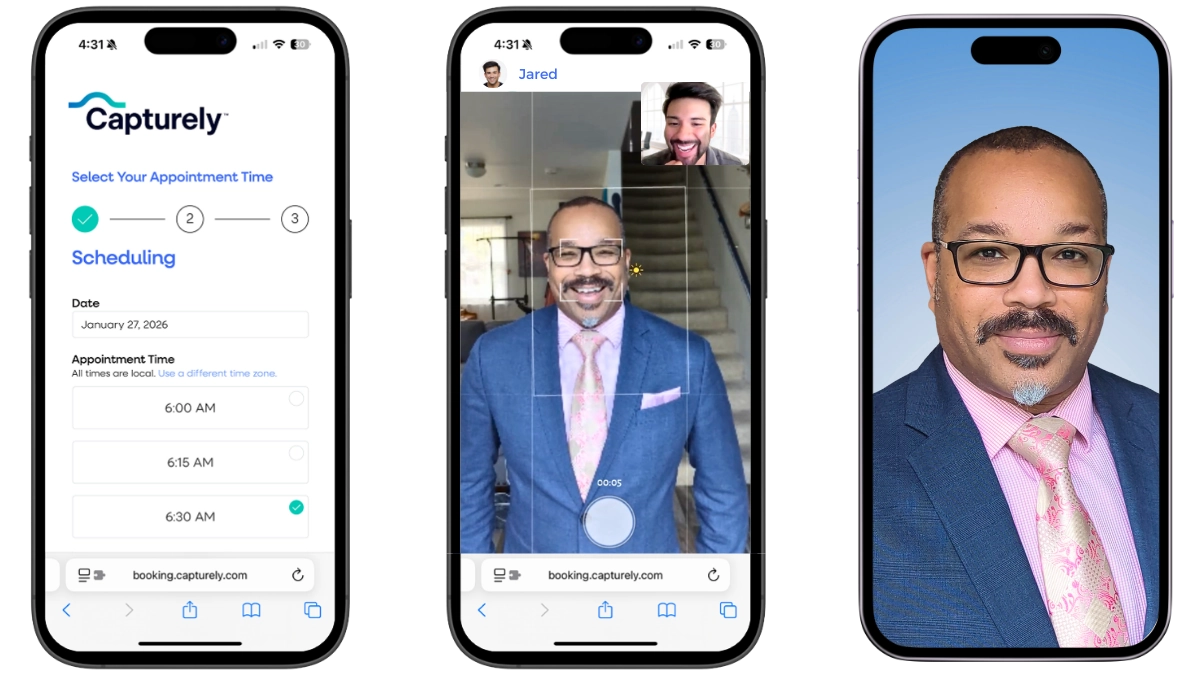
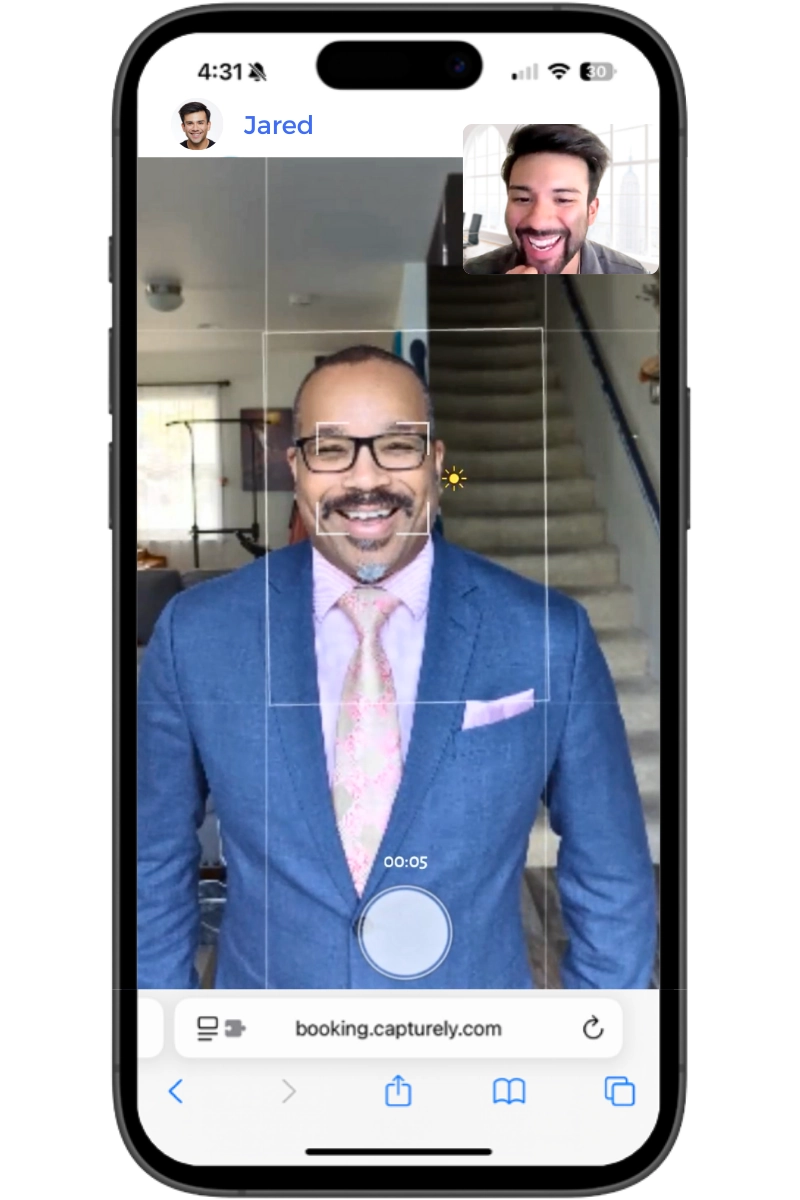
Virtual headshot sessions have quietly become a real option for actors who need to update their look without spending a full day and $500+ at a studio. With Capturely, you open a link on your phone, connect with a live photographer who coaches your expression, posture, and lighting in real time, and receive 3 professionally edited images within 24 hours. No studio appointment. No commute. No app download. The phone’s rear camera captures at 36-48 megapixels — exceeding the resolution requirements for Actors Access, Backstage, and Casting Networks.
For more on how to prepare for your session and nail your poses, check out our guide on the best headshot poses and our professional headshot examples gallery.
Both looks. One session. $79. Skip the $500 studio day. Capturely’s live photographers direct you through commercial and theatrical looks from your phone, with professionally retouched images delivered in 24 hours. Book your session →
Frequently Asked Questions
What is the difference between commercial and theatrical headshots?
Commercial headshots are bright, smile-forward photographs designed to book advertising, hosting, and sitcom roles. Theatrical headshots (also called “legit” headshots) show emotional depth and character complexity for film, TV drama, and stage work. The key differences are expression (warm smile vs. grounded intensity), wardrobe (bright jewel tones vs. earthy muted colors), and lighting (flat and even vs. contoured with shadows).
Should I smile in a theatrical headshot?
Not always, but you don’t need to look angry either. A theatrical headshot benefits from subtlety — a knowing smirk, vulnerability behind the eyes, or quiet confidence. Casting director Thom Hammond says theatrical headshots should be “fundamentally neutral” so casting directors can imagine you in any role (Spotlight, 2024). The forced brooding stare reads as one-dimensional.
Do actors need both commercial and theatrical headshots?
Yes. Most agents and talent managers expect both types in your portfolio. Having only one limits the breakdowns you can submit for. Talent manager Andrea Kelly recommends “specific shots to catch the casting agent’s attention” — which means distinct commercial and theatrical looks, not one generic headshot used for everything. The industry standard is 3-5 headshot looks total.
How much do actor headshots cost?
Actor headshots range from $100 to $925+ depending on the market and photographer. Los Angeles averages $300-$600 per session; New York City runs $423-$925 (HeadshotPro, 2025). The national median is approximately $250 per session. Virtual headshot services like Capturely offer sessions starting at $79 with live photographer direction and 24-hour delivery.
How often should actors update their headshots?
Every 1-2 years for adults, even if your look hasn’t changed noticeably. Update immediately after any significant appearance change — new haircut, hair color, weight shift of 15+ pounds, or facial hair changes. Children and teens should update every 6 months (Marc Cartwright, Backstage, 2022). Casting director Emma Ashton says plainly: “Actors have got to keep updating their images” (Spotlight, 2024).
What is a legit headshot?
“Legit” is industry shorthand for “legitimate theater” and, by extension, film and television drama. A legit headshot is the same as a theatrical headshot — grounded expression, earthy wardrobe, neutral background — designed for dramatic roles. The term distinguishes this work from commercial (advertising) and variety (hosting, game shows) categories used by agents and casting platforms.
Can I get virtual headshots for acting?
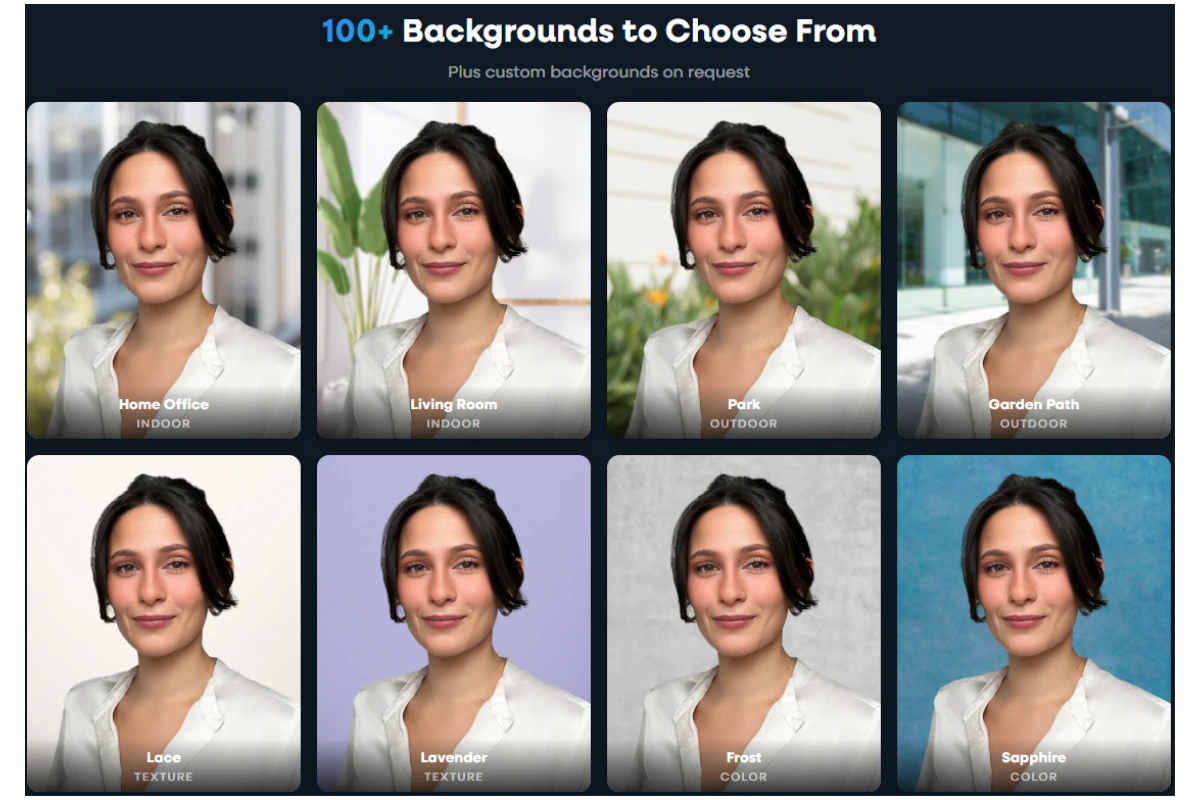
Yes. Virtual headshot sessions connect you with a live, professional photographer via your phone’s camera — no studio visit required. The photographer directs your posing, expression, and lighting in real time. Capturely delivers 3 edited images in 24 hours at $79 per session, with 98+ background options and professional retouching included. The rear camera resolution (36-48 megapixels) exceeds the requirements of Actors Access, Backstage, and Casting Networks.
What size should an acting headshot be?
The standard aspect ratio is 4:5 vertical (the digital equivalent of the traditional 8×10 print). Actors Access accepts up to 3000×3000 pixels, Backstage recommends 2400×3000 pixels, and Casting Networks requires a minimum of 1600×1200 pixels. Save your master file at 300 DPI in sRGB color space, then export platform-specific sizes. Never upscale a low-resolution image.