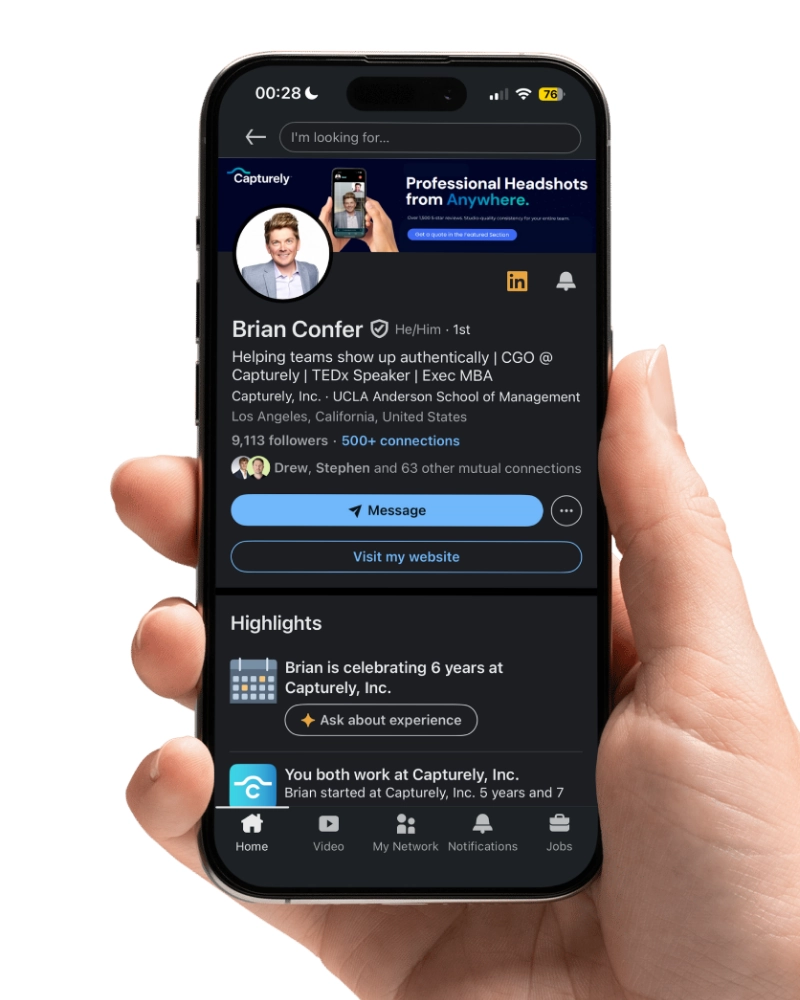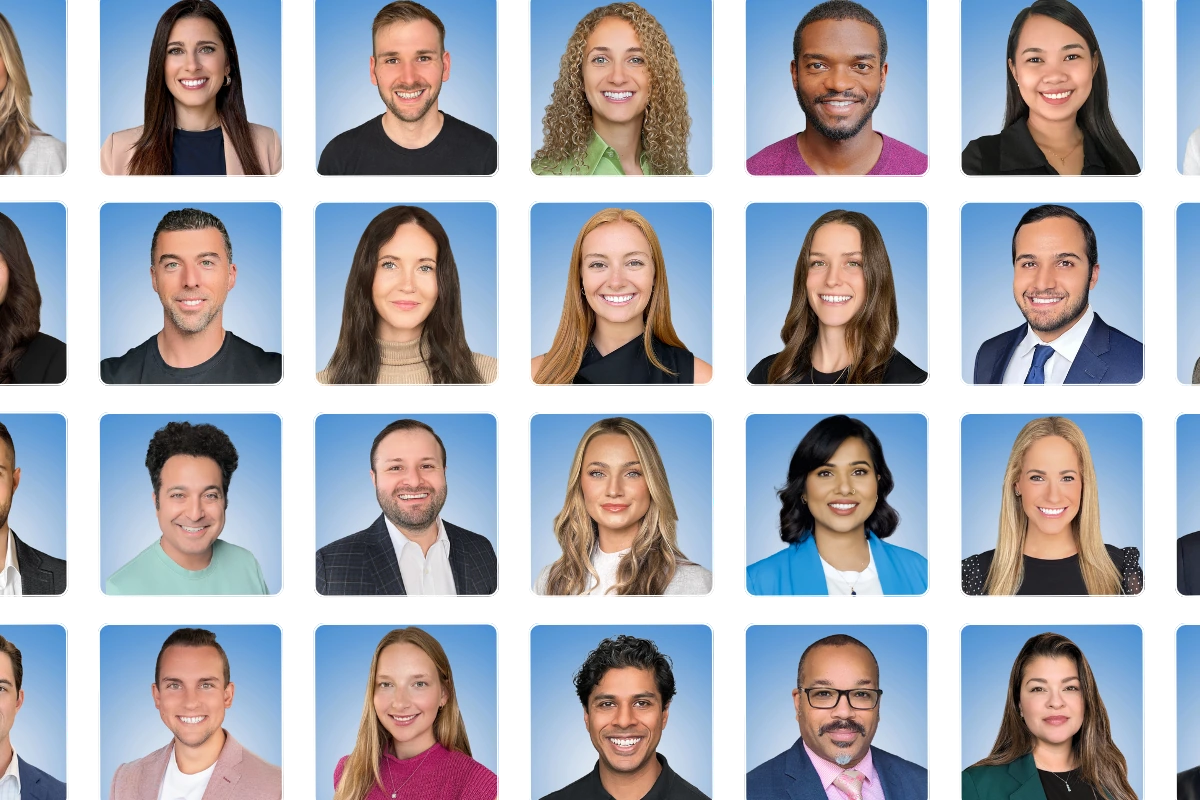
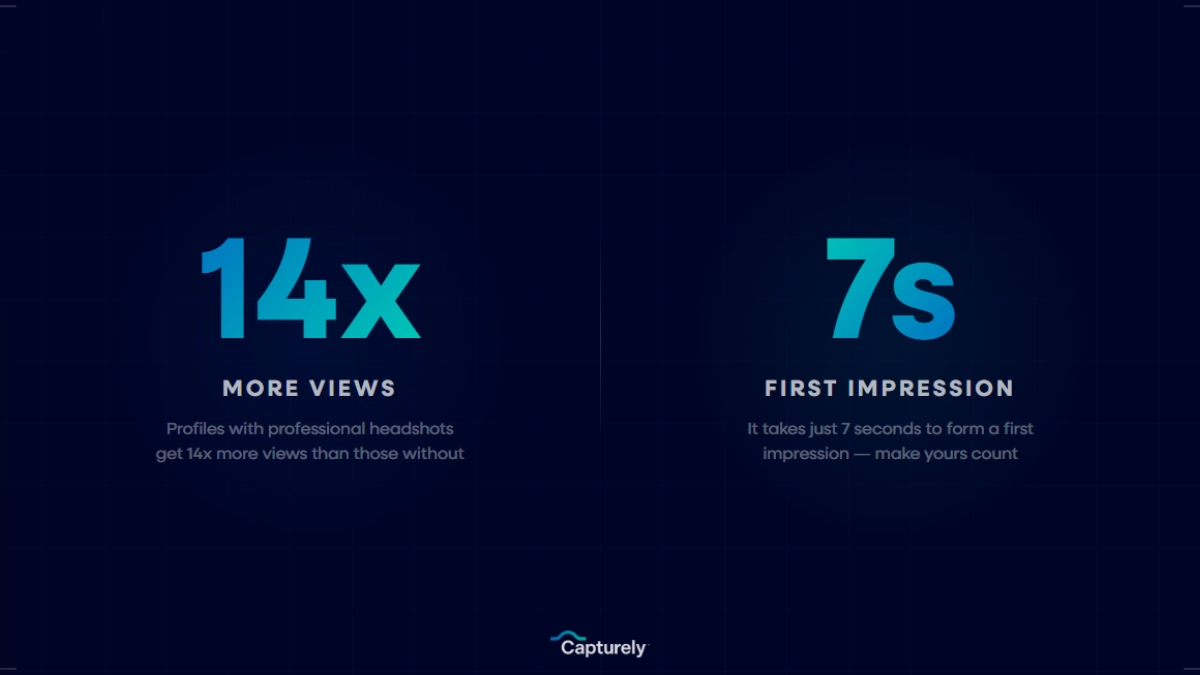
The ROI of professional team headshots is measurable across three dimensions: individual employee visibility (14x more LinkedIn profile views), brand perception (up to 33% revenue increase from consistent visual identity), and cost avoidance (eliminating $150–$450 per person traditional studio fees plus 10–20 hours of admin coordination time). When a Marketing Coordinator or HR Manager needs to justify headshot spending to leadership, these are the numbers that get budget approved.
Last updated: March 2026

This post is a champion’s toolkit. If you’re the person tasked with getting headshots done at your company — and you need to convince a CFO, VP, or executive team that professional photography is worth the investment — bookmark this page. Everything here is sourced, cited, and structured so you can copy the numbers straight into your budget proposal. At Capturely, we’ve helped 500+ companies build the case for team headshots, and we’ve seen which arguments actually move budgets. These are them.
As Peter Hurley, widely regarded as the world’s top headshot photographer, told the Wall Street Journal: “Your headshot is an investment in your career. It shows that you’re serious, that you understand the importance of professionalism, and that you’ve taken the time to present yourself in the best possible light” (WSJ, 2022). That applies to individuals. For teams, the ROI multiplies with every employee.
What Data Proves About Headshot ROI
Professional headshots aren’t a vanity line item. The research connecting professional imagery to business outcomes is surprisingly specific — and the numbers are large enough to make CFOs pay attention.

LinkedIn and Professional Visibility
LinkedIn profiles with professional headshots get 14x more profile views, 9x more connection requests, and 36x more messages than profiles without professional photos (LinkedIn Talent Solutions). For sales teams, that translates directly to pipeline. For recruiters, it means more candidate responses. For executives, it means more inbound partnership and speaking opportunities.
According to LinkedIn’s own data, profiles with photos are 21x more likely to be viewed and 9x more likely to receive connection requests (LinkedIn Economic Graph, 2017). The quality of that photo matters: a professionally lit, well-composed headshot signals competence before a single word of the bio is read.
First Impressions and Perceived Competence
Princeton researchers Janine Willis and Alexander Todorov found that people form trustworthiness judgments from a face in 100 milliseconds — one-tenth of a second (Willis & Todorov, Psychological Science, 2006). That snap judgment happens before anyone reads your credentials, your company name, or your track record. It’s purely visual.
A study of 243 participants found that swapping a casual photo for a professional headshot produced a 76% increase in perceived competence and a 62% increase in perceived influence (HeadShots Inc, 2023). On the PhotoFeeler platform, professional headshots scored 75.93% higher in perceived competence compared to casual self-taken photos (PhotoFeeler, 2023).
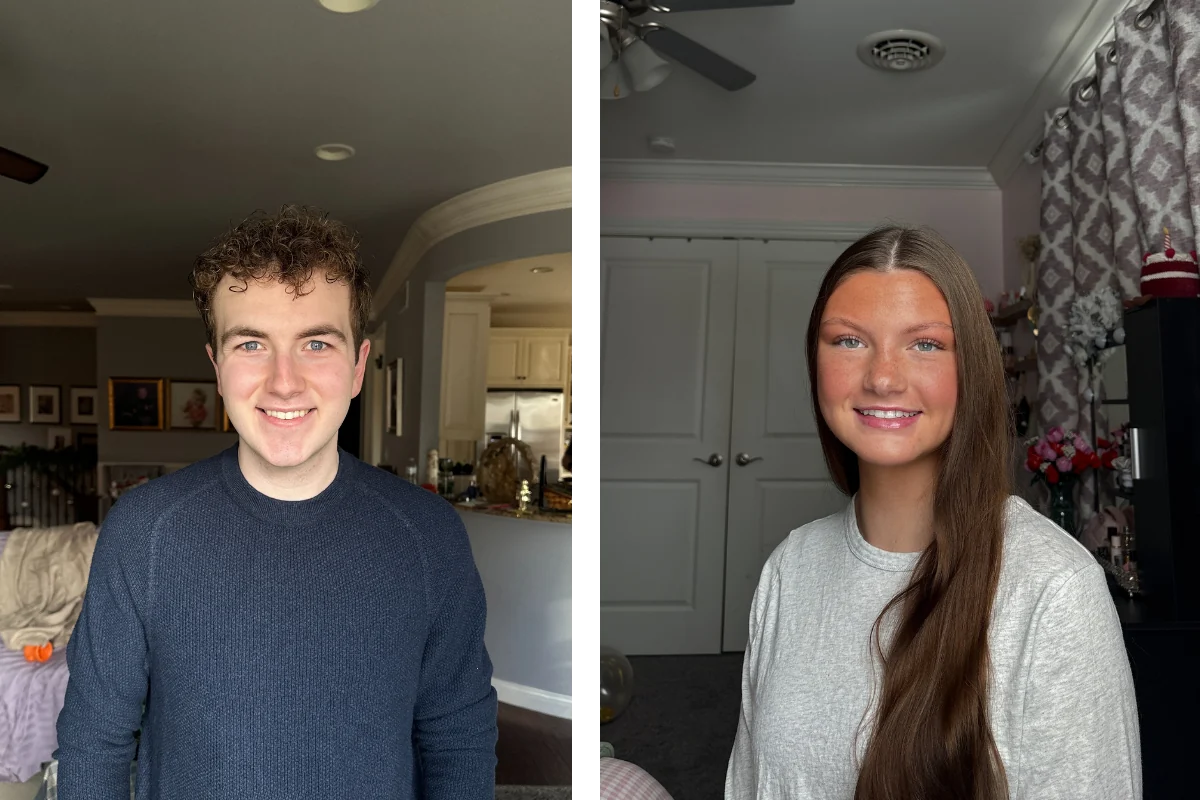
What does that mean in practice? When a prospect is choosing between two consulting firms and visits both team pages, the one with polished, consistent headshots gets the benefit of the doubt. The one with cropped wedding photos and bathroom selfies doesn’t.
Brand Consistency and Revenue
Consistent brand presentation — which includes how your team looks across every touchpoint — increases revenue by up to 33% (Lucidpress/Demand Metric, 2019). Companies with consistent branding are 3.5x more likely to achieve strong brand visibility.
According to Alexander Todorov, Professor of Psychology at Princeton University: “It takes only a fraction of a second for these snap judgments to take shape in the brain, but their influence has a major impact on how we view those around us” (Princeton University, 2017). And the Stanford Web Credibility Research Project found that 75% of people judge a company’s credibility based on website design (Fogg et al., Stanford, 2002). Your team page is a design element. When headshots are mismatched — different backgrounds, different quality levels, different decades — it signals disorganization. When they match, it signals attention to detail. That signal costs you nothing extra once the headshots are done, but the absence of it costs you credibility on every page view.

The Full ROI Data at a Glance
| Metric | Data Point | Source | Business Impact |
|---|---|---|---|
| LinkedIn profile views | 14x increase | LinkedIn Talent Solutions | Sales pipeline, recruiting, executive visibility |
| LinkedIn messages received | 36x increase | LinkedIn Talent Solutions | Inbound leads, partnership opportunities |
| Perceived competence | +76% | HeadShots Inc, 2023 | Trust, close rates, candidate attraction |
| Revenue from brand consistency | Up to +33% | Lucidpress/Demand Metric, 2019 | Top-line revenue growth |
| First impression speed | 100 milliseconds | Willis & Todorov, 2006 | Every digital touchpoint |
| Web credibility — design-driven | 75% | Stanford Web Credibility Project, 2002 | Website conversion and trust |
| Employee-shared content reach | 561% more reach | DSMN8, 2025 | Organic brand amplification |
| Employer brand — cost per hire | 50% reduction | LinkedIn Talent Solutions | Recruiting efficiency |
These aren’t soft metrics. They’re the reason Capturely’s enterprise accounts expand at a 267% Annual Net Revenue Retention rate — companies that start with a pilot don’t stay small because the ROI becomes obvious once headshots are deployed across the organization.
Ready to build your business case? Get an instant quote for your team size in 30 seconds — no sales call required. See exactly what consistent, professional headshots cost for your organization. Get your instant quote →
What “Doing Nothing” Actually Costs Your Company
The biggest competitor to a headshot investment isn’t a cheaper vendor. It’s the status quo. And the status quo has a price tag that nobody tracks.

The Admin Time Black Hole
Someone in your organization — usually a Marketing Coordinator or HR Manager — is spending hours managing a broken headshot process. Chasing employees for photos. Coordinating with local photographers. Following up on reshoots. Updating the website when photos finally trickle in. For a 100-person company using traditional photography, that admin burden runs 10–20 hours per cycle, not counting the 2–3 hours each employee loses to travel, waiting, and the session itself.
At an average marketing coordinator salary of $55,000/year ($26/hour), 15 hours of admin time costs $390. For 100 employees losing 2 hours each at an average salary of $75,000/year ($36/hour), that’s another $7,200 in productivity. The photographer’s invoice is the smallest line item in the real cost.
The Brand Credibility Drain
We hear the same thing on discovery calls, over and over:
- “It’s blurry. It’s like 15 years old and you look kind of scary.”
- “I get a dollar for every wedding photo that was like 15 years old with the wife or the husband cut out.”
- “We don’t have a uniform set of headshots.”
- “The headshots were from the 90s… nobody liked their photos… we spent a tremendous amount of time and money and it was a waste.”
52% of website visitors want to see “About Us” information when they land on a company homepage (KoMarketing). B2B buyers research multiple vendors before purchasing — and 76% say website design is the most important factor. When they land on your team page and see a patchwork of mismatched headshots from different decades, that’s a trust signal. A negative one.
Brands with inconsistent presentation need 1.75x more media spend to achieve the same results. You’re paying more for marketing because your visual identity is fragmented.
The Healthcare Multiplier
In healthcare specifically, 92% of patients research a clinician’s bio and photo before booking (rater8, 2025). Even more striking: 52% of patients choose a doctor with a photo and 4/5 stars over a doctor without a photo and 5/5 stars (Healthgrades) — the photo literally outweighs a perfect rating. An outdated or missing provider headshot doesn’t just look unprofessional — it directly reduces patient bookings. For a health system with 500 providers, even a 2% booking lift from updated directory photos translates to significant revenue.
The Employee Engagement Gap
Professional headshots are an employee engagement signal that’s easy to overlook. When a company invests in making every employee look their best, it communicates “you belong here, you matter, you’re part of this.” The Greater Rochester Chamber of Commerce put it directly: “Investing in employee portraits signals a deeper message: ‘You belong here. You matter. You’re part of the story we’re telling’” (Greater Rochester Chamber, 2025).
Employee-shared content achieves 561% greater reach than the same content shared by brand channels (DSMN8 Employee Advocacy Benchmark Report, 2025). When employees have professional headshots they’re actually proud of, they use them — on LinkedIn, in email signatures, on proposals. That usage amplifies your brand for free.
How to Calculate Your Headshot ROI
Your CFO doesn’t care about headshots. They care about revenue, cost efficiency, and risk reduction. Frame the request around what they already prioritize, not what you wish they’d care about.

Here’s a straightforward ROI framework. Plug in your numbers:
Step 1: Calculate the Direct Investment
| Method | Cost Per Person | 100-Person Team | 250-Person Team | 500-Person Team |
|---|---|---|---|---|
| Traditional studio | $150–$450 | $15,000–$45,000 | $37,500–$112,500 | $75,000–$225,000 |
| Freelance photographer | $100–$425 | $10,000–$42,500 | $25,000–$106,250 | $50,000–$212,500 |
| Self-guided virtual | $25–$60 | $2,500–$6,000 | $6,250–$15,000 | $12,500–$30,000 |
| AI-generated | $20–$75 | $2,000–$7,500 | $5,000–$18,750 | $10,000–$37,500 |
| Live virtual (Capturely) | $45–$79 | $4,500–$7,900 | $11,250–$19,750 | $22,500–$39,500 |
For detailed pricing across every method, see our professional headshot cost guide.
Step 2: Calculate the Hidden Costs You’re Already Paying
- Admin coordination time: Hours spent managing photography logistics × hourly rate. For a 250-person company with traditional photography, estimate 25–40 hours at $26–$50/hour = $650–$2,000.
- Employee productivity loss: Each employee’s travel + wait + session time × hourly rate. Traditional in-person: 2–3 hours per person. Virtual: 10 minutes. For 250 employees at $36/hour, traditional costs $18,000–$27,000 in lost productivity. Virtual costs $1,500.
- Reshoot costs: Self-guided services see 15–25% rejection rates. Each rejection means rescheduling, re-shooting, and re-processing. A live photographer gets it right the first time — Capturely’s reshoot rate is under 2%.
- Ongoing gap costs: With 18% average turnover (CFO.com, 2024), a 250-person company onboards ~45 new hires per year. Without a credits model, each one requires a new vendor engagement.
Step 3: Calculate the Revenue Impact
- LinkedIn visibility lift: If 50 client-facing employees each get 14x more profile views, that’s a measurable increase in inbound interest. Even if only 1% of incremental profile views convert to a conversation, the pipeline impact is real.
- Brand consistency premium: The 33% revenue lift from consistent branding applies to every customer-facing touchpoint. Headshots are one component, but they’re the most visible one on your team page, LinkedIn, email signatures, and directories.
- Employee advocacy multiplier: 561% greater reach when employees share content with professional profile photos means your organic reach compounds with every employee who uses their headshot on LinkedIn.
Step 4: Run the Math
For a 250-person company comparing Capturely ($11,250–$19,750) against traditional photography ($37,500–$112,500 + $18,000–$27,000 in productivity costs):
- Direct savings: $26,250–$92,750 in photography costs
- Productivity savings: $16,500–$25,500 in employee time
- Total savings: $42,750–$118,250 compared to traditional
- Plus: 24-hour delivery (vs. 1–3 weeks), ongoing new hire coverage through credits, and admin dashboard for zero-overhead management
Aaron Steinfeld at JS Held summed it up: “What you guys charge versus having an actual photographer, go to a JCPenney and have a photographer take care of it — you guys still come in cheaper. So I just feel like it’s worth it.”

See your team’s pricing in 30 seconds. Capturely’s instant quote engine shows volume pricing for your exact team size — no sales call, no guessing. Teams save up to 45%. Get your instant quote →
How to Pitch Headshots to Your CFO (The Champion’s Playbook)
You’re sold. Your boss might be sold. But the person holding the budget isn’t. Here’s how to structure the conversation based on who you’re pitching.

Pitching the CFO: Lead With Cost Avoidance
CFOs respond to three things: reducing costs, avoiding risk, and vendor consolidation. Your pitch:
- “We’re spending more than you think on the current approach.” Quantify the admin hours, employee productivity loss, and photographer fees from the last cycle. If you’ve never done formal headshots, quantify the cost of inconsistency: 1.75x more media spend to overcome brand fragmentation.
- “Virtual headshots cost 50–80% less than in-person.” Show the comparison table. $45–$79/person vs. $150–$450. For a 250-person team, that’s $26K–$93K in direct savings.
- “One vendor, one contract, ongoing coverage.” Credits model means no repeat procurement cycles. One purchase covers new hires for 12 months. That’s a consolidation play CFOs love.
Pitching the CMO: Lead With Brand Impact
CMOs care about brand perception, customer trust, and competitive differentiation:
- “Our team page is a brand liability.” Pull up the current team page. Show the inconsistency. Reference the 33% revenue lift from consistent branding. Ask: “Would you accept this level of inconsistency in our logo, our website colors, or our ad creative?”
- “Every employee is a brand ambassador on LinkedIn.” 14x more views. 36x more messages. 561% more reach when employees share content. Professional headshots activate your team as a marketing channel — for free.
- “Headshots appear in 7+ places.” Website, LinkedIn, email signatures, Slack, Teams, directories, proposals. Each one is a brand touchpoint. Inconsistency compounds across all of them. (Full breakdown: 7 places your team should use professional headshots.)
Pitching the CHRO: Lead With Employee Experience
HR leaders care about engagement, inclusion, and retention:
- “This is an employee benefit, not a marketing expense.” Employees keep their photos for personal use — LinkedIn, personal branding, freelance profiles. It’s a tangible perk that costs the company less than a single lunch-and-learn.
- “It signals belonging.” Investing in every employee’s professional image sends the message that everyone matters. Companies with strong employer brands see a 50% decrease in cost per hire (LinkedIn Talent Solutions).
- “It integrates into onboarding.” New hires get a professional headshot in Week 1. It’s a first-day signal that this company invests in its people. Organizations with strong onboarding improve retention by 82% (Brandon Hall Group).
The Budget Request Email (Template)
Copy this, customize it, send it:
Subject: Budget request: Team headshot program — $[X] for [team size] people
Hi [Name],
I’d like to propose a professional headshot program for [team/department/org]. Here’s the quick version:
The problem: Our team page has [X] outdated or missing headshots. [X]% of employees have photos more than 3 years old. [Brief specific example of inconsistency — e.g., “at least four people have cropped wedding photos”].
Why it matters: 52% of website visitors check the team page before engaging with a company. Consistent branding drives up to 33% more revenue (Lucidpress/Demand Metric, 2019). Professional LinkedIn headshots generate 14x more profile views. Our current team page undermines the brand standards we enforce everywhere else.
The proposal: [Vendor name] provides virtual headshot sessions with a live photographer at $[X]/person for our team of [N]. Total investment: $[X]. Includes: 10-minute sessions, professional retouching, 24-hour delivery, admin dashboard, [12-month credits for new hires].
Compared to: In-person studios would cost $[X]–$[X] for the same team, plus $[X] in employee productivity loss. This represents a [X]% savings.
Suggested approach: Start with a [15-25 person] pilot. Evaluate quality and participation. Then roll out company-wide.
I can share sample photos from a free demo session if that would help. Happy to walk through the numbers.
[Your name]
From Pilot to Enterprise: How Real Companies Scale
The pilot-to-expansion pattern is the most common path we see. A champion inside the company starts small — 10 to 25 people — to prove the quality and experience. Then leadership sees the results and the budget opens up.

One client described the pattern exactly: “It’s been great. So great that we’re like, okay, let’s extend to more people. We did a small group at first and we’re like, okay, leadership has done it, now we’re extending it to a larger crowd.”
This is why Capturely’s Enterprise Annual NRR sits at 267%. Companies that pilot don’t just renew — they nearly triple their spend within a year. The product proves itself, and the internal champion who took the risk becomes the person who solved a problem nobody else could.
Jeff Maldonado at AmeriLife described the end state: “We had no mechanism to ensure their headshots met our brand standards. Capturely solves that. We now have standards of formatting, consistent delivery, and everyone’s been on the nose of where we needed to be.”
Lisa Cavallaro at WellSpan Health went further: “Our onboarding team is going to start a full launch implementation within the next two weeks. Even ahead of our landing page, they’re going to begin using Capturely ahead of full-time employment.” That’s the inflection point — when headshots move from a one-time project to a permanent onboarding step.
The companies that get the most ROI from headshot programs share three characteristics:
- They build headshots into onboarding. New hires get photographed in Week 1. No gaps. No patchwork. Every employee matches from day one.
- They use credits for ongoing coverage. A 12-month credits model means the 18% annual turnover is handled automatically — no new purchase orders, no vendor re-engagement.
- They deploy headshots across all 7 touchpoints. Not just the team page. LinkedIn, email signatures, Slack, Teams, directories, proposals, and conference materials. Each deployment multiplies the return on the original investment. (See our full guide: 7 places to use professional headshots.)
For the complete playbook on building and managing a headshot program — from budget approval through rollout communication and success measurement — see the HR Manager’s Guide to Team Headshot Programs.
Why “Just Use AI” Isn’t the Answer for ROI-Focused Teams
AI headshot generators look like the obvious cost play. $29–$59/person. Fast. Easy to scale.
But AI headshots are fabricated images, not photographs. And that fabrication creates ROI-negative outcomes that the initial cost savings don’t cover:

- Trust erosion: 38% of people describe AI-generated headshots as “soulless.” When a prospect sees an AI headshot on LinkedIn and then meets a different-looking person on a video call, that trust gap undermines the relationship before the first real conversation.
- Enterprise compliance risk: Many organizations now prohibit AI-generated imagery for employee representation. “Our company does not allow us to use AI anyway” is something we hear regularly from enterprise prospects.
- Representation issues: AI generators have documented problems with skin tone accuracy, hair texture rendering, and age representation. For organizations that care about diversity, equity, and inclusion — which is most of them — this isn’t a technical footnote. It’s a liability.
- No reuse value: AI headshots can’t be used for ID badges, provider directories, or any context where photo accuracy matters. Real photographs work everywhere.
The full breakdown is in our AI headshots vs. real headshots comparison. The short version: if your goal is maximum ROI over 12 months (not just minimum invoice this quarter), real photography with live direction wins.
What Strong Headshot ROI Actually Looks Like
Track these metrics to prove return on your headshot investment to leadership:

| KPI | What to Measure | Strong Benchmark | Why It Matters for ROI |
|---|---|---|---|
| Participation rate | % of team who completed sessions | 85%+ within 4 weeks | Higher adoption = more brand touchpoints covered |
| LinkedIn adoption | % using new headshot on LinkedIn | 70%+ | Each adoption point multiplies visibility |
| Team page completeness | % with current, matching photos | 95%+ | Directly impacts prospect trust |
| Time-to-headshot (new hires) | Days from start date to delivered photo | Under 14 days | Onboarding integration signals investment |
| Employee satisfaction | Post-session survey score | 4.5/5 or higher | Drives repeat participation and referrals |
| Cost per headshot | Total program cost ÷ headshots delivered | Under $80 with live direction | Budget justification for renewal |
Track these quarterly. Report to leadership annually. The first report writes the business case for Year 2.
Marcia Cuenca at Virginia Garcia Memorial Health Center captured the expansion dynamic: “I have their support. I’m going to pitch this today to get more — try to get staff — but I do want to renew it.” That’s what ROI looks like in practice: the champion who proved value now has the organizational trust to expand.
Start your pilot today. Capturely offers free demo sessions so you can see the quality before committing. 10-minute sessions, 24-hour delivery, 765+ reviews at 4.9 stars. Used by Google, Amazon, McKinsey, and 500+ other companies. Book a free demo →
Frequently Asked Questions
Are professional headshots worth the investment?
Yes. Professional headshots deliver measurable returns: 14x more LinkedIn profile views (LinkedIn Talent Solutions), 76% higher perceived competence (HeadShots Inc, 2023), and up to 33% more revenue from consistent brand presentation (Lucidpress/Demand Metric, 2019). For a 100-person team using live virtual photography, the investment ranges from $4,500 to $7,900 — less than most companies spend on a single trade show booth.
How do I justify headshot costs to leadership?
Frame headshots as a cost-reduction initiative, not a vanity project. Compare the virtual headshot cost ($45–$79/person) against the full cost of traditional photography ($150–$450/person plus 2–3 hours of employee productivity per session). Include brand consistency data (33% revenue lift) and LinkedIn visibility data (14x more views). Propose a pilot of 15–25 people to prove value before a full rollout.
What is the ROI of employee headshots for a sales team?
Sales teams see the most direct headshot ROI. LinkedIn profiles with professional photos receive 36x more messages and 14x more profile views. Sales reps with professional headshots also score 76% higher on perceived competence. For a 20-person sales team at $45–$79/person ($900–$1,580 total), a single additional closed deal from improved LinkedIn visibility covers the entire investment multiple times over.
How much do professional headshots cost per person?
Costs vary by method: traditional in-person studios charge $150–$450 per person, freelance photographers $100–$425, self-guided virtual services $25–$60, AI generators $20–$75, and live virtual with a photographer (like Capturely) $45–$79 per person with up to 45% savings for larger teams. Virtual options with live direction offer the best quality-to-cost ratio for distributed teams. Full breakdown: professional headshot cost guide.
What’s better for ROI — AI headshots or real headshots?
Real headshots deliver stronger long-term ROI. AI headshots cost less upfront ($20–$75/person) but create trust problems when the AI-generated image doesn’t match the real person on video calls. Research shows 38% of people call AI photos “soulless,” and many enterprise organizations prohibit them. Real photographs with live photographer direction ($45–$79/person) work across all use cases — LinkedIn, team pages, directories, ID badges, and client-facing materials — without compliance risk.
How do companies measure headshot program success?
Track five metrics: participation rate (target 85%+ within 4 weeks), LinkedIn adoption (70%+ of employees using their new headshot), team page completeness (95%+ with current photos), time-to-headshot for new hires (under 14 days), and employee satisfaction score (4.5/5+). Report quarterly to leadership and use Year 1 results to build the business case for Year 2 renewal and expansion.
Should we start with a headshot pilot or full rollout?
Start with a pilot. The most successful headshot programs begin with 15–25 employees — ideally a mix of willing participants and a few skeptics. Share results internally (with permission) to build social proof. Once leadership sees the quality and employee reactions, the budget conversation for a full rollout becomes significantly easier. Capturely offers free demo sessions specifically for this proof-of-concept stage.
How long do professional headshot results last?
Professional headshots remain effective for two to three years before they start looking dated. Client-facing roles and executives may want annual updates. The bigger ROI factor is ongoing coverage: with 18% average employee turnover (CFO.com, 2024), a 250-person company needs ~45 new headshots per year. A credits model that covers ongoing onboarding eliminates the cost and hassle of repeat procurement cycles.