
Law firm headshots are professional photographs of attorneys, partners, and staff used on firm websites, legal directories, pitchbooks, and conference materials. They’re the single most viewed element on any attorney bio page — and with 92.4% of legal consumers researching attorneys online before making contact (Martindale-Avvo, 2024), your headshot is often doing the selling before you ever pick up the phone.

Last updated: March 2026
For law firms with partners and associates spread across multiple offices — or for a sole practitioner running a fully virtual practice — the headshot problem has always been the same: how do you get everyone looking professional, consistent, and current without burning billable hours on logistics? This guide covers what makes law firm headshots different from standard corporate photography, what they cost, and how firms from 6-person shops to AmLaw 200 practices handle them, drawn from patterns across 100,000+ headshots delivered at Capturely for organizations including McKinsey, KPMG, EY, and Deloitte.
Why Potential Clients Judge Attorneys by Their Headshot Before Anything Else
Here’s the uncomfortable truth about legal marketing: your credentials, case results, and Chambers ranking all matter less than your photo in those first moments.
People form trustworthiness judgments in roughly 100 milliseconds — before they can read a single word on your bio page (Willis and Todorov, Princeton University, 2006). And attorney bio pages aren’t some backwater section of your website. They attract up to 80% of total law firm web traffic, often outperforming the homepage (Inherent, 2026).

The numbers make this concrete. A professional headshot is rated roughly 50% more competent than a casual photo of the same person, based on analysis of 60,000+ ratings (Photofeeler, 2023). Profiles with professional photos receive 14x more views (LinkedIn, 2023). And 93.3% of consumers who find an attorney through search say they want to do further research before hiring — which means they’re visiting your bio page, looking at your photo, and making a gut decision about whether you seem like someone they’d trust with their case (iLawyerMarketing, 2024).
According to Gina Rubel, CEO of Furia Rubel Communications and a Lawdragon Global 100 Leading Consultant to the legal profession: “The human brain processes visual information 60,000 times faster than it processes text” — making attorney portraits critical because “your portrait sets the tone for prospective clients, even before they read a word.”
Amanda Gray, who manages marketing for a law firm, saw this play out directly after testing Capturely: “I had my digital marketing person do one so he could help attorneys. He was very pleased. And then we had another attorney who’s really pleased with the photo.”
The shift to AI-powered legal research is amplifying this effect. 28.1% of people now use ChatGPT as part of their attorney research process — up sharply from prior years (iLawyerMarketing, 2025). As AI tools start pulling attorney profiles into search results, having a consistent, professional headshot across every platform becomes the visual credibility signal that AI can reference and surface.
Need attorney headshots for your firm? Get an instant quote — configure backgrounds, see volume pricing, done in 30 seconds. Get your instant quote →
What Makes Law Firm Headshots Different from Other Corporate Photography?
Law firm headshots carry weight that standard corporate headshots don’t. In most industries, a headshot lives on your LinkedIn and maybe a team page. For attorneys, headshots appear in at least eight distinct contexts — each with different audiences, expectations, and stakes.
Partner and attorney bio pages. This is the primary use case, and it’s the one clients see most. Your bio page is your closing page. A prospective client has already found you through a referral, search, or directory listing. Now they’re deciding whether to call. A polished, current headshot signals competence. A grainy photo from 2014 signals… something else.
Legal directories. Chambers and Partners, Best Lawyers, Super Lawyers, Martindale-Hubbell, Avvo, FindLaw, Justia — each one displays your photo alongside your rankings and reviews. A missing or low-quality photo on Chambers undermines the prestige of the ranking itself. These directories are where sophisticated clients and GCs do their vetting.

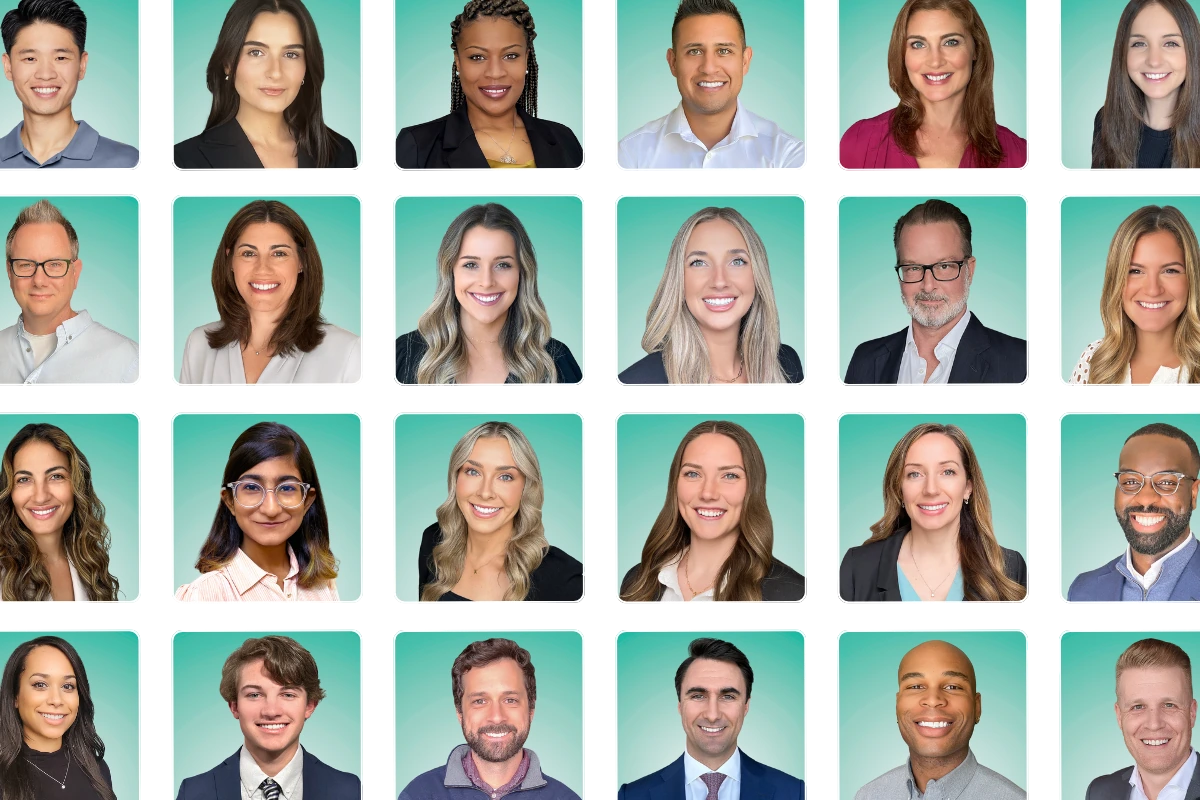
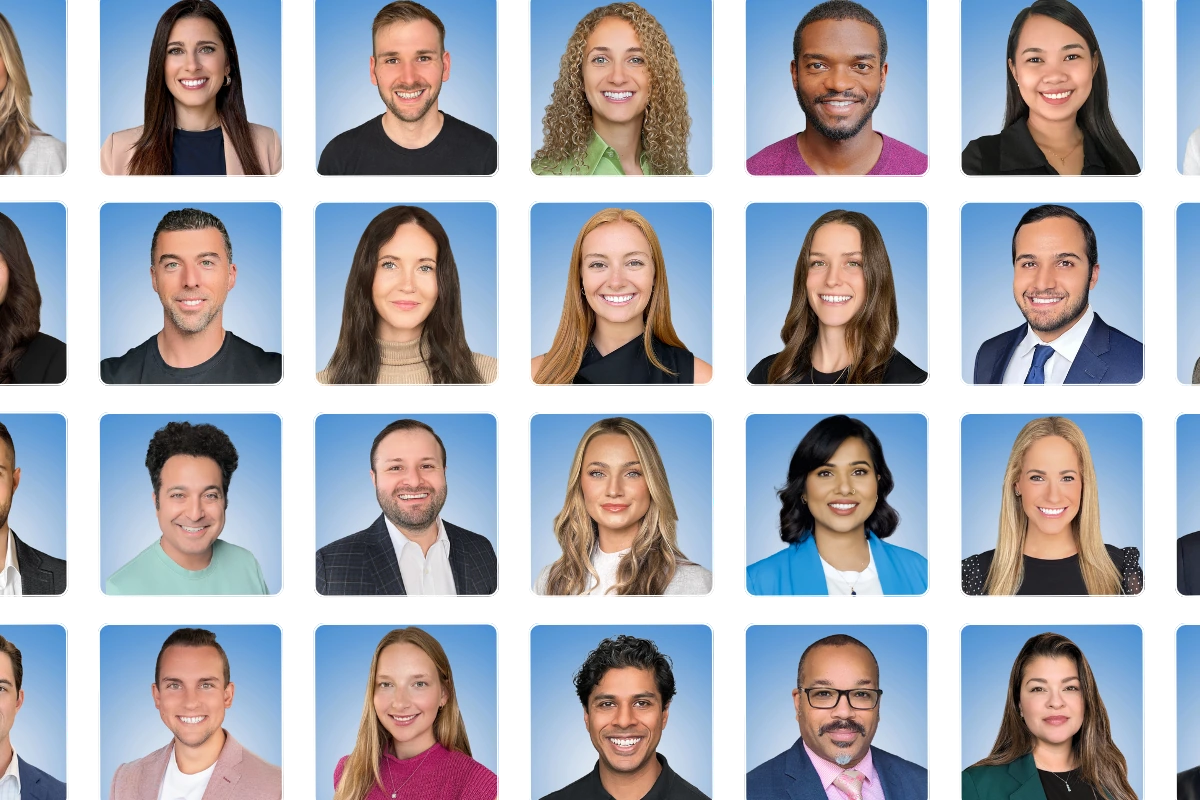
Pitchbooks and RFP responses. When your firm responds to an RFP for a $50 million transaction or a major litigation matter, the proposed team section includes headshots. Corporate counsel reviewing five pitchbooks in a day absolutely notices when one firm’s photos look professional and consistent and another’s look like they were pulled from five different decades. For a gallery of what strong attorney headshots look like in practice, see our professional headshot examples.
Conference materials and speaking engagements. CLE presentations, bar association events, industry panels — your headshot is in the program, on the website, projected on screen. It represents both you and your firm.
Media and press. When a partner gets quoted in the Wall Street Journal or appears on a legal podcast, the publication pulls whatever headshot is available. If the best they can find is a low-resolution photo from your firm’s outdated website, that’s what runs.
LinkedIn and professional profiles. Attorneys are increasingly expected to maintain active LinkedIn presence for business development. A professional headshot gets 14x more profile views and 36x more messages (LinkedIn, 2023) — and for rainmakers, that directly translates to referrals and client relationships.
Email signatures and internal systems. Every email an attorney sends is a micro-touchpoint. A headshot in the signature reinforces professionalism and recognition across hundreds of daily communications.
The Law Firm Consistency Problem: Multiple Offices, One Brand
This is where law firm photography gets genuinely hard. A regional firm with 3 offices has a manageable problem. An AmLaw 100 firm — with 123,953 total attorneys across the top 100 alone, and 70 new offices opened in just 18 months (Infinite Global, 2024) — that’s a different animal entirely.
The typical approach: each office hires a local photographer. Maybe the managing partner’s assistant coordinates it. Maybe someone in marketing sends a style guide that half the offices ignore. The result is a website where the New York office looks like one firm, the Chicago office looks like another, and the London office looks like a third.

That visual inconsistency isn’t just an aesthetic problem. It signals organizational disunity to the exact audience — corporate general counsel, sophisticated private clients, institutional investors — who notice these things. When your firm positions itself as a precision-driven institution that sweats the details on a $200 million deal, your team page should reflect that same attention to detail.
Three triggers make this problem acute:
Mergers. Law firm mergers hit 59 completed deals in 2025, an 18% increase over 2024, with cross-border mergers jumping from 3 to 10 year-over-year (Fairfax Associates, 2025). When two firms combine, you inherit two completely different sets of headshot styles, backgrounds, and quality levels. Integrating the visual identity is rarely the top priority during a merger — but it’s one of the first things clients and recruits see.
Lateral hires. BigLaw firms now budget more than $4 million on average to secure top lateral partner talent (Above the Law, 2025). When a lateral partner joins, their headshot from the old firm — different background, different style, different lighting — sits on your website until someone remembers to get a new one. That could be weeks. Or months. Or, honestly, sometimes never.
Time. Partners age. Associates become partners. People gain or lose weight, grow beards, change hairstyles, get new glasses. A headshot that was accurate five years ago may not resemble the person who walks into the conference room today. In a profession built on trust and accuracy, that disconnect matters.
Verónica Curátola at JS Held, a global consulting firm with offices across the Americas, Europe, and Asia-Pacific, described the coordination challenge: “I really want to centralize everything in Capturely. Don’t want to look for a vendor in Europe because that’d be silly to have two accounts and me trying to gather all the pictures from everywhere.”

How Much Do Attorney Headshots Cost?
Attorney headshot pricing varies widely depending on the approach. Here’s what firms actually pay in 2026, across every realistic option.
| Approach | Cost per Attorney | Live Photographer | Works for Multi-Office Firms | Consistent Results | Turnaround |
|---|---|---|---|---|---|
| Traditional Studio | $200–$500+ | Yes | No (varies by city) | Varies by photographer | 1–3 weeks |
| On-Demand Marketplace (Snappr) | $89–$200+ | Yes (in-person) | Limited (major metros) | Varies | 3–7 days |
| Self-Guided Virtual (Headshots.com) | $25–$60 | No | Yes | Low | 3 days |
| AI Headshot Generators | $29–$59 | No | Yes | Medium | Minutes |
| Live Virtual (Capturely) | $45–$79 | Yes | Yes | High | 24 hours |
The geography factor matters more for law firms than most industries. Traditional studio headshots average $924 per session in New York City but only $176 in Indianapolis (HeadshotPro, 2025). For a firm with offices in both cities, that price disparity creates an awkward budgeting conversation — and it’s exactly the kind of inconsistency that virtual headshot services eliminate.
Aaron Steinfeld at JS Held, a global professional services firm, compared Capturely’s pricing to traditional options: “What you guys charge versus having like an actual photographer, go to like a JCPenney and have like a photographer take care of it, but like you guys still come in cheaper. So I just feel like it’s worth it.”
The AI generator option deserves specific attention for law firms. These tools produce digitally fabricated images — not actual photographs. For a profession built on professional conduct obligations around truthfulness and where credibility is foundational, showing up to a client meeting looking nothing like your website photo isn’t just awkward. It’s a trust violation that cuts to the core of what lawyers sell. Most AmLaw firms prohibit AI-generated headshots for this reason. For a detailed comparison, see our professional headshot cost guide.
See what your firm would pay. Get a custom quote in 30 seconds — volume pricing for firms of every size. Get your quote →
How Law Firms Get Consistent Headshots Across Every Office
The approach that’s replacing the local-photographer patchwork for multi-office firms: virtual headshots with a live photographer directing each session in real time.
Here’s the actual process:
- Firm admin configures the program. Choose backgrounds (98+ options, or a custom branded background matching your firm’s visual identity for a $200 one-time fee), set retouching preferences, and define the deliverable specs your web team and directories need.
- Attorneys receive a secure link. No app download. No scheduling a studio visit. No coordinating with a local photographer. The attorney opens the link on their phone from their office, their home, or a conference hotel room between sessions.
- A live photographer directs the session. A professional photographer appears on screen. The attorney switches to the rear camera (36–48 megapixels — not the selfie camera). The photographer handles everything: “Shift slightly toward the window for better light. Drop your left shoulder. Perfect — hold that.”
- Real-time direction catches what self-guided can’t. Crooked tie? Caught. Harsh overhead fluorescents? The photographer repositions them. Tense expression from a litigation partner who’d rather be reviewing a brief? The photographer talks them through it. This is why reshoot rates stay under 2%.
- Three edited headshots delivered within 24 hours. Left angle, right angle, straight-on. Professional retouching — not filters, not AI manipulation. The admin sees them in the dashboard immediately.

The entire session takes about 10 minutes. For a billing attorney whose time is worth $500 to $1,500 per hour, that’s a fraction of what a traditional studio visit costs in lost productivity — no travel, no waiting, no multi-hour disruption to the day.
Scott, who runs a virtual law firm with six or seven people, described his reaction: “This is my first time doing this. I run a virtual law firm and we’re about six or seven people. I just get the feeling that headshots can be done virtually now. And I think you or your team, whoever does it, could probably edit and make it look pretty darn good.”
The consistency advantage is the part that multi-office firms care about most. When the same backgrounds, lighting direction, retouching standards, and quality controls are applied to every session — whether the attorney is in Manhattan, Miami, or Munich — the result is a team page where every headshot looks like it belongs together. One brand. One look. One vendor. For more on the virtual vs. in-person trade-offs, see our corporate headshots near me vs. virtual comparison.

What Should Attorneys Wear for Professional Headshots?
The wardrobe question for law firm headshots is more nuanced than “wear a suit.” Different roles, practice areas, and firm cultures call for different approaches.
Partners and senior attorneys: Dark suit (navy, charcoal, or black) with a well-fitted dress shirt or blouse. Ties are optional but common at traditional firms. For litigation partners and transactional attorneys at AmLaw firms, the expectation leans formal. A blazer-only look (no tie) works for firms positioning themselves as modern or entrepreneurial.
Associates: Match the firm’s culture. If partners wear ties, associates should too. If the firm culture is business casual, a structured blazer over a solid-colored top photographs well. The key is that associates should look polished but not overdressed relative to the partners.

Practice area considerations: A corporate M&A partner at a white-shoe firm and a criminal defense attorney at a boutique litigation shop are selling different things. The M&A partner needs to project institutional credibility. The defense attorney might benefit from appearing more approachable and relatable. Both need professional headshots — but the wardrobe and expression should reflect what clients in their practice area expect to see.
Professional services context: Law firms increasingly compete for the same clients as consulting firms and accounting firms. When your headshot page sits alongside McKinsey, KPMG, or Deloitte in a client’s browser tabs, matching their visual professionalism isn’t optional. For detailed guidance, see our corporate headshots guide.
Universal tips for attorneys:
- Solid colors photograph better than patterns — pinstripes are fine, but avoid bold checks or busy prints
- Avoid all-white shirts on light backgrounds (you’ll wash out)
- Glasses are fine — your photographer will angle you to minimize glare
- Keep jewelry minimal and avoid anything that catches light
- Groom as you would for a client meeting, not a casual Friday
Carole Lucido at the Contra Costa County Bar Association noted the retouching factor: “The thing about your service is the Photoshop part that comes in too, you know? So even if you’re not happy with what you really look like, you know, it’s enhanced, it’s better.”
When Should a Law Firm Update Attorney Headshots?
The short answer: more often than most firms do.
The industry standard recommendation is every 1–2 years for current headshots. But law firms have a set of triggers that go beyond simple aging:
Lateral hires. Every lateral partner or associate joins with a headshot from their previous firm — different style, different background, different quality. Getting them re-photographed in your firm’s style should be part of onboarding, right alongside setting up their email and ordering business cards.
Promotions. An associate making partner is a milestone worth a new headshot. The firm is investing in this person’s brand. A fresh, polished photo signals the promotion internally and externally.
Mergers and acquisitions. When firms combine, re-photographing the entire combined team in a unified style is one of the most visible integration steps you can take. It signals “one firm” to clients, recruits, and the market.
Rebrands or website redesigns. If you’re spending six figures on a new website, populating it with headshots from three different eras defeats the purpose.
Significant appearance changes. New glasses, major weight change, dramatically different hairstyle. If a client won’t recognize you from your headshot when they walk into the conference room, it’s time.
How to make updates painless: A credits model — where you purchase session credits and use them throughout the year as needed — eliminates the “big batch photo day” problem entirely. New lateral hires get photographed during their first week. Promoted associates get updated immediately. The marketing team doesn’t need a new purchase order every time someone needs a headshot. As Jody Iorns at the Contra Costa County Bar Association put it: “I do love the concierge concept. If we didn’t have a policy, I’d be like, yeah, go for it. Because, you know, the less work we have to do, the better.”

Where Attorney Headshots Need to Appear
A single attorney headshot needs to work across more platforms and materials than most professionals realize. Here’s the complete list:
- Firm website bio page — the most-visited page after the homepage, and where 80% of client research happens
- Legal directories — Chambers and Partners, Best Lawyers, Super Lawyers, Martindale-Hubbell (~25M monthly visitors), Avvo, FindLaw (216x216px minimum), Justia (640x640px recommended), Law.com
- Pitchbooks and RFP responses — the proposed team page in every pitch
- Conference and CLE materials — speaker bios, event programs, sponsor pages
- LinkedIn — where 14x more profile views go to professionals with headshots
- Email signatures — hundreds of micro-impressions daily
- Internal systems — firm directory, Slack/Teams, HRIS profiles
- Media and press — publications pull the best available photo when quoting an attorney
- Google Business Profile — local search results for the firm

The consistency principle applies across all of them. When you photograph once at high enough quality, with the right deliverable specifications, that single session feeds every channel. When you cobble together different photos from different sources, your visual identity fragments across every place potential clients research you.
For a deeper look at all the places headshots should appear, see our post on professional headshot examples across industries.
Frequently Asked Questions
How much do law firm headshots cost?
Attorney headshot costs range from $29 for AI generators (not real photos) to $500+ for traditional studio sessions in major legal markets like New York City. Self-guided virtual services run $25–$60, while live virtual headshots with a professional photographer cost $45–$79 per attorney depending on firm size. For multi-office firms, virtual headshot services typically cost 50–70% less than coordinating studio photographers in each city. Full breakdown: professional headshot cost guide.
Should law firms use AI-generated headshots?
For most law firms, AI-generated headshots create more problems than they solve. These tools produce digitally fabricated images — not actual photographs of the attorney. When a client meets you in person or on video and you look different from your headshot, it undermines the trust your photo was supposed to build. Most AmLaw firms prohibit AI-generated imagery for professional profiles. If your attorneys meet clients face-to-face, invest in real photography.
How often should attorneys update their headshots?
Every 1–2 years, or when triggered by specific events: lateral hires, partner promotions, firm mergers, website redesigns, or significant appearance changes. A credits-based model lets firms photograph new attorneys during onboarding and update existing headshots throughout the year without batch scheduling. The goal is keeping every bio page current — a headshot that doesn’t match reality damages credibility.
Can a phone camera produce quality attorney headshots?
Yes. Modern smartphone rear cameras capture at 36–48 megapixels, which exceeds what most websites and directories require. The quality difference between phone-based and studio headshots comes down to direction, not hardware. A live virtual session — where a professional photographer coaches posture, lighting, and expression in real time through the phone — produces results that firms like JS Held and Contra Costa County Bar Association have used across their attorney directories.
What should attorneys wear for professional headshots?
Dark suits in navy, charcoal, or black with a well-fitted dress shirt or blouse. Match your firm’s culture: ties for traditional firms, blazer-only for modern or entrepreneurial practices. Solid colors photograph better than patterns. Avoid all-white on light backgrounds. Keep jewelry minimal. Associates should match partner formality — the goal is visual consistency across the entire firm, not individual expression.
What background works best for law firm headshots?
Gray and navy are the most common choices for law firm directories. Gray reads as clean and neutral — it works for every practice area and reproduces well at any size. Navy adds authority and pairs well with dark suits. The critical factor is consistency: every attorney in your firm should use the same background so the team page looks unified. Capturely offers 98+ backgrounds plus custom branded options for firms with specific visual standards.
How do multi-office law firms handle headshot consistency?
The traditional approach — hiring local photographers in each city — produces inconsistent results across offices. Virtual headshot services solve this by applying the same backgrounds, lighting direction, retouching standards, and quality controls to every session regardless of the attorney’s location. One vendor, one process, one look — whether the attorney is in New York, Los Angeles, or working from home. This is particularly valuable during mergers when combining two firms’ visual identities.
Where do attorney headshots need to appear?
Attorneys need professional headshots in at least nine places: firm website bio pages, legal directories (Chambers, Best Lawyers, Martindale-Hubbell, Avvo), pitchbooks and RFP responses, conference materials, LinkedIn, email signatures, internal firm systems, media and press placements, and Google Business Profile. Photographing once at high quality with proper deliverable specs feeds every channel without re-shooting.
Your Attorney Bio Page Is a Client Acquisition Tool
When 92.4% of potential clients research attorneys online before making contact, and attorney bio pages drive 80% of law firm website traffic, the quality of your headshots isn’t a marketing nicety. It’s the visual foundation of every client relationship.
Law firms like JS Held, the Contra Costa County Bar Association, and firms across every practice area are treating attorney headshots as what they are: professional infrastructure that needs to be maintained, updated, and consistently managed — the same way you’d manage your website, your directory listings, or your pitch materials.
The firms that get this right — consistent backgrounds, current photos, professional quality across every office and every directory — have a quiet edge in client acquisition. The firms that don’t? Their bio pages tell a different story than the one they intend.

Ready to get your firm’s headshots right? Real photographers. Real photos. 10 minutes per attorney. 24-hour delivery. Consistent headshots for firms of 6 to 6,000. Get your instant quote →