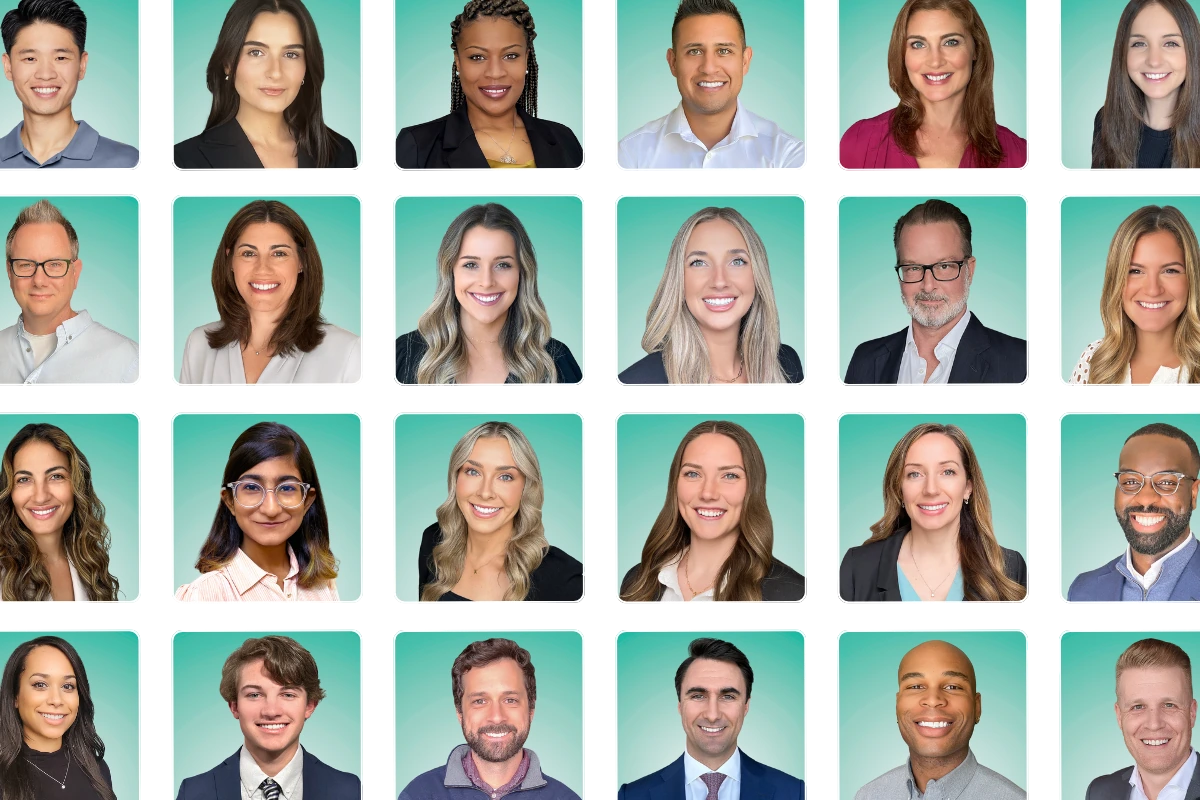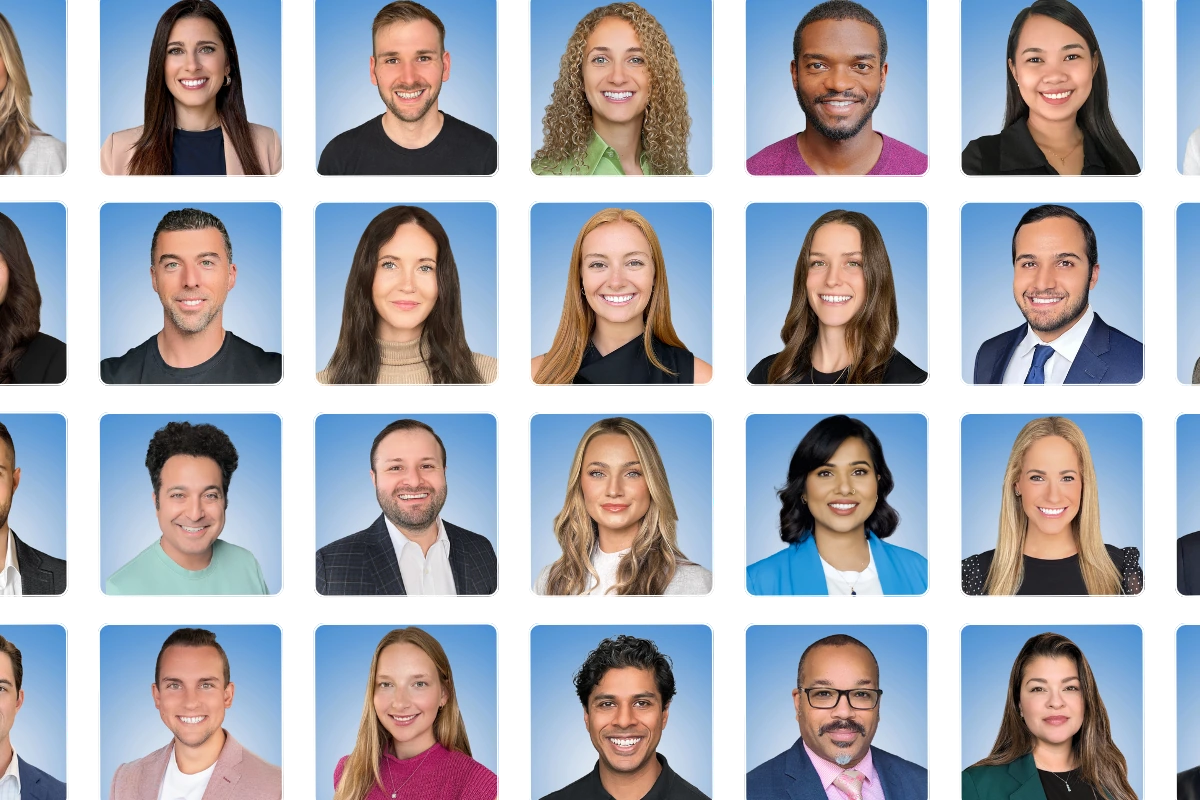

Professional headshots for women are head-and-shoulders photographs taken with controlled lighting against a clean background, designed to project competence, approachability, and authority in professional settings. The best ones share five traits: a genuine smile, a solid-color outfit one level above your daily norm, soft natural lighting, a slight body angle away from the camera, and a photo taken within the last two years that actually looks like you.

Last updated: February 2026
That sounds simple. It isn’t. Women face a set of headshot considerations that generic guides skip over entirely — neckline choices, makeup that translates to camera, hair decisions, jewelry calibration, and the double bind of looking authoritative without looking unapproachable. A 2024 study published in Nature found that gender bias is actually more prevalent in images than in text, and that viewing gendered images shifts people’s beliefs for at least three days afterward (Caliskan et al., Nature, 2024). Your headshot isn’t just a photo. It’s shaping how people perceive you before you say a word.
This guide covers everything specific to women’s professional headshots — from wardrobe by industry to posing, makeup, hair, glasses, and what the session itself looks like. It’s built from patterns across 100,000+ headshots Capturely has delivered to professionals at Google, McKinsey, Capital One, Amazon, and hundreds of other organizations, plus research from PhotoFeeler, Princeton, Harvard, and LinkedIn’s own platform data. For the general fundamentals that apply to everyone, see our complete professional headshots guide.
Why Professional Headshots Matter More for Women Than Most Guides Admit
The stats on professional photos apply to everyone: profiles with a headshot get 21x more views and 36x more messages (LinkedIn, 2017). People form trustworthiness judgments in just 100 milliseconds (Willis & Todorov, Psychological Science, 2006). A 243-participant study found professional headshots increase perceived competence by 76% (HeadShots Inc. / PhotoFeeler, 2020).
But the landscape isn’t the same for men and women.
Researchers at the University of Washington found that only 11% of people shown in Google Image results for “CEO” were women — even though 27% of U.S. CEOs were women at the time (University of Washington, 2015). Images matching the majority gender for a profession were rated as more competent and trustworthy. If you’re a woman in a male-dominated field, your professional image is working harder to earn the same credibility.

There’s also the confidence factor. A Dove/Unilever study found that 77% of women describe themselves as camera shy (Dove/Unilever, 2013). That number is striking because it means most women approaching a headshot session are already uncomfortable before it starts. The anxiety isn’t irrational — it’s a response to legitimate pressure. Women in professional photos face a scrutiny threshold that men rarely encounter: too much makeup reads as unprofessional, too little looks “tired.” Too formal feels stiff, too casual gets judged. A Cornell University study found a “complete reversal” in how women were evaluated in semi-professional versus provocative photos — the double standard was far harsher for women than for men (Journal of Experimental Social Psychology, 2023).
Which is exactly why getting this right matters. A strong professional headshot doesn’t just make you look competent — it removes a barrier. People stop evaluating your photo and start evaluating your work.
Want headshots your team will actually love? Capturely’s photographers are trained to make everyone comfortable — especially people who hate being photographed. Real photographers, 10-minute sessions, 24-hour delivery. Get your instant quote →
What to Wear for Professional Headshots: Women’s Guide by Industry
The universal rule: dress one level above your daily norm. If you wear jeans to work, shoot in a blazer. If you’re already in blazers, choose a more structured or higher-quality one. But “one level up” means different things in different industries.

| Industry | Best Choices | Colors | Avoid |
|---|---|---|---|
| Finance / Banking | Structured blazer, tailored suit | Navy, charcoal, black with white or light blue shell | Anything casual, bright patterns |
| Law | Dark tailored suit, collared blazer | Navy, charcoal, deep gray | Loud colors, chunky jewelry |
| Healthcare | Soft knit sweater, V-neck blouse | Soft blues, teals, warm neutrals | Clinical white, scrubs |
| Tech / Startups | Fitted button-down, clean crew neck, optional blazer | White, soft blue, gray, muted teal | Graphic tees, hoodies |
| Real Estate | Business casual blazer with soft blouse | Warm tones, approachable blues | Overly formal suiting |
| Consulting | Blazer with crisp button-down | Navy, charcoal, deep green | Too-trendy pieces |
| Creative / Marketing | Expressive textures, bold solids, statement pieces | Mustard, burgundy, deep red, copper | Busy patterns on camera |
| Education | Soft knit sweater, approachable business casual | Warm earth tones, jewel tones | Overly corporate |
For a full wardrobe guide covering both men and women across every industry, see our what to wear for professional headshots guide.
Which Neckline Photographs Best?
This is the question nobody answers well, and it matters more than most women expect. Your neckline changes how your face and neck appear in the frame.
V-neck: The most universally flattering option. It elongates the neck, creates a slimming visual line, and draws the eye upward toward your face. Ideal for women with broader shoulders or shorter necks. Don’t go too deep — if the crop line hits mid-V, it looks odd.
Scoop neck: Adds softness without sacrificing professionalism. The rounded curve can balance narrow shoulders. Works across most industries.
Boat neck: Creates width across the shoulders for a balanced, polished look. Particularly good for pear-shaped body types. Elegant and distinctive.
Crew neck: Clean and modern, great for tech and creative fields. Avoid if you have a shorter neck — crew necks can make short necks look shorter.
Skip: Turtlenecks (compress the neck and create an out-of-proportion look), strapless or spaghetti straps (look awkward cropped), large ruffles (compete with your face for attention).
Colors That Actually Work (by Skin Tone)
An IJERT study found that darker-valued clothing receives higher trust ratings than lighter-valued clothing of the same style — and blue-purple tones scored highest for trust perception overall (IJERT, 2021). But the specific shade that works best depends on your skin tone.
Cool undertones (veins appear bluish): Navy, emerald, deep purples, cool neutrals, jewel tones. Silver jewelry.
Warm undertones (veins appear greenish): Earthy greens, rust, rich reds, browns, golden yellows. Gold jewelry.
Fair skin: Soft blues, lavender, and blush pink add vibrancy. Navy and emerald green create striking contrast.
Darker skin: Saturated jewel tones — teal, amethyst, ruby — create beautiful separation and keep features defined. Crisp white creates a clean, professional contrast.
The critical rule: don’t match your clothing too closely to your skin tone. If there isn’t clear separation between your skin and your outfit, your jawline softens and the camera has nothing to grab onto.

Hair, Makeup, and Grooming for Professional Headshots
Here’s the thing nobody tells you until you’re sitting in front of the camera: makeup and hair look completely different on camera than they do in the mirror. Studio lighting washes out color by roughly 50%. What looks like “a lot” in person often reads as “barely there” in the final image.
Makeup That Translates to Camera
A 2011 study by Nancy Etcoff at Harvard Medical School found that women wearing professionally applied makeup were rated as more competent, likable, and trustworthy in a 250-millisecond glance — but the most dramatic “glamorous” makeup actually reduced trustworthiness with longer viewing (Etcoff et al., PLoS ONE, 2011). The sweet spot is polished and natural — not bare-faced, not dramatic.
According to Nancy Etcoff, researcher at Massachusetts General Hospital and Harvard Medical School, “For the first time, we have found that applying makeup has an effect beyond increasing attractiveness — it impacts first impressions and overall judgments of perceived likability, trustworthiness, and competence.”
What works on camera:
- Go matte on foundation. Dewy or glowy formulas risk looking sweaty under camera lighting. Match to your neck, not just your face. Skip foundations with SPF — the light-reflecting particles cause “flashback” (white patches in photos).
- Use more setting powder than you think. Focus on the T-zone (forehead, nose, chin). Avoid HD powders — they look invisible in person but can create white patches on camera.
- Go one shade darker on lips. Studio lights wash out lip color. Choose nudes or shades close to your natural color. Matte or satin finish — glossy lips create distracting glare spots.
- Stick to neutral, matte eyeshadow. Soft browns, taupes, warm grays. Black mascara always (brown doesn’t show up enough under studio lighting). Skip false lashes — they make eyes look heavier on camera.
- Shape brows a full week before. No fresh tweezing or waxing near the session. Fill in with pencil or powder one shade darker than your natural brow color.
- Apply blush one shade darker than your best in-person look. Blush restores the dimension that studio lighting flattens out of your face.

Hair: Style It the Way People Know You
Your headshot should look like you. If you wear your hair curly every day, don’t straighten it for the session. If you’ve never worn an updo to work, your headshot isn’t the time to debut one.
That said, there are a few photography-specific considerations:
Hair down: Frames the face, reads as relaxed and approachable. Keep layers brushed and out of your eyes. NYC hairstylist Gregory Patterson calls a smooth blowout with moderate volume “the woman’s version of the man’s red power tie.”
Hair up: Slims the face, elongates the neck, opens everything up. Projects authority. Best options: low chignon, sleek low bun, polished ponytail.
Best strategy if you have long hair: Shoot both. Start with hair down, then pull it up. You’ll have options for different platforms and contexts.
Natural, curly, and coily hair: Work with your natural texture. The 2023 CROWN Workplace Research Study (Dove and LinkedIn) found that Black women’s hair is 2.5x more likely to be perceived as unprofessional — and 66% of Black women have changed their hair for a job interview to reduce discrimination risk (CROWN, 2023). Wear your hair however you normally wear it. If someone won’t hire you because of your natural hair, that’s information you need — and a headshot with straightened hair just delays that discovery. Protective styles like knotless braids and faux locs are absolutely appropriate for professional headshots.
The biggest hair mistake across all textures: frizz and flyaways. Wash hair the night before (freshly washed hair is too soft to hold a style), use frizz-control serum, and bring a small comb and travel-size hairspray for touch-ups.
Jewelry: Less Than You Think
Your face is the focal point. Jewelry that competes with it undermines the whole image.
Earrings: Simple studs are the gold standard — pearl, diamond, or small gemstones. Large dangly earrings pull the eye downward and can get lost in hair.
Necklaces: Simple pendant necklaces work if they sit close to the collarbone (longer chains fall below the crop line and are wasted). Skip chunky statement pieces and layered chains.
Glasses: If you wear them daily, keep them in. People should recognize you. Shoot a few frames without them too. To prevent glare: ensure your lenses have anti-reflective coating, tilt the frames slightly upward, and let your photographer adjust the angle. Avoid transition lenses — they retain uneven tinting even indoors.
Match your metal tones to your skin undertone: gold with warm skin, silver with cool skin.
Not sure what works on camera? Capturely’s photographers coach you through everything — wardrobe, posing, expression — in real time during your 10-minute session. No guessing. Book a free demo →
How to Pose for Professional Headshots as a Woman
The best pose for a woman’s professional headshot is a slight body angle (10-45 degrees from the camera), the shoulder closest to the camera dropped slightly, chin brought forward and tilted down just enough to define the jawline, with weight shifted onto the back foot. This creates a flattering, confident frame that avoids the flat “mugshot” look of standing square to the camera.

The 5 Adjustments That Matter Most
- Turn your body 10-45 degrees. Never face the camera dead-on. A slight angle slims the frame and adds depth. Turn your body, then rotate your head back toward the lens.
- Drop the shoulder closest to the camera. This is the single biggest difference between women’s and men’s posing. Dropping one shoulder softens the pose and creates a more flattering line. Squared shoulders project authority (useful for C-suite) but can feel aggressive.
- Bring your chin slightly forward and down. This defines the jawline, eliminates double-chin shadows, and opens the eyes. It feels weird. It looks great. Trust your photographer on this one.
- Shift weight onto your back foot. Even though the headshot only shows your upper body, where you carry your weight changes your posture and shoulder position. Weight on the back foot creates a subtle forward lean that reads as confident.
- Relax your shoulders. Tense shoulders show in your face. Before each shot, inhale, pull your shoulders up to your ears, and drop them. The tension melts out of the whole frame.
For a deeper dive on posing mechanics (head tilts, hand placement, expression coaching), see our guide on how to pose for corporate headshots.
Expression: Authority vs. Approachability
There’s no single “right” expression. It depends on what you’re using the headshot for.
For authority (C-suite, litigation, investment banking): Squared shoulders, strong posture, confident neutral expression or slight smile, direct eye contact. You want gravity.
For approachability (healthcare, education, real estate, client-facing consulting): Slight body angle, genuine smile showing teeth, one shoulder dropped, subtle lean toward the camera. You want warmth.
According to Peter Hurley, headshot photographer who has photographed over 30,000 subjects, “Confidence is in the eyes; friendliness is in the mouth.” His advice: a slight narrowing of the eyes (what he calls the “squinch”) projects confidence without looking hostile.
PhotoFeeler’s analysis of 60,000+ ratings confirms: a teeth-showing smile boosts Likability by +1.35 — the single largest positive factor they tested. But it also boosts Competence (+0.33) and Influence (+0.22). For most women in most fields, a genuine smile with visible teeth is the right call (PhotoFeeler, 2017).

7 Professional Headshot Mistakes Women Make (and How to Fix Them)
- Standing square to the camera. It adds visual width and creates the “mugshot” effect. Fix: turn 10-45 degrees and look back at the lens.
- Cap sleeves. Short cap sleeves create a visual line that makes shoulders appear wider on camera. Fix: wear long sleeves or 3/4 sleeves. Always.
- Too much (or too little) makeup. Heavy makeup reduces perceived trustworthiness — a separate study found it triggers “dehumanization” and reduces perceived leadership capability (The Ladders, 2018). But no makeup at all looks washed out on camera. Fix: polished, natural makeup one shade darker than your everyday look.
- Matching clothing to skin tone. If your outfit blends with your skin, your jawline disappears on camera. Fix: choose colors that create clear contrast between your skin and clothing.
- An outdated photo. 71% of recruiters have rejected a qualified candidate based on their LinkedIn photo (Passport-Photo.Online, 2023). If your headshot is more than two years old — or doesn’t look like you on a Zoom call — it’s hurting you.
- Forced smiling. The jaw-clenched, every-tooth-showing grin looks uncomfortable on camera and can read as overeager. Fix: think of something genuinely funny right before the shot. A real smile uses the muscles around the eyes (called a Duchenne smile), and the camera picks up the difference immediately.
- Turtlenecks. They compress the neck and create a disproportionate look in a head-and-shoulders crop. Every photographer I’ve spoken with specifically warns against them. Fix: V-neck, scoop, or boat neck.

What to Expect During a Professional Headshot Session
If you’ve never had professional headshots taken, not knowing what to expect is often worse than the session itself. Here’s how the process works — from prep to delivery.
Your Pre-Session Timeline
- Two weeks before: Schedule any haircuts or color. Get your brows shaped. Start testing outfit combinations in front of a mirror (check necklines, colors, fit).
- One week before: Confirm your outfit choices. Try them on with the jewelry and accessories you plan to wear. If you’re getting a facial, do it now (not the day before — reactions happen).
- Night before: Wash and condition your hair (day-old hair holds styles better). Prep your outfits. Get adequate sleep — exhaustion shows on camera, and no amount of concealer fixes genuinely tired eyes.
- Morning of: Do your makeup slightly more defined than usual. Style your hair the way you normally wear it. Dress in your first outfit. Bring backup options and touch-up supplies (concealer, powder, hairspray, bobby pins).

During the Session (It’s Faster Than You Think)
Most women expect headshot sessions to feel awkward. They rarely do — especially when there’s a photographer actively directing you.
With Capturely, the entire session takes about 10 minutes. You receive a secure link, open it on your phone, and connect with a professional photographer who directs everything through your rear camera — posture, expression, lighting, angle, chin position. No app download. No studio visit. The photographer handles all the micro-adjustments that make the difference between “fine” and “great.” Three fully retouched images are delivered within 24 hours.
That live direction is particularly valuable for women who feel camera shy. Remember the stat: 77% of women describe themselves as camera shy (Dove/Unilever, 2013). A real photographer who can read your body language, crack a joke to get a genuine smile, and coach you through the awkward phase is the difference between tolerating the experience and actually enjoying it.

As Sylvie di Giusto, author of The Image of Leadership and certified speaking professional, puts it: “In an interaction with someone new, you only have about seven seconds to make a great first impression. In those seven seconds, we make up to eleven major decisions about the other person.”
After the Session
You’ll receive three professionally retouched images — typically a straight-on, left angle, and right angle. Professional retouching means evening out skin tones, removing temporary blemishes, and cleaning up stray hairs — not changing your bone structure or making you look like someone else. The goal is you on your best day. People should recognize you when they meet you.
Use your headshots across every touchpoint: LinkedIn, company website, email signature, Slack/Teams, provider directories, conference bios, proposals. The average professional now has seven places to use a headshot. Getting all of them consistent from one session saves you from the piecemeal problem of hunting down different photos for different platforms.
Professional Headshots for Women at Different Career Stages
What works at 25 doesn’t work at 45. Not because you look different — because the image you need to project evolves.
| Career Stage | Priority | Wardrobe Emphasis | Expression | Common Mistake |
|---|---|---|---|---|
| Early career (20s-30s) | Approachability + competence | Business casual to professional; blazer optional | Warm, confident smile | Dressing too casually or too trendy (dates the photo fast) |
| Mid-career (30s-40s) | Authority + personal brand | More structured pieces; strategic color choices | Confident warmth to quiet authority | Using a headshot that’s 5+ years old |
| Executive / C-suite (40s+) | Leadership + gravitas | Dark structured suiting; quality fabrics visible on camera | Composed and direct | Over-retouching to the point people don’t recognize you |
Research by Bonnie Marcus found that 60% of women ages 35-40 have already experienced gendered ageism in the workplace (Marcus, Harvard Business Review, 2023). The pressure to look younger in professional photos is real. But here’s the counterintuitive truth: a headshot that looks like the person in the room builds more trust than one that looks ten years out of date. Authenticity beats artifice. Every time.

How Much Do Professional Headshots for Women Cost?
Pricing varies by method, and the cost-quality tradeoff isn’t as straightforward as “more expensive = better.”
| Method | Price Range | What You Get | Best For |
|---|---|---|---|
| Traditional studio | $150-$450/session | In-person session, multiple looks, professional lighting | Individuals wanting maximum control |
| Virtual with live photographer (Capturely) | $45-$79/person | 10-min guided session, 3 retouched images, 24-hour delivery | Teams and remote professionals |
| Self-guided virtual (Headshots.com) | $40-$60/person | Video guide, self-capture, 3-day turnaround | Budget-focused, solo use |
| AI headshot generator | $29-$59/person | AI-fabricated images from selfies, minutes | Low-stakes use only |
| DIY at home | Free | Whatever you can manage with a phone and a wall | Better than no headshot |
For a full breakdown with volume pricing and cost comparisons, see our professional headshot cost guide.
A note on AI headshots for women specifically: 38% of respondents in a consumer poll called AI-generated headshots “soulless.” But there’s an additional concern for women. AI generators are trained on datasets with documented bias — skin tones, facial features, and body types can be distorted or normalized toward a narrow standard. Multiple enterprise organizations now prohibit AI-generated headshots for client-facing roles. If your photo will appear on a provider directory, company website, or LinkedIn profile where people will meet you in person afterward, use a real photograph.
Standardizing Women’s Headshots Across Your Team
If you’re the Marketing Director or HR Manager reading this because you need to get headshots for your whole team — not just yourself — the individual styling advice above still applies. But you’ve got a bigger problem: consistency.

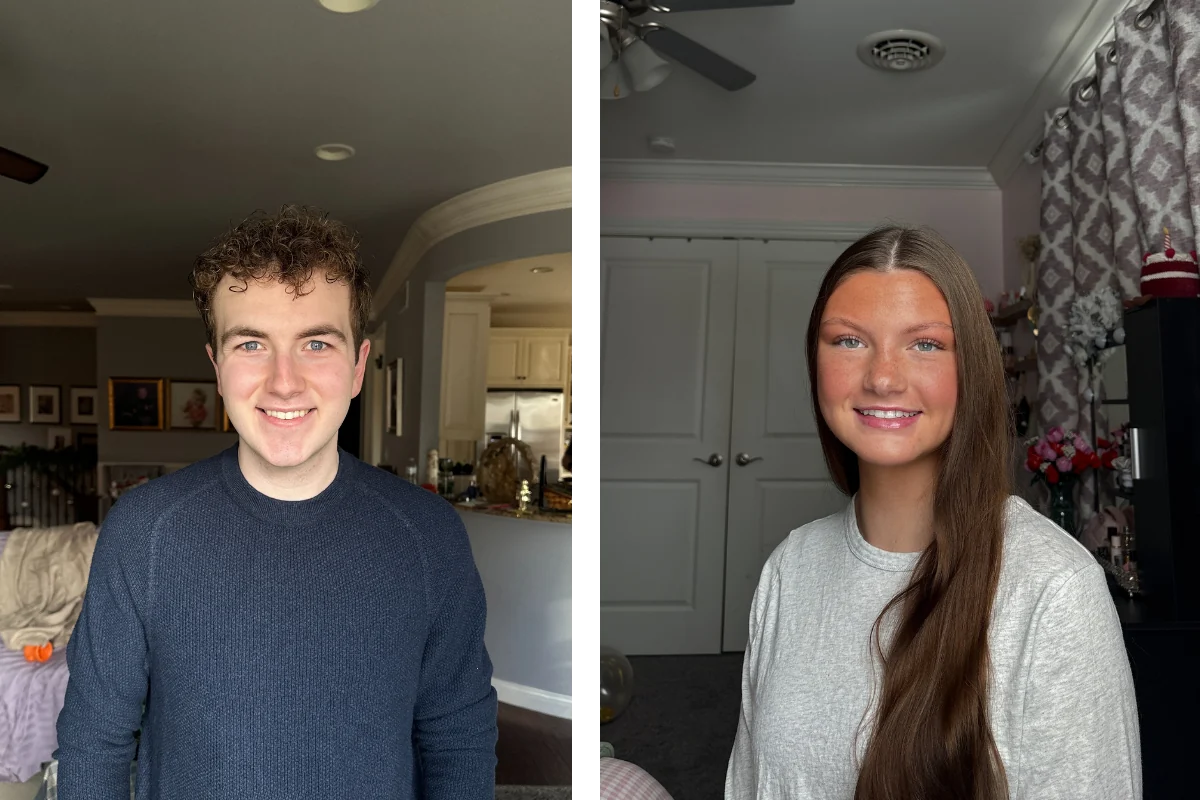
Right now, your team page probably has a mix of studio shots, selfies, AI-generated images, cropped wedding photos, and blank placeholder avatars. It undermines your brand before anyone reads a single bio.
Capturely solves this by letting admins set the standard once — background, cropping, retouching style — and then distributing session links to every employee regardless of location. Everyone gets the same professional result. Session credits last 12 months, so you can cover new hires and role changes without repurchasing. And at $45-$79/person for teams, it’s a fraction of coordinating in-person photo days across multiple offices.
As Jeff Maldonado at AmeriLife put it: “We had no mechanism to ensure their headshots met our brand standards. Capturely solves that. We now have standards of formatting, consistent delivery, and everyone’s been on the nose of where we needed to be.”
Need consistent headshots across your organization? Get an instant quote in 30 seconds — configure your look, see volume pricing, done. Over 1,500 five-star reviews at 4.9 stars. Google, Netflix, McKinsey, and Amazon trust us with theirs. Get your instant quote →
Frequently Asked Questions
How should a woman prepare for a professional headshot?
Start two weeks out: schedule haircuts or color, get brows shaped, and test outfit-and-jewelry combinations. The week before, confirm your final outfit choices and do any facials. Night before, wash and condition hair (day-old hair holds styles better). Morning of, apply slightly more defined makeup than everyday, style hair as you normally wear it, and bring backup tops and touch-up supplies. The whole session typically takes 10 minutes with a live photographer.
What should a woman wear for a professional headshot?
Dress one level above your daily norm in solid colors that contrast with your skin tone. V-necks and scoop necks are the most universally flattering necklines. Navy, charcoal, and jewel tones score highest for trust perception in research (IJERT, 2021). Avoid turtlenecks, cap sleeves, busy patterns, and neon colors. The best choice depends on your industry — law and finance call for structured blazers, while healthcare and education lean toward softer knits.
How should I do my makeup for a professional headshot?
Apply slightly more than your everyday look — camera lighting washes out color by roughly 50%. Use matte foundation (skip SPF, which causes flashback), set with powder on the T-zone, choose lip color one shade darker than usual in matte or satin finish, and stick to neutral matte eyeshadow. Always use black mascara. Harvard research found polished natural makeup increases perceived competence and trustworthiness, but heavy “glamorous” makeup reduces trustworthiness (Etcoff et al., PLoS ONE, 2011).
Should I wear my hair up or down for a headshot?
Wear it the way people know you. Hair down frames the face and reads as approachable; hair up elongates the neck and projects authority. If you have long hair, shoot both — start down, then pull up for variety. The most important rule: work with your natural texture. If you normally wear curly hair, don’t straighten it. Control frizz with serum, wash hair the night before, and bring touch-up supplies.
What is the best pose for a woman’s professional headshot?
Turn your body 10-45 degrees from the camera, drop the shoulder closest to the lens, bring your chin slightly forward and down to define the jawline, and shift weight onto your back foot. This creates a flattering, confident frame. For authority roles, square up more and use a confident neutral expression. For approachable roles, lean slightly forward with a genuine teeth-showing smile. PhotoFeeler data shows smiling boosts likability by +1.35 (PhotoFeeler, 2017).
Should I wear jewelry in my professional headshot?
Less is more. Simple stud earrings (pearl, diamond, or small gemstones) are ideal. Pendant necklaces work if they sit near the collarbone — anything longer falls below the crop line. Skip large dangly earrings, chunky statement pieces, and layered chains. Match metal tones to your skin undertone: gold with warm skin, silver with cool. If jewelry is core to your personal brand in creative fields, wear it — but your face should still be the focal point.
Can I take a professional headshot with my phone?
Yes — modern rear cameras capture at 36-48 megapixels, more than enough for professional-quality headshots. The camera hardware isn’t the limitation. Lighting, composition, and direction are. Virtual headshot services like Capturely pair smartphone capture with a live professional photographer who coaches you in real time — posing, lighting, expression, angle. If going fully DIY, always use the rear camera (not selfie camera), face a large window, use a plain background, and have someone else hold the phone.
How often should women update their professional headshot?
Every one to two years, or whenever your appearance changes noticeably — new hairstyle, different glasses, significant changes. A Passport-Photo.Online study found 50% of LinkedIn users have kept the same photo for three to six-plus years, and 71% of recruiters have rejected qualified candidates based on their profile photo (Passport-Photo.Online, 2023). If your headshot doesn’t match how you look on a Zoom call, it’s overdue. Roles with high external visibility should update annually.
Your Headshot Is Your First Handshake
Every LinkedIn connection request, every “About Us” page visit, every provider directory search — they start with your photo. For women, the stakes are higher than generic headshot advice suggests. The research is clear: images shape perception more than text, and the double standards are real.

But a great headshot isn’t about beating the system. It’s about removing the barrier between your qualifications and other people’s perception. When your photo looks professional, current, and authentically you, people stop evaluating the image and start evaluating your expertise.
The specifics matter — necklines, colors, posing angles, makeup calibration. Get them right and the photo disappears into the background where it belongs, letting your work speak for itself.