More school districts are looking for a Lifetouch alternative right now than at any point in the past decade. Across Texas, Michigan, Pennsylvania, Kentucky, and at least five other states, schools are suspending contracts, issuing new RFPs, and actively evaluating replacement vendors for the 2026-2027 school year. Some are switching to regional competitors. Others are rethinking the entire model — replacing traditional picture day with approaches that don’t require a single minute of school time.
Last updated: March 15, 2026 · Written by Brian Confer, Co-founder & COO at Capturely
This isn’t a blip. It’s the acceleration of a trend that’s been building for years — declining parent satisfaction, outdated ordering systems, and a growing gap between what families expect and what traditional picture day delivers. The events of early 2026 didn’t create these problems. They gave schools a reason to finally act on them.
If your district is considering a vendor change, this guide covers why schools are switching, what’s actually wrong with the traditional model, what modern alternatives look like, and how to make the transition without disrupting the school year.
A Wave of Vendor Changes Is Sweeping K-12
The Numbers Behind the Shift
The scale of vendor reevaluation happening right now is unprecedented. In Kentucky, the statewide educational cooperative KEDC suspended all photography vendor services across its member districts. In Texas, at least ten districts — including Van ISD (full termination), Temple ISD (13 campuses), Belton ISD, Malakoff ISD, and multiple East Texas districts — have canceled or paused contracts. Michigan districts including Dearborn, Redford Union, and Wyandotte have suspended services. Mount Pleasant Area SD in Pennsylvania cut ties entirely.
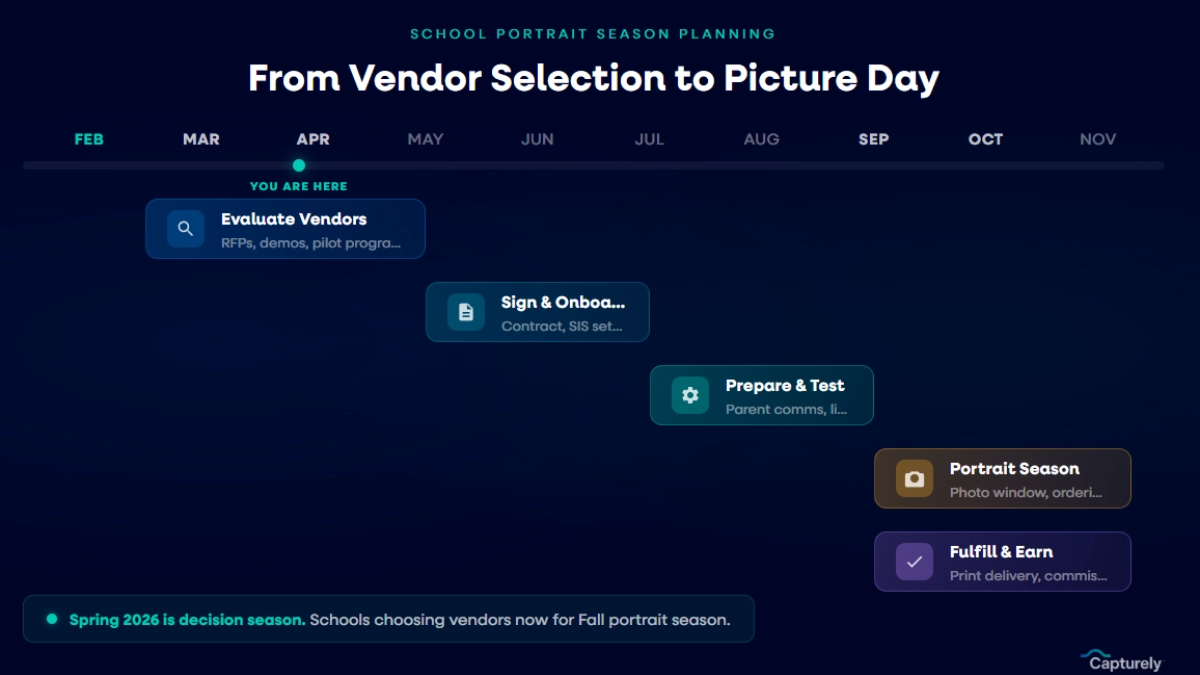
And those are just the public announcements. Behind the scenes, procurement offices in hundreds of districts are quietly reviewing contracts, checking cancellation clauses, and gathering proposals from alternative vendors. Spring 2026 is when schools make photography decisions for fall — and this spring, the evaluation process is more active than it’s been in a generation.
Some of this movement predates the 2026 headlines. Tyler ISD in Texas had already notified its vendor of non-renewal before any controversy surfaced. CADY Studios acquired Lifetouch’s high school accounts back in August 2025. The broader trend — schools demanding more from their photography partners — was already underway. Recent events just compressed what might have been a five-year shift into five months.
Why Now? Three Forces Converging
Schools don’t switch vendors lightly. Photography contracts are familiar, the switching cost feels high, and the person responsible for managing the relationship has a dozen other priorities. So why are so many districts moving at once?
1. Trust and transparency concerns. Parents are paying closer attention to who their schools partner with — and why. Questions about corporate ownership, data handling practices, and vendor accountability have moved from background noise to board meeting agenda items. Schools are being asked, directly and publicly, to justify their vendor relationships. For many, the simplest answer is to evaluate alternatives.
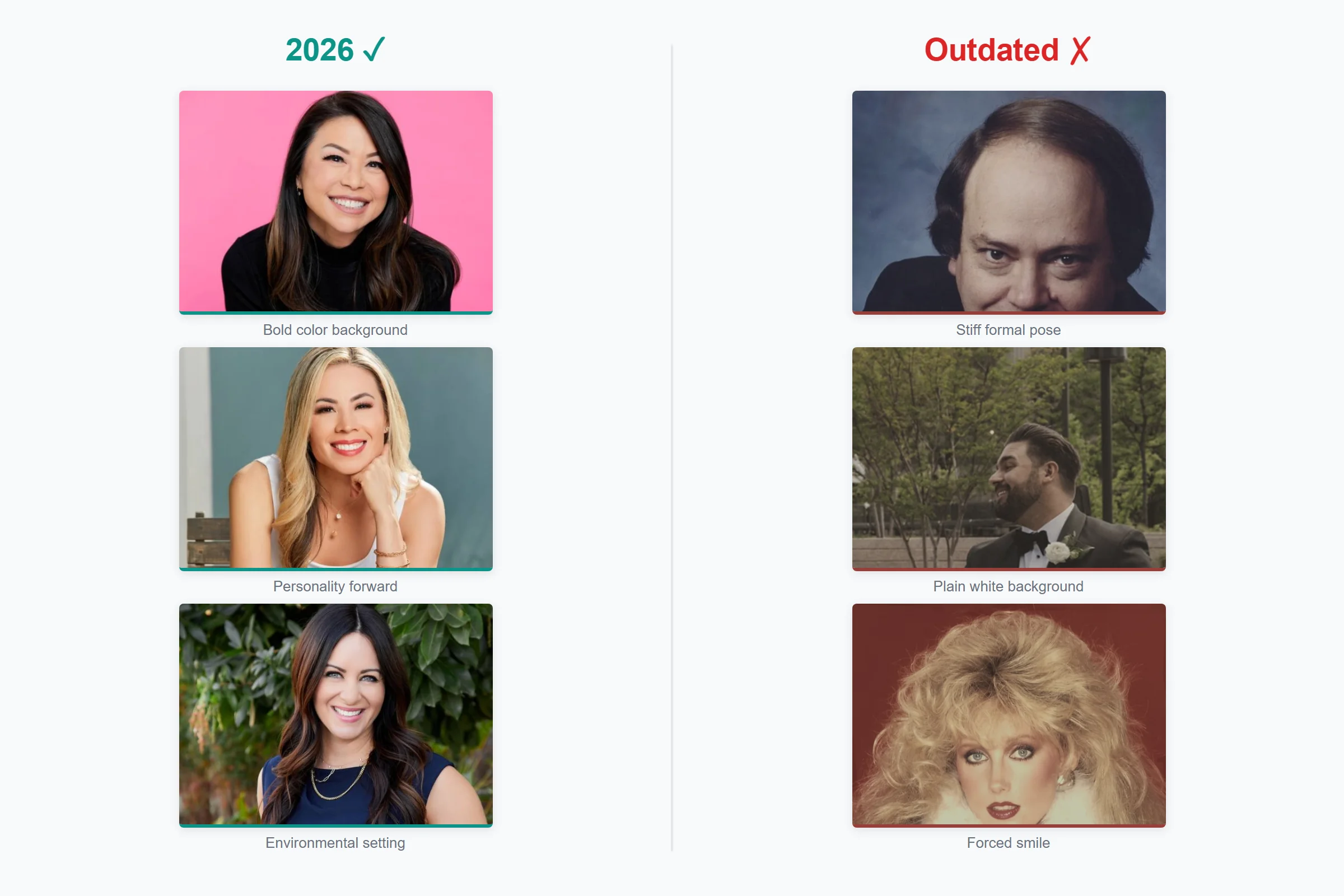
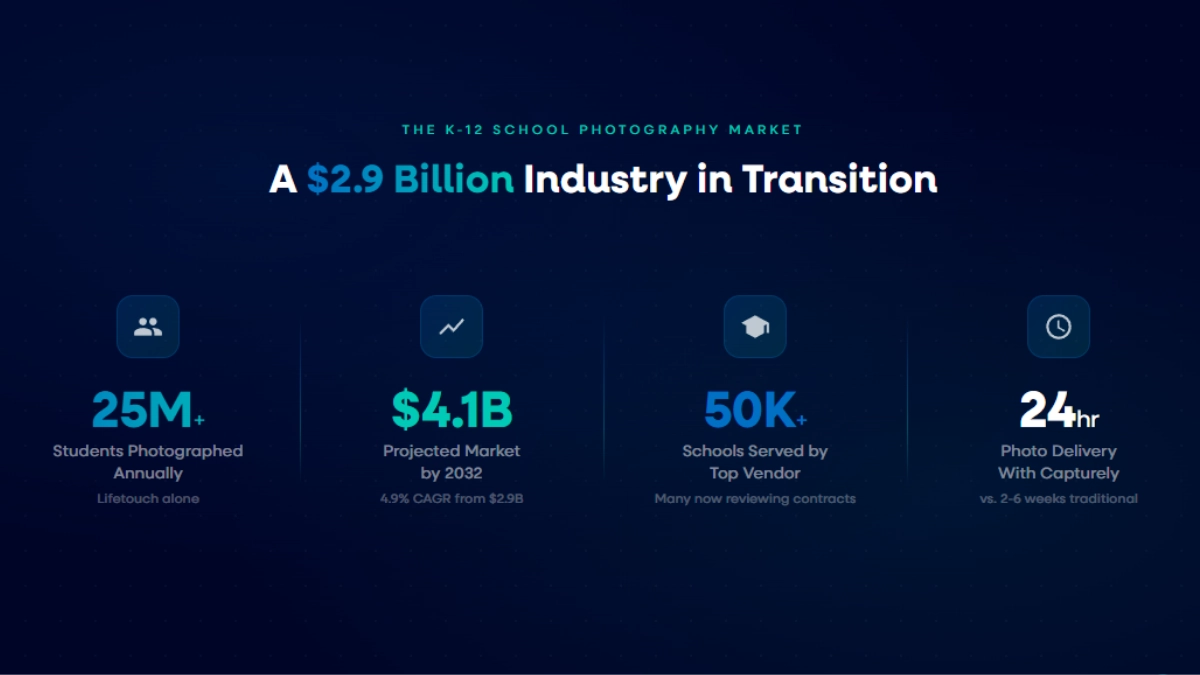
2. Parent expectations outgrew the product. This is the bigger, longer-burning issue. Parents in 2026 live in a world of instant digital delivery, see-before-you-buy shopping, and mobile-first everything. Traditional picture day still sends paper forms home with kids, requires prepayment before seeing any photos, and delivers prints three to six weeks later. That gap has been widening for years. Only 30% of parents now buy school photos — down from 69% in 1995. The product isn’t matching what families want.

3. The technology gap became impossible to ignore. Parents order groceries from their phone and track delivery in real time. They try on glasses at home and return what doesn’t fit. They preview Airbnb properties with 3D tours before booking. Then picture day arrives and their kid brings home a paper envelope with a check inside. The contrast is jarring — and it’s getting worse every year as consumer expectations accelerate and school photography stays frozen in 2005.
Looking for alternatives? See our side-by-side comparison of 8 school photography companies — pricing, features, delivery times, and what schools actually experience. Read the 2026 comparison guide →
What’s Wrong With Traditional Picture Day
If you’ve been running the same picture day model for the past decade, it’s worth stepping back and looking at what it actually costs — not just in commission checks, but in instructional time, staff hours, parent satisfaction, and missed revenue from families who stopped buying.
The Admin Burden Schools Shouldn’t Accept
Traditional picture day occupies a full school day of operations. The gym or cafeteria is blocked from before first bell through afternoon dismissal. Every class gets pulled from instruction for 15-30 minutes (including transition time). Staff members are assigned to manage lines, escort students, handle paperwork, and troubleshoot problems. The school secretary fields parent calls for weeks afterward.
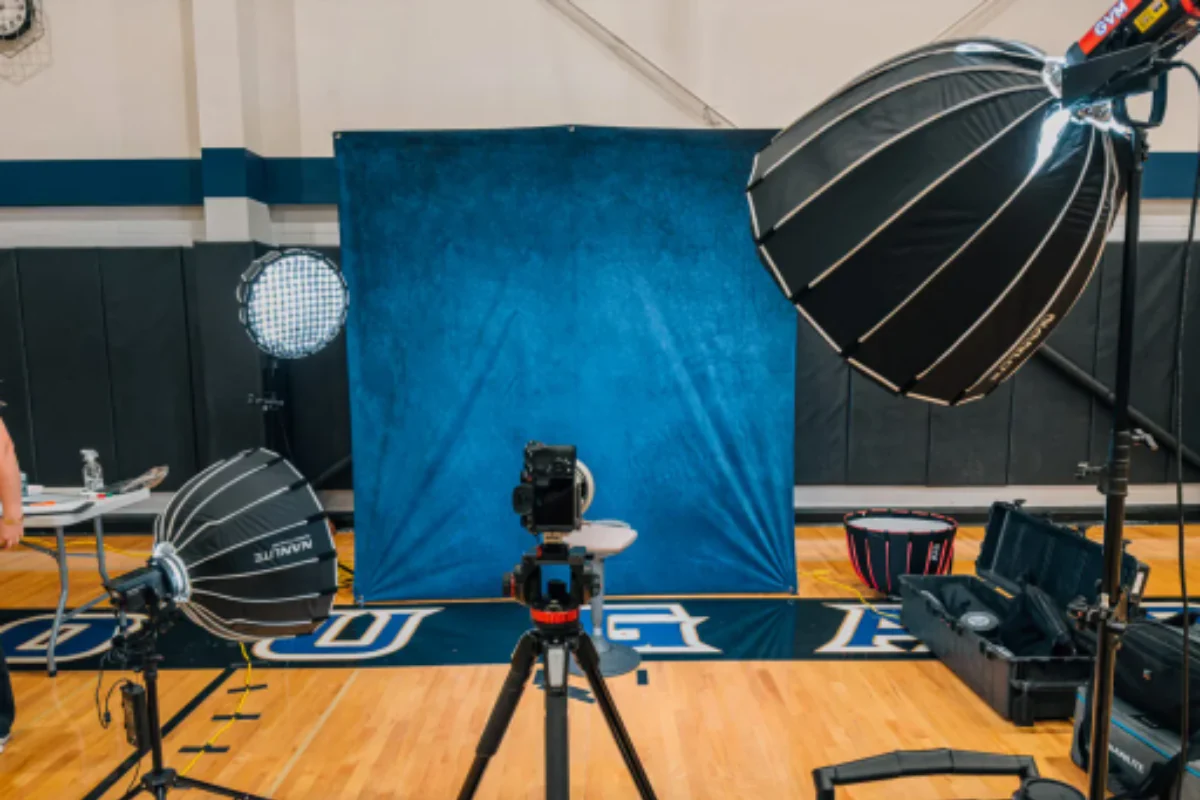
Then retake day happens 4-6 weeks later. Same setup. Same disruption. Same staff coordination. For schools that do fall and spring portraits, that’s four full days of school operations consumed by photography every year.
At a throughput rate of 45-60 students per hour per photographer, a school of 500 students needs 8-11 hours of photography time. A school of 800 needs a full day and then some. And that doesn’t count setup, teardown, or the scheduling coordination that starts weeks before the photographer arrives.
The question worth asking: is all of that disruption actually necessary? Or is it just how things have always been done?
What Parents Actually Experience
From the parent side, traditional picture day looks like this:
- Buying blind. Many schools still require prepayment — parents commit money before seeing a single photo. One parent put it bluntly: “Why, with digital photos, don’t schools post them and let the parents order?” Schools that do show proofs before ordering actually see higher purchase rates. The prepayment model is losing money, not saving it.
- No control over timing. Photos get taken whenever the school schedules them. After lunch? Hope there’s no spaghetti sauce. After recess? Hope the hair survived. After a bad morning? Forced smiles on unhappy kids.
- Package bloat. “I only wanted three 4×6 photos but had to buy about 602 unwanted pictures for $60,” one parent wrote. Wallet-size prints nobody carries. Door hangers. Photo key fobs. CDs. The packages are designed for a world that doesn’t exist anymore.
- Weeks of waiting. Standard delivery is 3-4 weeks after picture day. Some vendors take 6+ weeks. By the time photos arrive, the moment is long gone — and if the photos are bad, there’s no recourse except waiting for retake day.

The result? Purchase rates have been declining for two decades. In 1995, 69% of parents bought school photos. By 2002, it was 64%. Today, vendors need roughly 30% of parents buying at $25 average just to break even. The product isn’t failing because parents don’t want school photos — 96% of them do. It’s failing because the experience doesn’t earn their money. More on why picture day is broken and what should replace it.
The Delivery Speed Problem
This one deserves its own section because it’s so stark.
Parents in 2026 can order dinner on their phone and have it delivered in 20 minutes. They can buy a product on Amazon and have it on their doorstep tomorrow. They can take a photo on their iPhone, edit it, and share it with fifty people in under a minute.
Then school picture day delivers printed photos in an envelope. Three to six weeks later.
The gap between what consumers expect from every other service and what school photography delivers has never been wider. And it’s not a technology limitation — the technology to deliver digital photos within 24 hours exists right now. The traditional model just hasn’t adopted it.

What Modern School Photography Looks Like
The schools that are switching aren’t all landing on the same solution. Some move to a different traditional vendor. Some go local. But the most forward-thinking districts are asking a different question entirely: does picture day need to happen at school at all?
At-Home, Photographer-Directed Portraits
Capturely built a model that eliminates picture day from the school calendar completely. Instead of sending photographers and equipment to the school, the school sends a scheduling link home to families. Parents open the link, pick a time that works for their family, and connect with a live professional photographer through their phone. The photographer directs the session in real time — coaching the child’s expression, posture, and positioning through the phone’s rear camera. Three professionally edited portraits are delivered within 24 hours.
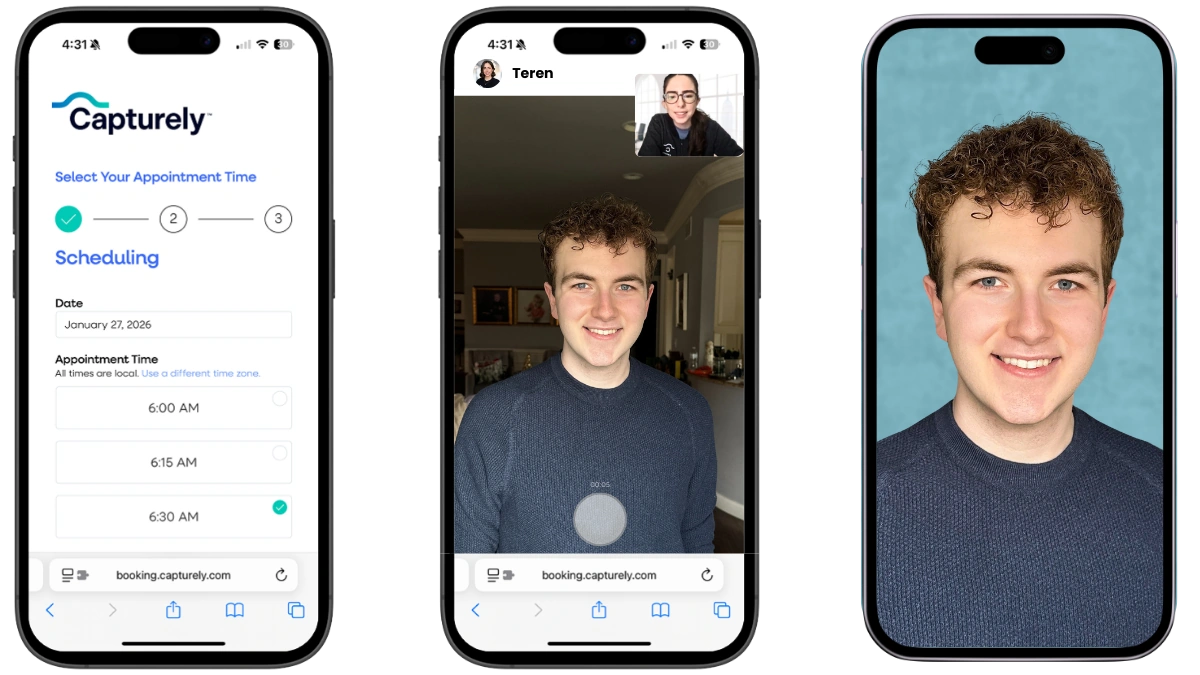
No gym blocked. No classes pulled. No paper forms. No cash envelopes. No retake day. The school’s total involvement is sending one link.
This is the same platform that delivers 100,000+ professional headshots annually for organizations like Google, Netflix, and McKinsey — now adapted for K-12. It’s not a selfie tool or an app. It’s a real photographer directing a real session, just without the school logistics.
What Changes for Schools
For administrators, the shift is dramatic:
- Zero instructional time lost. Sessions happen at home, on the family’s schedule. No classes interrupted.
- Zero facility impact. The gym stays available. The cafeteria serves lunch. The school day runs normally.
- Zero paper management. No forms to distribute, no envelopes to collect, no packages to sort and hand back to students.
- No retake logistics. Because parents see photos before buying and control the timing, the forced-retake cycle disappears.
- Commission revenue preserved. Schools still earn commissions on parent purchases — the economics don’t change, just the operations.

What Changes for Parents
For families, the difference is even more obvious:
- No bad hair days. Parents pick the time. If the morning goes sideways, reschedule. No more praying your kid doesn’t look like they just ran a marathon before their portrait.
- Parent controls the environment. No fluorescent gym lighting. No line of 300 kids waiting. The child is comfortable, at home, with a parent nearby. The photos show it.
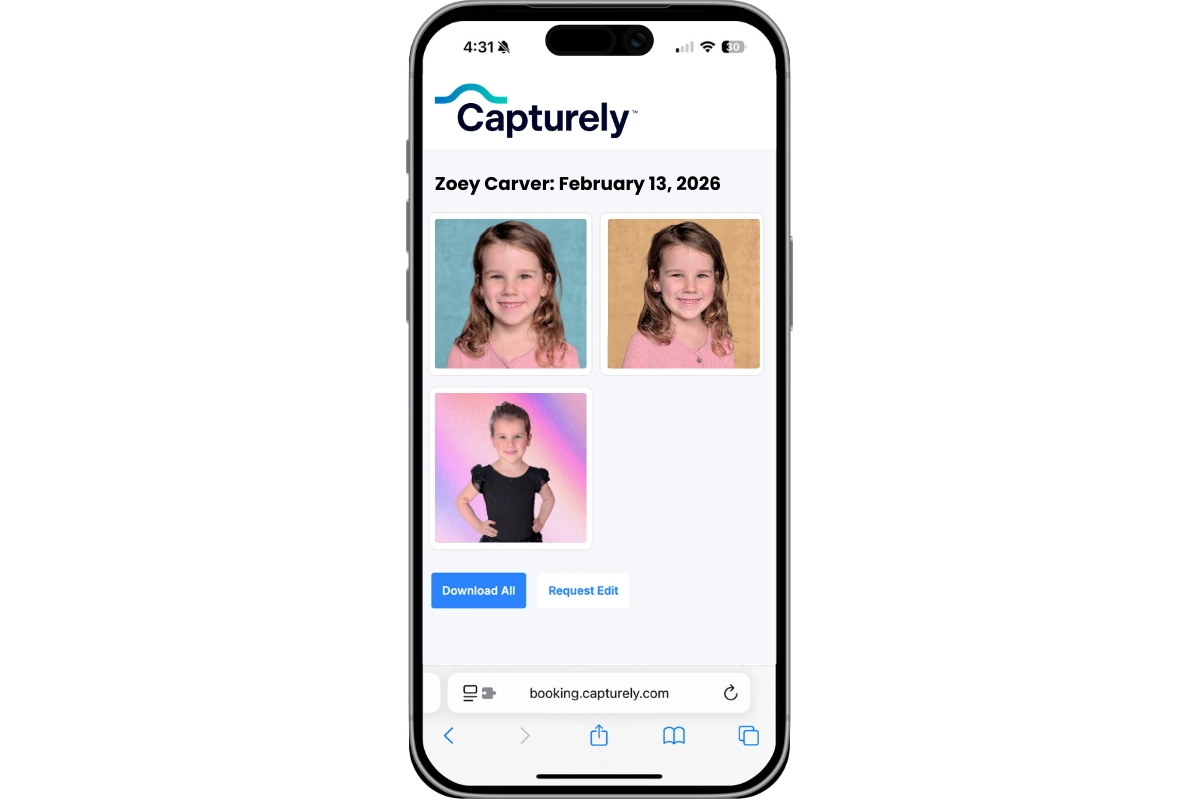
- See before you buy. Parents view their child’s actual photos before spending a dollar. No more prepaying and hoping for the best.
- 24-hour delivery. Not three weeks. Not six weeks. Twenty-four hours. Digital, shareable, ready for the fridge, the grandparents’ text thread, and the yearbook.
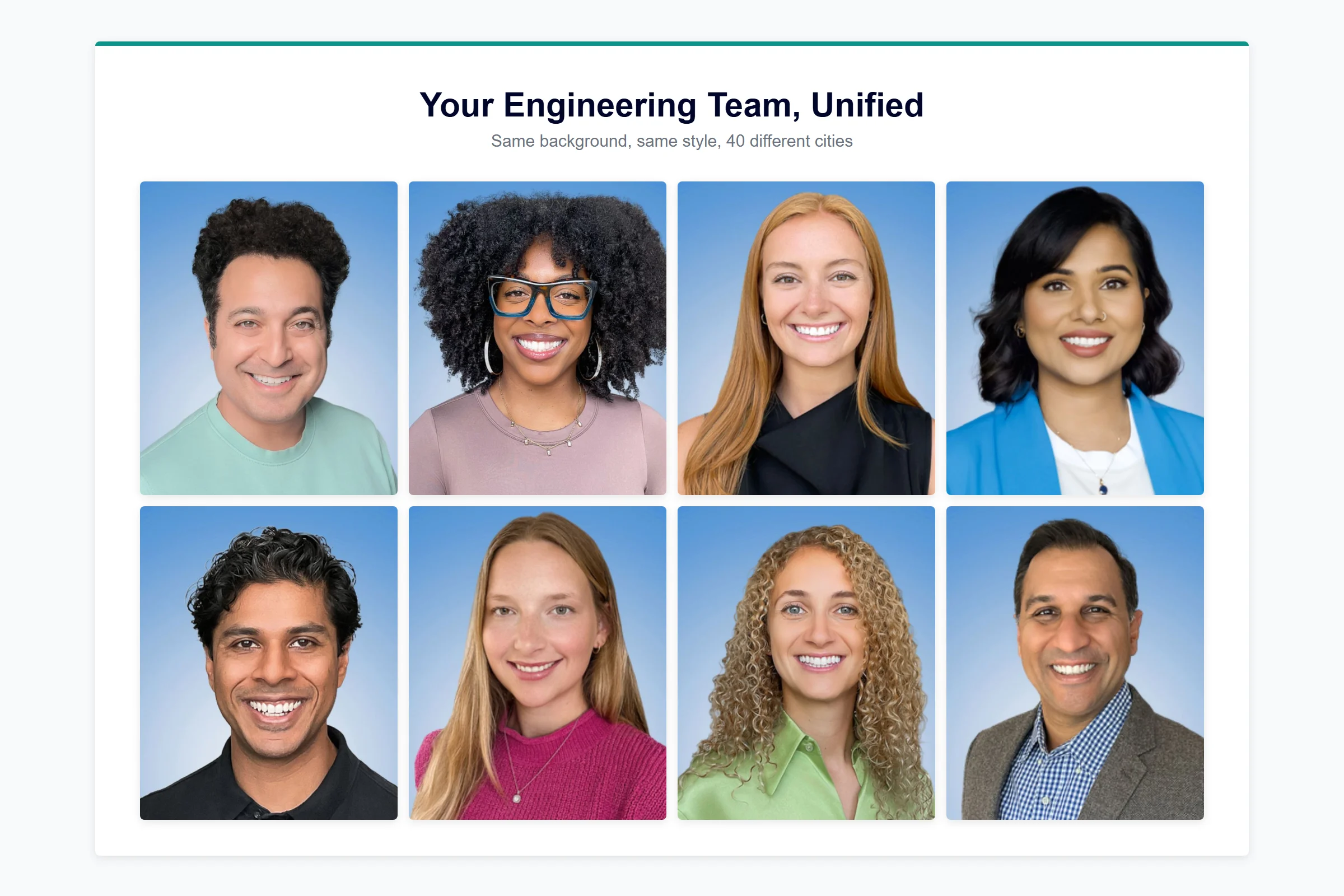
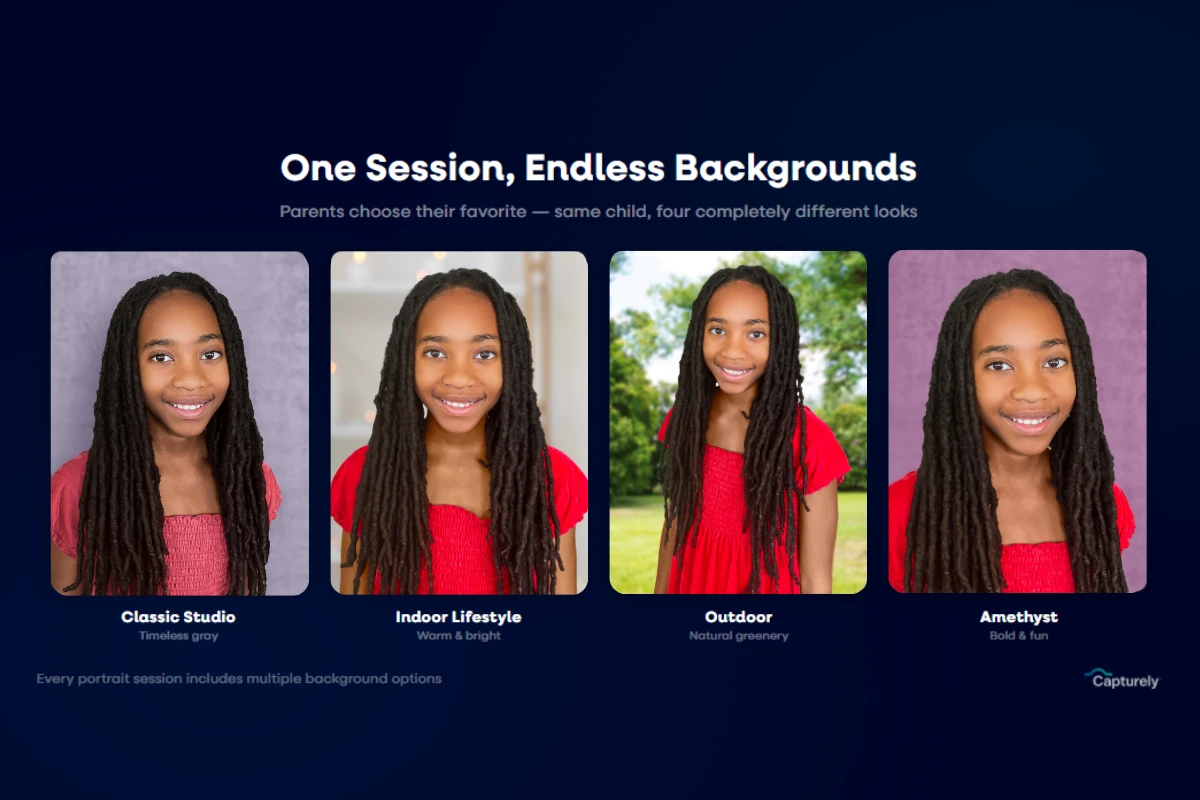
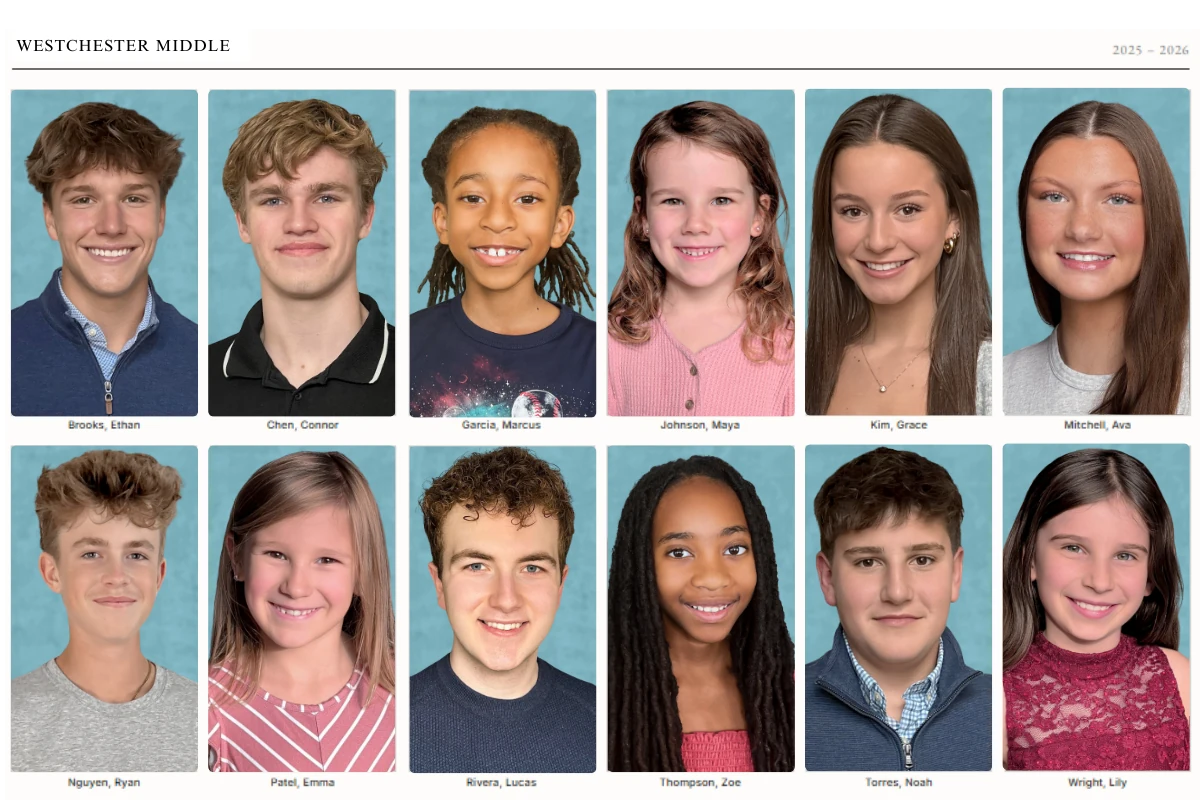
- 98+ background choices. Not the same pull-down backdrop every kid in the school sits in front of. Parents pick the background — classic yearbook blue, modern gray, textured options, or something that matches their family’s style.
Want to see what this looks like for your school? Capturely offers free pilot programs — photograph one grade at no charge and let families experience the difference firsthand. No contracts, no risk. Request a free pilot →
How to Make the Switch
Switching photography vendors doesn’t have to be complicated. Here’s the practical path that districts are following right now.
Step 1: Evaluate Your Current Contract
Start by pulling your existing agreement and checking three things:
- Term and renewal. When does the contract expire? Is there an auto-renewal clause? Most modern contracts run 1-3 years with annual renewal options — but older agreements may have multi-year lock-ins. Check the cancellation notice period (typically 60-90 days).
- Exclusivity. Does your contract prevent you from running a pilot with another vendor? Many don’t — but read the fine print.
- Commission guarantees. Has your commission rate changed since you signed? Post-acquisition, some vendors quietly reduce school commissions. Compare your current rate to what you were originally promised.
If your contract allows for non-renewal, notify your current vendor in writing within the required notice window. If you’re mid-contract, check whether a pilot program with an alternative vendor is permitted alongside your existing agreement.
Step 2: Define What Matters
Before you start comparing vendors, get clear on what your district actually needs. Not every school values the same things. Some priorities to rank:
- Delivery speed. Is 3-4 weeks acceptable, or do your families expect faster?
- Parent experience. Do you want see-before-you-buy ordering, or is prepayment fine?
- Admin burden. How much staff time and facility space are you willing to commit?
- Commission rate. What’s your minimum acceptable rate — and are you factoring in parent participation rates, not just the percentage?
- Technology integration. Do you need SIS connectivity? Yearbook platform export? Online galleries?
- Privacy and compliance. What FERPA, background check, and data handling standards do you require?
Step 3: Request Proposals or Pilots
You have two paths: a formal RFP process or a direct pilot evaluation. For larger districts, a formal RFP ensures transparency and gives your board documentation for the decision. Our school photography RFP template includes 35+ evaluation criteria and a scoring rubric you can customize.
For smaller districts or individual schools, a pilot is faster and more practical. Ask potential vendors to photograph a single grade or class at no charge. Compare the results — photo quality, parent feedback, delivery time, admin effort — against what your current vendor delivers. Real results from real families beat any sales presentation.
Step 4: Run a Pilot Before Committing
This is the step most districts skip — and the one that matters most. A pilot lets you test the vendor’s actual performance with your actual families. Not a demo. Not a slide deck. Real photos of real students, with real parent reactions.
What to evaluate during a pilot:
- Photo quality. Are the portraits genuinely good? Would you hang them on your wall?
- Parent participation. What percentage of families in the pilot grade actually completed sessions and purchased?
- Parent feedback. Not just satisfaction scores — actual comments. What did families say about the experience?
- Admin effort. How much time did your staff actually spend? Was it less than, equal to, or more than traditional picture day for that grade?
- Delivery timeline. Did the vendor hit their promised delivery window?
Any vendor worth considering should be willing to do this at no cost. If they won’t let you test before committing, that tells you something about their confidence in the product.

Ready to run a pilot? Capturely will photograph one grade at your school — completely free. See 24-hour delivery, see-before-you-buy galleries, and zero school disruption with real families in your district. Request your free pilot →
Frequently Asked Questions
How do I switch school photography vendors?
Start by reviewing your current contract’s term, renewal clauses, and cancellation notice period (usually 60-90 days). Notify your current vendor in writing if you plan to non-renew. Then define your evaluation criteria, request proposals or pilot programs from alternative vendors, and test at least one alternative with real families before committing to a full-school contract. Most districts complete this process in 2-4 months. Our RFP template can help structure the evaluation.
When is the best time to change school photographers?
Spring (March through May) is decision season for fall portrait contracts. Most schools photograph students in September or October, so starting your vendor evaluation 4-6 months before gives enough time to review options, run a pilot, and finalize a contract. If you’re currently locked into a multi-year agreement, check whether you can run a pilot alongside your existing contract to compare results before your renewal window opens.
What should I tell parents about the change?
Be straightforward: the district evaluated its photography options and chose a vendor that better serves families. Emphasize what parents gain — faster delivery, the ability to see photos before buying, more background choices, scheduling flexibility. Most parents will welcome the change, especially if you lead with specific improvements they’ve been asking for. If possible, share sample photos from a pilot so parents can see the quality before the transition.
Can I try a new photography vendor before committing?
Yes — and you should. Reputable vendors offer free pilot programs where they’ll photograph one class or grade at no charge so you can evaluate quality, parent response, and operational impact with real families. Capturely, for example, offers free pilots specifically for districts evaluating alternatives. A pilot is the most reliable way to compare vendors because it produces actual results, not promises.
Will switching vendors affect yearbook photos?
Not if you choose a vendor with yearbook platform compatibility. Most modern school photography companies can export images in the formats required by major yearbook platforms (Jostens, Entourage, Treering, etc.). Ask potential vendors specifically about yearbook integration during your evaluation — and test the export process during your pilot. The format requirements are standardized, so switching vendors shouldn’t create yearbook complications if you verify compatibility upfront.
How do commissions compare between school photography companies?
Commission rates typically range from 15% to 40%+ depending on the vendor, contract terms, and sales volume. But the commission rate alone doesn’t determine how much revenue your school earns. The real equation is commission rate multiplied by parent participation rate multiplied by average order value. A vendor with a 20% commission and 60% parent participation can generate more revenue than a vendor offering 40% commission with only 25% participation. When comparing, ask for both the commission rate and the vendor’s average parent participation rate. Full breakdown of school photography pricing and economics.
The vendor you choose for school photography shapes what every family in your district experiences — from picture day disruption to photo quality to the moment parents open that envelope (or, increasingly, that email). The schools moving fastest right now are the ones that recognized the gap between what families expect and what their current vendor delivers. The switch doesn’t have to be complicated. Start with a pilot. Let the results speak for themselves.