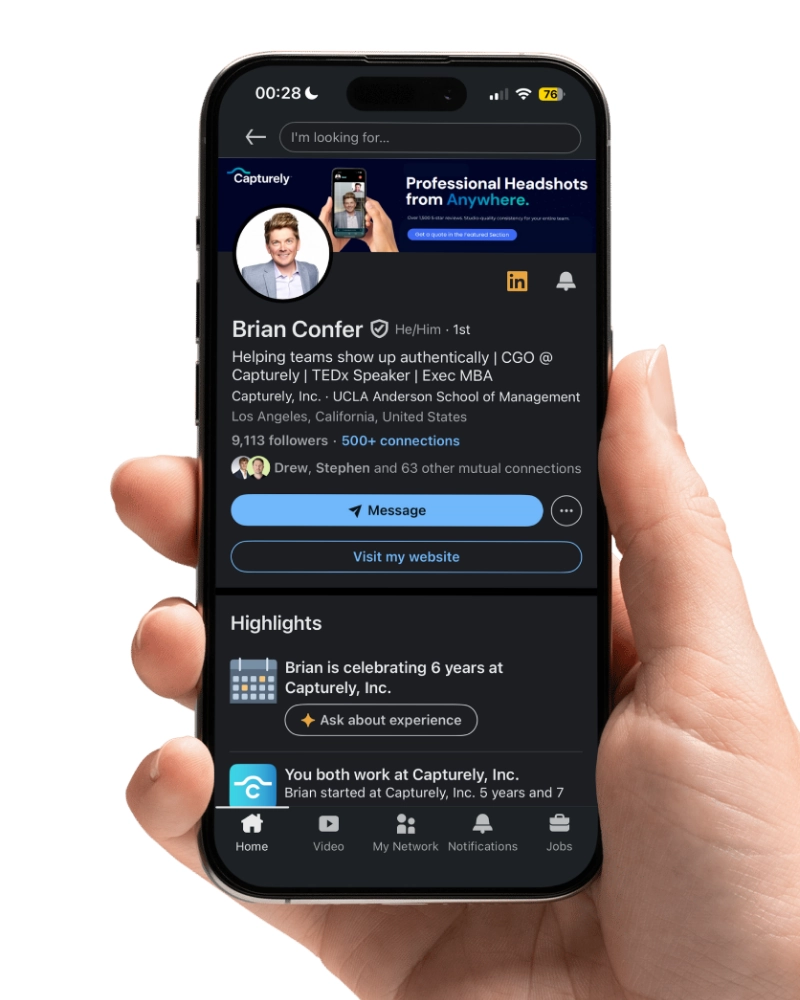
Black and white headshots are professionally photographed portraits rendered in monochrome — using shades of gray rather than color to emphasize expression, lighting, and facial structure. They work best for industries where authority and timelessness matter more than approachability: law, finance, executive leadership, and entertainment. Most professionals should shoot in color and request a B&W conversion so they get both versions from one session.
Last updated: March 2026

There’s a reason the most iconic portraits in history are monochrome. Yousuf Karsh’s defiant Churchill. Richard Avedon’s stripped-down American West series. Platon’s world leader close-ups. Color would have softened every one of them. As Avedon himself put it: “Color creates an unwanted distraction from the frank visual scrutiny of a sitter” (The Art Story).
That same principle applies to your LinkedIn profile, your company bio, and your speaker page. A black and white headshot strips away everything except who you are — your expression, your posture, your presence. Whether that’s the right choice depends on your industry, your audience, and where the photo will live. This guide covers when B&W works, when it doesn’t, the technique behind great monochrome portraits, and how to get both color and B&W versions from one 10-minute Capturely session.
Why Black and White Headshots Are Making a Comeback
Monochrome never really left — but it’s surging. Black and white film posted 89% growth in 2025, with Ilford expanding production capacity by 26% to meet demand (Serrano Rey, 2026). The professional headshot market itself hit $1.2 billion in 2024 and is projected to reach $2.5 billion by 2033 at 9.2% CAGR (Business Research Insights, 2024).
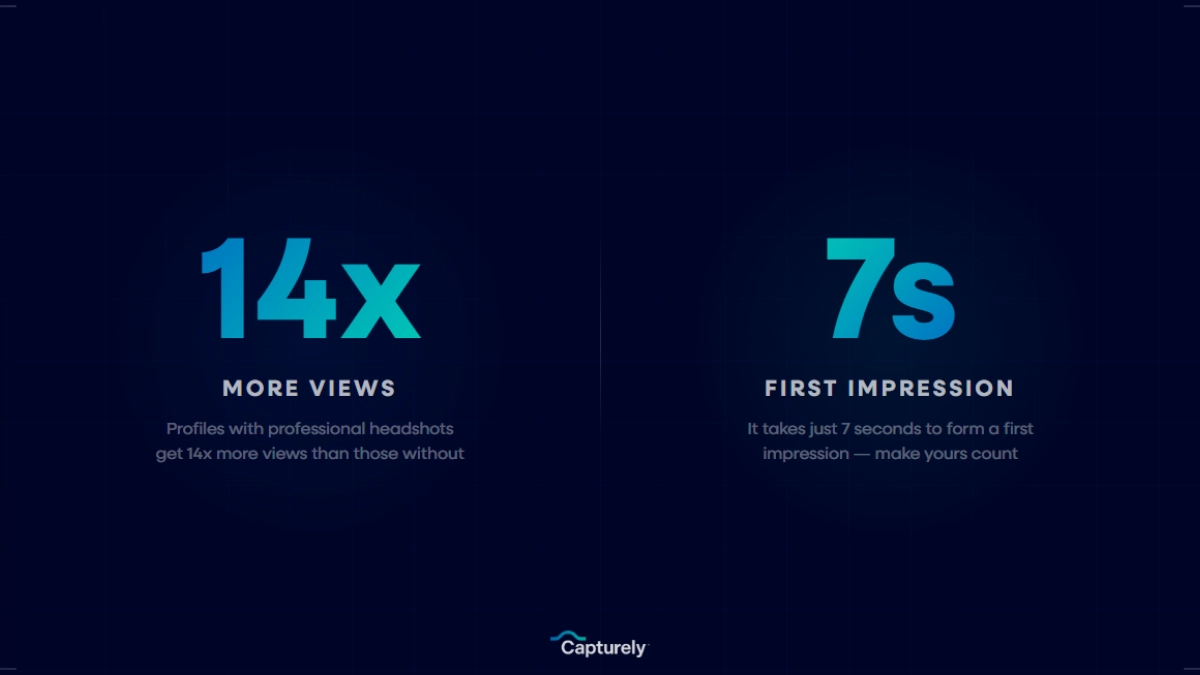
Several forces are driving the B&W resurgence in professional photography:
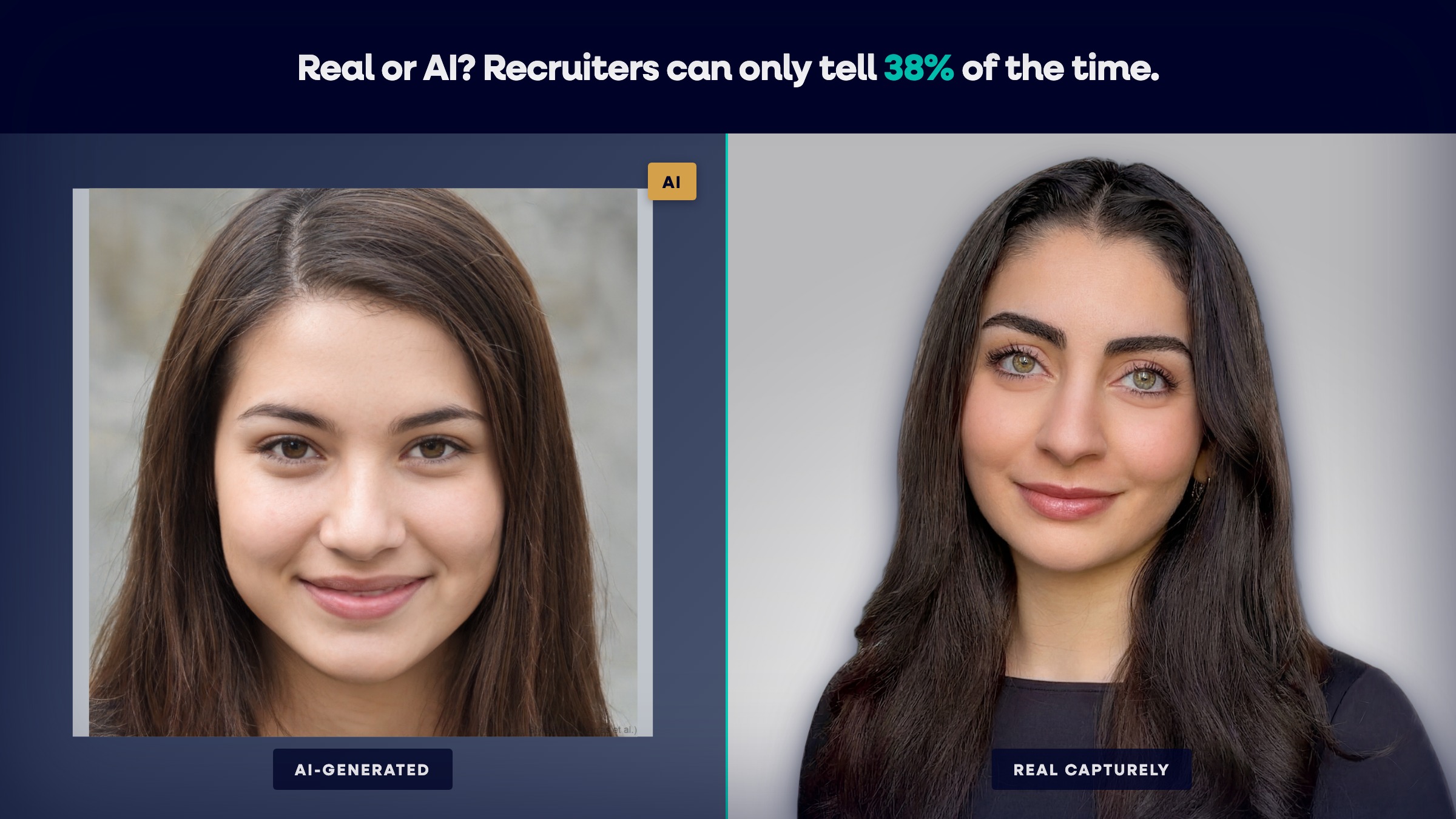
- The authenticity backlash. AI-generated headshots saturated LinkedIn in 2024–2025. Now 38% of recruiters flag AI-smoothed images as untrustworthy (SaleSso, 2025). B&W headshots signal intentionality — you chose this style deliberately, not because an algorithm picked it.
- The scroll-stopping effect. In a LinkedIn feed drowning in color, a monochrome headshot stands out. It reads as confident and deliberate. According to Alice Prenat, a NYC executive headshot photographer, a B&W portrait can “stand out visually in search results or comment threads” because most profiles default to color (Portrait Executive, 2025).
- Trend toward darker, sophisticated backgrounds. Headshot trends in 2026 lean toward deep charcoals and near-blacks that simplify the frame and put all focus on the eyes (James Connell, 2025). B&W is the natural extension of that shift.
The psychology backs it up. When color is removed, the brain compensates by projecting deeper meaning onto the image. Without color cues, viewers focus on contrast, texture, and expression — the elements that actually build trust (Michael Romero Studio). Peter Lindbergh, the photographer who launched the supermodel era, captured it perfectly: “Black and white is authentic. The color stops on the surface. Black and white penetrates the skin” (Blind Magazine).
When Do Black and White Headshots Work Better Than Color?
B&W headshots aren’t universally better or worse than color. Photofeeler analyzed over 60,000 ratings across 800 profile photos and found “no statistically significant effect — positive or negative” between color and B&W on competence, likability, or influence (Photofeeler). A separate HeadShots Inc. experiment with 240 reviewers confirmed the same finding — some B&W versions actually outperformed their color counterparts (HeadShots Inc., 2021).
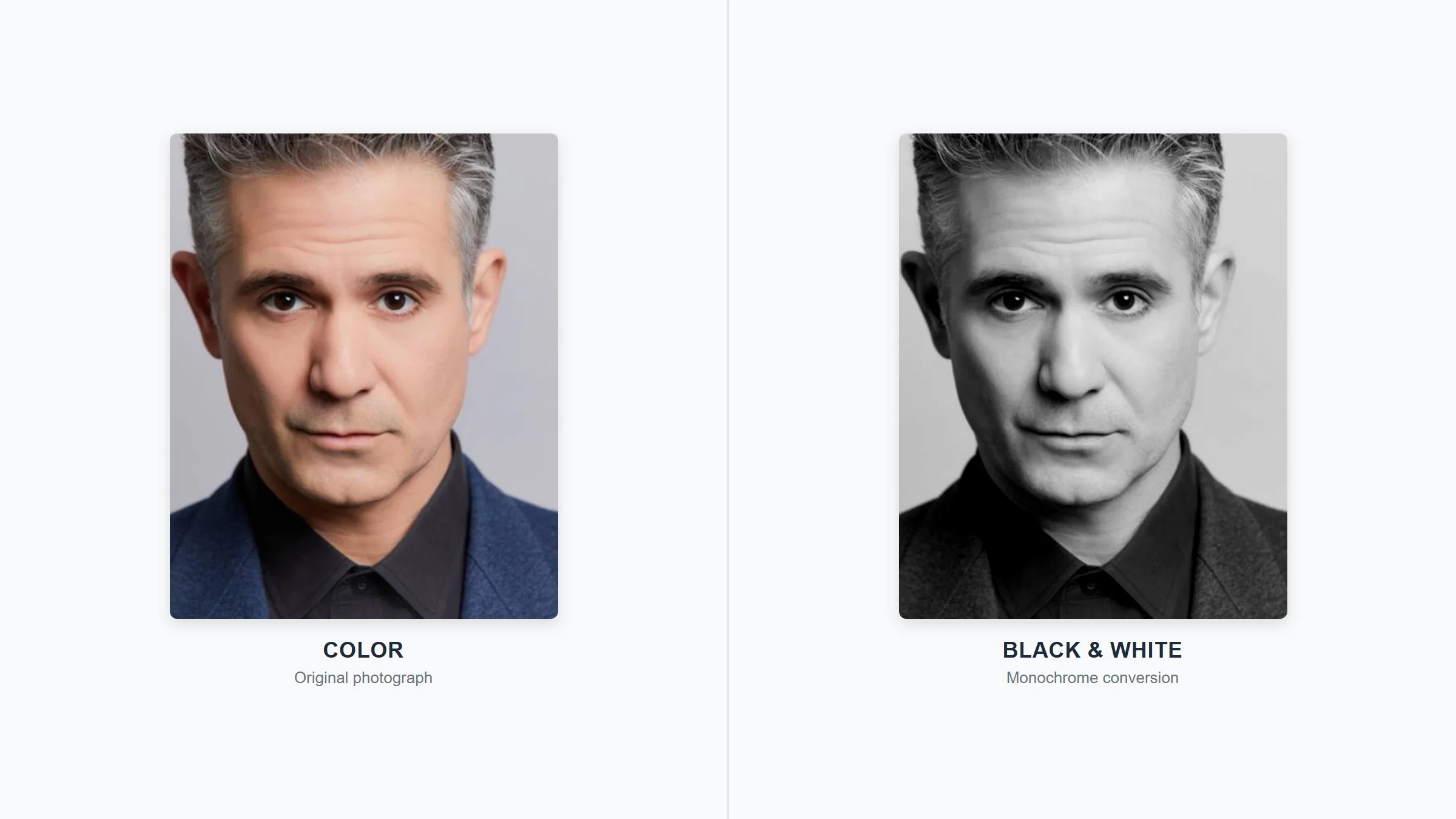
So the question isn’t “which is better?” It’s “which communicates what I need?”
Black and white headshots work best when the goal is authority, timelessness, or artistic sophistication. Here’s when to lean into monochrome:
| Industry / Use Case | Why B&W Works | Examples |
|---|---|---|
| Law firms | Conveys authority and tradition. Clients expect gravitas. | Partner bios, website directory, bar association profiles |
| Financial services | Signals trust and sophistication. Conservative industries reward classic aesthetics. | Advisor profiles, fund manager bios, quarterly reports |
| C-suite / executive leadership | Commands attention in board presentations, investor materials, and keynote introductions. | Annual reports, press releases, conference programs |
| Authors and speakers | Editorial quality that works on book jackets, event pages, and press kits. | Author bios, TEDx profiles, media kits |
| Architecture and design | Aligns with portfolio aesthetics. B&W team pages are standard in design firms. | Studio websites, project presentations |
| Acting / entertainment | Dramatic range, editorial portfolio work, artistic expression. | Portfolio supplements, theatrical submissions (note: casting directors now prefer color for primary headshots) |

For more on acting headshot requirements, including the shift from B&W to color in casting, see our dedicated guide. And for creative headshot styles that push beyond the standard corporate look, B&W is one of six distinct approaches worth considering.
When Should You Stick With Color?
B&W isn’t always the right call. Color headshots outperform monochrome when approachability, warmth, and personal connection matter more than authority.

| Context | Why Color Wins |
|---|---|
| Healthcare provider directories | Patients need warmth and approachability. B&W can read as cold or distant in a medical context. |
| Real estate agent profiles | Real estate is relationship-driven. Color communicates personality and energy. |
| LinkedIn (most industries) | 74% of LinkedIn first impressions are based on the profile picture alone (SaleSso, 2025). Color helps you appear warmer and more approachable in the feed. |
| Tech and startup teams | Color conveys energy, innovation, and modernity. B&W can read as stuffy in startup culture. |
| Marketing and communications | Your headshot is part of your personal brand. Color lets you signal personality through background choice and wardrobe. |
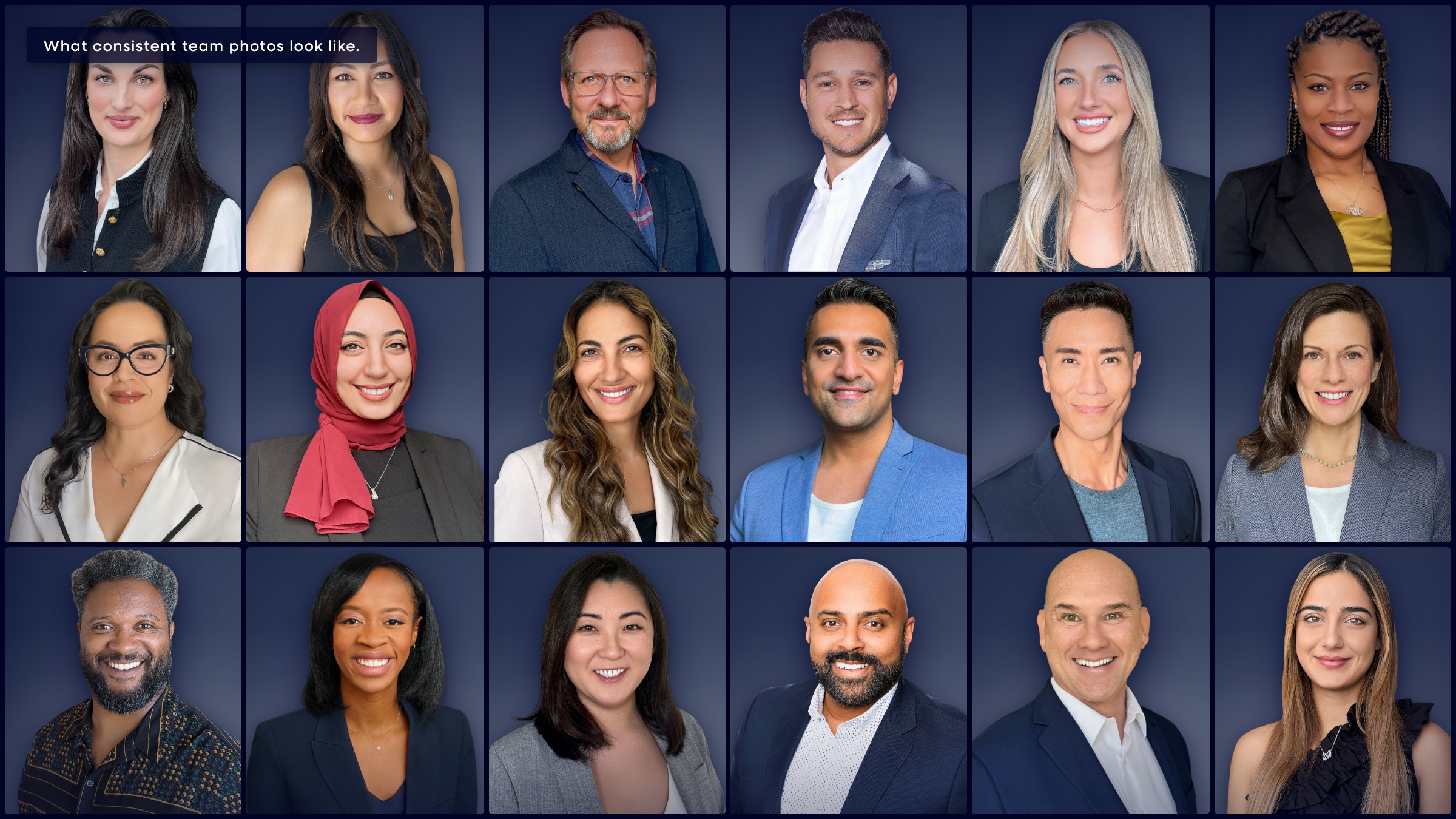
| Team pages needing consistency | If the rest of your team is in color, one B&W headshot sticks out — and not in a good way. |
One Capturely client described the consistency problem perfectly: “In the past we get people with some black and white, with some color, and the DPI is off, it’s just not a high enough resolution” (Poppy Behrens, Modern Storage Media, 2025). When your team page looks like it was assembled from six different decades, no individual headshot — B&W or color — can save the visual experience.
Here’s the honest take: Photofeeler also found that high color saturation hurts professional perception, reducing competence scores by -0.31 and influence by -0.35 (Photofeeler). So the real enemy isn’t color vs. B&W — it’s bad color vs. good anything. A well-lit, properly retouched headshot outperforms regardless of whether it’s monochrome or full color.
Get both color and B&W from one session. Capturely’s live photographers shoot in color, then our editors deliver B&W conversions alongside your standard images. 10 minutes, 3 edited photos, 24-hour delivery. Book your session →
What Makes a Great Black and White Headshot? The Technique That Matters
A great B&W headshot isn’t a color photo with a filter slapped on it. The technique is different, and the margin for error is thinner. Without color to carry the image, everything rests on lighting, contrast, and skin tone rendering.

Lighting Is Everything
In color photography, you can get away with flat, even lighting — the colors do some of the visual heavy lifting. In B&W, flat lighting produces flat, lifeless images. You need directional light to create shadow and dimension.
- Side lighting is the most impactful setup for monochrome headshots. It defines the jawline and cheekbones through shadow, creating a sculptural quality that color images rarely achieve.
- Rembrandt lighting (light from 45 degrees above and to one side) creates the signature triangle of light on the shadow-side cheek. It’s been the go-to portrait lighting pattern since the 1600s for a reason — it works.
- Backlighting with fill separates the head from the background and creates a subtle edge glow. A white reflector in front provides enough fill to keep facial features readable.
The eyes must be the sharpest, brightest element in the frame. Sharp eyes make or break a monochrome portrait. If the catchlights are missing or the eyes are underexposed, the image falls apart — no amount of post-processing fixes dead eyes.
Contrast and Tonal Range
The goal is a full tonal range from deep blacks to clean whites, with rich mid-tones carrying the facial detail. Mid-tones are where skin lives — lift them slightly during editing to keep skin looking smooth and even after conversion.
Too little contrast and the image looks muddy. Too much and you lose the quarter-tones in highlights and shadows — cheekbones disappear into pure black, forehead washes out to white. The sweet spot preserves enough shadow detail to show facial structure while maintaining enough contrast to feel dramatic.
Skin Tones in Monochrome
Different skin tones translate to different gray values, which is why the B&W conversion process matters more than the filter you choose. Red and orange channel manipulation is key: adjusting how warm tones convert to gray determines how skin reads in the final image.
One upside: blemishes are usually red, so they naturally recede when color is removed. One caution: texture becomes more visible in B&W. Fine pores, expression lines, and skin detail all show more prominently. This is a feature, not a bug — B&W portraits celebrate texture. Over-smoothing destroys authenticity and defeats the entire purpose of going monochrome. For more on what retouching should (and shouldn’t) look like, see our headshot retouching guide.

Black and White Headshot Styles Worth Knowing
Not all B&W headshots look the same. The style you choose communicates something specific about you and your work.
High Contrast / Dramatic
Deep blacks, bright highlights, minimal mid-tones. This is the Platon school — one strobe, shoot-through umbrella, black flags to eat excess light. The result is intense, confrontational, and impossible to scroll past. Best for: executives, speakers, authors with strong personal brands.

Classic / Soft
Full tonal range, gentle shadows, even lighting. Closer to Karsh’s style — refined and timeless without the intensity of high contrast. This is the safest B&W choice for corporate contexts where you want sophistication without drama. Best for: law firm partner pages, financial advisor profiles, corporate directories.
Editorial / Fashion
Wider framing, environmental context, magazine-quality production. Think Annie Leibovitz: one light, Rembrandt pattern, raw psychological depth. This style blurs the line between headshot and portrait. Best for: creative directors, designers, personal branding shoots. Browse more options in our headshot examples gallery.
Modern Minimalist
Clean background (usually white or light gray), contemporary lighting, and a natural expression. The B&W equivalent of the “modern relaxed” color headshot — professional without being stiff. This is what works for most professionals who want B&W without committing to drama. Best for: LinkedIn, consultants, tech executives who want sophistication without intimidation.

Choose your style, keep your options open. Capturely delivers 3 edited headshots in 24 hours — including B&W conversions from your color originals. 98+ backgrounds, live photographer direction, happiness guarantee. Teams of 10+ save up to 45%. Get a quote →
Can You Get Both Color and B&W Headshots?
Yes — and you should. The professional consensus is clear: always shoot in color, then convert to B&W during editing. This gives you maximum flexibility because the color file preserves all the channel data (red, green, blue) that controls how different tones translate to specific gray values.
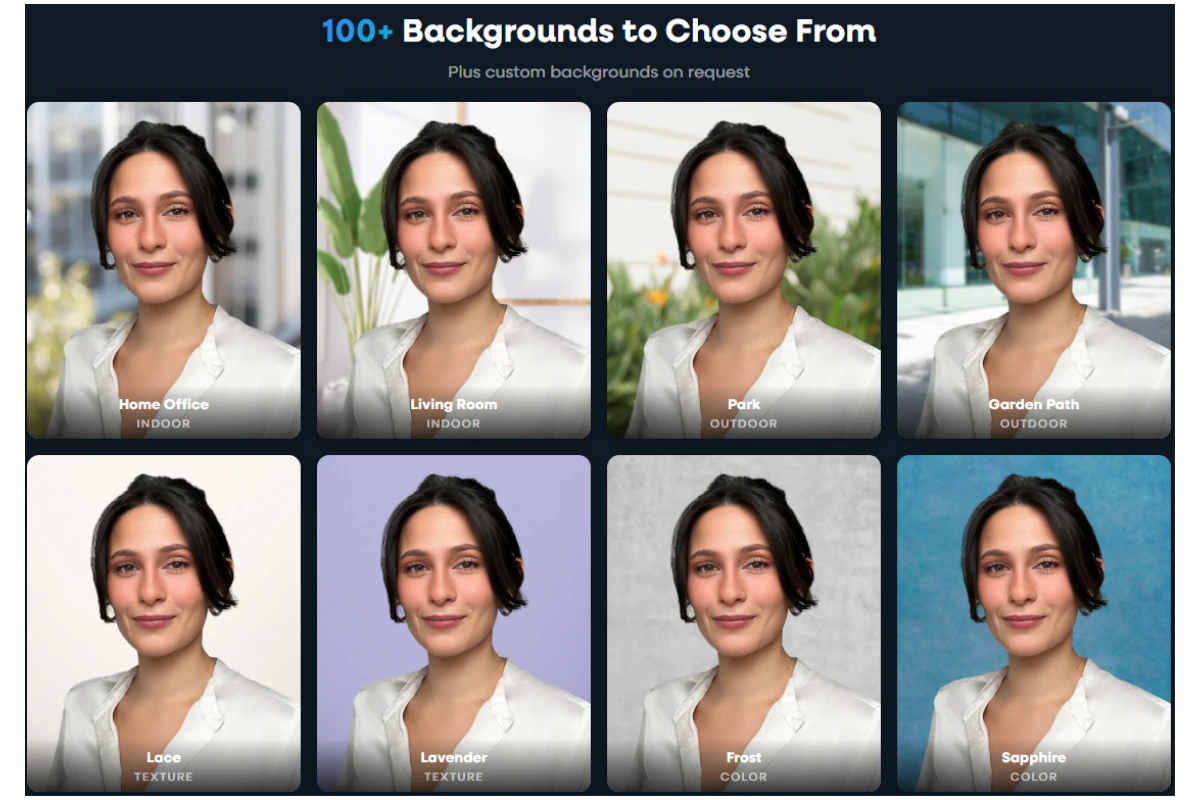
Here’s why shooting color first matters:
- You get both versions from one session. No need to book separate shoots for color and B&W.
- Color channel data gives you control. Adjusting how reds, oranges, and blues convert to gray values lets an editor fine-tune how skin, clothing, and backgrounds render in monochrome. A “desaturate” filter gives you none of that control.
- You future-proof your images. If your team page switches from B&W to color next year (or vice versa), you already have the files.
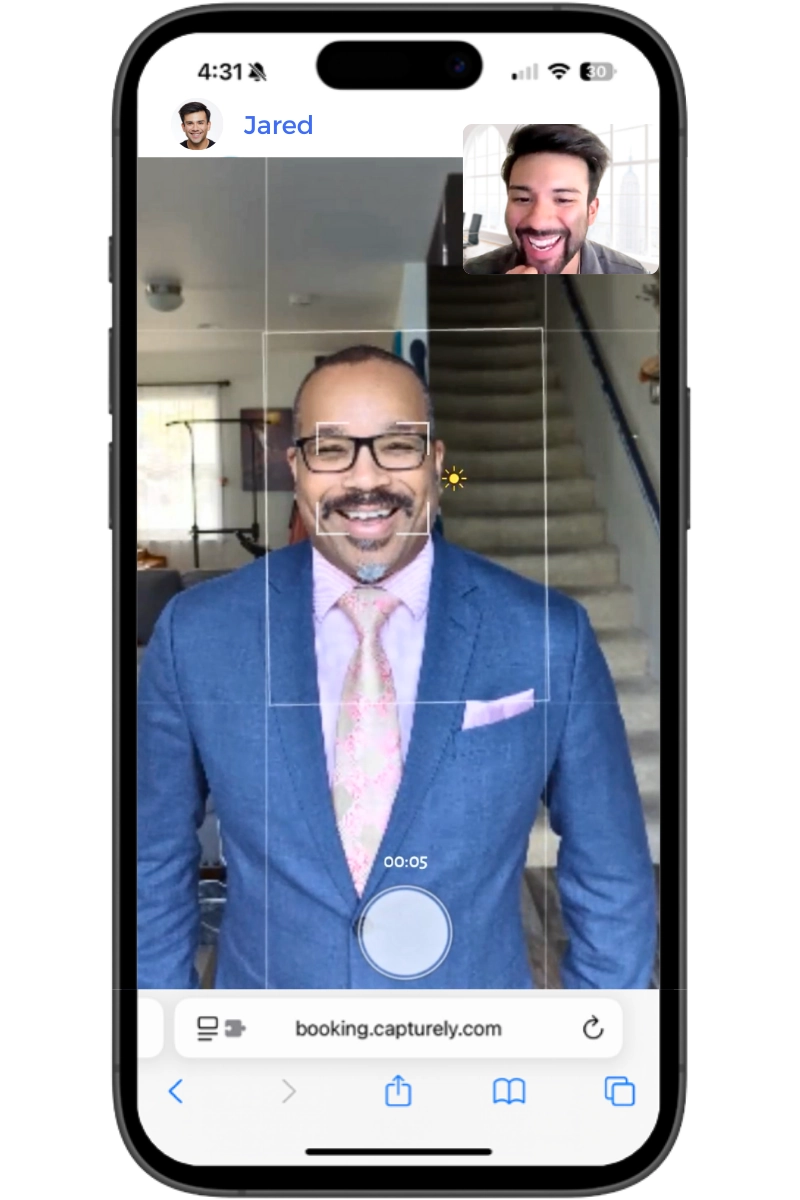
As photographer Kishore Sawh of SLR Lounge recommends: shoot RAW so the original file retains all color information for the best possible B&W conversion (SLR Lounge). With Capturely, this happens automatically — our photographers capture in full-resolution color using your phone’s rear camera (36–48 megapixels), and our editors can deliver B&W conversions alongside your standard color headshots.
What About the Cost?
Most photographers don’t charge extra for B&W conversions — it’s a standard part of the editing workflow. The real cost difference is between a professional headshot session and a DIY filter job.
| Option | Price Range | B&W Included? | Quality Control |
|---|---|---|---|
| Traditional studio session | $250–$450/session | Usually yes (upon request) | Photographer-dependent — varies by studio |
| On-site corporate shoot | $2,500–$6,000/day | Yes (part of editing package) | One photographer, one location only |
| Capturely virtual session | $79/session ($45–$79 for teams) | Yes — request B&W with your order | Consistent editing standards across every location |
| DIY phone filter | Free | N/A (it’s just a filter) | None — no lighting direction, no retouching, no control |
| AI-generated B&W headshot | $20–$50 | N/A (algorithmically generated) | Not a real photograph — 38% of recruiters flag as untrustworthy |
How Capturely Delivers B&W Headshots
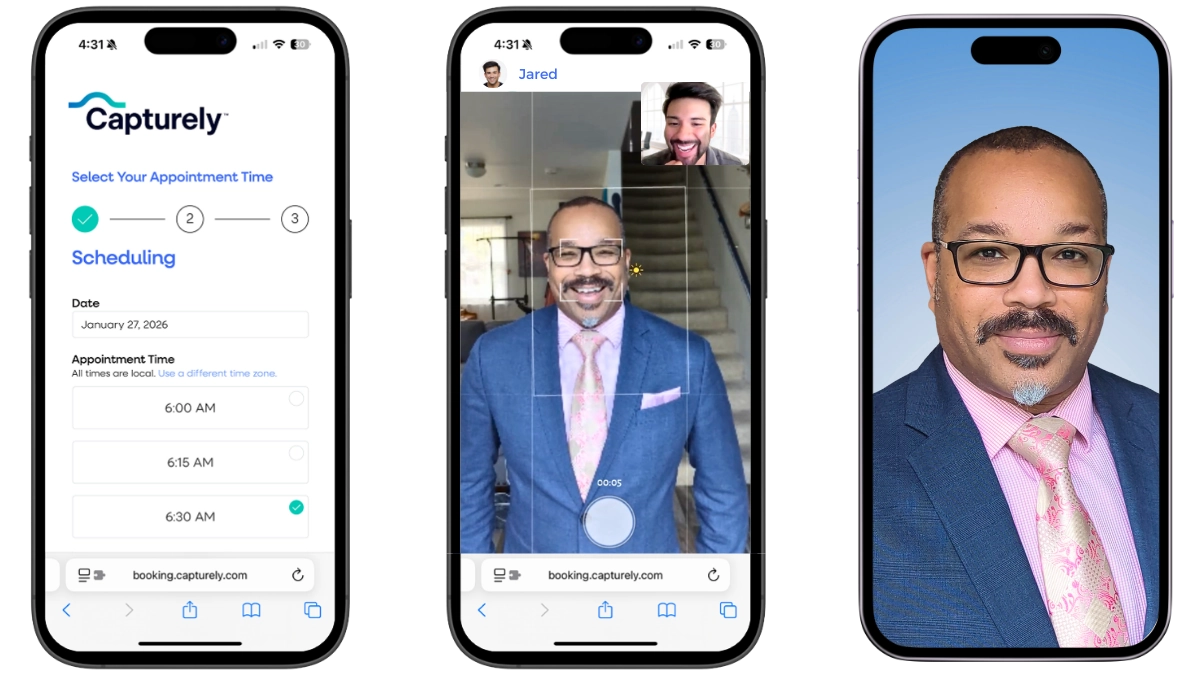
- Click your session link. Open it on your phone — no app download required.
- A live photographer directs your shoot. They coach posture, expression, and lighting in real time. 10 minutes total.
- Get 3 edited images in 24 hours. Request B&W conversions and receive both versions — color originals plus monochrome — with full professional retouching and your choice of 98+ background options.
Companies like Google, Netflix, Amazon, and McKinsey use Capturely for their distributed teams. 765+ reviews at 4.9 stars. Whether you need one headshot or five hundred, every session follows the same quality standards — so your team page looks consistent regardless of where people are located.

Color originals. B&W conversions. One session. $79 for individuals. Teams save up to 45%. Live photographer direction, 24-hour delivery, happiness guarantee. Get started →
Frequently Asked Questions
Is it OK to have a black and white headshot?
Yes. Photofeeler’s analysis of 60,000+ ratings found no statistically significant difference between color and B&W headshots on competence, likability, or influence (Photofeeler). B&W headshots work especially well in law, finance, executive leadership, and creative industries. The key is professional lighting and editing — a desaturated phone selfie is not a B&W headshot.
Should professional headshots be in color or black and white?
It depends on your industry and where the photo will be used. Color is preferred for healthcare, tech, real estate, and LinkedIn in most industries because it communicates warmth and approachability. B&W is preferred for law firms, financial advisors, executive bios, and editorial contexts where authority and timelessness matter more. When in doubt, shoot color and request a B&W conversion so you have both.
What should I wear for a black and white headshot?
Solid colors in medium tones photograph best in B&W — think charcoal, navy, burgundy, or forest green. Avoid pure white (washes out) and pure black (loses detail in shadows). Textured fabrics like wool, tweed, and linen add visual interest that smooth fabrics lack. Patterns and busy prints become distracting without color to differentiate them. For detailed wardrobe guidance, see our what to wear guide.
Are black and white headshots good for LinkedIn?
They can be. Profiles with professional headshots receive 21x more views and 36x more messages regardless of color treatment (LinkedIn Research, 2025). A B&W headshot can stand out in a color-dominated feed, but it works best if your industry leans formal — law, finance, consulting. For tech, marketing, or healthcare, color typically communicates better warmth and energy.
How much do black and white headshots cost?
Most photographers include B&W conversion at no extra charge because it’s a standard editing step. Traditional studio headshots run $250–$450 per session in major markets. Capturely’s virtual sessions are $79 individually or $45–$79 per person for teams, with B&W available upon request. AI-generated B&W headshots cost $20–$50 but are algorithmically fabricated — not real photographs.
Can you convert a color headshot to black and white?
Yes, and it’s the recommended approach. Shooting in color preserves all RGB channel data, giving editors precise control over how each tone converts to gray. A proper B&W conversion using color mixer controls (Lightroom, Photoshop) produces dramatically better results than simple desaturation or a phone filter. Always shoot RAW for the best conversion quality.
What is the difference between a black and white headshot and a regular headshot?
The framing, quality, and purpose are identical — both are professionally photographed head-and-shoulders portraits. The difference is color treatment. B&W removes color information to emphasize expression, lighting, and facial structure. It carries a more editorial, timeless quality. Color headshots are more versatile and work across a wider range of industries and contexts.
What backgrounds work best for black and white headshots?
Solid backgrounds in medium to dark tones work best because they provide clean separation without competing with the subject’s face. Dark gray, charcoal, and black backgrounds create a dramatic look. Light gray and white create a clean, modern feel. Avoid busy or textured backgrounds — without color separation, visual clutter becomes more distracting in monochrome. Capturely offers 98+ background options including styles optimized for B&W conversion.