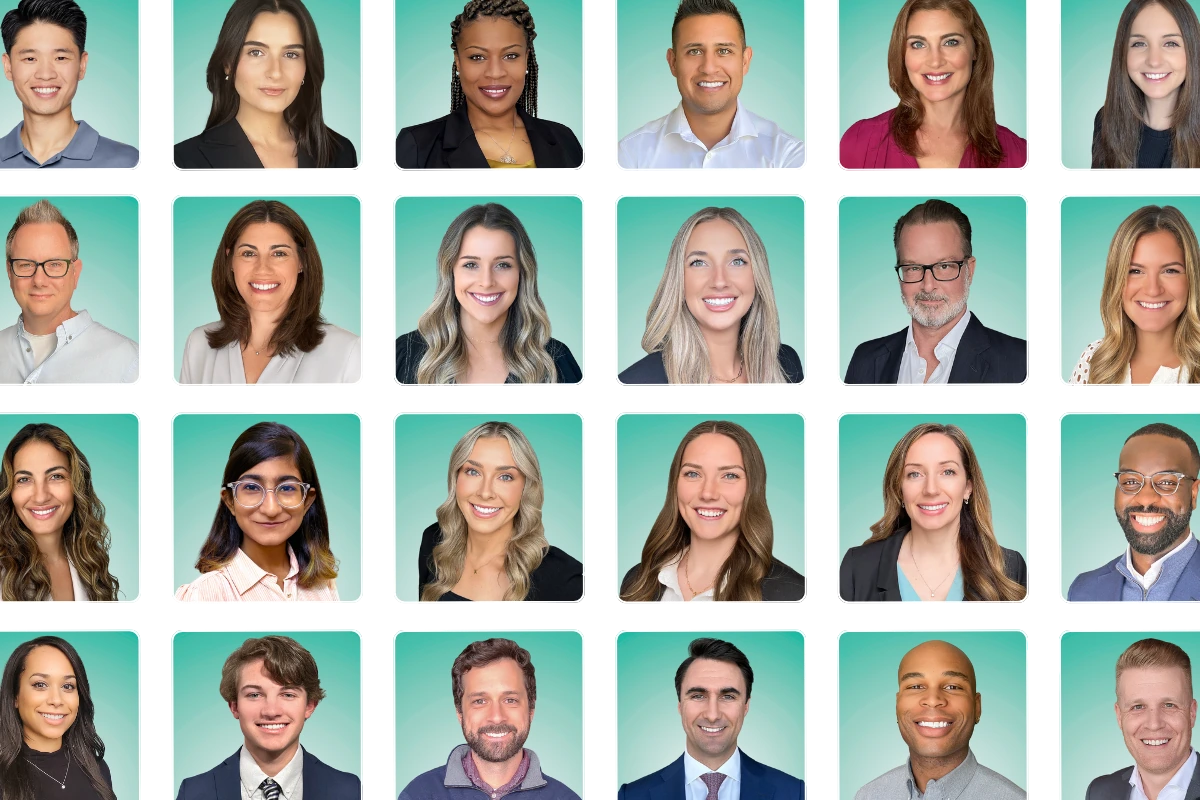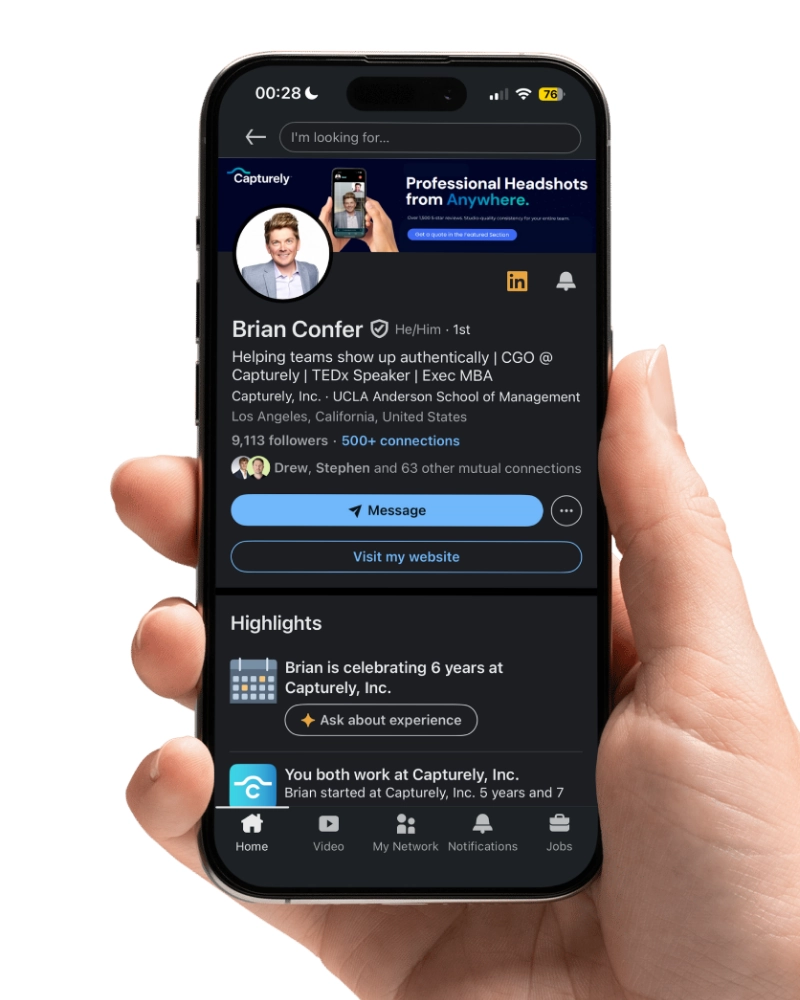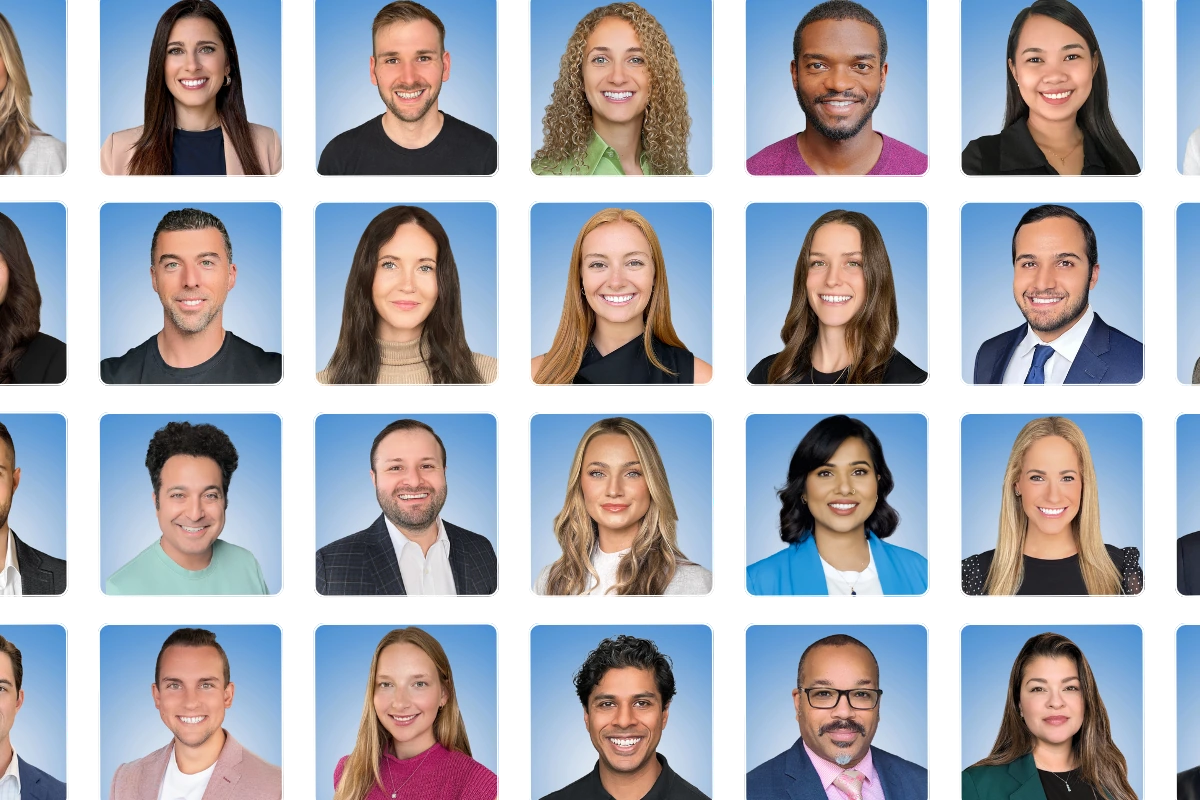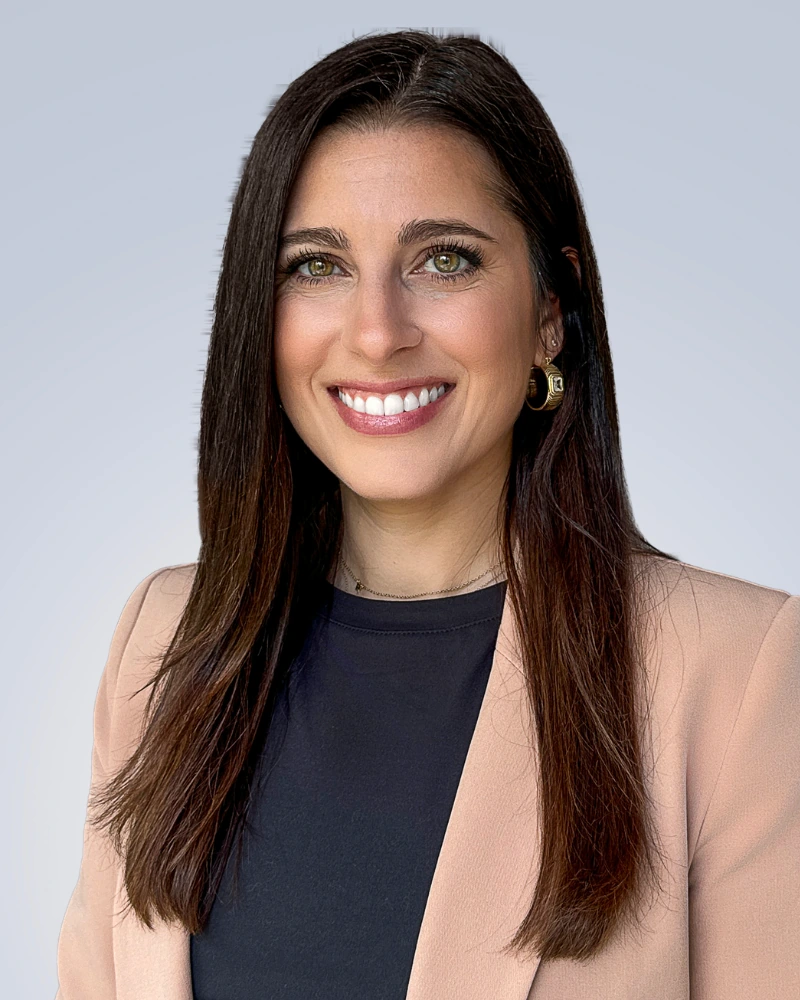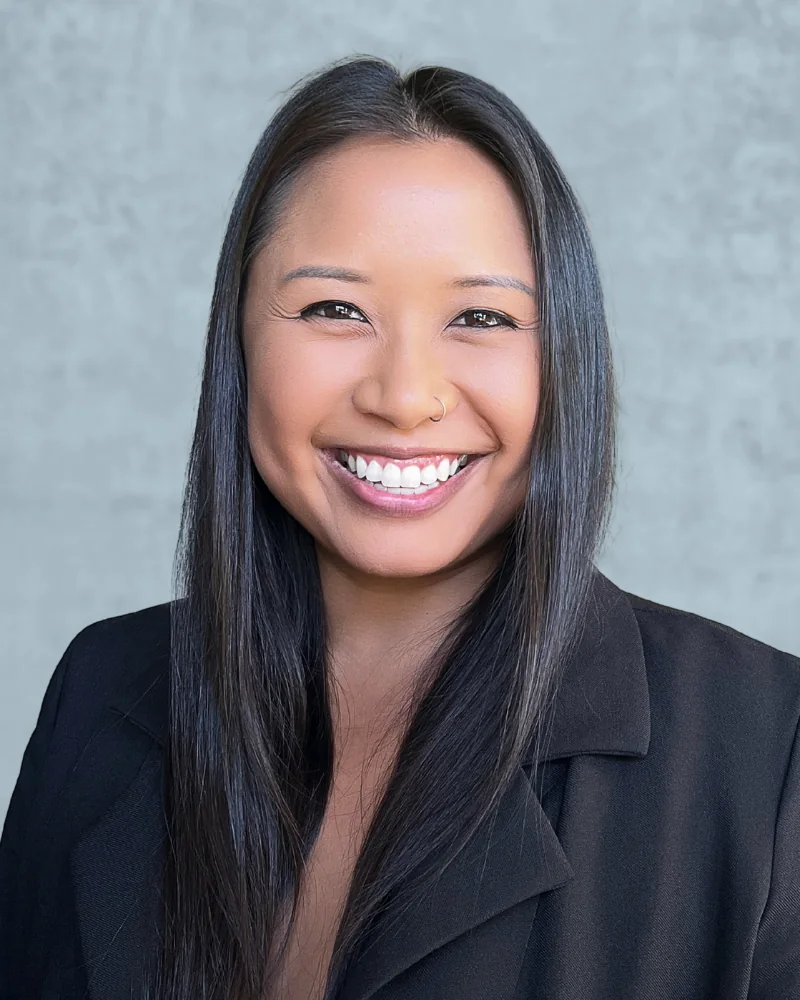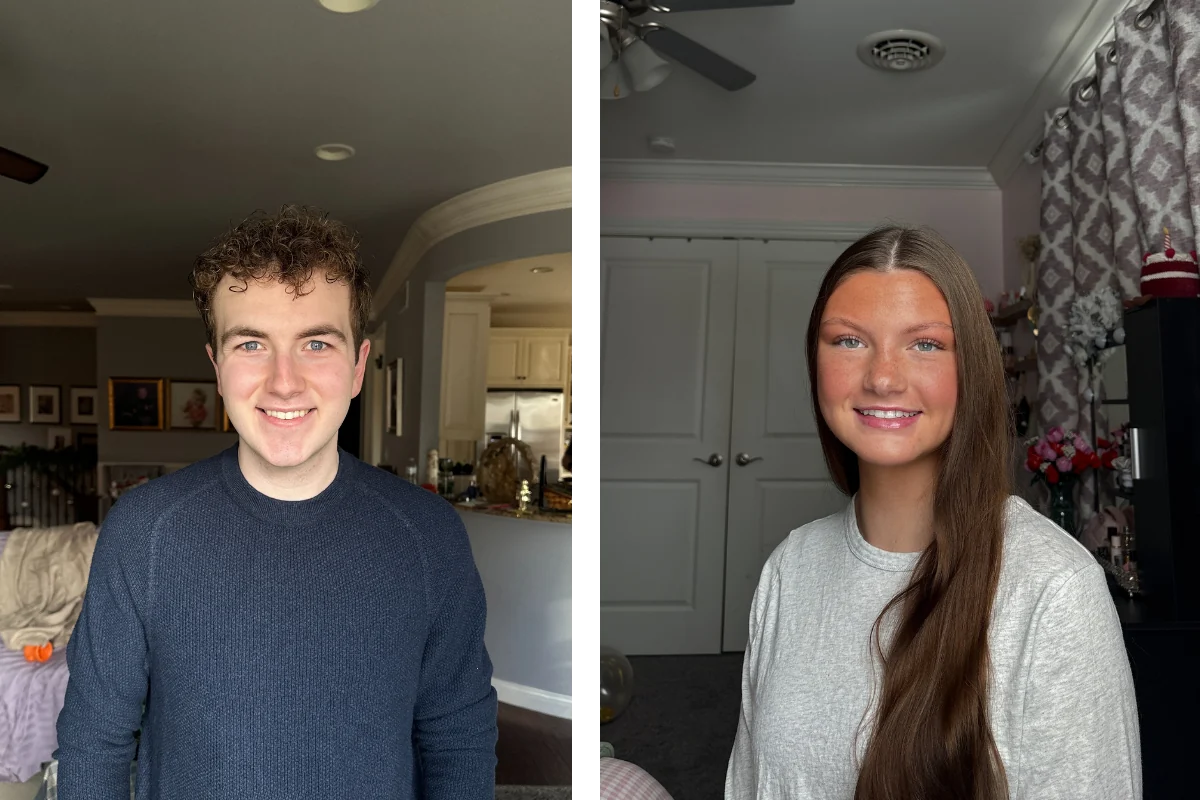
Where to get professional headshots depends on three things: your budget, how many people need photos, and whether you care about authenticity. The best options range from $29 AI generators to $700+ studio sessions — but the right choice for a solo LinkedIn refresh is completely wrong for a company rolling out headshots to 500 distributed employees.
Last updated: February 2026
This guide breaks down every way to get professional headshots in 2026 — eight distinct options, with real pricing, honest pros and cons, and a clear recommendation for each use case. We’ve tested, compared, and coached teams through most of these options at Capturely, where we’ve delivered 100,000+ headshots for companies like Google, Netflix, McKinsey, and UnitedHealth Group. We know what works. We also know what wastes your time and money.
Quick Comparison: Every Way to Get Professional Headshots
Here’s the full picture before we go deep on each option. Bookmark this table — it’s the fastest way to narrow down what works for you.
| Option | Price Range | Real Photos? | Live Direction? | Turnaround | Best For |
|---|---|---|---|---|---|
| Local Photography Studio | $150–$700+ | Yes | Yes (in-person) | 1–3 weeks | Executives, actors, personal branding |
| JCPenney Portraits | $75–$195 | Yes | Yes (in-person) | Same day proofs | Budget-conscious individuals |
| Freelance Photographer | $100–$425+ | Yes | Yes (in-person) | 1–2 weeks | Flexible scheduling, location variety |
| On-Demand Marketplace (Snappr) | $89–$249+ | Yes | Yes (in-person) | 2–5 days | On-demand in-person, co-located teams |
| Self-Guided Virtual (Headshots.com) | $40–$60/headshot | Yes | No | 3–5 business days | Remote teams wanting real photos, no live direction |
| AI Headshot Generators | $19–$79 | No (AI-generated) | No | 15–90 minutes | Solo professionals on tight budgets |
| Live Virtual Headshots (Capturely) | $45–$79/person | Yes | Yes (live photographer via phone) | 24 hours | Distributed teams, quality + convenience |
| DIY at Home | Free | Yes | No | Immediate | Emergency placeholder, personal social media |
Now let’s unpack each one — what it actually costs, where it falls short, and who should use it.
1. Local Photography Studios
The traditional choice. You book a session at a portrait studio, show up, and a professional photographer directs you through poses and expressions in a controlled lighting environment. It’s what most people picture when they think “professional headshots.”
What it costs: $150–$700+ per session in most U.S. markets. New York City averages $924. Indianapolis averages around $176. LA and San Francisco run $295–$450 (HeadshotPro cost analysis, 2025). That session fee typically covers 30–60 minutes of shooting and 1–3 retouched images. Want more edited photos? Budget $25–$100 each, additional. Hair and makeup? Another $50–$200.
Hidden costs nobody warns you about: Setup fees ($200–$500 at higher-end studios), advanced retouching beyond basic corrections ($40–$100 per image), and commercial usage rights ($100–$500+). That “$300 session” can quietly become $600+ once you need the photos for your website, LinkedIn, and marketing materials.
Who this is right for: Executives, actors, or anyone building a personal brand who wants the absolute highest production value and doesn’t mind investing a full afternoon plus travel time. If you need one perfect headshot and budget isn’t the primary constraint, a good local studio is hard to beat on raw image quality.
Who this is wrong for: Teams. Getting 50 distributed employees to the same studio is a logistical nightmare — and getting 50 employees to different studios across different cities produces inconsistent results. As one HR director told us: “The cost and the time and the scheduling just threw us.” For a detailed pricing breakdown across all methods, see our professional headshot cost guide.
2. JCPenney Portrait Studios
The option most comparison articles ignore entirely. JCPenney Portraits — operated by Lifetouch, a Shutterfly company — still runs roughly 400 locations across the U.S. They offer professional headshots at a fraction of independent studio prices.
What it costs: Session fee is $14.99 (free with a JCPenney Perks Club membership). One digital image: $59.99. Three digital images: about $95. A full digital album runs $145–$195. JCPenney has also run promotions including their “Snapshot for Success” program offering free headshots (JCPenney Corporate, 2024). Groupon deals frequently start at $29.99.
The tradeoff: JCPenney photographers are generalists. They shoot babies, families, seniors, and headshots — all in 45-minute sessions with 15–20 frames. You’ll get a decent, well-lit headshot, but you won’t get the coaching and micro-adjustments a dedicated headshot specialist provides. The backgrounds and setups are also standardized, not customizable to your brand.
Who this is right for: Individuals on a tight budget who want a real, photographer-directed headshot and have a JCPenney location nearby. Especially useful for job seekers, students, and early-career professionals.
Who this is wrong for: Teams, brand-conscious organizations, or anyone who needs a specific background, style, or cropping standard. And location availability matters — many JCPenney Portraits locations have closed due to reduced foot traffic. Check availability before planning around this option.
What happened to the others? Sears Portrait Studios and Walmart’s PictureMe studios both closed permanently in 2013 when operator CPI Corp defaulted (PetaPixel, 2013). Target’s portrait studios are also gone. JCPenney is the only surviving retail portrait option in the U.S.
3. Freelance Photographers (Thumbtack, Bark, Yelp)
Hiring an independent photographer through a marketplace like Thumbtack, Bark, or Yelp. You search for headshot photographers in your area, review portfolios, compare prices, and book directly.
What it costs: The average on Thumbtack runs $150–$304, with a typical range of $150–$427 (Thumbtack, 2025). Bark’s average is about $150/hour, ranging from $100–$230/hour depending on your market (Bark, 2025). Beginners charge as low as $75. Headshot specialists in major metros can run $500–$2,000+.
The quality gamble: Freelance platforms have no standardized quality control. A photographer’s portfolio shows their 10 best shots — but your result depends on the conditions of your specific session, how well they direct you, and whether their expertise is actually in headshots or if they’re a wedding photographer trying to fill weekday bookings. There’s no way to guarantee consistency if you need headshots for more than one person.
Who this is right for: Individuals who want flexibility on location (your office, outdoors, a café) and are willing to spend time vetting portfolios. A great freelance headshot photographer who specializes in corporate or professional portraits can deliver results equal to any studio.
Who this is wrong for: Teams, or anyone who doesn’t want to gamble on quality. Also a problem if you’re in a smaller market with limited photographer options.
Need consistent headshots for a distributed team? Capturely connects every employee with a live photographer via their phone — same process, same quality, same backgrounds, regardless of location. 24-hour delivery. 765+ reviews at 4.9 stars. Get an instant quote →
4. On-Demand Photography Marketplaces (Snappr)
Snappr is the dominant on-demand photography marketplace in the U.S. You select your shoot type, get matched with a vetted local photographer, and they come to your location — sometimes within hours.
What it costs: Headshot sessions start at $89. Extended sessions with more looks and deliverables run $249+. Major-metro pricing for multi-look shoots can reach $500+ (Snappr, 2025). Snappr claims to accept only 5% of photographer applicants.
How it works: Book online, choose a date and location, and a photographer shows up with equipment. Standard editing (color correction, exposure, cropping) is included. You own full copyright. Enterprise dashboard available for managing multiple sessions.
The limitation: Snappr is still in-person photography. Better booking experience, same delivery model. A team of 200 people across 30 cities means 30 separate bookings with 30 different photographers — and 30 different lighting setups, posing styles, and result qualities. Consistency isn’t guaranteed. Some Trustpilot reviews also flag no-show photographers and refund difficulties, though they carry 1,734 reviews with a generally positive rating.
Who this is right for: Individuals or co-located teams who want a professional photographer at their location without the hassle of finding one independently. Great for office headshot days where everyone is in the same building.
Who this is wrong for: Distributed or remote teams. If your people are spread across the country (or the world), on-demand in-person photography doesn’t solve the coordination problem — it just moves it to a different app.
5. Self-Guided Virtual Headshots (Headshots.com, Snapbar)
A middle ground between in-person studios and AI generators. You take your own photo following video instructions, upload it, and a team of editors (human or AI) processes it to look professional.
What it costs:
| Service | Per Headshot | Editing | Turnaround |
|---|---|---|---|
| Headshots.com | $40–$60 (volume tiered) | Human editors | 3–5 business days |
| Snapbar Studio | $25/approved headshot | AI-powered editing | Near-instant |
How it works (Headshots.com): Team members receive a tutorial video and self-guided instructions. They take their own photos — no app download, no special equipment. Headshots.com’s editing team processes the submissions. No live photographer. No real-time feedback. Quality depends entirely on how well the employee follows the instructions. For a detailed comparison to live-photographer services, see our Headshots.com vs Capturely breakdown.
How it works (Snapbar Studio): Similar self-guided process, but editing is AI-powered rather than human. Admin dashboard enforces brand guidelines across all submissions. Scales from 5 to 50,000 headshots.
The gap: Self-guided means self-directed. Nobody is coaching your expression, catching your shoulder tension, or telling you to push your chin forward. One prospect who switched from Headshots.com described it this way: “We’re not really loving the process… it’s really difficult to get the right picture for them to approve… employees getting dressed, taking headshots, submitting, then getting rejection in 24-48 hours.”
Who this is right for: Remote teams who want real photos (not AI) at a reasonable per-person cost, and don’t need live coaching during capture.
Who this is wrong for: Organizations that need high first-time quality with low rejection rates. Without live direction, you get more reshoots and more frustrated employees.
6. AI Headshot Generators
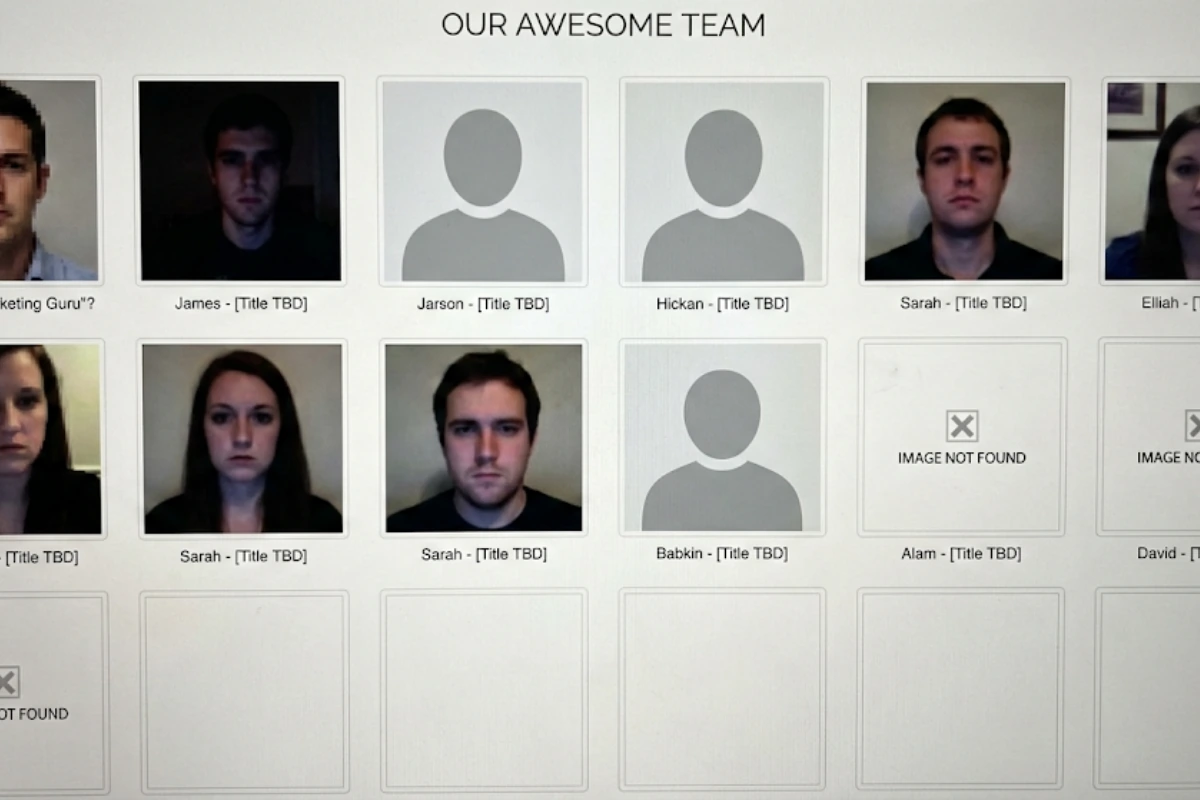
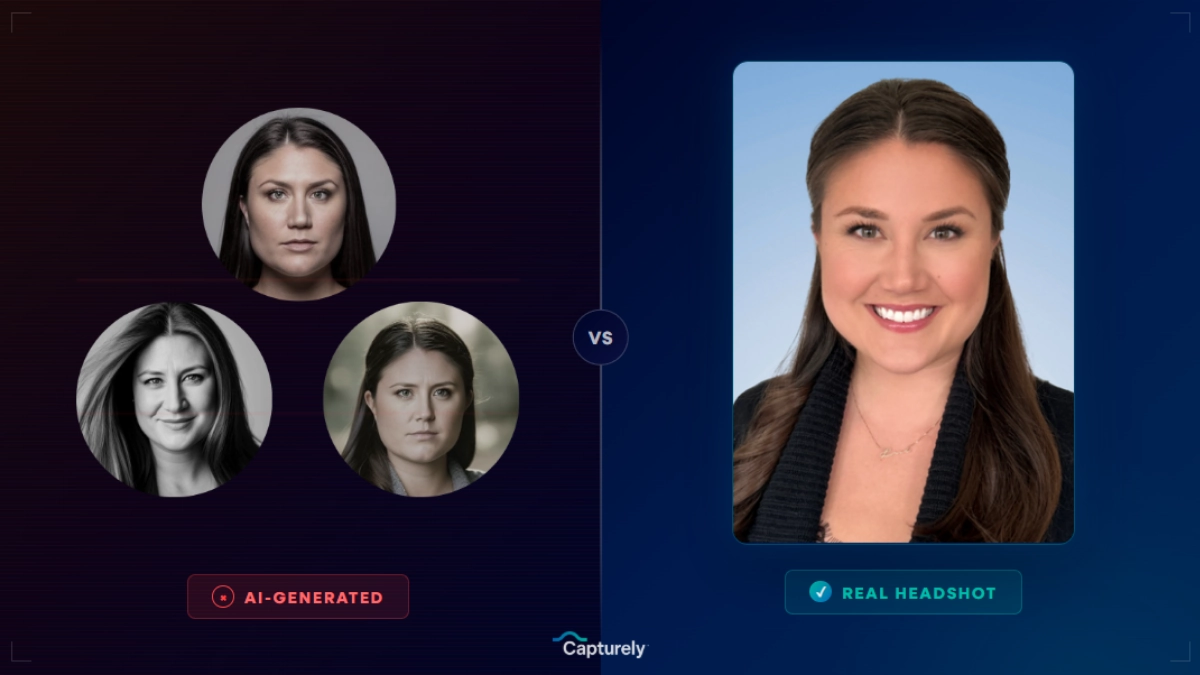
Upload 10–20 selfies. An AI model generates synthetic headshots that look like you — in a suit, against a studio background, with professional lighting. Except none of it is real. The suit is fabricated. The background is fabricated. The lighting is fabricated. Sometimes even the face is subtly wrong.
What it costs:
| Tool | Price | # Headshots | Turnaround |
|---|---|---|---|
| Try It On AI | $19–$47 | 100–200 | 30–90 min |
| HeadshotPro | $29–$59 | 40–200 | ~30 min |
| BetterPic | $35–$79 | 20–unlimited edits | 30–90 min |
| Aragon AI | $35–$75 | Up to 100 | 15 min–2 hr |
| InstaHeadshots | $39–$55 | 40–200 | ~15 min |
The appeal is obvious: $29, 30 minutes, done. No scheduling, no camera shyness, no travel. For a solo professional who needs something better than their current cropped-vacation-photo on LinkedIn, it’s hard to argue with the speed and price.
The problems are less obvious — until they aren’t.
A 2024 study by Ringover surveyed 1,087 recruiters and found a revealing paradox: 76.5% preferred AI headshots over real ones in blind comparisons. But 66% said they’d be put off once they learned the headshot was AI-generated, and 88% believed candidates should disclose AI use (Ringover, 2024). AI headshots look polished. They just don’t build trust once anyone knows the truth.
The representation problem is worse. A study published in JAMA Network Open analyzed 1,000 AI-generated physician images across 5 platforms and found that 82% depicted White physicians (vs. 63% of actual U.S. physicians) and 93% depicted males (vs. 62% of actual physicians). Three platforms produced zero Latino physician images. Two produced zero Asian images (JAMA Network Open, 2024).
Then there’s the trust gap. When your AI headshot shows you in a charcoal blazer against a studio backdrop, and your colleagues see you on Zoom in a hoodie — the disconnect is immediate. As Sam DeMase, Career Expert at ZipRecruiter, warned: “A poorly done AI-generated headshot is easily recognized, reads as inauthentic, and can hurt the candidate’s chances” (CNBC, 2025).
And in January 2026, editing software company Evoto launched an AI Headshot Generator at Imaging USA — and removed it within days after furious backlash from the photography community, issuing a public apology: “We missed the mark, and we are sorry” (PetaPixel, 2026). The incident — dubbed “Headshotgate” — underscored just how contested AI imagery remains.
Who this is right for: Individuals on a tight budget who need a quick LinkedIn profile upgrade and are comfortable with the authenticity tradeoff. If you’re a freelancer or student who needs something better than nothing, $29 for an AI headshot beats a grainy selfie.
Who this is wrong for: Teams. Client-facing professionals. Anyone in healthcare, law, or finance where trust is currency. Any organization where people meet face-to-face (or face-to-Zoom) after seeing the headshot. For a deeper breakdown of the real-vs-AI question, see our professional headshots guide.
Real photos. Real photographer. No logistics. Capturely sessions take 10 minutes from your phone — a live photographer coaches your pose, expression, and angles in real time. 3 edited headshots delivered in 24 hours. Teams save up to 45%. See how it works →
7. Live Virtual Headshots (Capturely)
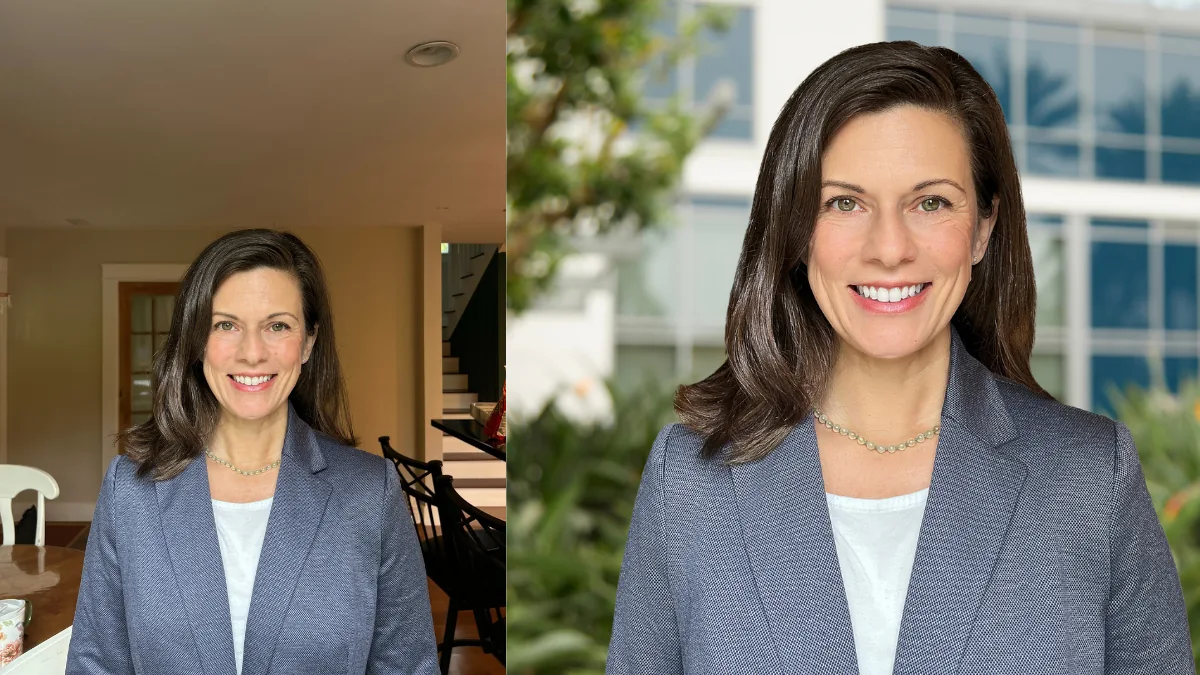
This is the category most comparison articles skip — and the one growing fastest. Live virtual headshot services connect you with a professional photographer through your phone, like a video call. The photographer directs your session in real time, uses your phone’s rear camera (36–48 megapixels, not the selfie camera), and coaches your posing, expression, and lighting — the same direction you’d get in a $400 studio.
What it costs: $79/session for individuals. Teams save up to 45% — $45–$79 per person depending on team size. Each session includes 3 fully edited images, professional retouching, 24-hour delivery, and a happiness guarantee. Custom backgrounds available from a library of 98+ options.
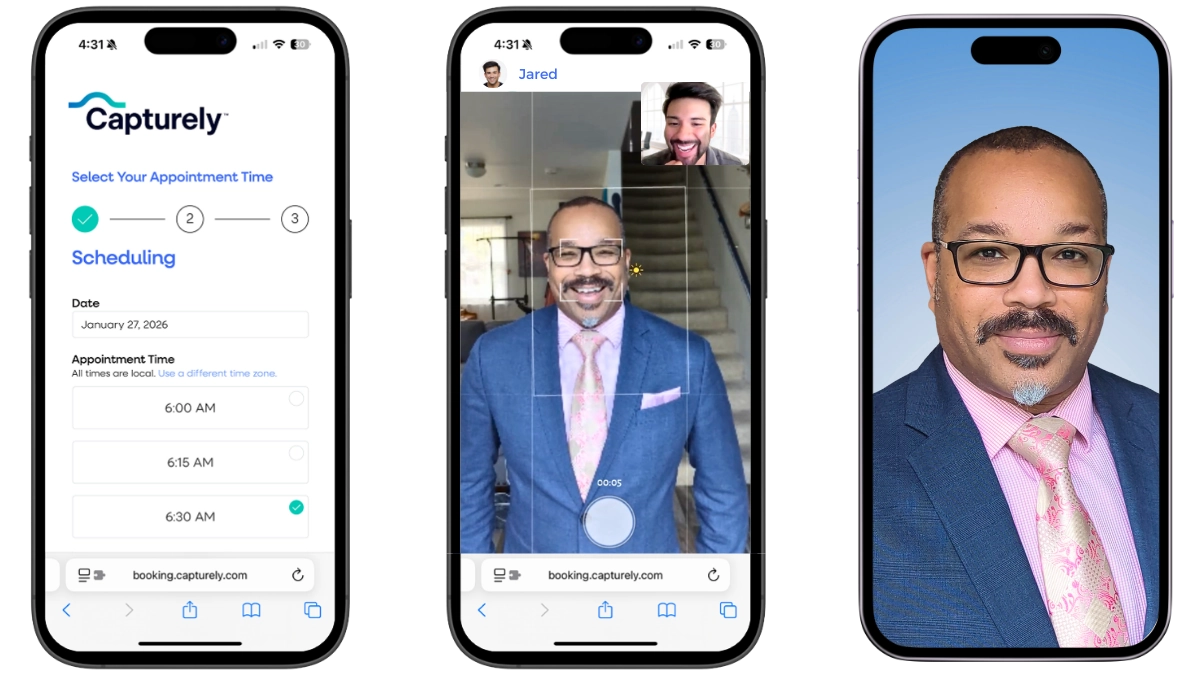
How it works:
- Employees receive a simple, secure link — no app download required.
- Open the link on any smartphone. A professional photographer connects live.
- The photographer switches to the rear camera and directs the entire 10-minute session — posture, chin angle, shoulder tension, expression, eye contact.
- Photos are professionally retouched and delivered within 24 hours.
- Admins manage everything through a dashboard — scheduling, delivery, branding, background selection.
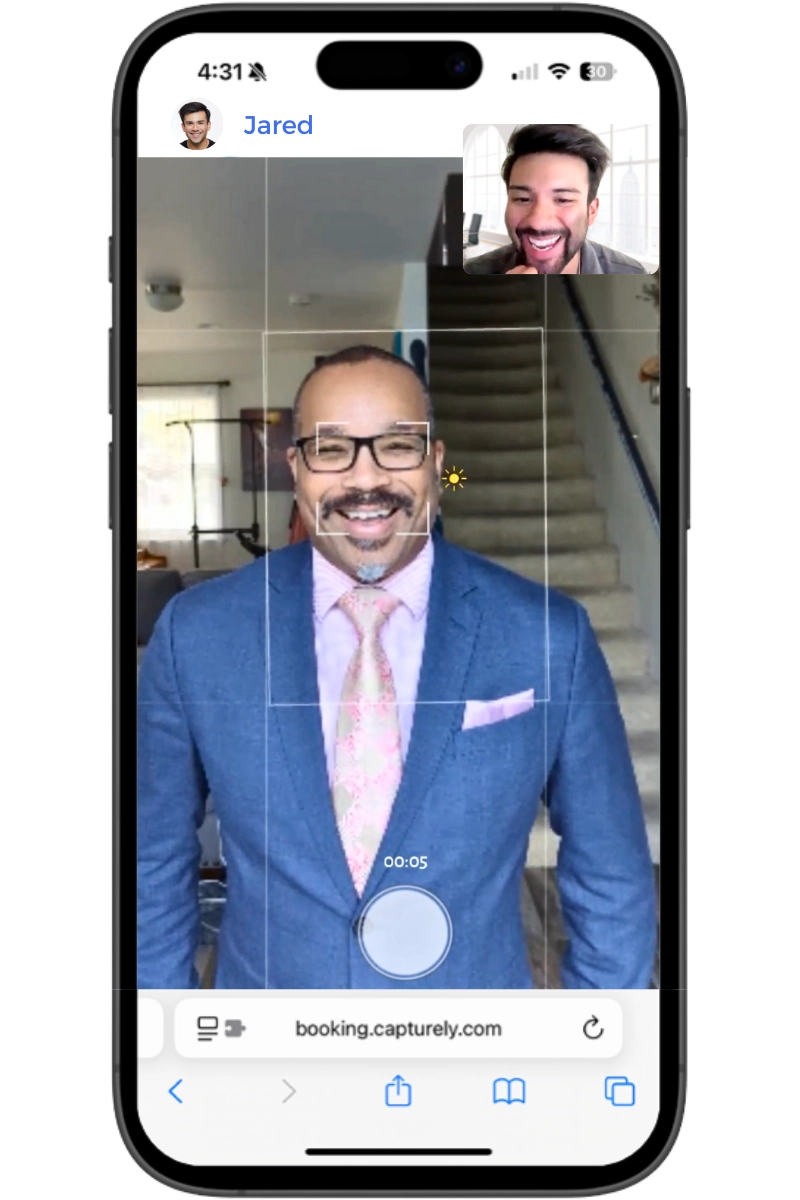
Why the live direction matters: Peter Hurley, widely regarded as the world’s premier headshot photographer, puts it simply: “Headshots are 10 percent photography and 90 percent communication” (Pop Photo, 2015). The difference between a mediocre headshot and a great one isn’t the camera — it’s someone telling you to drop your shoulders, push your chin forward, and breathe. Self-guided services and AI generators skip this entirely. That’s why Capturely’s approach produces a 98% satisfaction rate with near-zero reshoots — the photographer catches the problems in real time, before they reach the final image.
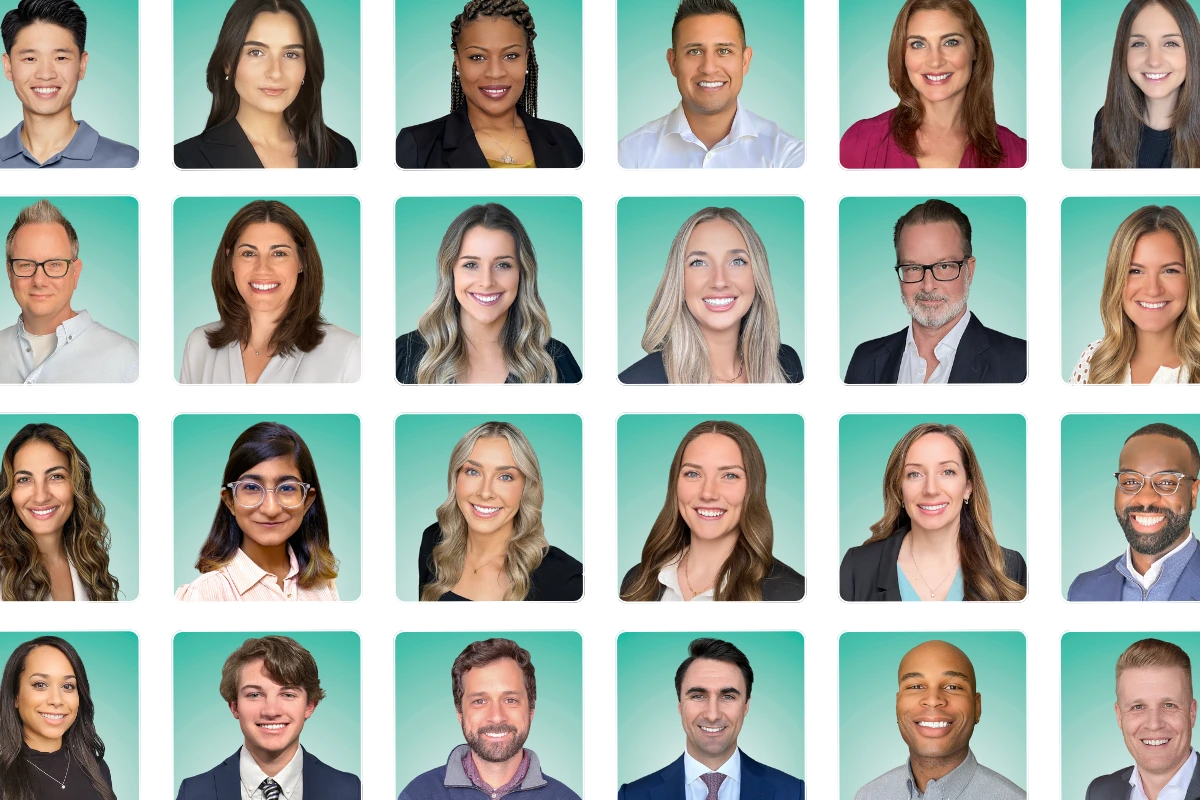
Who this is right for: Distributed teams of any size who need consistent, professional, real headshots without the logistics of in-person photography. Companies like Google, Netflix, Amazon, McKinsey, Capital One, and UnitedHealth Group use this model because it scales — whether you need 5 headshots or 5,000, every session follows the same process and delivers the same quality. For a deeper look at the virtual model, see our guide to virtual headshots for remote teams.
Who this is wrong for: People who specifically want the studio atmosphere — the physical experience of walking into a portrait studio with backdrop setups and professional lighting rigs. If that matters to you, a local studio is worth the premium.
8. DIY at Home
You, your phone, a clean wall, and natural light from a window. Cost: free. Effort: moderate. Quality ceiling: limited.
How to get the best result: Use the rear camera (never selfie), stand near a large window for soft natural light, find a clean and uncluttered background, use a tripod or ask someone to hold the phone at eye level, take 50+ shots, and use Portrait Mode if your phone supports it. For a full tutorial, see our guide on how to take professional headshots.
The honest assessment: A DIY headshot taken carefully with good light is better than no headshot. It can work fine for a personal LinkedIn profile, internal Slack photo, or any context where “good enough” is the bar. But it will not match the quality of a directed session. You can’t see your own chin angle, catch your own shoulder tension, or tell yourself to relax a clenched jaw. People form trustworthiness judgments from a face in 100 milliseconds — one-tenth of a second (Willis & Todorov, Psychological Science, 2006). Those milliseconds are shaped by micro-details you won’t notice while taking a selfie in your bathroom mirror.
Who this is right for: Students, recent grads, job seekers between roles, or anyone who needs an emergency headshot immediately. Also fine for personal social media where the stakes are lower.
Who this is wrong for: Teams, company websites, provider directories, or any professional context where consistency and quality directly affect credibility. 43% of Americans lack a professional headshot (Harris Poll/PhotoPacksAI, 2025) — but having a bad one can be worse than having none.
What About “Professional Headshots Near Me”?
“Near me” is the most searched headshot query in the U.S., at 12,100 searches per month. And it makes sense — you assume you need a local photographer, so you search locally.
But here’s the shift: 76% of “near me” searches result in a business visit within a day (Think with Google, 2017). That pattern works for restaurants and haircuts. For headshots, though, the best option might not be near you at all.
Virtual headshot services — both self-guided (Headshots.com) and live-directed (Capturely) — work from anywhere. There’s no “near me” constraint. If you’re in a small market with limited photographer options, or your team is spread across 12 states, searching for “professional headshots near me” will limit you to whoever happens to be within driving distance. That’s a geographic constraint, not a quality filter.
The question isn’t where to go. It’s what you need: studio experience (go local), team consistency (go virtual), or budget speed (go AI). Geography shouldn’t be the deciding factor for a photo that lives on the internet.
How to Choose: A Decision Framework
Skip the analysis paralysis. Answer these three questions:
Question 1: How many people need headshots?
- Just you: Local studio, freelancer, or AI generator. Your choice depends on budget and how important authenticity is.
- 5–50 people, same office: On-demand marketplace (Snappr) or coordinate a local photographer to come to you.
- 5–5,000+ people, distributed: Live virtual headshots (Capturely) or self-guided virtual (Headshots.com). Only virtual services scale without logistics spiraling.
Question 2: How important is authenticity?
- Must be real photos: Any non-AI option. Studios, freelancers, Snappr, Headshots.com, Capturely.
- OK with AI: HeadshotPro, BetterPic, Aragon AI. Cheapest and fastest. Just know the tradeoffs.
Question 3: Do you need live direction during the shoot?
- Yes (best quality at capture): Local studio, freelancer, Snappr (all in-person) or Capturely (virtual).
- No (OK self-directing): Headshots.com, Snapbar, or DIY.
For most teams — remote, hybrid, or multi-location — the answer lands on live virtual headshots. Real photographer. Real photos. No geographic constraints. No scheduling nightmare. That’s not a pitch. It’s how companies like Amazon, Accenture, Deloitte, EY, and Paramount get it done.
Ready to see the difference? Capturely offers free demo sessions — try it risk-free before committing. $79/session individual, teams save up to 45%. 98+ backgrounds. 24-hour delivery. 765+ reviews at 4.9 stars. Get your free instant quote →
Frequently Asked Questions
Where is the best place to get professional headshots?
The best place depends on your situation. For individuals who want the highest production value, a local portrait studio ($150–$700+) delivers the best raw quality. For distributed teams needing consistent headshots at scale, live virtual services like Capturely ($45–$79/person) provide real photographer direction without logistics. AI generators ($29–$79) work for quick LinkedIn upgrades but produce synthetic images, not real photographs.
How much do professional headshots cost in 2026?
Professional headshot pricing ranges from free (DIY) to $700+ (luxury studios in NYC/LA). The most common options: local studios $150–$450, freelance photographers $100–$425, on-demand marketplaces like Snappr $89–$249, self-guided virtual services $25–$60 per headshot, AI generators $19–$79, and live virtual headshots $45–$79 per person. Hidden costs at studios — retouching, usage rights, setup fees — can add $200–$500 to the session price.
Can I get professional headshots at Walmart or Target?
No. Both Walmart’s PictureMe studios and Target’s portrait studios closed permanently in 2013 when operator CPI Corp defaulted on its lenders. Sears Portrait Studios closed the same year. JCPenney Portraits is the only surviving retail portrait option in the U.S., with roughly 400 locations operated by Lifetouch. JCPenney headshot packages run $75–$195 for digital images.
Are AI headshots good enough for LinkedIn?
AI headshots can pass a quick scroll on LinkedIn, but they carry real risks. A Ringover study of 1,087 recruiters found 66% would be put off once they learned a headshot was AI-generated, and 88% believed candidates should disclose AI use (Ringover, 2024). AI images also have documented bias — a JAMA study found 82% of AI-generated physician images depicted White individuals — and create trust gaps when colleagues see you look different in person.
How do virtual headshots work?
With live virtual headshot services like Capturely, you receive a secure link, open it on your smartphone, and connect with a professional photographer via video — like FaceTime. The photographer switches to your rear camera (36–48 megapixels), then spends about 10 minutes coaching your pose, expression, and angles in real time. Photos are professionally retouched and delivered within 24 hours. No app download. No travel. No equipment needed.
What should I wear for a professional headshot?
Solid colors photograph best — navy, charcoal, jewel tones, and deep greens are universally flattering. Avoid busy patterns, logos, and bright white (which can blow out under studio lighting). Dress one level above your daily norm: if you wear business casual to work, wear a blazer for the shoot. Iron everything — wrinkles show up worse on camera than in person. Layer pieces give you options during the session without a full outfit change.
How often should professional headshots be updated?
Every two to three years, or whenever your appearance changes noticeably — new hairstyle, glasses, significant weight change. An outdated headshot creates a trust gap when colleagues and clients see you on video calls and don’t recognize you. For teams, setting a regular refresh cycle with session credits keeps directories current without annual scrambles to coordinate photo days across offices.
Do I need a professional headshot for LinkedIn?
LinkedIn profiles with professional photos receive 21x more views and 36x more messages than those without (LinkedIn, 2020). Recruiters spend 19% of their time looking at the profile photo first, and 71% admit to skipping candidates with poor profile pictures. A professional headshot isn’t technically required, but the data shows it directly impacts visibility, connection rates, and hiring outcomes.