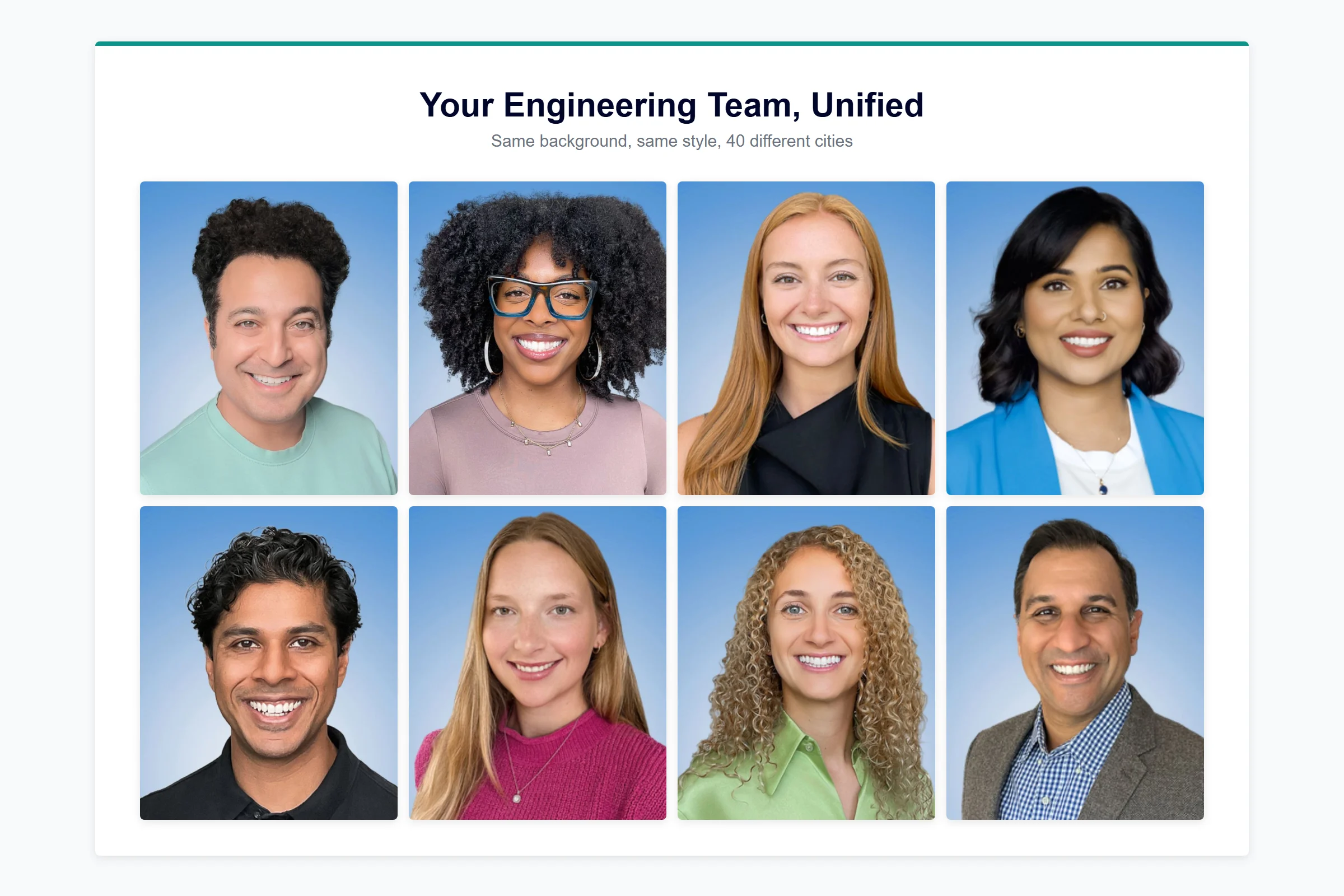
Your company has 200 employees across 12 cities. Leadership wants consistent headshots on the website by Q3. Someone in marketing gets assigned the project. They start Googling studio photographers in each city, trying to coordinate schedules across time zones, and realizing that “consistent” becomes impossible when you’re hiring different photographers with different equipment in different lighting conditions.
Last updated: March 15, 2026 · Written by Brian Confer, Co-founder & COO at Capturely
Then someone suggests flying everyone to headquarters for a photo day. Quick napkin math: $1,128 per business trip (the 2025 GBTA average), times 200 people, equals $225,600 — for headshots. Plus two lost workdays per person. Plus the 15-20% who won’t show up anyway because they’d rather eat glass than pose for a camera.
That’s the moment most companies discover virtual headshots.
A virtual headshot is a professional photograph taken through your smartphone, directed in real time by a live photographer over a video connection. No studio. No travel. No coordinating 12 cities. You open a link on your phone, a professional photographer appears, and 10 minutes later you have studio-quality images — from your kitchen, your home office, or wherever you happen to be.
Capturely pioneered this model and has delivered over 100,000 virtual headshots for companies including Google, Netflix, Amazon, Microsoft, McKinsey, and UnitedHealth Group. This guide explains exactly how the technology works, what the experience looks like, and why it’s replaced in-person photo days for most distributed teams.
What Is a Virtual Headshot?
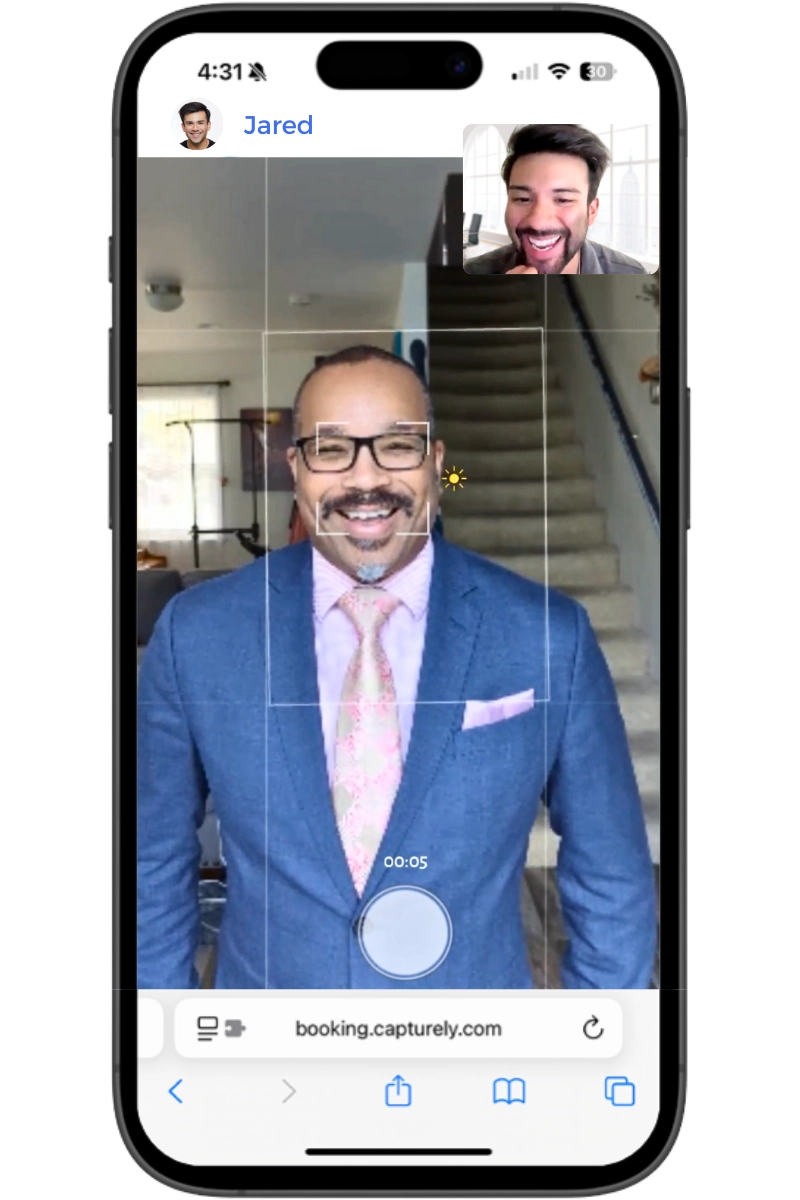
A virtual headshot is a professional-quality photograph captured using a smartphone camera and directed remotely by a trained photographer. The photographer connects live via a video link, sees what your phone’s rear camera sees, and guides you through posing, expression, and lighting — the same direction you’d receive in a studio, delivered through your phone screen.
The term “virtual headshot” gets used loosely, though. Three distinct models exist under that umbrella, and they produce very different results:
Model 1: Live Photographer-Directed (What Capturely Does)
A real photographer connects with you through your phone in real time. They direct every aspect of the shoot — posture, chin angle, expression, shoulder positioning, lighting — while you use your rear camera to capture images. The photographer sees your feed live and controls the session. It’s the closest thing to an in-studio experience without physically being in a studio. Sessions take about 10 minutes. Results are professionally retouched and delivered within 24 hours.
Model 2: Self-Guided Upload + Professional Editing
Services like Headshots.com send you a tutorial video, you take your own photos following the instructions, and their team edits the results. No live photographer. No real-time feedback. The quality depends entirely on how well you can follow a guide and direct yourself. Pricing runs $40-$60 per headshot with 3-day turnaround.
Model 3: AI-Generated Headshots
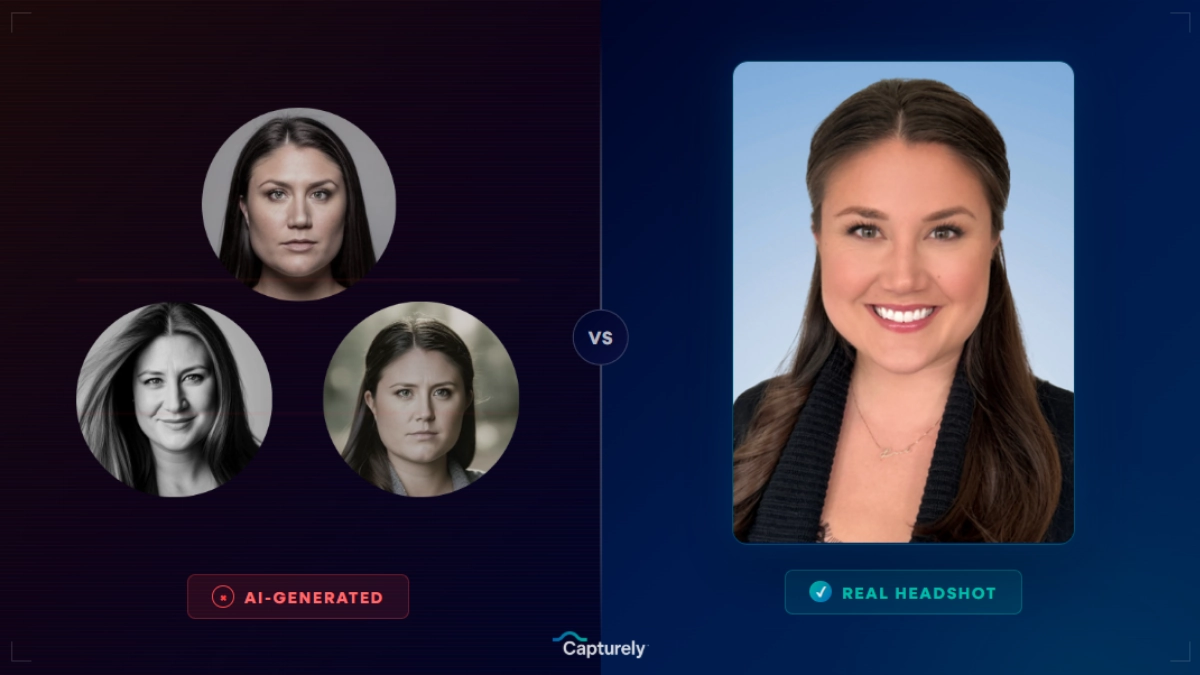
You upload 10-20 selfies, and an AI generates synthetic images of your face in different outfits and backgrounds. These aren’t real photographs — they’re digitally fabricated. Services like HeadshotPro charge $29-$59. The results look polished but don’t look like you on a Zoom call, which creates a trust problem most enterprises aren’t willing to accept.
The distinction matters. When someone says “virtual headshots,” they might mean any of these three. Model 1 is the only one that combines real photography with professional direction. Models 2 and 3 trade direction for convenience and price — and the results reflect that trade-off.
How a Virtual Headshot Session Actually Works (Step by Step)
Most articles about virtual headshots stay vague. Here’s what actually happens when a company rolls out virtual headshots through a live-directed service. This is the exact process Capturely uses for teams of 15 to 5,000+.
Step 1: Company Onboarding (Admin Side)
An admin — usually someone in marketing or HR — sets up the account. They choose:
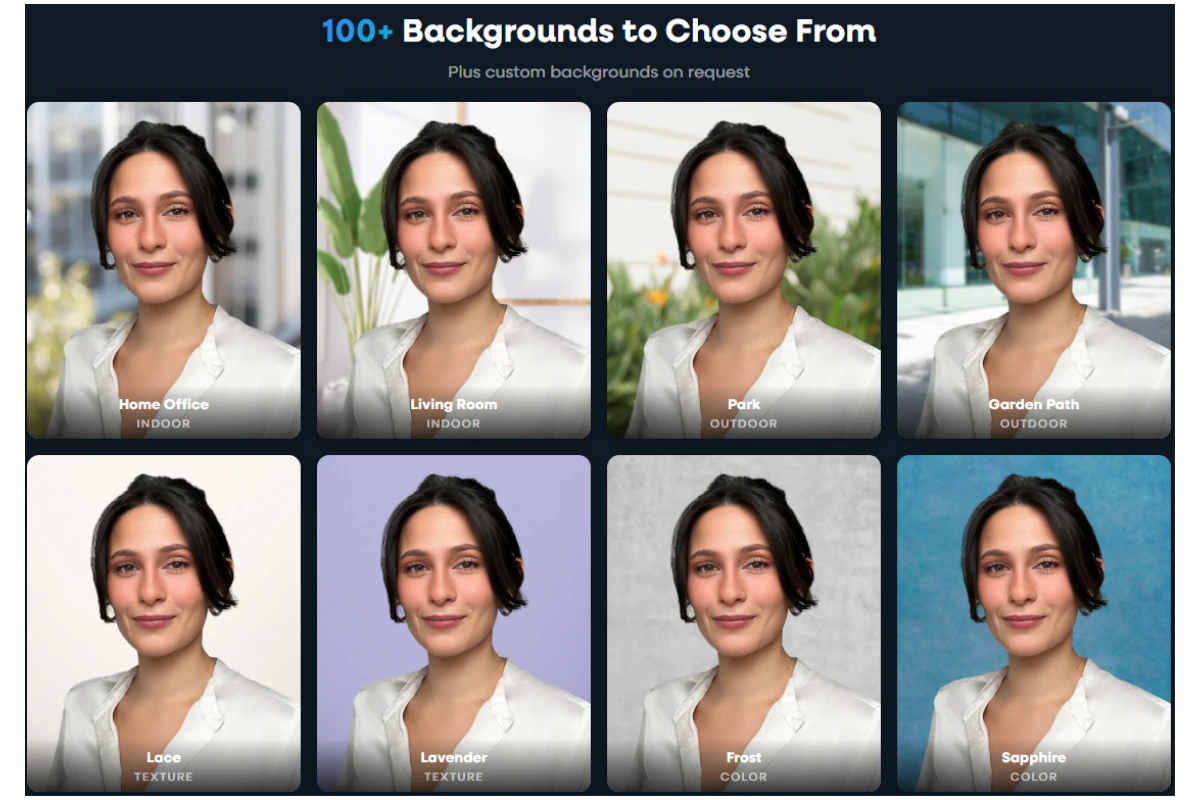
- Backgrounds: 98+ options including solid colors (white, gray, navy, teal), gradients, and branded backgrounds. Custom backgrounds are available for $200 one-time.
- Cropping style: Head-and-shoulders, waist-up, or specific dimensions for different platforms.
- Delivery preferences: File format, resolution, naming convention.
- Brand guidelines: Style notes so every headshot matches the look and feel the company wants.
This setup takes 15-20 minutes and only happens once. Every session after that automatically follows these specifications.
Step 2: Employee Scheduling
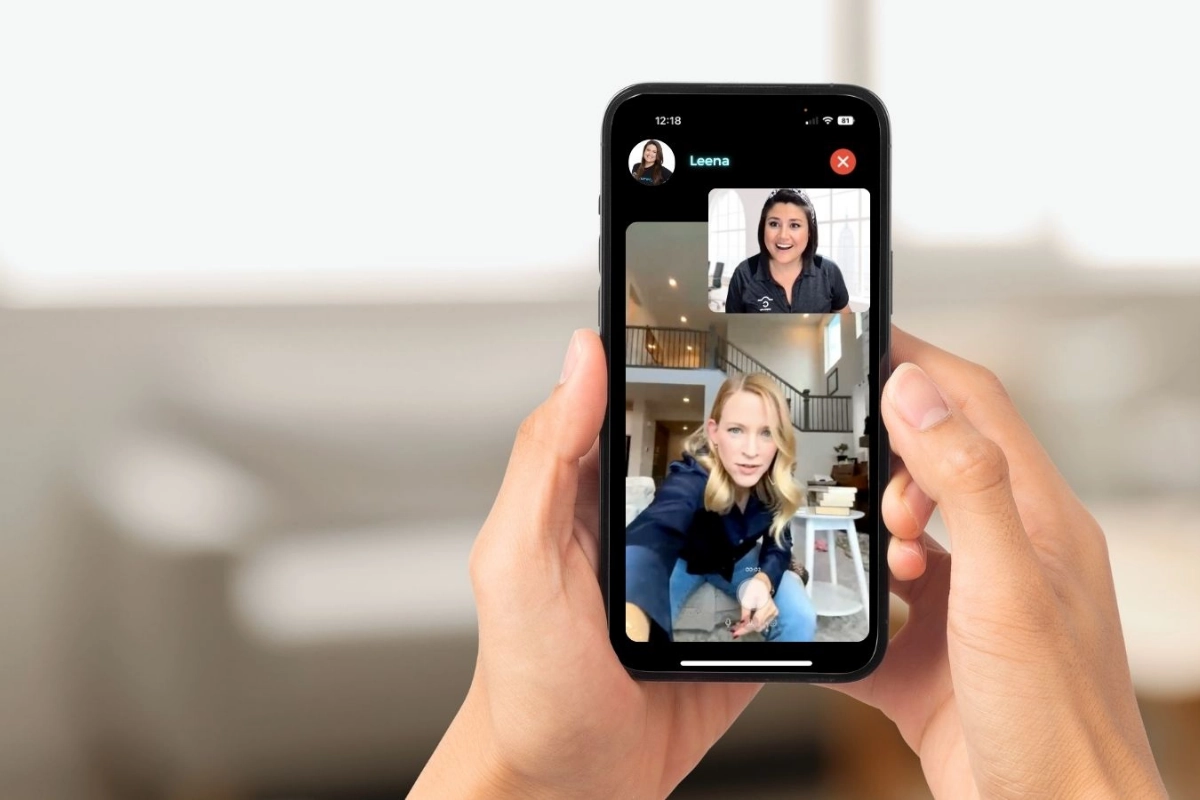
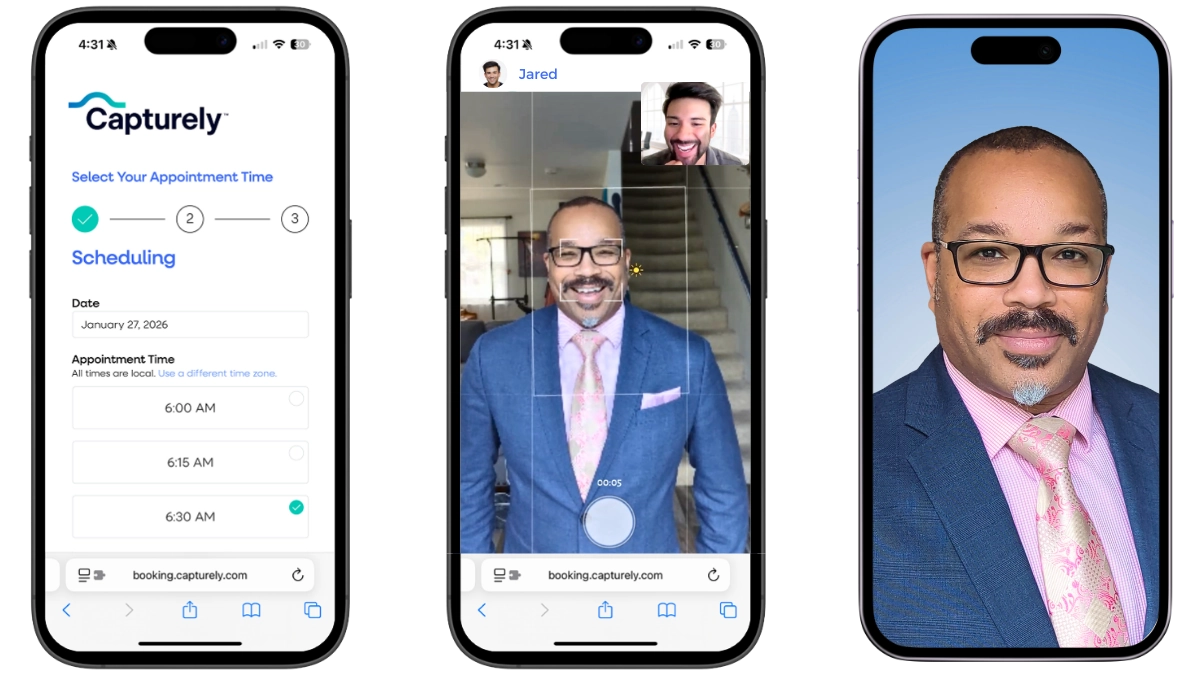
Each employee receives a unique session link. They pick a time that works for them — no block scheduling, no competing for slots, no “Tuesday didn’t work for half the office” situations. The link works from any location. An employee in Austin and an employee in Berlin book on their own schedules.
Step 3: The 10-Minute Session
This is where virtual headshots diverge from self-guided services. Here’s the actual minute-by-minute experience:
Minutes 0-2: Setup. You click the session link on your phone. No app download needed — it works in your browser. A photographer appears on screen and walks you through positioning: “Face the window, good. Turn your phone around to the rear camera. Can you prop it on that shelf at eye level? Perfect.”
Minutes 2-4: Lighting and framing. The photographer can see exactly what your rear camera sees. They’ll ask you to adjust: “Move two steps to the left — there’s a shadow on your right cheek. Turn the lamp off behind you. Good, the natural light from that window is doing all the work now.” They handle the things you literally cannot see about your own face.
Minutes 4-8: Shooting. The photographer directs your posture, expression, and angles. “Drop your left shoulder a bit. Push your chin forward and slightly down. Now think about something that happened last weekend that made you laugh — not a big smile, just that thought.” They capture multiple frames for each angle: left-facing, right-facing, and straight-on. They know the exhale moment when your jaw unclenches. They catch the real smile, not the performed one.
Minutes 8-10: Review and wrap. The photographer confirms they have what they need. You’re done. Total time investment: 10 minutes. No travel. No waiting room. No awkward small talk with a stranger while they adjust lights for 20 minutes.
See it in action. Capturely offers free demo sessions so you can experience the process before committing. 10 minutes, from your phone, with a real photographer. Book a free demo →
Step 4: Professional Retouching
Your raw images go to a retouching team — real people, not AI filters. They handle background replacement (swapping your kitchen wall for the company’s selected background), skin retouching (blemishes and stray hairs, not skin-smoothing that makes you look synthetic), color correction, and lighting balance. The goal: you on a good day. Not a different person.
Step 5: 24-Hour Delivery
Three fully edited images (left, right, and straight-on) are delivered within 24 hours. The admin dashboard shows real-time status across the whole team — who’s scheduled, who’s completed, who still needs a nudge. For a 200-person rollout, HR can track the entire project from one screen instead of chasing email threads.
The Quality Question: Can a Phone Actually Produce Professional Headshots?
This is the objection every virtual headshot company hears. It’s reasonable. And five years ago, it was valid. Not anymore.
The rear camera on an iPhone 16 Pro captures at 48 megapixels with a 1/1.14-inch sensor. The Samsung Galaxy S25 Ultra shoots at 200 megapixels. The Google Pixel 9 Pro hits 50 megapixels with computational photography that rivals dedicated cameras. For context, most professional headshot photographers in the 2010s were shooting at 20-24 megapixels on DSLRs that cost $3,000+.
Your phone’s rear camera now outresolves the professional cameras from a decade ago. That’s not an exaggeration — it’s the spec sheet.
But resolution isn’t the whole story. What makes a great headshot isn’t megapixels. It’s lighting, expression, and direction. A 200-megapixel photo of someone with tension in their jaw, harsh overhead lighting, and a strained smile is still a bad headshot. A well-lit, well-directed photo at 12 megapixels is a great one.
That’s why the live photographer matters more than the camera. The photographer controls the variables that actually determine quality:
- Positioning you near natural light (which is softer and more flattering than any studio strobe when used correctly)
- Eliminating competing light sources that create unflattering color casts
- Coaching micro-expressions that the camera captures but you can’t see
- Adjusting angles by degrees — not guessing and hoping
This is why Capturely’s reshoot rate sits below 2%. The photographer catches problems in real time. Self-guided services can’t — which is why services without live direction report significantly higher rejection rates. As one prospect who switched from a self-guided service described it: “We’re not really loving the process… it’s really difficult to get the right picture for them to approve… employees getting dressed, taking headshots, submitting, then getting rejection in 24-48 hours.”
The Math: Why Flying Everyone In Stopped Making Sense
Here are the numbers most companies discover after they’ve already committed to the in-person approach.
The direct costs:
- Studio photographer: $250-$450 per person in major metros (NYC averages $925 if you include premium studios)
- Business travel: $1,128 per domestic trip, per the Global Business Travel Association
- On-site event photographer: up to $10,000 per day for full-day corporate sessions
The hidden costs:
- Coordination: HR spends roughly 8 hours scheduling a single photo day — emailing, confirming, sending reminders, handling reschedules
- Lost productivity: Each employee loses 2-3 hours to travel, waiting, and session time. At $50/hour average, that’s $100-$150 per person in time alone
- No-shows: One HR director paid $14,000 for headshots of 47 employees — half didn’t show because “Tuesday didn’t work”
- Inconsistency: Different photographers in different cities produce different looks. The whole point was consistency, and you didn’t get it
- Ongoing gaps: New hires, promotions, and role changes create a perpetual need that a single photo day can’t solve
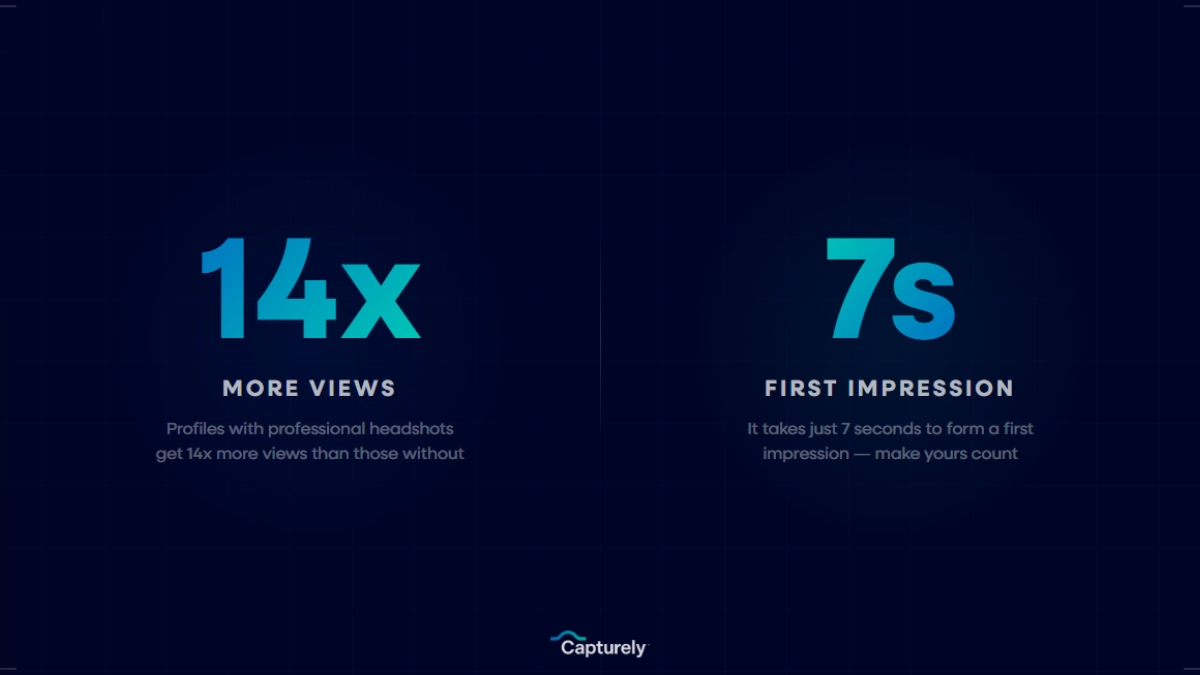
The workforce reality: According to Gallup’s 2025 data, 52% of remote-capable employees work hybrid and 27% are fully remote. Only 21% are fully on-site. Stanford’s WFH Research found that remote work accounts for 25% of all paid US workdays — and planned return-to-office mandates would only trim that to 24.5%. The distributed workforce isn’t going back. Your headshot solution needs to match that reality.
A consulting firm with 100 employees at $75/hour average spent $22,500 in employee time alone for an annual headshot update — before paying the photographer. And that was with everyone in the same building. For distributed teams, multiply that number by the cost of coordination across locations and time zones.
Virtual headshots at $45-$79 per person — no travel, no coordination, no lost workdays — aren’t just more convenient. They’re economically obvious.
Virtual Headshots vs. In-Person Studios vs. AI: The Full Comparison
Every approach has trade-offs. Here’s an honest breakdown based on delivering 100,000+ headshots across all three models.
| Factor | Virtual + Live Photographer | Self-Guided Virtual | In-Person Studio | AI-Generated |
|---|---|---|---|---|
| Cost per person | $45–$79 | $25–$60 | $150–$450+ | $20–$75 |
| Live direction | Yes — real-time coaching | No — tutorial only | Yes — in person | No |
| Real photographs | Yes | Yes | Yes | No — synthetic images |
| Session time | 10 minutes | 15-30 min (self-directed) | 30-60 min + travel | Upload selfies + wait |
| Delivery | 24 hours | 3 business days | 1-3 weeks | 15 min – 2 hours |
| Works for distributed teams | Yes — any location | Yes — any location | Per-city coordination | Yes — any location |
| Consistency across team | High — same process, same direction | Medium — same editing, variable input | Low across cities | Synthetic uniformity |
| Camera-shy friendly | Yes — photographer coaches you | No — you’re on your own | Depends on photographer | No interaction |
| Looks like you on Zoom | Yes — it’s a real photo of you | Yes — it’s a real photo | Yes — it’s a real photo | Often not — synthetic face |
| Best for | Distributed teams needing quality + consistency | Budget-conscious teams OK with self-direction | Executives, actors, personal branding | Low-stakes, individual use |

The pricing picture is clear, but the nuance matters. Self-guided services cost less per headshot, but their rejection rates are higher — employees submit, get told the photo doesn’t meet standards, and have to redo the process. That frustration multiplies across 200 people. AI generators are fast and cheap, but 38% of people describe AI headshots as “soulless,” and a growing number of enterprises have banned AI-generated imagery entirely.
In-person studios still produce the highest-quality individual results when budget isn’t a factor. But for teams? The logistics don’t scale. You can’t get consistent results from 12 different photographers in 12 different cities. And you certainly can’t fly 200 people to one location for photos without the CFO asking if you’ve lost your mind.
For a detailed pricing breakdown across all headshot methods, see our professional headshot cost guide.
Why Live Direction Changes Everything
This is the part that sounds like marketing until you experience it. Then it makes complete sense.
Sixty-seven percent of people don’t like how they look in photos. Seventy-seven percent of women specifically report feeling camera shy. Sixty-five percent of women say having their photo taken is more anxiety-inducing than public speaking, a first date, or a job interview. These aren’t fringe numbers. This is most of your team.
When that person opens a tutorial video and tries to take their own headshot, several things happen simultaneously:
- They’re managing lighting they can’t really evaluate on a small screen
- They’re trying to remember posing tips while also feeling self-conscious
- They’re adjusting the camera angle while their expression shifts from “relaxed” to “I’m adjusting a camera angle”
- They’re looking at their own face on screen — which is the fastest way to amp up every insecurity they have
- Nobody tells them “that looked great.” Nobody catches the moment between poses when their face actually relaxes
A live photographer changes the dynamic entirely. They redirect attention away from the camera. They say “tell me about the best meal you had this week” and capture the smile that follows. They notice your shoulders rising every 30 seconds and remind you to drop them before it shows up in the frame. They know that minute seven is usually when you stop trying so hard and start looking like yourself.
This is why 765+ reviewers gave Capturely a 4.9-star rating. Not because the technology is impressive — but because having a person on the other end makes the experience feel less like a photo shoot and more like a conversation.

$79/session individual, teams save up to 45%. Each session includes live photographer direction, 3 edited images, 24-hour delivery, 98+ backgrounds, and a happiness guarantee. Get an instant quote for your team →
What Companies Actually Use Virtual Headshots For
The most common assumption: virtual headshots are for the company website’s team page. That’s one use. Here are the other six that drive most of the demand.
New Hire Onboarding
A new employee starts remotely. Within their first week, they get a session link, spend 10 minutes with a photographer, and have professional headshots matching the rest of the team within 24 hours. No waiting for the next photo day. No starting with a Slack silhouette for three months. Companies with high onboarding volume — healthcare systems, consulting firms, financial services — use session credits on an ongoing basis. Buy credits once, use them throughout the year as people join.
Provider and Attorney Directories
Healthcare systems and law firms live and die by their directories. A patient choosing between three dermatologists checks the provider directory. A client evaluating law firms reads the attorney bios. Outdated or missing headshots aren’t just unprofessional — they cost revenue. Capturely works with HCA Healthcare, Intermountain Health, CommonSpirit Health, and WellSpan to keep provider directories current across hundreds of locations.
LinkedIn and Professional Branding
LinkedIn profiles with professional headshots receive 21x more views and 36x more messages than profiles without one. For companies investing in employer branding, employee advocacy, or social selling, standardizing LinkedIn headshots across the team creates a visual identity that compounds. When 50 employees all have consistent, professional headshots with the same background, they’re recognizable as a team.
Post-Merger and Rebrand Rollouts
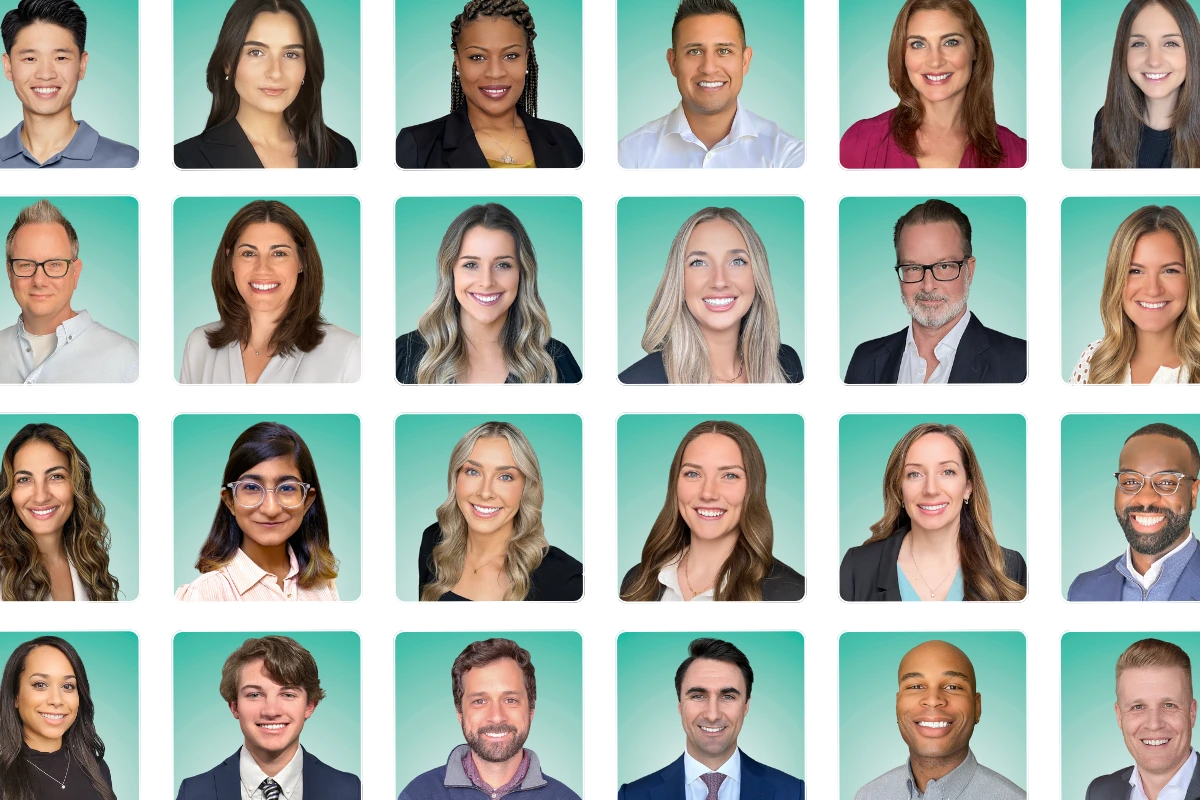
When two companies merge, or when a company rebrands, every employee headshot needs updating. A virtual headshot service that works regardless of location can roll out to thousands of people in weeks instead of months. No photographer coordination per office. No inconsistent results. Just one process, one link, one look.
Email Signatures and Internal Profiles
The average professional has seven places where a headshot appears: LinkedIn, company website, email signature, Slack or Teams, Google or Zoom profile, internal directories, and client proposals. Most companies only think about one or two of these. Professional headshots in email signatures alone measurably improve response rates — people respond to people they can see.
Event and Conference Headshots
Companies attending conferences set up a virtual headshot station — a phone on a tripod with a ring light — and offer headshots to booth visitors or event attendees. A Capturely photographer directs each session remotely. It takes about four square feet of floor space and produces dozens of headshots per hour. It’s also the highest-converting conference booth activity most companies have tried.

The Enterprise Case for Virtual Headshots
If you’re the person building the business case for this, here’s the framework that gets budget approved.
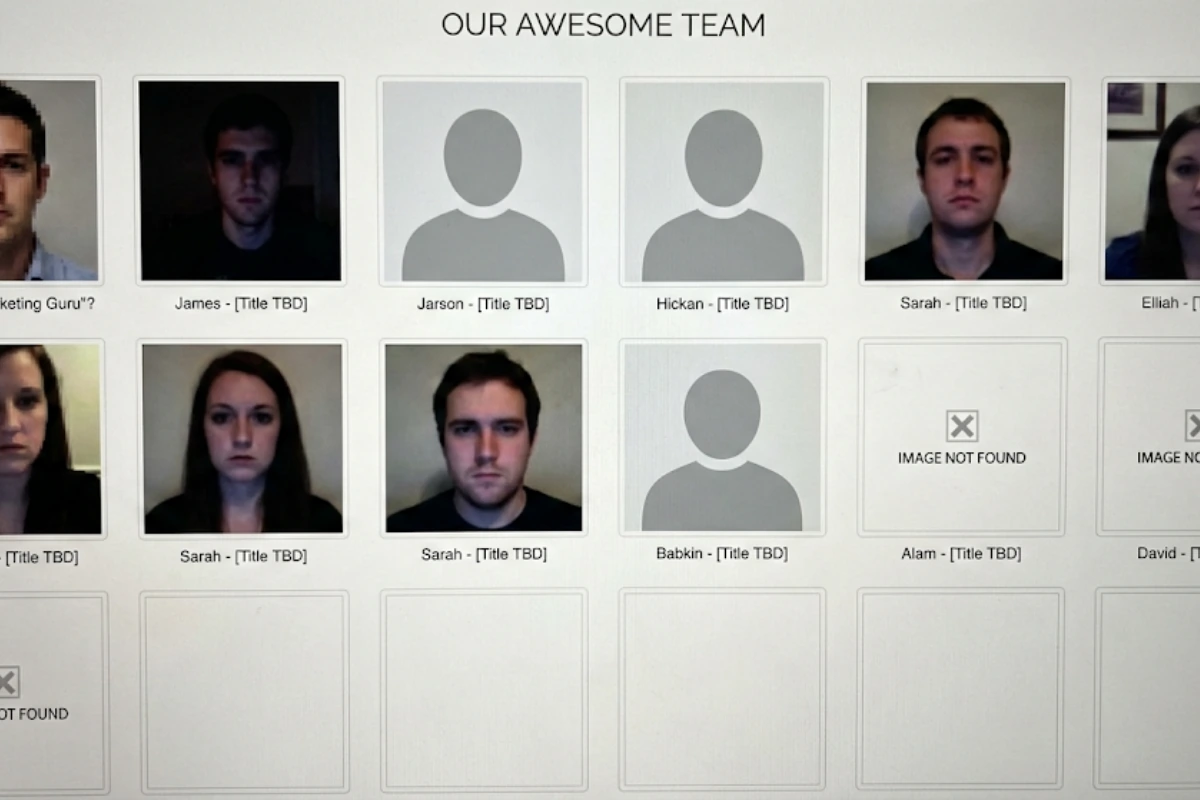
Brand perception: Research from Lucidpress found that consistent brand presentation increases revenue by up to 33%. Your team page is one of the most visited pages on your website. When it has mismatched headshots — one person on white, another in a park, three missing entirely — it undermines every claim of professionalism on the site. Forty-seven percent of brand perception is based on visuals.
Talent perception: Princeton researchers found that people form trustworthiness judgments from a face in 100 milliseconds. Professional headshots increase perceived competence by 76% according to PhotoFeeler research. Whether that’s fair is debatable. Whether it affects hiring decisions, client acquisition, and partnerships is not.
Employee engagement: Providing professional headshots signals investment in your team. Every employee gets the same quality, the same treatment, the same professionalism — regardless of whether they’re in headquarters or working from their apartment in Denver. It’s a surprisingly high-impact, low-cost perk.
The cost comparison that closes the deal:
| Scenario: 200 Employees | In-Person Photo Day | Virtual Headshots |
|---|---|---|
| Photography cost | $50,000–$90,000 | $9,000–$15,800 |
| Travel (for distributed teams) | $100,000–$225,600 | $0 |
| Lost productivity (hours) | 400-600 hours | 33 hours |
| Coordination time (HR/marketing) | 40-80 hours | 2-3 hours |
| Completion rate | 80-85% | 95%+ |
| Timeline to full rollout | 2-4 months | 2-4 weeks |
| Total estimated cost | $170,000–$345,600 | $9,000–$15,800 |
The numbers do the talking. For a deeper dive into building the ROI case, see our ROI of professional team headshots guide.
Common Objections (and Honest Answers)
“A phone photo will look like a phone photo.”
If you take it yourself in bad lighting with no direction — yes. But your phone’s rear camera captures 48+ megapixels. That’s more resolution than most professional cameras from 10 years ago. The variable that determines headshot quality isn’t the camera. It’s the direction. A well-lit, well-directed phone photo with professional retouching is indistinguishable from a studio headshot. Companies like Google and Amazon have verified this with their teams.
“Our employees won’t participate.”
In-person photo days have 15-20% no-show rates because people have to travel, block time, and physically walk into a studio. Virtual sessions require 10 minutes from wherever you already are. The participation barrier drops to almost nothing. And for the genuinely camera-shy employees — the ones who “come up with a lame excuse” every time photo day rolls around, as one of our clients described it — having a photographer who coaches them through the anxiety is often the thing that gets them to finally do it.
“We need studio-quality lighting and backdrops.”
Natural window light is actually softer and more flattering than most studio strobes. And the background doesn’t matter at capture — Capturely replaces it with your chosen background (98+ options, plus custom). The employee could be standing in front of a beige apartment wall and the final image shows them on a clean navy gradient matching the rest of the team.
“This sounds too good to be cheap.”
Virtual headshots aren’t cheap because quality is lower. They’re less expensive because the overhead is lower. No studio rent. No equipment transport. No per-city photographer booking. The photographer works from a studio, connecting to employees remotely. The economic structure is fundamentally different from in-person photography. For a full cost breakdown, see our professional headshot pricing guide.
How to Evaluate a Virtual Headshot Service
Not all virtual headshot services work the same way. If you’re comparing options, ask these questions:
- Is there a live photographer during the session? This is the single biggest differentiator. Self-guided services rely on you to follow a tutorial. Live-directed services put a trained photographer in the session coaching every frame.
- What camera do they use? The rear camera (36-48 megapixels) versus the selfie camera (12 megapixels) makes a massive quality difference. Avoid any service that uses the front-facing camera.
- Human retouching or AI editing? AI editing can replace backgrounds and adjust lighting, but it can’t match the subtlety of human retouching for skin tones, hair detail, and natural-looking corrections.
- What’s the turnaround? 24 hours versus 3 business days matters when you’re rolling out to 200 people on a deadline.
- Is there an admin dashboard? For teams, managing the rollout from one screen — tracking who’s scheduled, who’s completed, downloading images, controlling brand settings — saves hours of coordination.
- What’s the reshoot rate? A service with a low reshoot rate (under 5%) is getting it right the first time. A high reshoot rate means employees are going through the process multiple times, multiplying frustration.
- What do the reviews say about the experience? Quality is measurable. But the experience — whether people felt comfortable, whether camera-shy employees actually enjoyed it — only shows up in reviews.
For a ranked comparison of every headshot service available to companies, see our best headshot services for companies breakdown. For a head-to-head with the largest self-guided competitor, read our Headshots.com vs. Capturely comparison.
Ready to see the difference? Capturely offers free demo sessions — experience a virtual headshot session before committing. 100,000+ headshots delivered. 765+ reviews at 4.9 stars. Try a free demo →
Frequently Asked Questions
What is a virtual headshot?
A virtual headshot is a professional photograph taken through your smartphone’s rear camera, directed remotely by a live photographer over a video connection. The photographer sees your camera feed in real time and coaches you through posing, expression, and lighting — producing studio-quality results without requiring you to visit a studio. Virtual headshots are used primarily by companies with distributed or remote teams who need consistent, professional headshots at scale.
How do virtual headshots work?
You click a session link on your phone (no app download required). A professional photographer connects via video and switches you to your rear camera. They direct your positioning near natural light, coach your posture and expression, and capture multiple frames across different angles. The session takes about 10 minutes. Your images are then professionally retouched — background replaced, color corrected, skin refined — and delivered within 24 hours. An admin dashboard lets companies track the entire rollout.
Can a phone really take professional headshots?
Yes. The rear camera on modern smartphones captures 48-200 megapixels — more resolution than professional DSLRs from a decade ago. But the camera isn’t what makes a headshot professional. Lighting, direction, and expression are. A live photographer controls all three variables in real time during a virtual session, which is why the results are indistinguishable from studio photography. Capturely has delivered 100,000+ virtual headshots to companies including Google, Netflix, and McKinsey using this approach.
How much do virtual headshots cost?
Pricing varies by model. Live photographer-directed virtual headshots (like Capturely) cost $45-$79 per person, with team discounts up to 45%. Self-guided virtual services (like Headshots.com) charge $40-$60 per headshot. AI headshot generators cost $20-$75 but produce synthetic images, not real photographs. For comparison, in-person studio headshots cost $150-$450+ per person. See our full headshot pricing guide for a detailed breakdown.
Are virtual headshots as good as studio headshots?
When directed by a live professional photographer, yes. The quality gap between phone cameras and professional cameras has narrowed dramatically. The remaining variables — lighting, posing, expression, retouching — are controlled by the photographer regardless of whether the session happens in a studio or through a phone. Self-guided virtual headshots (without a live photographer) have a lower quality ceiling because the subject is directing themselves.
How long does a virtual headshot session take?
A live-directed virtual headshot session with Capturely takes approximately 10 minutes. That includes setup (positioning near a window, adjusting the phone angle), shooting (multiple frames across three angles), and a quick review. Most employees report it takes less time than their morning coffee order. Self-guided services vary from 15-30 minutes since the subject is managing everything themselves.
Do I need to download an app for virtual headshots?
Not with Capturely. The session runs through a secure browser link — you click it, the photographer connects, and you’re shooting. No app download, no account creation, no permissions to manage. This is by design: it reduces the friction to zero for employees, which is why participation rates exceed 95%.
What backgrounds are available for virtual headshots?
Capturely offers 98+ professional backgrounds including solid colors (white, gray, navy, teal, blue), gradients, and environmental options. Custom branded backgrounds — matching specific hex codes, including company logos, or replicating a client’s existing background style — are available for a $200 one-time fee. The background is replaced during post-production, so the employee’s physical surroundings during the session don’t matter. For a visual guide, see our headshot backgrounds guide.
The Bottom Line
Virtual headshots exist because the old model broke. In-person photo days were designed for a world where everyone worked in the same building. That world ended in 2020. What replaced it — 77% of companies running hybrid, teams spread across cities and time zones, new hires starting from their apartments — requires a headshot solution that doesn’t depend on geography.
The technology is simple: a phone, a window, and a photographer who knows what they’re doing. What makes it work isn’t the phone camera (though modern phones are absurdly capable). It’s the live direction — someone who can see the things you can’t see about your own face, coach you through the discomfort, and capture you at the moment you stop performing and start looking like yourself.
That’s the part you can’t get from a tutorial, a filter, or an AI generator.
If you’re managing headshots for a distributed team, the question isn’t whether virtual headshots produce professional quality. Over 100,000 headshots at Google, Netflix, Amazon, McKinsey, UnitedHealth Group, and Capital One have answered that. The question is whether you want to keep spending $150-$450 per person plus travel, coordination, and lost workdays — or whether you’re ready for a 10-minute session that costs a fraction and delivers in 24 hours.
For a complete overview of professional headshot options, read our professional headshots guide. For details on managing headshots at the corporate level, see our corporate headshots guide.