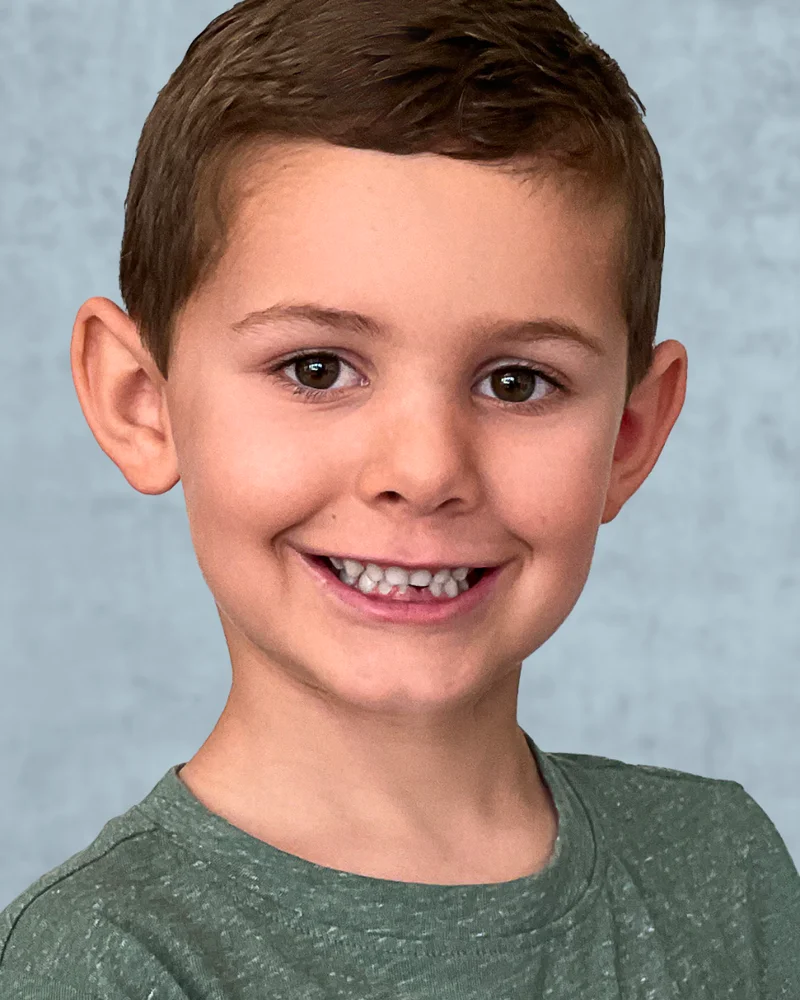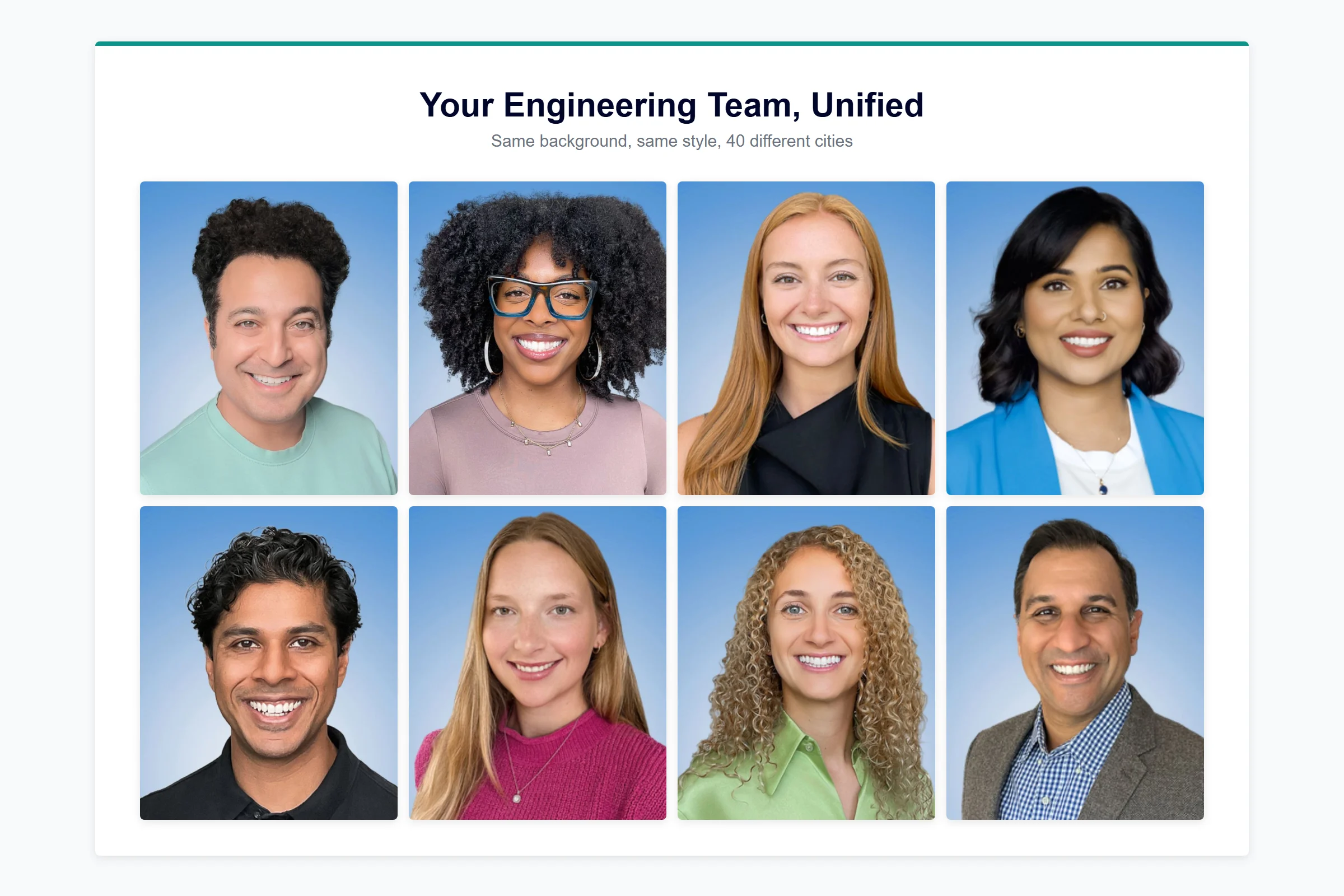
Virtual school photography replaces traditional picture day with at-home portrait sessions directed by a live professional photographer through the family’s smartphone. The school sends a session link, parents schedule a 10-minute session, a real photographer coaches the child’s posture and expression in real time using the phone’s rear camera, and three professionally retouched portraits arrive within 24 hours.
Last updated: March 2026
If you’ve searched for “virtual school photos” or “picture day alternative,” you’ve probably found almost nothing. That’s because this model is new. Capturely — a platform that’s delivered over 100,000 photographer-directed portraits for Google, Netflix, and McKinsey — adapted its virtual headshot technology for K-12 school photography. No photographer goes to the school. No gym gets blocked. No classes get pulled. Families photograph at home, on their schedule, with a professional directing every shot.
Here’s exactly how it works — and why schools, parents, and kids all come out ahead.
What Is Virtual School Photography?
The 60-Second Explanation
A school signs an agreement with a virtual photography platform — same structure as any picture day contract. The platform generates a unique session link for each student. The school distributes the link to families through email, app notification, or whatever communication tool they already use.
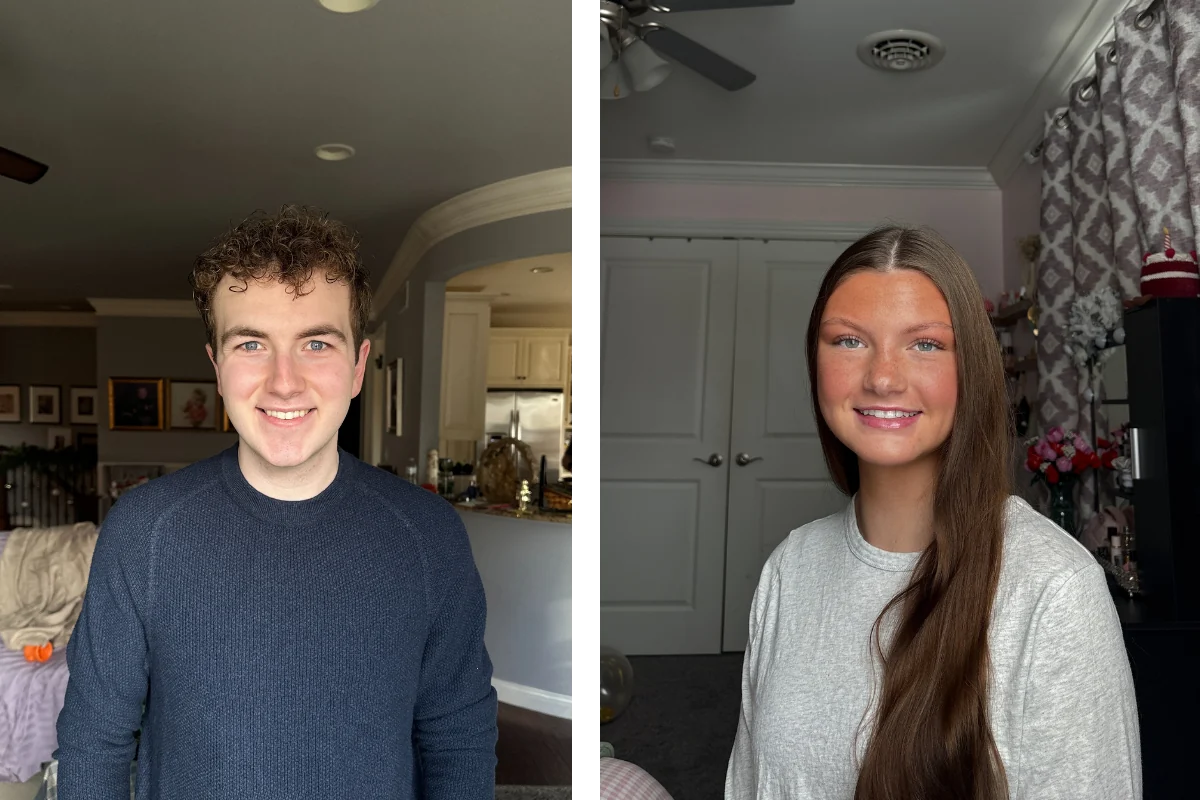
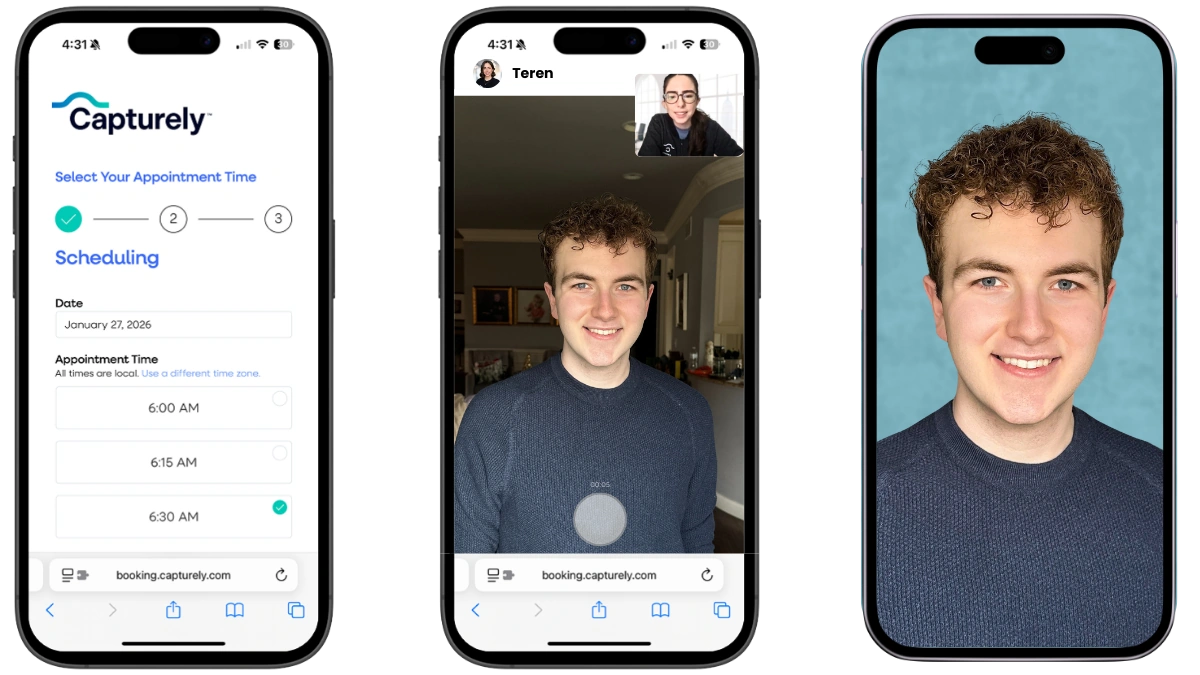
Parents open the link on their phone and pick a time slot within a 2-3 week photo window. Evenings and weekends are available — not just Tuesday during third period. At the scheduled time, the parent opens the link again. A live professional photographer appears on screen — think FaceTime — but the phone uses the rear camera (36-48 megapixels) instead of the selfie camera. The photographer directs the entire session: posture, angles, expression, timing. About 10 minutes per child.
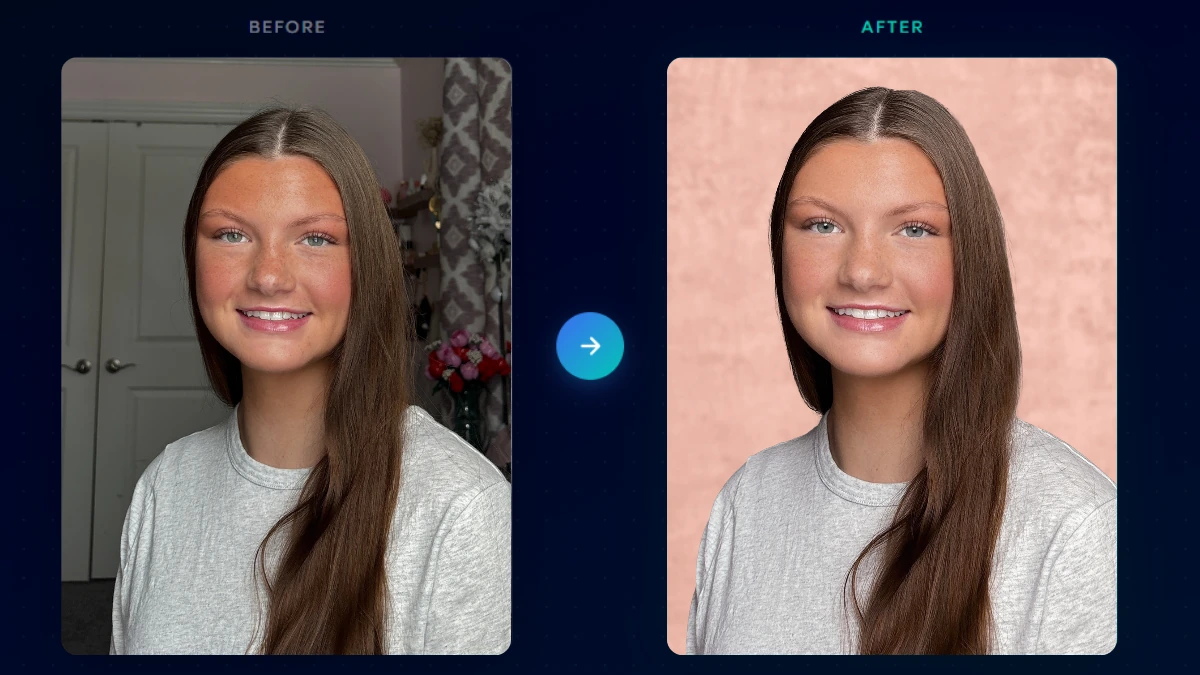
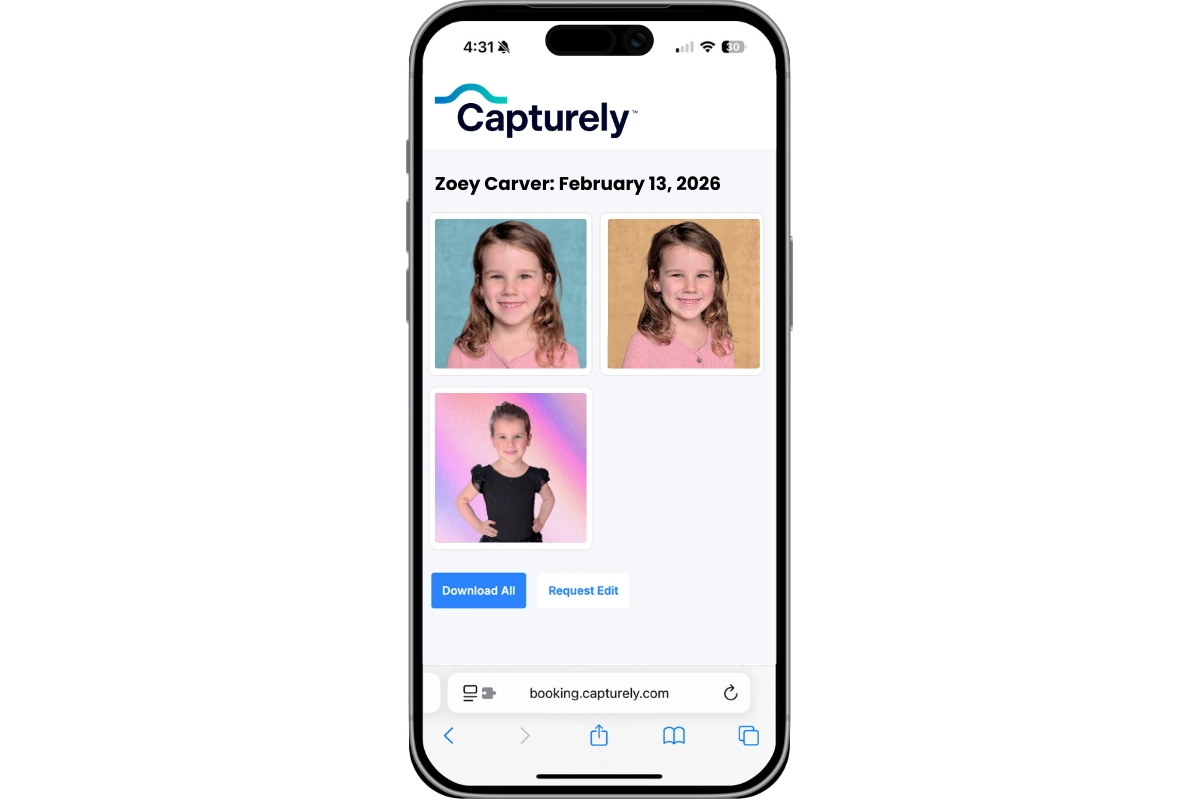
Photos are professionally retouched by a human editing team — color correction, blemish cleanup, background enhancement. Three finished portraits land in the parent’s gallery within 24 hours. Parents browse the actual photos online, then decide what to order: prints, digital downloads, packages, or nothing at all. See before you buy. No paper forms. No cash envelopes. No buying blind.
The school’s total involvement? Sending the link.
Is This Real Photography or AI-Generated?
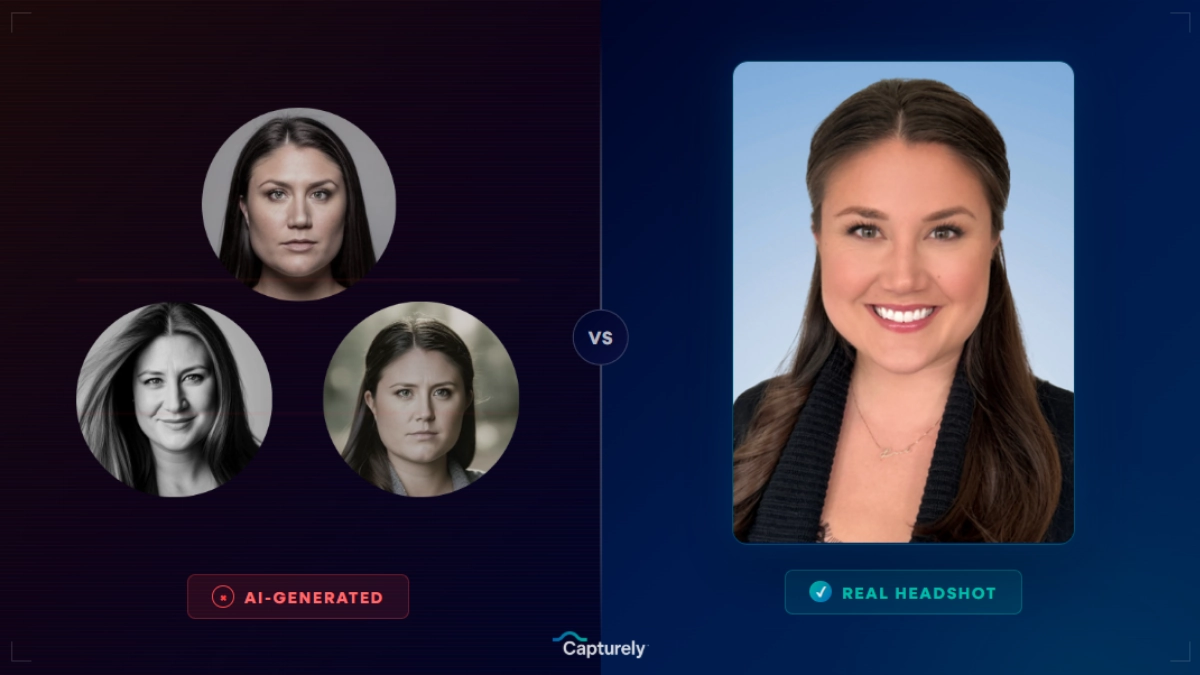
Real photography. The phone’s rear camera captures actual images of your actual child — the same sensor that takes every other photo in your camera roll, but at higher resolution than most point-and-shoot cameras. A trained human photographer directs every session live. A professional retouching team edits every image by hand. Nothing is generated, fabricated, or created by software.
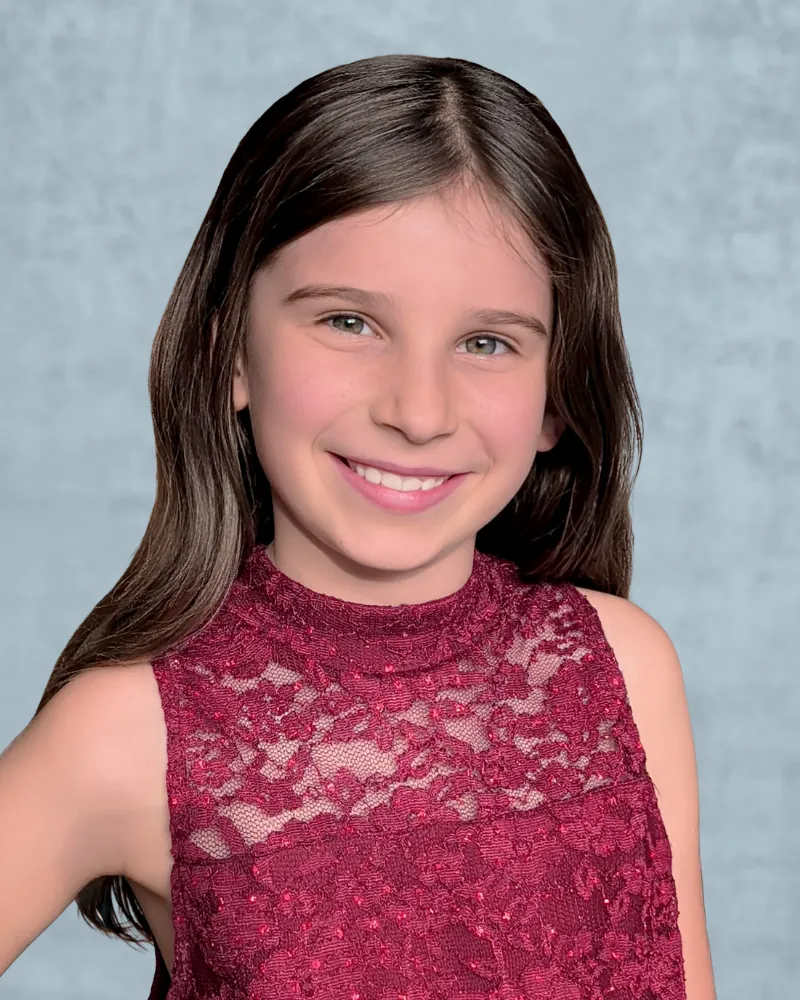
This distinction matters more than you’d think. AI headshot generators create a digital approximation of a face — something that often doesn’t quite look like the actual person. Virtual school photography captures the real child, in their real environment, looking like themselves on a good day. The technology connects the photographer to the family. It doesn’t replace the photography.
As headshot photographer Peter Hurley, founder of Headshot Crew, puts it: “Headshots are 10 percent photography and 90 percent communication” (Hurley, Fstoppers). That’s exactly why virtual direction works. The photographer’s ability to coach expression, adjust posture, and time the capture — the communication — is what produces a great portrait. Not the brand of camera. Not being in the same room.
How a Virtual School Photo Session Works (Step by Step)
- School distributes session links. The school sends each family a unique link through existing channels — email, ParentSquare, Remind, ClassDojo, or the school app. No new software for anyone to learn. No paper forms to print, distribute, or collect.
- Parents schedule a session. Parents click the link and choose a time slot within the school’s photo window (typically 2-3 weeks). Slots include evenings and weekends. Families pick when their child looks and feels their best — not when the school calendar dictates.
- The 10-minute at-home session. Parent opens the link on their phone at the scheduled time. A professional photographer appears on screen. The parent props the phone at arm’s length, rear camera facing the child. The photographer directs everything: “Chin down just a touch. Relax your shoulders. Now think about your dog doing something funny.” Multiple expressions, multiple angles. Kids can change outfits. They can try a goofy face or a serious look. Ten full minutes — not the 30 seconds they’d get at school.
- Professional retouching within 24 hours. A human editing team processes the images: color correction, blemish removal, background cleanup. Not an AI filter. Studio-grade results, because the capture quality starts high (rear camera + professional direction) and real editors finish the job.
- Parents browse and order online. Three retouched portraits land in the parent’s digital gallery within a day. Parents see exactly what the photos look like — the real images, not samples — and decide what to buy. Prints, digital downloads, packages, or nothing at all. No pressure.
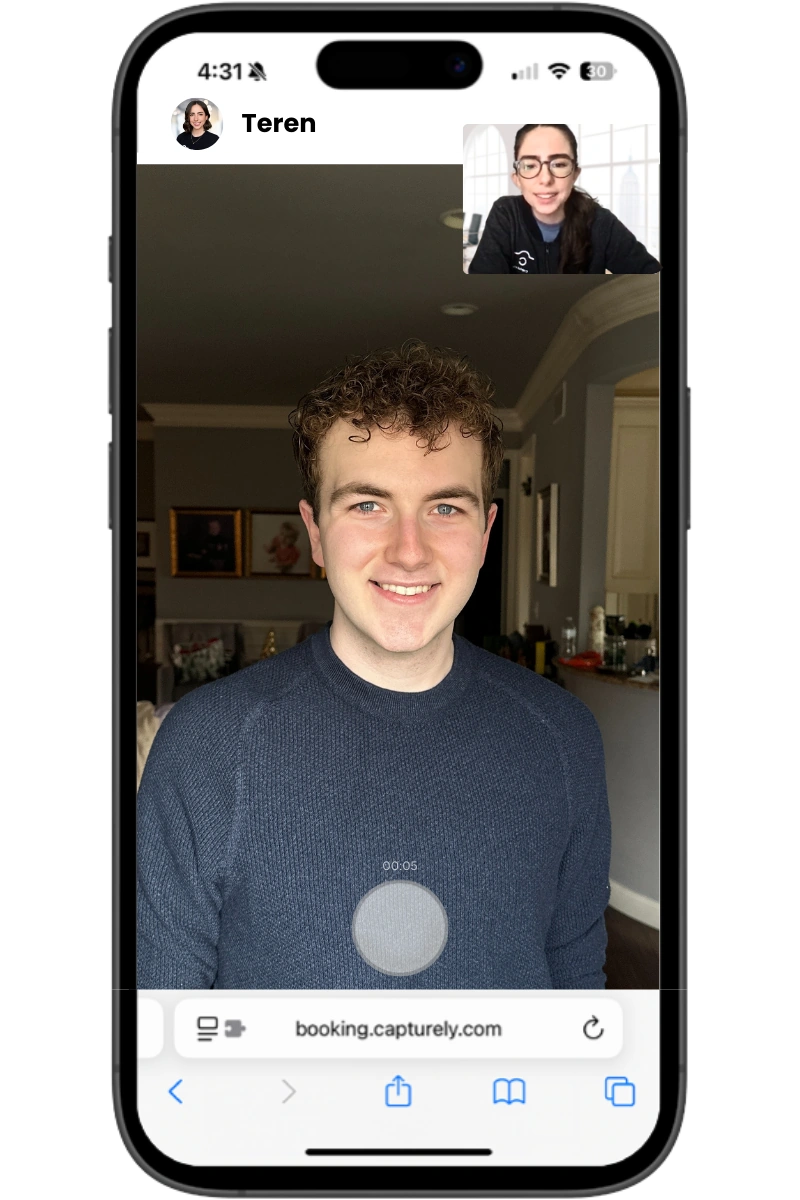
Every session follows the same quality standard because a trained photographer directs every one. Whether it’s the first session of the day or the fiftieth, the photographer is coaching posture, catching stray hairs, timing the shutter for genuine smiles, and putting camera-shy kids at ease.
Want to see a virtual school photo session in action? Capturely delivers photographer-directed portraits for families at home — the same platform trusted by Google, Netflix, and McKinsey. Learn how Capturely works for schools →
Why At-Home Sessions Are Better for Kids
Comfortable Environment Means Authentic Smiles
The C.S. Mott Children’s Hospital National Poll on Children’s Health found that 64% of children are self-conscious about at least one aspect of their appearance (Mott Children’s Hospital, 2022). Among teens, 73% of girls and 69% of boys report body image concerns. One in five teens actively avoids being in photos altogether.
Now picture where traditional school photos happen. A gymnasium. Fluorescent lights. A stranger behind a camera. Thirty classmates watching. Thirty seconds to produce a smile.
At-home sessions flip every one of those conditions. The child is in a familiar space. A parent is right there. The photographer builds rapport over 10 minutes, not 30 seconds. The result? Genuine expressions — the kind where the eyes crinkle and the personality actually comes through.
No Assembly-Line Pressure
Traditional picture day photographs 45-60 students per hour (The Honcho, 2024). That works out to 30-60 seconds per child. Sit down. Tilt your head. Click. Next.
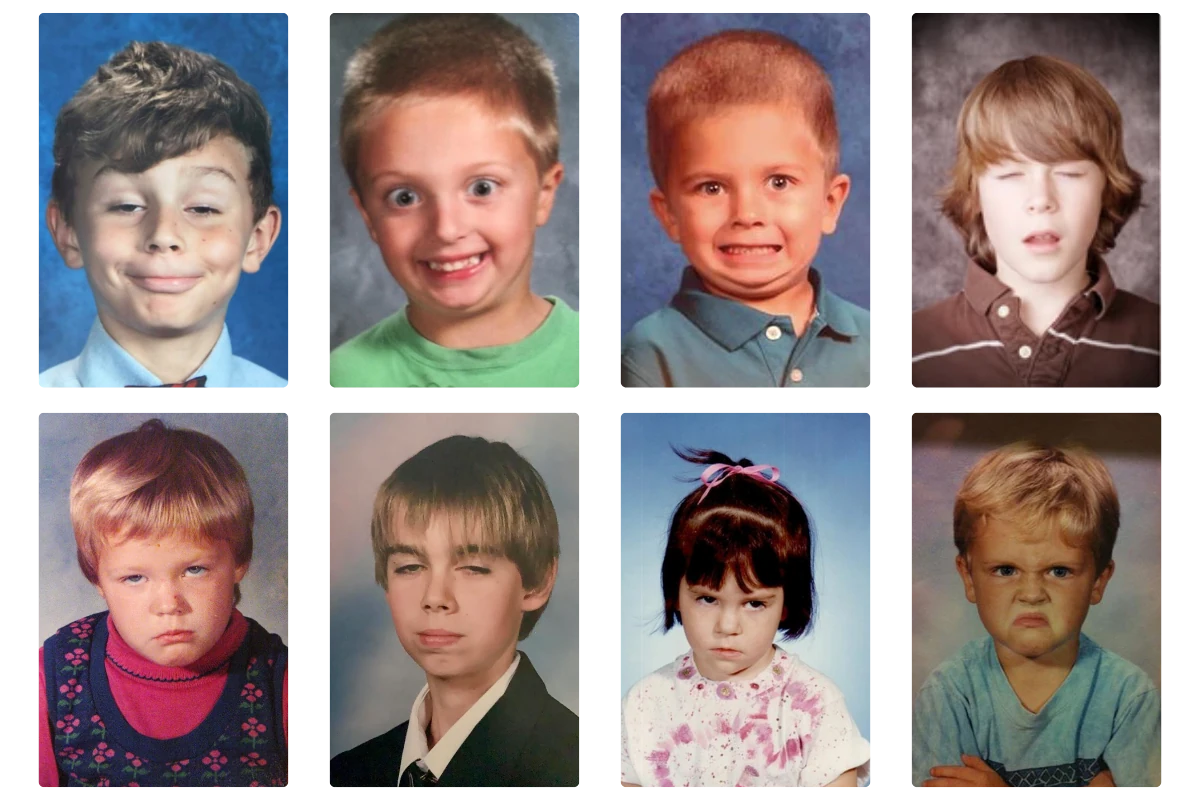
There’s no time to make a nervous kindergartner comfortable. No time to coax a real smile from a self-conscious seventh grader. No time to notice the toothpaste on their collar.
Virtual sessions give each child 10 dedicated minutes with a professional. The photographer uses real conversational prompts — not “say cheese” — to draw out natural expressions. If something goes wrong (sneeze, blink, stray hair), there’s time to fix it and try again. The portraits show who the kid actually is, not who they are when they’re anxious and rushing through a line.
Parents Control Hair, Outfit, and Setting
Every parent knows the drill. You send your kid to school looking perfect. By photo time, there’s been a juice box incident, a playground disaster, and a hairstyle rebellion. You find out when the proofs arrive weeks later.
At-home sessions put parents back in charge. Hair is done. Clothes are clean and camera-ready. The background is tidy. If something goes wrong, you fix it before the photographer clicks — not three weeks after.
Fun Shots and Personality — Not Just Sit-and-Smile
A 30-second assembly line produces one expression: the nervous-sit-still-smile face. Ten minutes with a professional photographer produces a range. The real smile. The confident look. The silly face parents secretly love most. The personality shot that actually deserves a frame on the mantel.
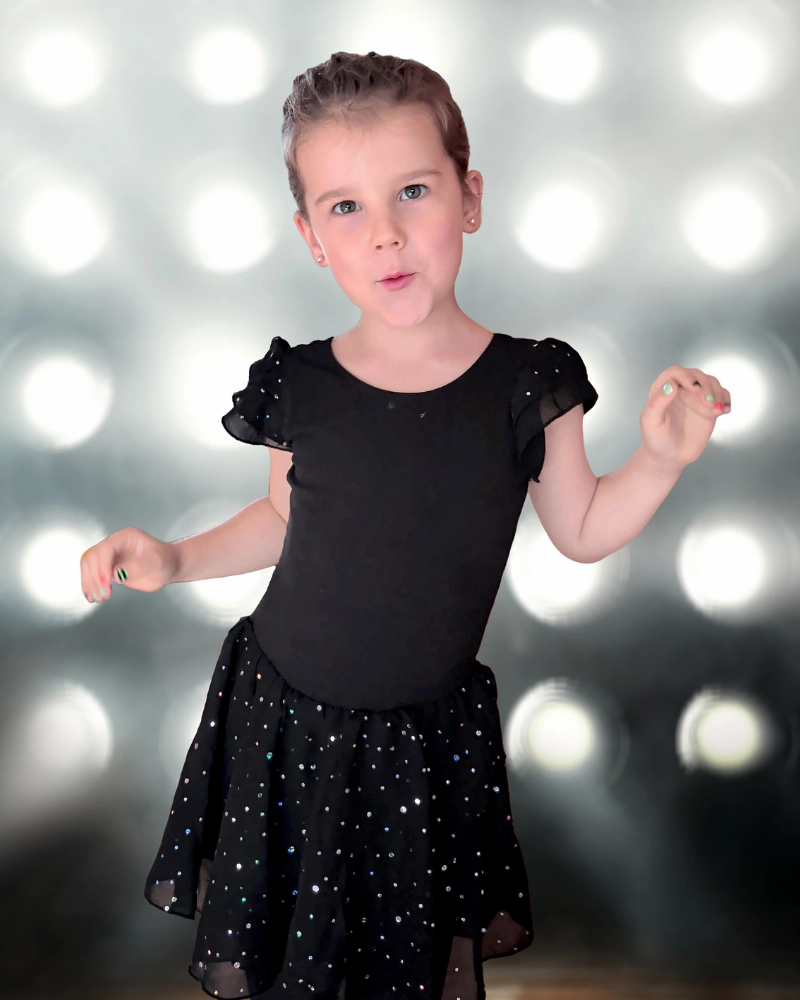
Kids can change outfits between shots. They can try different expressions. The photographer adapts to each child instead of running through a script. The portraits that come back look like your kid — not a stiff, generic version captured between math class and recess.
Why At-Home Sessions Are Better for Schools
Zero Disruption to the School Day
Traditional picture day is one of the biggest single-day operational disruptions on the school calendar. The gym or cafeteria is blocked for 4-6 hours. Every class gets pulled from instruction for 10-15 minutes. Research from Education Week shows that frequent small disruptions can cost schools the equivalent of up to 20 days of instructional time per year (EdWeek, 2025). And then retake day repeats the whole process two to four weeks later.
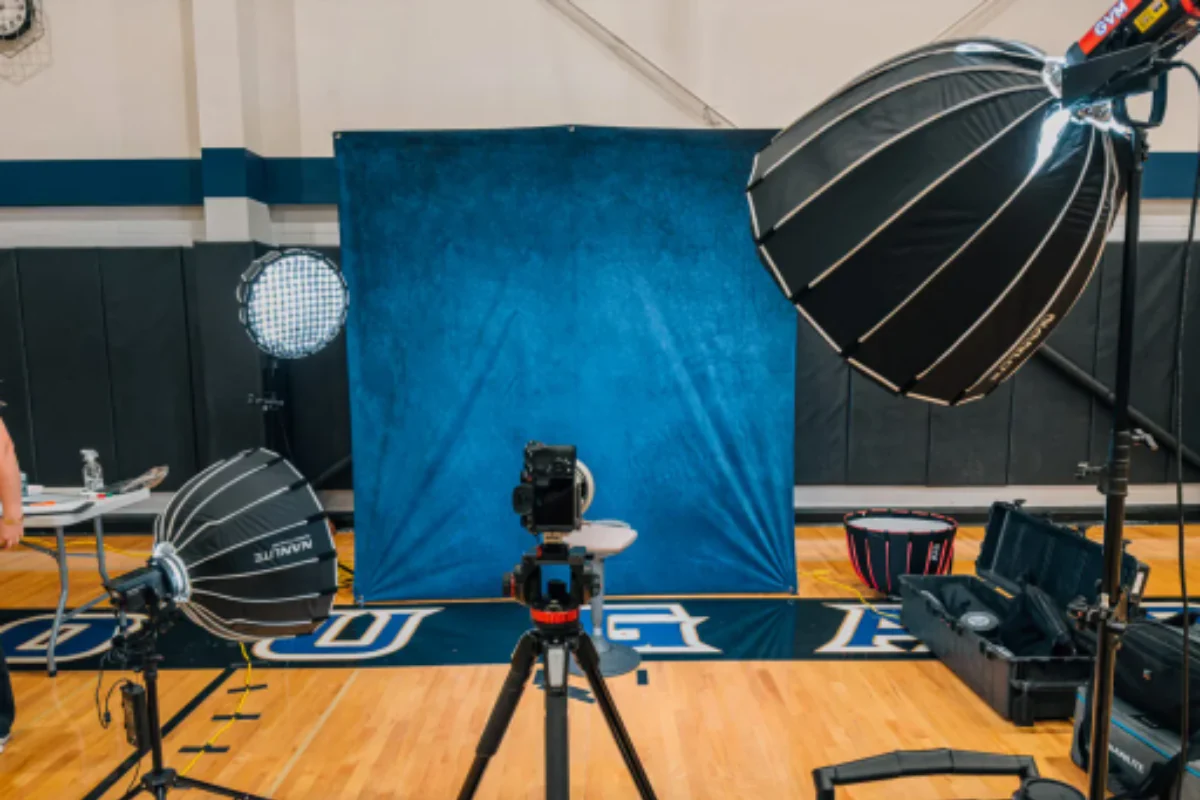
Virtual school photography eliminates all of it. Nothing happens at the school building. No space blocked. No classes pulled. No schedule disrupted. No retake day. The school calendar stays intact. If your school is fed up with the annual picture day disruption, here’s a deeper look at everything that’s broken about the traditional model.
No Gym Blocked, No Volunteers, No Cash Handling
Here’s the admin workload that disappears: reserve the space. Build the class rotation schedule. Recruit parent volunteers. Print and distribute order forms. Collect cash and checks through backpacks. Field parent complaints. Manage the photographer’s setup and teardown. Coordinate retake day. Distribute photo packages when they finally arrive. Chase down lost envelopes.
Principals already spend 31% of their week on administrative tasks, with over half working 60+ hours (EdWeek, 2016). Picture day shouldn’t be one more thing on the pile.
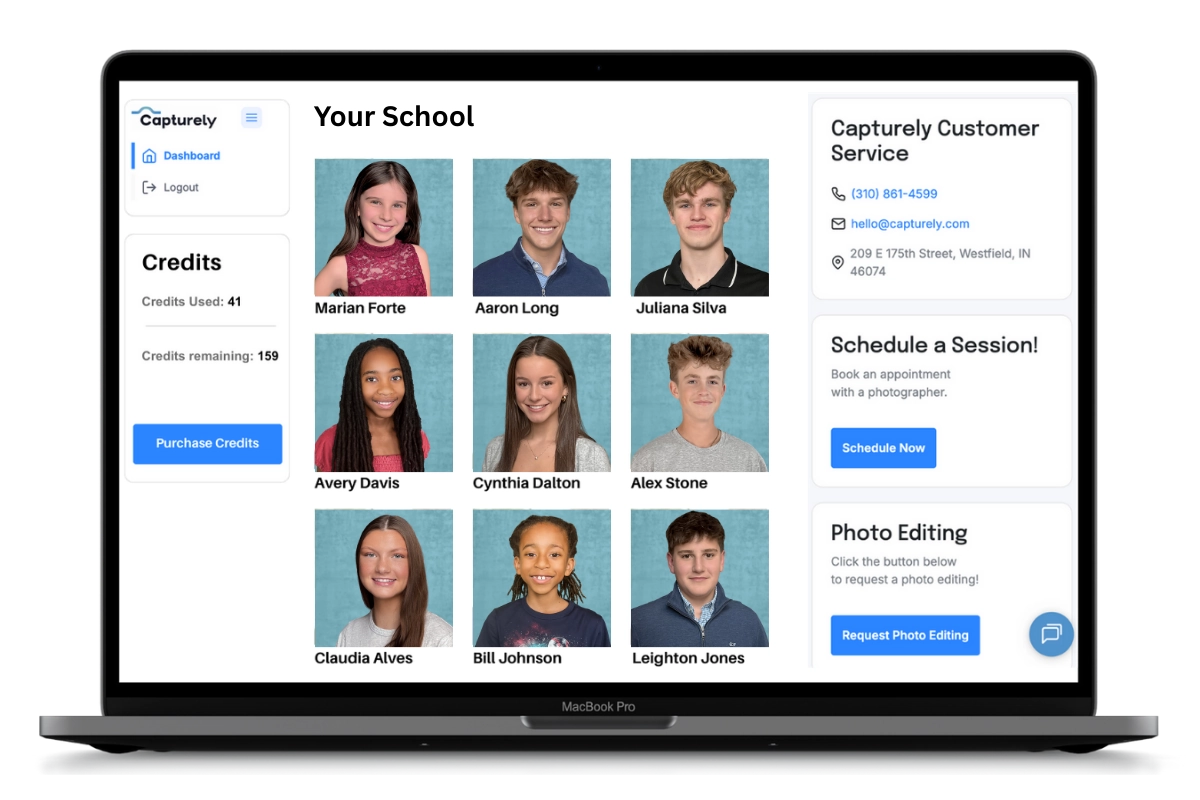
With virtual photography, the school’s involvement is one action: distribute the session link through existing communication channels. The platform handles scheduling, photography, retouching, gallery delivery, ordering, fulfillment, and commission tracking — all visible through a single admin dashboard. As Freed Photography, a school photography company, put it: “Most school teachers and administrators dread picture day because photographing an entire school full of wiggly, wind-blown youngsters is not only disruptive to the academic schedule, but the results of that lost day seem to become more and more disappointing every year” (Freed Photography, 2024).
Higher Parent Participation Means More Commission Revenue
Schools earn commissions on parent photo purchases — typically 15-30% of gross revenue. But under the traditional model, only 25-50% of parents buy packages — down from about 75% two decades ago (Freakonomics, 2023). Meanwhile, 96% of parents say they want school photos (Consumer Reports). That gap — between wanting photos and refusing to buy blind — is the biggest revenue leak in the industry.
The “see before you buy” model changes that math. When parents can view their child’s professionally retouched portraits before spending money, more of them buy. Higher participation at lower friction means more commission revenue for the school — with zero administrative overhead. For a full breakdown of how school photography economics work, see our guide to school photography pricing.
Traditional vs. Virtual School Photography: Side by Side
| Feature | Traditional Picture Day | Virtual At-Home Portraits |
|---|---|---|
| Where it happens | School gym or cafeteria | At home, wherever the family is comfortable |
| Who’s present | Photographer + school staff | Parent + child + photographer (virtual) |
| Time per child | 30-60 seconds | 10 dedicated minutes |
| School disruption | 4-6 hours, gym blocked, classes pulled | Zero — nothing happens at school |
| Parent involvement | None during the session | Parent present the entire time |
| Delivery speed | 2-6 weeks | 24 hours |
| Ordering model | Buy before seeing photos (paper, cash) | See photos first, order online |
| Camera | DSLR with studio lighting | Phone rear camera (36-48 MP) + live direction |
| Admin burden | High — space, schedule, volunteers, cash | Minimal — send one link |
| Bad hair / spill risk | Whatever happened between home and gym | Parent controls — fix before the click |
| Yearbook compatible | Yes | Yes — exports to Jostens, Walsworth, etc. |
| Retakes | Second disruption day, weeks later | Schedule another 10-min session anytime |
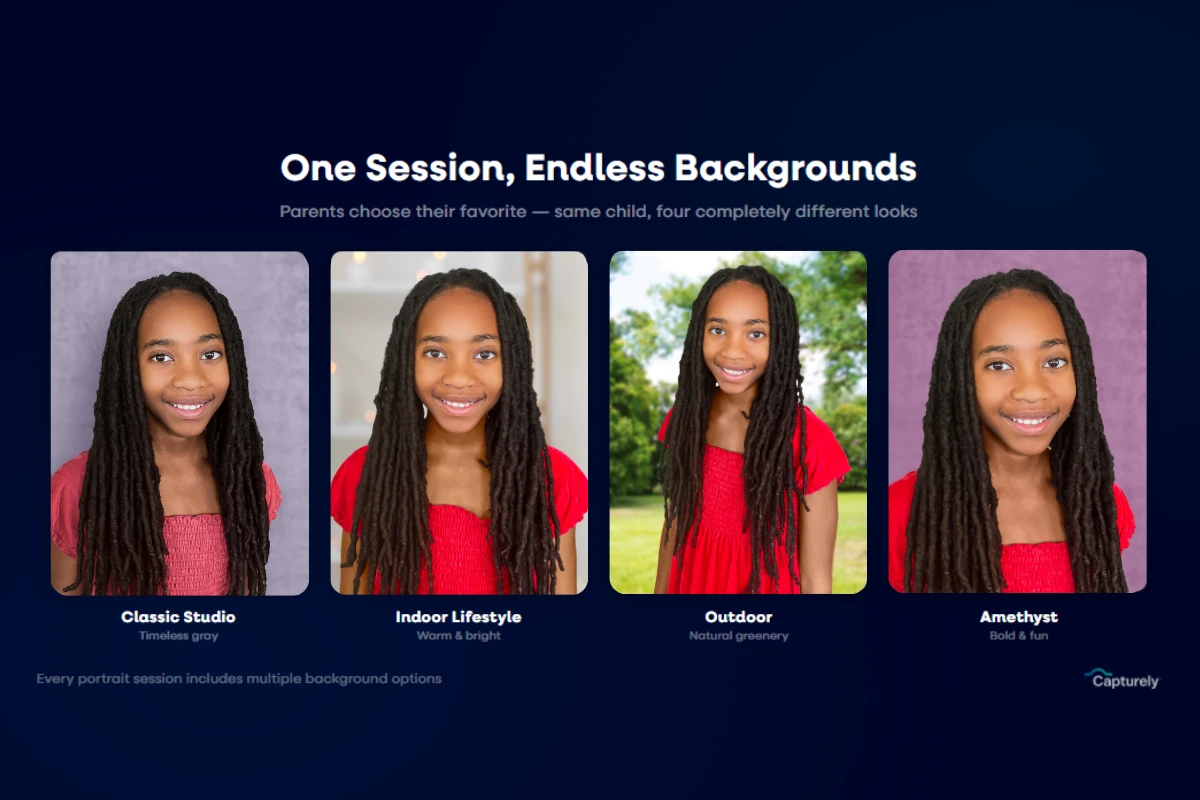
Looking for a school photography partner that eliminates picture day entirely? Capturely’s virtual platform gives families professional portraits at home — with zero disruption to your school day. Schools earn commissions on every order. See how Capturely works for K-12 →
Common Concerns About Virtual School Photos (Answered Honestly)
Will Phone Photos Be Good Enough?
Modern smartphone rear cameras capture at 36-48 megapixels — more resolution than many professional DSLRs used by school photographers five years ago. The iPhone 16 Pro shoots at 48 MP. Samsung Galaxy S25 does the same. These aren’t selfies taken with the front-facing camera. The rear camera is a legitimate photographic tool.
But megapixels alone don’t make a good photo. DXOMARK’s 2025 analysis found that smartphones are “closing the gap” on dedicated cameras — computational photography (HDR, portrait mode, real-time processing) already produces results indistinguishable from DSLRs for most portrait photography (DXOMARK, 2025). What makes the result truly professional is the direction — a trained photographer controlling composition, expression, and timing — plus human retouching afterward. The same combination that Capturely uses to deliver portraits for Fortune 500 companies like Google, McKinsey, and UnitedHealth Group. As Chase Jarvis, professional photographer and founder of CreativeLive, wrote: “The best camera is the one that’s with you” (Jarvis, 2009). In 2026, the most capable camera most parents own is already in their pocket.
What About Families Without Smartphones?
Smartphone ownership among US adults aged 18-49 is 97% (Pew Research Center, 2024). For parents of school-age children, access isn’t typically the barrier.
But edge cases exist. A family member’s or friend’s phone works — the session runs through a browser link with no app download required. Some schools set up a quick session station in the front office for the handful of families who need it: a phone on a small tripod, five minutes of staff time, done. You don’t need a full picture day to accommodate a few sessions.
How Does This Work for Yearbooks?
Virtual photography platforms export hi-res, properly formatted student portraits directly to yearbook systems — Jostens, Walsworth, Entourage, Treering. Automatic data matching by student ID ensures every portrait reaches the correct yearbook page without manual sorting.
Quality consistently meets or exceeds traditional school photos because each portrait gets individual direction (not assembly-line capture) and professional retouching. Yearbook advisors get properly formatted, correctly matched files without the manual data entry that plagues traditional workflows.
Is the Photographer Really Not There in Person?
Correct. The photographer is professional, trained, and live — but virtual. They appear on the phone screen and direct the session in real time. They see what the camera sees. They coach the child through poses and expressions. They capture the shots at exactly the right moment.
This is actually a privacy advantage for schools and families. The photographer is never physically with the child. The session runs on the family’s own device. No strangers on campus during the school day. No background-check logistics for on-site visitors. Parents are present for every second of every session. If data privacy is a concern for your district, our guide to FERPA and school photography covers what to require from vendors. And if you’re comparing options, our breakdown of the best school photography companies lays out what each vendor offers.
Ready to see what school portraits look like without picture day? Capturely delivers professional, photographer-directed portraits to families at home. 24-hour delivery. See-before-you-buy ordering. Zero school disruption. Request a free demo for your school →
Frequently Asked Questions
How does virtual school photography work?
The school sends families a session link. Parents schedule a 10-minute slot within a 2-3 week window (evenings and weekends included). At session time, a live professional photographer appears on the phone screen and directs posture, expression, and angles using the rear camera (36-48 MP). Three retouched portraits arrive within 24 hours. Parents view photos online and order what they want — after seeing the results.
Are virtual school photos real or AI-generated?
Virtual school photos are 100% real photographs captured by the phone’s rear camera — the same sensor parents use daily, at higher resolution than most consumer cameras. A trained human photographer directs every session live. A professional retouching team edits every image by hand. Nothing is generated or fabricated by artificial intelligence. What you see is your real child, really photographed.
What camera is used for virtual school photos?
Virtual portraits use the phone’s rear camera, not the front-facing selfie camera. Modern rear cameras capture at 36-48 megapixels with advanced computational photography. The phone is propped at arm’s length with the rear lens facing the child, giving the photographer a direct view to compose shots. Combined with professional direction and human retouching, results match or exceed traditional studio-grade school portraits.
Can at-home school photos be used in yearbooks?
Yes. Virtual photography platforms export hi-res, properly formatted portraits directly to yearbook systems including Jostens, Walsworth, Entourage, and Treering. Automatic student ID matching ensures every portrait reaches the correct yearbook page without manual sorting. Image quality exceeds most traditional school photos because each child receives individual photographer direction and professional human retouching.
How long does a virtual school photo session take?
A virtual session takes about 10 minutes per child. The photographer directs multiple poses, expressions, and angles during that time. Children can change outfits between shots and try both traditional portrait poses and fun personality shots. Compare that to traditional picture day, where each child gets 30-60 seconds of camera time — and retakes mean a second disruption day weeks later.
What if my child is camera-shy?
Camera-shy children are where virtual sessions genuinely shine. The photographer builds real rapport over 10 full minutes — not the 30 seconds available on traditional picture day. The child is in their own home with a parent present, reducing anxiety dramatically. Photographers use conversational prompts (“tell me about your favorite thing to do after school”) rather than “say cheese” to draw out natural expressions. If a shot doesn’t work, there’s time to try again.
How much do virtual school photos cost?
Virtual school portrait packages typically range from $29 to $49 per child, depending on the package selected. Options include individual digital portraits ($29), multi-image packages ($39-$49), and optional print add-ons. The key difference from traditional picture day: parents see the actual photos before spending any money. Schools earn commissions on every purchase with no upfront cost to participate. For full pricing details, see our school photography pricing guide.