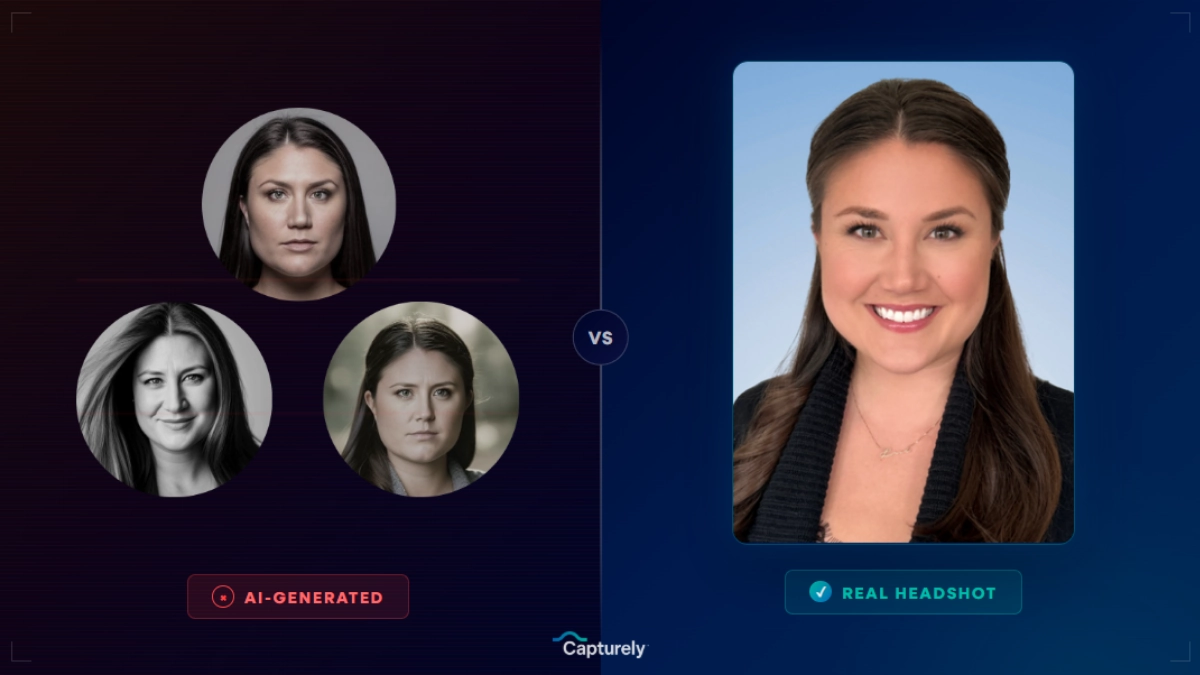
HeadshotPro generates 30–70 AI headshots from uploaded selfies for $29 to $59, a fast and affordable option for individuals. For teams where trust and authenticity matter, real photographer-directed services like Capturely deliver actual photographs taken by a live photographer via smartphone in 24 hours, with guaranteed likeness accuracy that AI generation can’t match.
HeadshotPro is the biggest name in AI-generated headshots. According to the company, it has generated over 18 million headshots for 197,000+ customers and holds a 4.8-star Trustpilot rating. For $29 to $59, you upload a handful of selfies and get back dozens of AI-generated professional headshots. No photographer. No session. No real photos.
Last updated: April 12, 2026 · Written by Brian Confer, Co-founder & COO at Capturely
That last part matters more than you think.
A 2022 study in the Proceedings of the National Academy of Sciences found that AI-generated faces are actually rated 7.7% more trustworthy than real faces (Nightingale & Farid, PNAS, 2022) — when people don’t know the photo is AI. But a separate study of 1,087 recruiters found the opposite: once people learn a headshot is AI-generated, about two-thirds said they’d be put off (Ringover, 2024). The same photo that looked great becomes a trust liability the moment someone discovers it’s AI-generated.
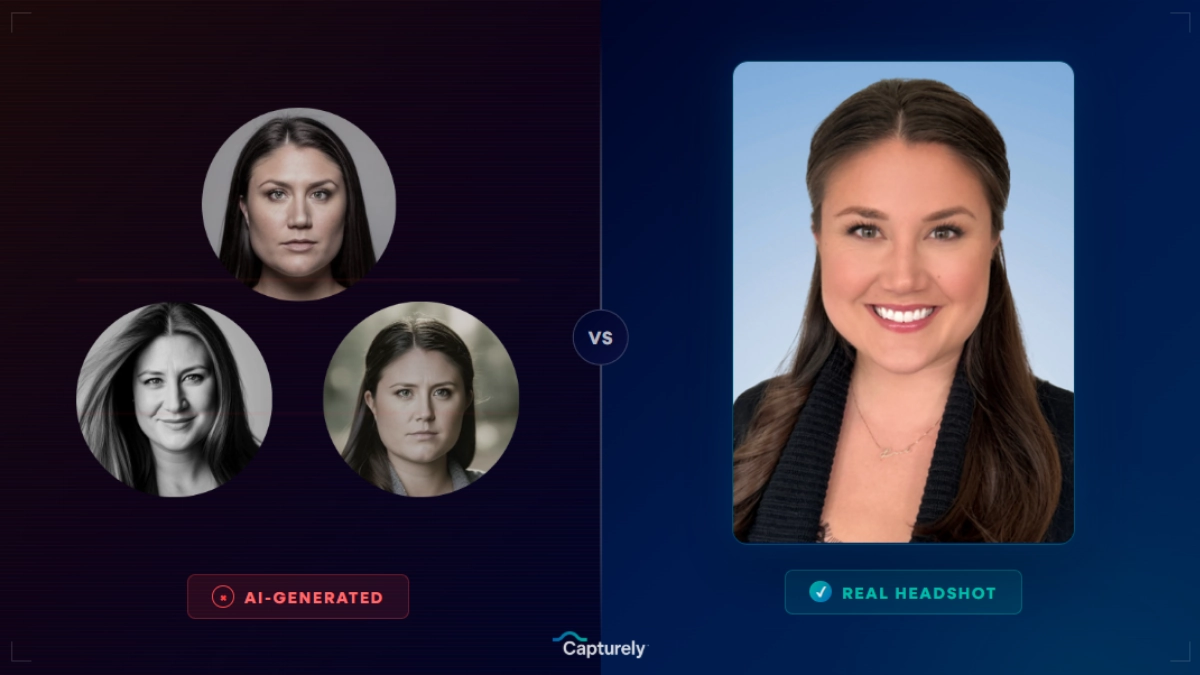
That’s the paradox at the center of this comparison. HeadshotPro produces images that can look polished and professional. But they’re not photographs of you — they’re AI-generated images based on your appearance. And for teams where trust, authenticity, and brand credibility matter, that distinction is the whole ballgame.
Quick Verdict: HeadshotPro vs Real Photography
Choose HeadshotPro if you’re an individual on a tight budget who needs a LinkedIn photo fast, you work in a low-stakes environment where nobody scrutinizes headshots, and you’re comfortable with the fact that the image isn’t a photograph — it’s an AI’s interpretation of you. At $29 for 30 images, the value proposition is hard to argue with for personal use.
Choose real photography if your headshot appears anywhere clients, patients, recruits, or investors will see it. If you’re managing headshots for a team — especially in healthcare, finance, law, or consulting — AI-generated images carry real risk. Trust erodes when the person on Zoom doesn’t match the headshot on the website. A service like Capturely connects your team with live photographers for real photos taken via smartphone, delivered in 24 hours, with none of the authenticity concerns.
These are different products solving different problems. HeadshotPro is an affordable, fast AI image generator. Real photography is a professional service. The question isn’t which is “better” — it’s which your situation actually calls for.
HeadshotPro vs Real Photography: Side-by-Side Comparison
| Factor | HeadshotPro (AI) | Real Photography (Capturely) |
|---|---|---|
| What you get | AI-generated images based on your uploaded selfies | Real photographs taken by a live professional photographer |
| Real photos? | No — digitally generated | Yes — captured by your phone’s rear camera |
| Live photographer? | No | Yes — directs every session in real time |
| Price | $29 (Basic) / $39 (Professional) / $59 (Executive) | $79 individual; teams save up to 45% ($45–$79/person) |
| Turnaround | 15 min to 2 hours | 24 hours |
| Photos delivered | 30–70 AI-generated images | 3 professionally edited real photographs |
| Accuracy | Varies — results may differ from your actual appearance | Exact likeness — it’s a real photo of you |
| Editing | AI-generated output (some remix/customization) | Professional human retouching |
| Backgrounds | 60+ AI-generated backdrops | 98+ real backgrounds, custom branded options ($200) |
| Team management | Team portal, SSO, HR integrations (BambooHR, Workday via Zapier) | Admin dashboard with scheduling, tracking, brand controls |
| Security | SOC 2 Type II; photos deleted within a week | API-into-camera only; no access to device data or storage |
| Best for | Individuals needing a quick LinkedIn photo on a budget | Teams needing authentic, on-brand headshots at scale |
How HeadshotPro Works
HeadshotPro was founded by Danny Postma, a Dutch developer who launched it in March 2023. The product is straightforward: upload 15-17 selfies, wait 15 minutes to 2 hours, get back 30-70 AI-generated headshots in various styles and backgrounds.
The process works in three steps:
- Upload photos (5 minutes): You provide at least 15 photos of yourself at 512px+ resolution. HeadshotPro wants varied expressions, backgrounds, lighting conditions, and angles. You can use their guided photoshoot feature (4-5 minutes) or manually upload existing photos (10-15 minutes).
- AI generates headshots (15 min to 2 hours): The AI model trains on your uploaded images and generates new professional-looking headshots. You pick from preselected styles (Basic plan) or choose from thousands of options (Professional and Executive).
- Download your favorites (5 minutes): Browse the results. Use the remix feature to swap backgrounds and outfits on images you like. Download the keepers. The Executive plan delivers 4K resolution (4096px+).
What HeadshotPro Does Well
HeadshotPro has earned its reputation for several genuine reasons:
- Speed and convenience: No scheduling, no sessions, no preparation beyond uploading selfies. For someone who needs a headshot today and has zero interest in sitting for a photo, this removes every friction point.
- Volume: You get 30-70 images per order. Not every image will be a keeper, but most users report finding several they’re happy with.
- Price: $29 for 30 headshots is hard to beat. For an individual freelancer or job seeker, the math is clear — you’d pay 5-10x more for a single session with a studio photographer.
- Remix feature: Being able to swap backgrounds and outfits on a generated image you like is genuinely useful.
- Money-back guarantee: HeadshotPro offers a 14-day “Profile-Worthy” money-back guarantee. Note that to qualify for a refund, you must not have downloaded any images from your order.
The Trustpilot reviews back this up. With a 4.8-star rating, HeadshotPro delivers a good experience for the majority of buyers. “I was amazed by the results — totally worth the $29 I paid,” one reviewer wrote. Another: “They didn’t look AI-generated.”
Where HeadshotPro Falls Short
The images aren’t photographs of you. This is the fundamental difference, and no amount of AI improvement fully changes it. HeadshotPro’s model generates a version of you based on patterns in your uploaded photos. Sometimes the result is close enough. Sometimes it’s not.
Some HeadshotPro users on Trustpilot have reported accuracy issues. One reviewer wrote: “NONE of the AI pix they created for me looked like me.” Another said: “Some of the images were not even my face, others were scary, half processed images.” These are publicly posted reviews representing individual experiences — the majority of HeadshotPro’s reviews are positive — but they illustrate a real limitation of AI-generated headshots.
A Cybernews editorial review noted that some users, particularly “women with longer hair had issues getting a picture that resembled them” because close-up selfie uploads sometimes resulted in images with shortened or altered hairstyles.
Not every image will be usable. HeadshotPro delivers 30-70 images depending on the plan. Some reviewers report that a portion of the batch contains artifacts or accuracy issues. As one 4-star reviewer put it: “Only a few are good, but that works for me… most of them are too weird haha.” This is typical of AI image generation broadly — not a flaw unique to HeadshotPro.
The refund policy has conditions. HeadshotPro’s money-back guarantee requires that you haven’t downloaded any images from your order. For users who download a few images to evaluate before deciding the results don’t look enough like them, the refund window has already closed.
AI image generation can struggle with diverse representation. This isn’t specific to HeadshotPro — it’s a well-documented challenge across AI image generation tools. In a widely covered 2023 incident, MIT graduate Rona Wang asked an AI image tool called Playground AI to make her headshot more “professional,” and it lightened her skin and gave her blue eyes. Research broadly shows that AI image tools can introduce skin tone shifts or alter features for people with darker complexions, because training datasets tend to underrepresent diverse skin tones.
If your team is diverse — as most teams are — it’s worth knowing that AI-generated headshots may not represent everyone with equal accuracy.
Want headshots that actually look like your team? Capturely’s live photographers capture real photos with your phone’s rear camera — 98% satisfaction, 24-hour delivery, 98+ backgrounds. Get a free instant quote →
What Happens When People Find Out Your Headshot Is AI?
Here’s where the research gets uncomfortable for AI headshot companies.
Nightingale and Farid’s 2022 PNAS study found that people can’t reliably tell AI faces from real ones — participants achieved just 48.2% accuracy, basically a coin flip. Even more surprising: AI-generated faces were rated 7.7% more trustworthy than real faces. The AI has crossed the uncanny valley. The images look better than real.
According to Sophie Nightingale, psychology researcher at Lancaster University and lead author of the PNAS paper, “synthesis engines have passed through the uncanny valley and are capable of creating faces that are indistinguishable — and more trustworthy — than real faces.” That’s the polished version. The practical version is messier.
But that advantage evaporates the moment someone learns the truth.
The same Ringover study showed the paradox in action: 76.5% of recruiters preferred AI headshots when they didn’t know which was which (Ringover, 2024). But when told a headshot was AI-generated, about two-thirds of recruiters said they’d be put off by it. The same photo. The same quality. Completely different reaction.
A Nuremberg Institute for Market Decisions (NIM) study of 3,000 people across the US, UK, and Germany found a similar pattern. When identical marketing content was labeled as AI-generated versus human-created, the AI-labeled version was perceived more negatively on emotional dimensions and drove lower engagement.
In practice, this means: your AI headshot looks great on your LinkedIn profile right now. But the moment a colleague mentions it looks “a little too perfect,” or a client notices you look different on Zoom, the trust equation flips. You don’t get to control when that disclosure happens.
A 2022 poll of 1,600 participants found that 38% described AI-generated headshots as “soulless” and lacking authenticity. An eye-tracking study by Zhou and Kawabata (2023), published in i-Perception, showed that people subconsciously spend more time viewing images they believe are human-made — even when they can’t consciously identify which is AI. We’re wired to sense the difference, even when we can’t articulate it.
For individuals using AI headshots on a personal LinkedIn profile, the disclosure risk is manageable. For teams putting headshots on a corporate website where clients, patients, and partners will see them? That’s a different calculation.
When Are AI Headshots Actually Fine?
This isn’t an anti-AI hit piece. HeadshotPro works well for specific situations:
- Individual professionals on a budget. If you’re a freelancer or job seeker and $29 is the difference between having a professional-looking headshot and using a cropped vacation photo, HeadshotPro is a clear upgrade.
- Low-stakes internal use. Slack avatars, internal directories, team chat profiles — contexts where nobody is scrutinizing whether your headshot is AI-generated.
- Placeholder until you get real photos. Starting a new job next week and don’t have a headshot? An AI version bridges the gap until you can schedule something real.
- Experimentation. Want to see how you’d look with different backgrounds, outfits, or styles before committing to a real photo session? AI generators are an affordable way to explore.
For these use cases, HeadshotPro delivers genuine value. The problem isn’t that AI headshots exist. The problem is when they’re used in contexts that demand authenticity — and the user doesn’t realize the risk until it’s too late.
When Is Real Photography Non-Negotiable?
There are situations where an AI-generated image creates more problems than it solves. These are the scenarios where teams consistently choose real photographer-directed services instead:
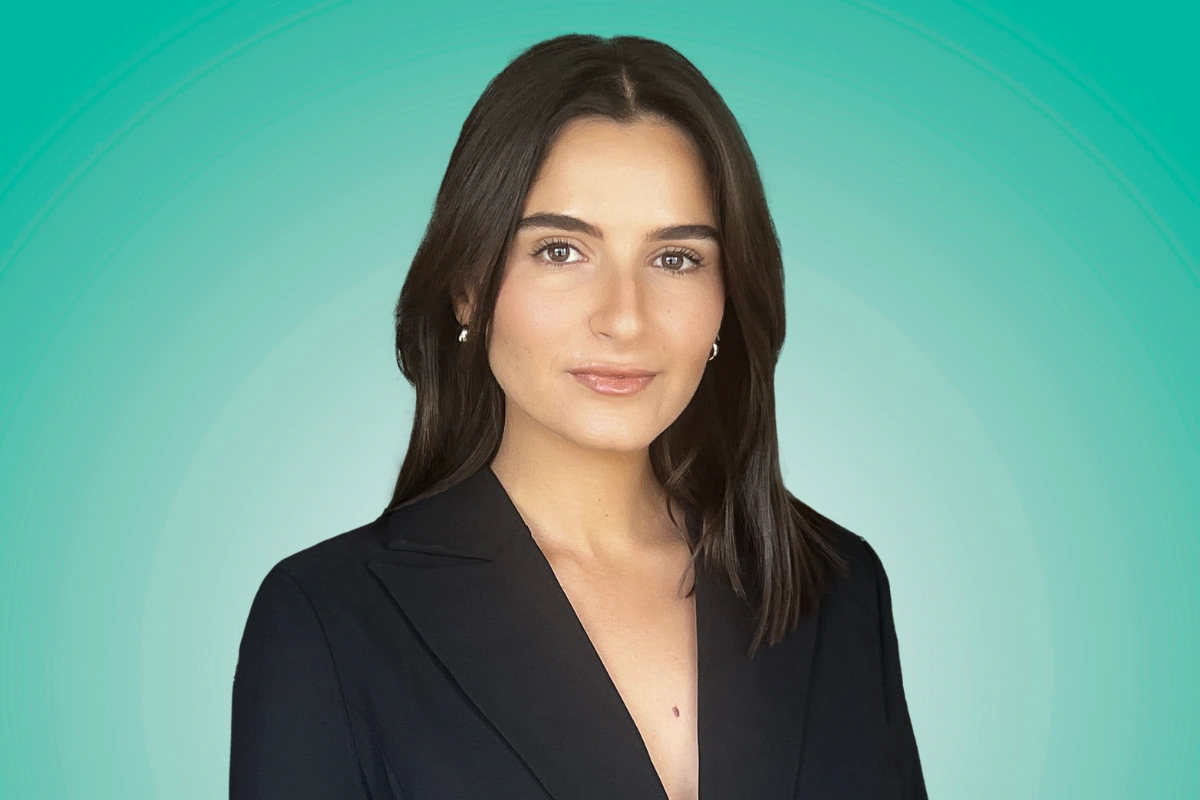
Client-facing roles. Consultants, account managers, salespeople, attorneys, financial advisors — anyone whose clients will meet them face-to-face or on video after seeing the headshot. The “you look different than your photo” moment erodes trust. As one prospect told Capturely: “As much as it looks like me, there’s… you can always tell it was AI generated.”
Healthcare provider directories. Patients research their doctors before appointments. Provider directory headshots need to be trustworthy and accurate representations. Healthcare systems like HCA Healthcare, Intermountain Health, and UnitedHealth Group use real photography for their provider pages.
Financial services and regulated industries. Several major financial institutions, including JPMorgan Chase, Deutsche Bank, and Goldman Sachs, have placed restrictions on employee use of certain generative AI tools. Many regulated industries are developing internal policies around AI-generated content that may apply to professional imagery. The compliance considerations of using AI-generated headshots in regulated environments can outweigh the cost savings.
Enterprise teams managing brand consistency. HeadshotPro generates 30-70 images per person with varying styles and quality levels. When you’re coordinating headshots for 200 people, you need consistent results — same background, same style, same quality — across every single person. A live photographer applying the same direction, lighting approach, and editing standards across every session delivers the uniformity enterprise brands require.
Companies with explicit AI policies. “Our company does not allow us to use AI anyway,” one prospect told Capturely directly. This is increasingly common, especially in regulated industries. The EU AI Act includes provisions around mandatory disclosure of AI-generated content — adding a regulatory dimension to what was previously just an optics concern.

Real photos for teams that need authenticity. Capturely’s live photographers direct 10-minute virtual sessions via smartphone — 765+ reviews at 4.9 stars, used by Google, Netflix, McKinsey, and UnitedHealth Group. See how it works →
How Real Photographer-Directed Virtual Headshots Work
The alternative to AI headshots isn’t dragging everyone to a studio. Capturely delivers real, photographer-directed headshots through a simple virtual session that works from anywhere:
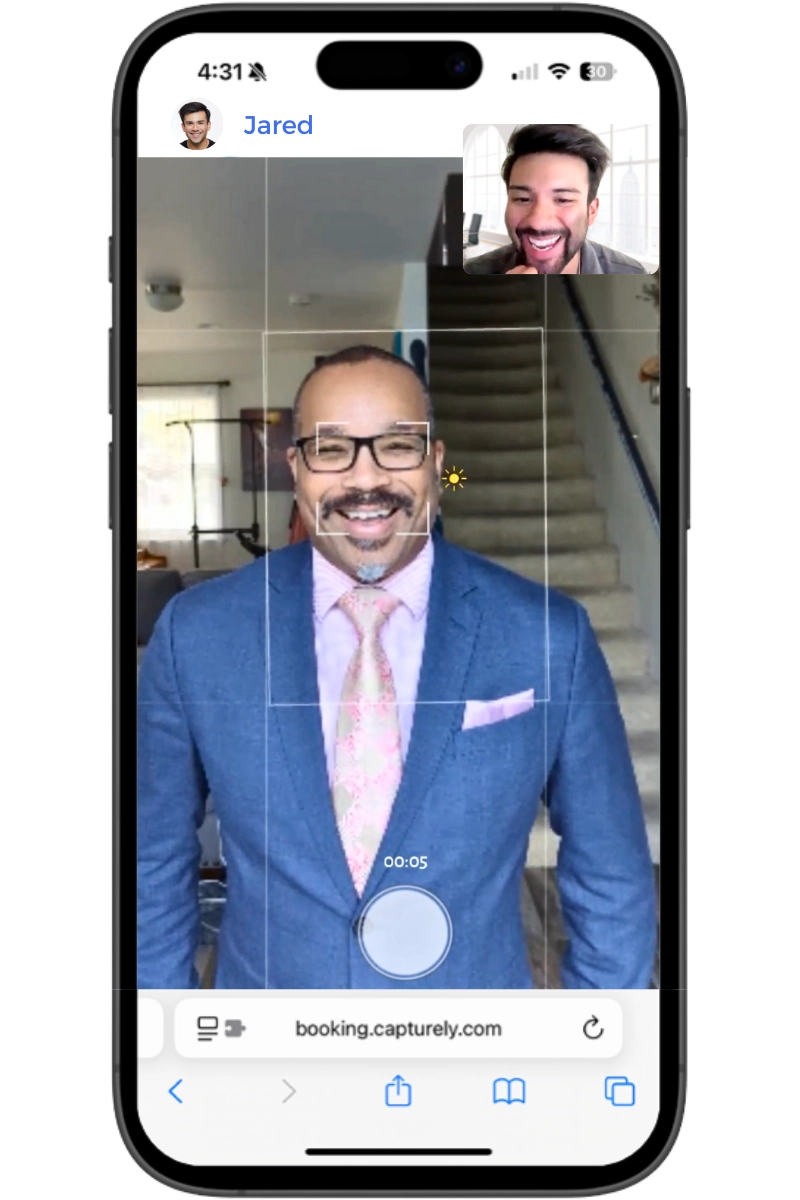
- Employee gets a secure link. No app download. Opens on any smartphone browser.
- A real photographer appears live. Like FaceTime — the photographer switches you to the rear camera (36-48 megapixels, far better than a selfie camera) and starts directing the session.
- 10 minutes of real-time coaching. Posture, expression, head angle, chin position, lighting adjustments for your specific environment. The photographer catches every micro-tension — clenched jaw, raised shoulders, squinted eyes — that you’d never notice yourself.
- Professional retouching and delivery in 24 hours. Each session delivers 3 fully edited photographs (left-facing, right-facing, straight-on). Human retouching, not AI filters.
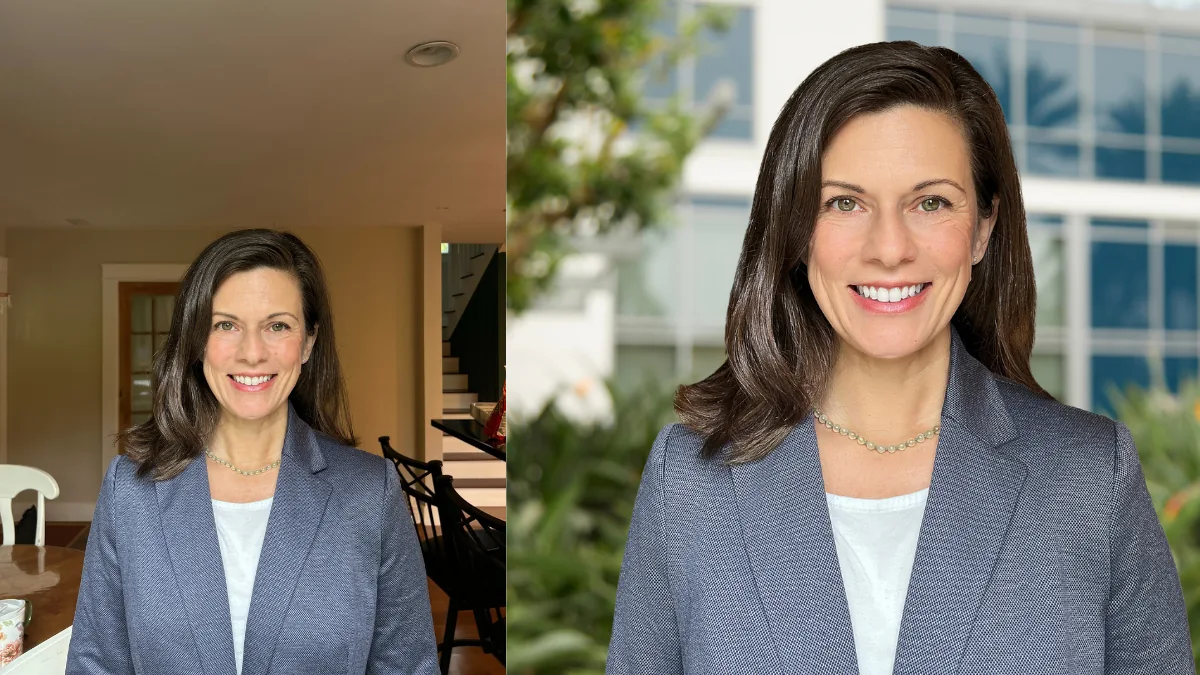
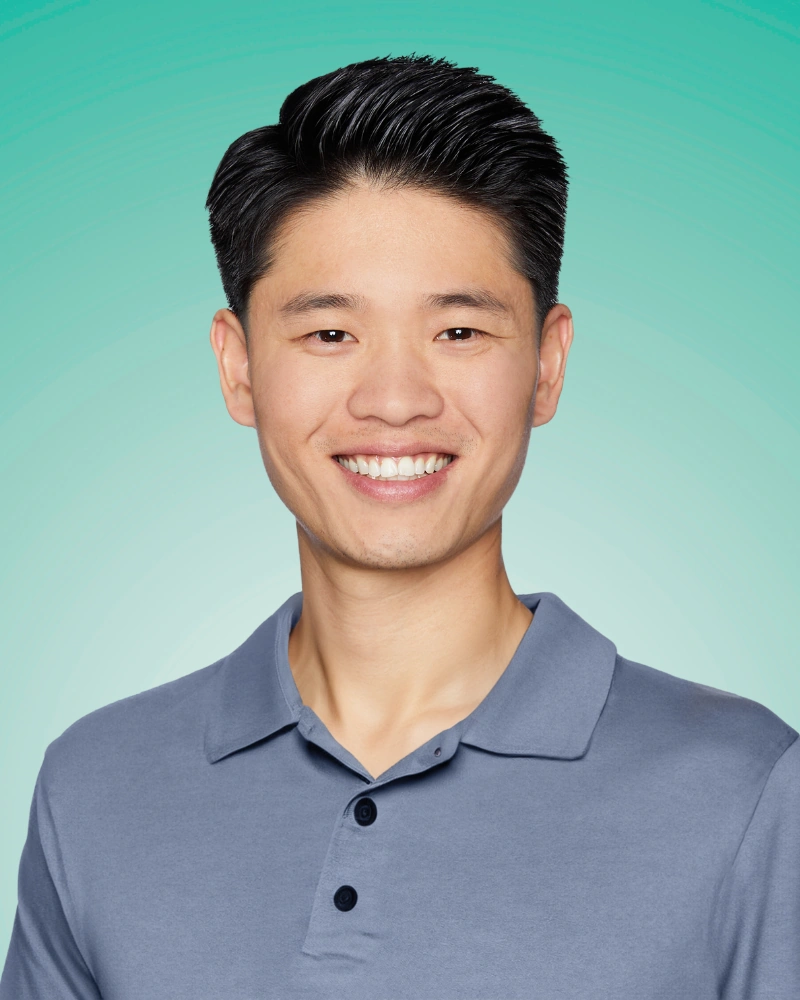
The result is a real photograph of you, taken by a real camera, directed by a real person, edited by a real retoucher. It looks like you. Because it is you.
This is the process that companies like Google, Amazon, McKinsey, Netflix, KPMG, and Capital One use for their distributed teams. Not because it’s cheaper than AI — it isn’t. Because when 94% of first impressions are design-related and professionals have an average of 7 places where their headshot appears, the difference between an AI-generated image and a real photograph has business consequences.
How Much Does HeadshotPro Cost vs Real Photography?
HeadshotPro is cheaper. That’s a fact. Here’s what the numbers actually look like for a 100-person team:
HeadshotPro (Enterprise): With team discounts of up to 60%, expect roughly $20-$31 per person depending on volume. For 100 people: approximately $2,000-$3,100. You get 30-70 AI-generated images per person. No live sessions. No real photos.
Real photography (Capturely): Team pricing ranges from $45-$79/person with volume discounts up to 45%. For 100 people: approximately $5,500-$6,500. You get 3 professionally retouched real photographs per person, live photographer direction, 24-hour turnaround, and a sub-2% reshoot rate.
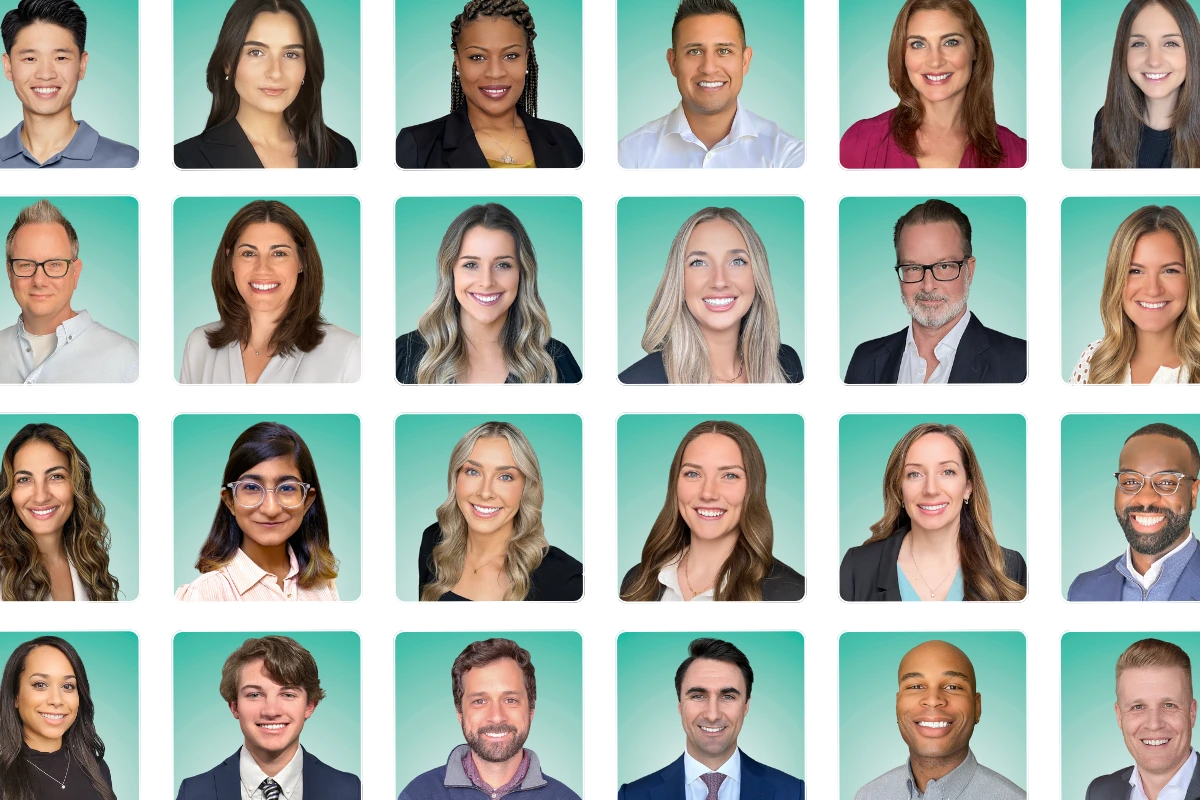
The gap is real — roughly $25-$45 more per person for real photography. The question is what that difference buys you: actual photographs that are guaranteed to look like your team, zero authenticity risk, consistency across every person, and a process that works for camera-shy employees instead of against them.
For comparison, traditional in-person studios charge $150-$450 per person before travel and coordination costs. Virtual photographer-directed sessions sit between AI generators and studios — higher quality than AI, a fraction of the cost and logistics of in-person. For a full pricing breakdown across every method, see our professional headshot cost guide.
Frequently Asked Questions
Is HeadshotPro worth it?
For individuals, often yes. At $29 for 30 headshots, it’s a fraction of what a studio photographer charges and produces usable results for most people. Not every image in a batch will be a keeper, but most users find several they’re happy with. For teams, the value proposition is different: consistency is harder to achieve across many people, likeness accuracy can vary, and the authenticity risk scales with the number of client-facing contexts where the headshots appear.
How much does HeadshotPro cost?
HeadshotPro offers three individual plans: Basic ($29, 30 headshots), Professional ($39, 50 headshots), and Executive ($59, 70 headshots). Team pricing starts at a 20% discount and goes up to 60% off for larger organizations. All plans include their “Profile-Worthy” money-back guarantee, though you must not have downloaded any images to qualify for a refund.
Is HeadshotPro legit?
Yes. HeadshotPro has generated millions of headshots for a large customer base since launching in March 2023. It holds a 4.8-star Trustpilot rating, is SOC 2 Type II compliant, deletes uploaded photos and trained models within a week, and offers SAML SSO for enterprise accounts. The company is a legitimate, well-reviewed AI headshot generator. The question to ask isn’t whether it’s legit — it’s whether AI-generated headshots are the right solution for your specific use case.
Does HeadshotPro actually look like you?
For most users, yes — the majority of positive reviews praise the likeness. However, some users have reported accuracy issues, with the AI altering skin tone, changing hair length or style, modifying facial features, or producing images that don’t closely resemble them. The accuracy depends heavily on the quality and variety of your uploaded photos, your features, and the inherent variability of AI generation. Even satisfied reviewers often note that some images in a batch are unusable while others are great.
Can recruiters tell if your headshot is AI-generated?
Usually not. The Ringover study found recruiters correctly identified AI headshots only 39.5% of the time — worse than guessing. But here’s the catch: about two-thirds of recruiters said they’d be put off by a candidate who used an AI headshot once they learned the truth. The issue isn’t detection — it’s what happens when disclosure occurs. An increasingly common scenario: you show up to a video interview and the recruiter notices your headshot doesn’t quite match. That’s a trust conversation you don’t want to have.
Is it OK to use AI headshots on LinkedIn?
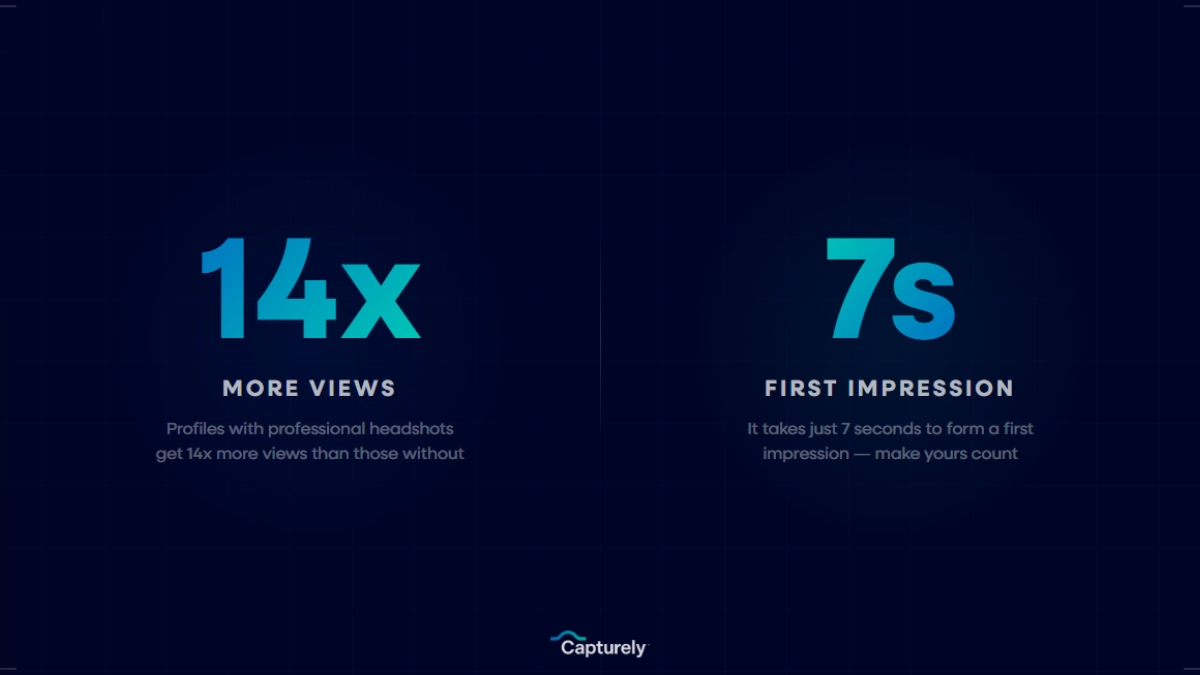
LinkedIn doesn’t explicitly prohibit AI headshots, but their policy requires photos to “reflect your likeness.” If the AI generator produces an image that genuinely resembles you, you’re within the policy. If it gives you lighter skin, different hair, or altered features — which can happen with AI generation — you’re in a gray area. Beyond platform rules, consider the practical impact: LinkedIn research shows profiles with professional photos get 14x more views and 36x more messages (LinkedIn, 2023). An AI headshot that looks polished but doesn’t quite look like you may hurt more than help when connections meet you in person or on video.
What is the best AI headshot generator?
For individuals, HeadshotPro leads the category on volume and reviews. Aragon AI ($29 for ~100 headshots) offers more images per dollar. BetterPic ($39-$79) is another well-reviewed option. All three are legitimate choices for personal use. For teams, the more relevant question is whether AI-generated headshots meet your requirements at all — see our AI vs real headshots comparison for a deeper analysis of when AI falls short.
Are AI headshots safe for corporate use?
It depends on your industry and company policies. Several major financial institutions have placed restrictions on certain generative AI tools. Healthcare organizations need provider photos that accurately represent providers patients will meet in person. The EU AI Act includes provisions around disclosure of AI-generated content that may affect how companies use AI headshots. If your company has an AI usage policy, check it before deploying AI-generated headshots across the team.
HeadshotPro vs Capturely: which should I choose?
These are different products for different situations. Choose HeadshotPro if you’re an individual who needs a quick, affordable headshot for personal use and is comfortable with AI-generated images. Choose Capturely if you’re managing headshots for a team, work in a trust-dependent industry, need guaranteed likeness accuracy, or want a consistent look across every person. HeadshotPro generates images at $29-$59. Capturely captures real photographs with live photographer direction at $45-$79 per person for teams. The price gap is real; so is the quality and authenticity difference.
The Bottom Line
HeadshotPro is good at what it does. It generates professional-looking AI headshots quickly and affordably. For individuals, it’s a smart buy. Danny Postma built something that hundreds of thousands of people have paid for, and most of them are happy with the results.
But “professional-looking” and “professional” aren’t the same thing. When your headshot represents your company to clients, patients, investors, or partners, the difference between an AI-generated image and a real photograph carries weight. The 38% who describe AI headshots as “soulless” are responding to something real. The two-thirds of recruiters who were put off by AI headshots once they knew the truth tell you everything you need to know about the disclosure risk.
For teams, the calculus is straightforward. If headshots are an internal nicety — Slack avatars, internal directories — AI is fine. If headshots appear anywhere trust matters, real photography removes the risk entirely. Willis and Todorov’s Princeton research showed that trustworthiness judgments form in 100 milliseconds (Willis & Todorov, Psychological Science, 2006). According to Alexander Todorov, professor of psychology at Princeton University, judgments made after a 100-millisecond glimpse of a face correlate highly with judgments made with no time constraints at all — meaning the first tenth of a second does most of the work. You get one-tenth of a second. The question is whether you want that moment to be built on something real or something generated.
Capturely doesn’t compete with HeadshotPro. It serves a different need. When teams at Google, McKinsey, Netflix, and UnitedHealth Group need professional headshots for their distributed workforce, they choose live photographer-directed sessions — real photos, real direction, real trust. 100,000+ headshots delivered with a 98% satisfaction rate and 765+ reviews at 4.9 stars.
Your team deserves headshots that are actually them. Configure your look, choose from 98+ backgrounds, and get a free instant quote in 30 seconds. Get your instant quote →
Want to see how other headshot options compare? Read our AI headshots vs real headshots deep dive or explore the Headshots.com vs Capturely comparison for a look at self-guided virtual services.